


Nine faces double standards scrutiny after Mason breach follows Cullen exit
Several former Nine employees have said the handling 'reeks of double standards'.

Nine Entertainment is facing fresh scrutiny over its handling of on-air conduct after sports reporter Danika Mason admitted to drinking alcohol before a live cross, prompting comparisons with the network’s swift dismissal of Today presenter Alex Cullen in 2025.
Several former Nine employees have contacted Mediaweek, questioning whether the network has applied its policies consistently, with one former Nine staffer telling Mediaweek the differing responses “reek of double standards.”
The scrutiny centres on whether Mason’s admission represents a clear breach of Nine’s workplace alcohol policies and why she was allowed to continue on air, while Cullen was immediately sidelined and ultimately exited the business.
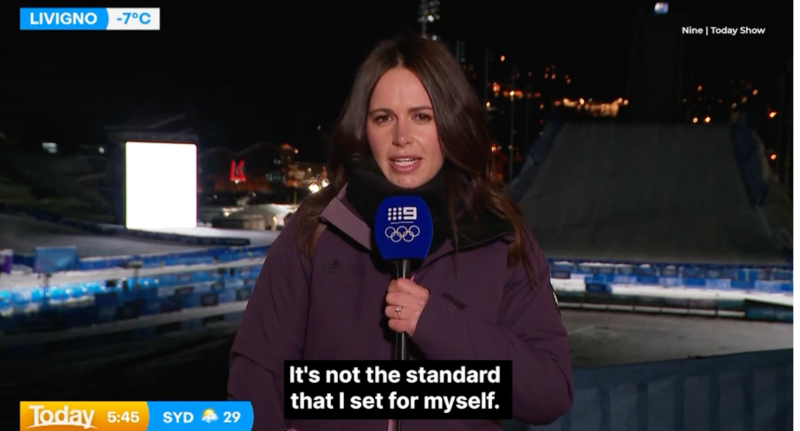 Danika Mason apologies after live cross. Image: Today
Mason apologises after live cross incident
Mason apologised on Today after appearing to struggle with her words during a live cross from Italy covering the Winter Olympics.
On Thursday morning, the 34-year-old revealed she had been drinking alcohol the previous evening. The incident occurred during a Wednesday morning Australian broadcast, which was around 10pm local time in Italy.
According to Nine’s internal policies, employees must adhere to strict alcohol limits while working.


The leading media trade publication in Australia.
Get our top stories straight to your inbox daily by signing up to our Newsletter
By providing your information, you agree to our Terms of Use and our Privacy Policy. We use vendors that may also process your information to help provide our services.
Nine’s policy, as seen by Mediaweek, states: “Blood Alcohol Limits at Work. Nine office environments: You are required to be under 0.000g.”
It further states: “DO NOT return to Nine's premises to work after drinking alcohol: Even if you've had a small amount and feel okay, alcohol can impair your judgment and reaction time, creating a safety risk for everyone. Your safety and the safety of others are a priority.”
Based on these policies, Mason’s admission that she had consumed alcohol prior to performing work duties represents a breach of Nine’s documented workplace alcohol standards.
Despite this, Mason was given the opportunity to address the incident publicly and apologise on air the following day.
Cullen dismissal followed immediate policy enforcement
The network’s handling of Mason’s incident stands in contrast to its response to Today presenter Cullen, who permanently stepped down after accepting a $50,000 gift from billionaire Adrian Portelli.
The controversy began after Portelli, eager to shed his 'Lambo Guy' nickname, offered the cash to the first journalist to call him 'McLaren Man.' Cullen used the phrase during a lighthearted exchange on Today with Karl Stefanovic, triggering an immediate internal response.
At the time, Nine said Cullen had breached policies relating to commercial arrangements involving on-air talent.
“Broadcast journalists and on-air talent are required to adhere to a number of policies and procedures with respect to third-party commercial arrangements,” the network said.
“Nine conducts regular training regarding these policies and procedures; we will be using this opportunity to remind our team members of their obligations.”
The network immediately removed Cullen from the air and confirmed it was arranging to have the money returned, saying it was taking the matter “very seriously.”
Cullen was not afforded the same opportunity to publicly address the issue on air before his departure.
Former staff raise questions over consistency
The differing outcomes have prompted questions from within Nine’s own ranks.
One former Nine staffer told Mediaweek the contrast between the two situations had not gone unnoticed internally, describing it as inconsistent enforcement of the network’s own rules.
Several former employees who contacted Mediaweek said the handling of Mason’s situation compared with Cullen’s dismissal had raised broader concerns about accountability and fairness.
While the circumstances of the two incidents are not identical, both involved clear breaches of Nine’s documented policies, raising questions about whether those standards are being applied consistently across the organisation and to all on-air talent.
The core issue centres on the application of Nine’s own policies. Both incidents involved conduct that fell outside documented workplace standards. Yet the consequences appear markedly different.
Nine declines to discuss individual cases
When contacted by Mediaweek, a Nine spokesperson said the company does not comment on individual employment matters.
The network has not publicly indicated whether Mason will face disciplinary action.
The situation has renewed focus on how media organisations enforce internal policies governing editorial integrity, commercial relationships, and workplace conduct. For broadcasters, the credibility of on-air talent is closely tied to audience trust and advertiser confidence, making consistent application of standards critical to maintaining both.
As the industry watches closely, the handling of Mason’s case may ultimately shape perceptions of how Nine enforces its own rules and whether its approach reflects consistent policy enforcement across its newsroom.
More from Mediaweek
The leading media trade publication in Australia.
Get our top stories straight to your inbox daily by signing up to our Newsletter
By providing your information, you agree to our Terms of Use and our Privacy Policy. We use vendors that may also process your information to help provide our services.


