
Friday August 4, 2023
Now We Collide: Will Meta be offering advertising to clients on Threads?
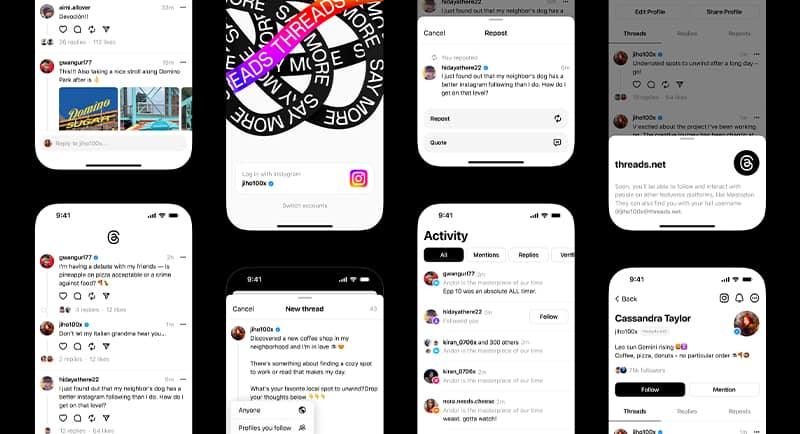
Last month, Meta launched Threads, the app widely reported to be a ‘Twitter Killer’ – or perhaps now, an ‘X killer’.
As an app, Threads is more focused on text and dialogue, with Meta saying that the platform “offers a new, separate space for real-time updates and public conversations.”
With the app now out there in the world, Mediaweek caught up with Keir Maher, managing partner at Now We Collide – Meta’s local agency of record.
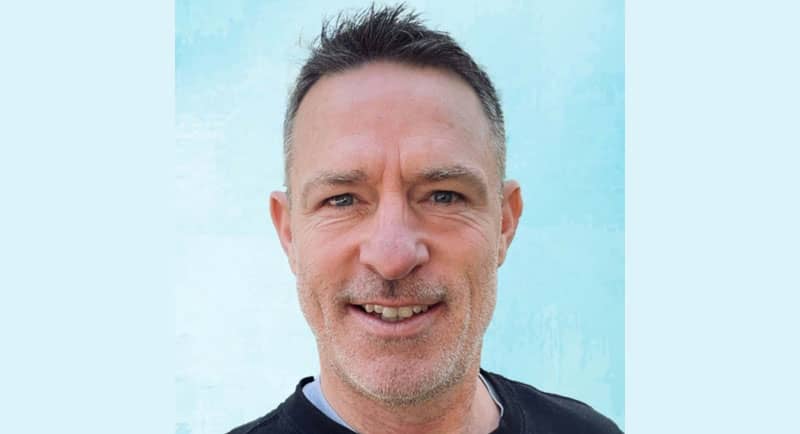
Keir Maher
“It’s been interesting – Meta have come back really strongly this year,” Maher says, reflecting on how the year has been for Meta so far. “ It’s good for us to be part of that journey after last year’s ups and downs across the tech industry, I don’t think anybody was really out of the firing line for that.
“It’s been good to be back this year, and with things like Threads launching, it just means there’s more to come.”
Now We Collide works with Meta as part of their B2B side of the business, and in that space, Maher says that the team have been pleased with the launch of Threads.
“Everybody is blown away by how quick the take up has been, in terms of the interest that there’s been from creators’ brands. ChatGPT had the fastest growth ever, and now three months later, that’s been blown out of the water by 10 million new users in six hours.
“I think it was a super smart move from Meta to make it so easy for people to access Threads through their Insta account, and at the touch of a button say, ‘Yes, I want to follow everyone that follows me on Insta, and everyone that’s on Insta that follows me can follow me on Threads’. Suddenly what you’ve got is huge scale straight away, which no other ‘Twitter killer’ has been able to achieve, because they’ve had to build scale from scratch.”
The ‘Twitter killer’ – or perhaps ‘X killer now – label has been following Threads since it first launched, however, Maher says that anyone who is pushing that line probably hasn’t spent much time on Threads.
“A lot of people are saying it’s a Twitter killer because it’s the same as Twitter – they haven’t used it if they’re saying that, because it’s not the same as Twitter. You can’t use hashtags for content discovery yet, which is what drives Twitter. There’s no area within Threads to find trending content at the moment, it’s a single feed, whereas Twitter is all about picking news trends, sports trends, and music trends in their native menu – there is no native menu in Threads yet for that.”
When it comes to the rapid take-up of Threads – the app took only 5 days to record 100 million users – Maher says that Now We Collide will always focus on the value equation, because “there needs to be some kind of value equation between the consumer and the platform itself.” With some very famous backers of the app, however, he’s feeling positive about the future.

“You’ve got Chris Hemsworth with 3.7 million followers already on the platform, Tourism Australia, they’re on there with 155,000, you’ve got Nike with 2.5 million followers, you’ve got Netflix with 3 million followers. Even Anthony Albanese is on there with 51,000 followers. The fact that you’ve got all these content creators already there means you’ve got brands looking for that first-mover advantage. We’ve been talking to the partners and the clients that we have on how they can take that first-mover advantage, experiment with the platform, and see where it goes.”
While Meta isn’t offering advertising to clients just yet, Maher says that it could be a service that is just over the horizon.
“There’s still more development to come. At the moment, they’re not offering advertising to clients, so that first mover advantage is from an organic point of view – what can clients do to test, learn, and experiment while they’re building out? Threads are saying that monetisation is not a priority for them at all this year, Zuck himself is saying that his vision for Threads is to create an open and friendly public space for conversation.
“Meta has very good ad tech tools, they’ve got the tech stack, they’ve got the tools for finding people and delivering relevant advertising messages. It makes sense that over time that could possibly come in, but at the moment there are no plans to do that in the foreseeable future.”
See Also: With 10 million sign-ups in seven hours, what does Threads mean for advertisers and creators?
The Ads That Made Us: Big ads, Black and white ads, and Initially banned ads
Whether it’s a childhood jingle that you can still sing word for word, or a campaign that influences the way you work today, everyone has an ad that has really stuck with them.
Mediaweek has been asking the industry to take a trip down memory lane, to find out all about the ads that made us.
Sam Buchanan – CEO, Independent Media Agencies of Australia
Carlton Draught ‘Big Ad’
“The 2005 Carlton Draught ‘Big Ad’ campaign was a first of its kind – an impressively and ridiculously over the top production, using a take of the famous ‘O Fortuna’ song. It’s a clever parody of all those ads with massive budgets – not taking itself too seriously and with the brilliant last lyric ‘This ad better sell some bloody beer!'”
Barry O’Brien – Chairman, Atomic 212°
Toyota Hi Lux “Bugger” ad
“Initially banned in NZ and then approved, the ad ran in many countries (including here) and created an incredible amount of water cooler conversations, all of which started with “Have you seen that TV ad with the cattle dog and the bloke saying ‘Bugger’?” It was warm, funny, very memorable and really sold the toughness and durability of Toyota Hi Lux. Almost a quarter of a century later, people still remember it.”
Catherine Edghill – general manager, Hatched Sydney
Guinness Surfer ad
“Bearing in mind I was eight in 1999 and have the memory of a goldfish, nobody is more astonished than me that this ad stuck in my brain.
“It’s an ad I watched with my Dad, again and again and again. The horses, the music, the black and white. In its simplest form, it was pure, unadulterated entertainment.
“On looking it up again for this column, turns out it’s very well acclaimed, as it should be.
“I now see it through new eyes, the link to the brand is exceptional, imagine it in cinema. Oooft.”
See Also: The Ads That Made Us: Aussie icons, ink in chalk, and incredibly clever men
–
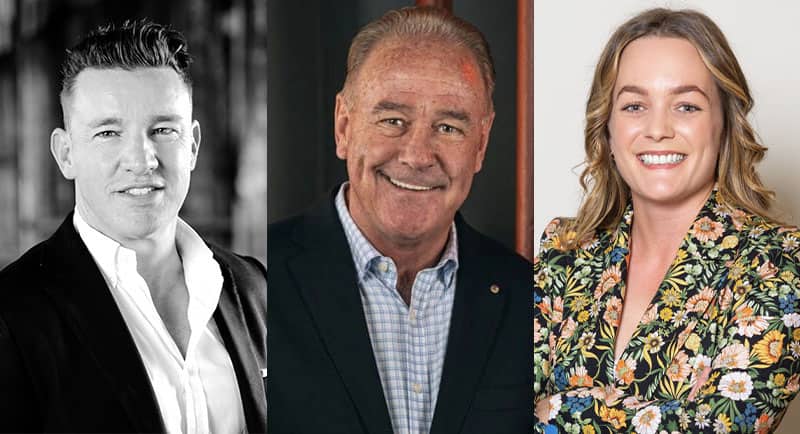
Top Image: Sam Buchanan, Barry O’Brien, Catherine Edghill

Mediaweek Agency 50: iProspect's Marcelle Gomez celebrates her team's drive and growth journey
Mediaweek held its inaugural Power Lunch in October, celebrating the successes of the media industry and the people who make it.
Marcelle Gomez, managing director of iProspect, reached the #23 place on the Mediaweek Agency 50 list.
Mediaweek caught up with Gomez as she reflected on her team’s momentum and drive, why she believes TV is far from “dead”, and her optimism for the future of the dentsu agency.
Mediaweek: Congratulations on making the #23 spot on our Mediaweek Agency 50 list. What was your reaction to your placement?
Marcelle Gomes: It was a nice surprise and completely unexpected! It was lovely to be recognised by the team at Mediaweek, amongst so many of my friends and industry heavyweights. And more importantly, it was great recognition of the momentum we’ve driven in the new and evolved iProspect – I see it as recognition of the team’s efforts, not just mine.
MW: How does your position on the list reflect the achievements made by iProspect?
MG: The growth we’ve experienced as a business and the journey that we’ve been on is absolutely the result of a team effort. Of course, you need clear leadership and a vision, but that is nothing without a team to make it all happen. I have a wonderful leadership team surrounding me in iProspect that I partner with to drive this business forward. They challenge me, inspire me and have made the last few years some of the best of my career.
We are all aligned in our ambition to make iProspect an amazing place to work – our people are our #1 priority. I know a lot of agencies say that, but we truly deliver on that promise, day in, day out. It is reflected in our retention rates and our engagement scores – we are the happiest agency in NSW based on the latest media-i survey. And the result of having a high performing team who are all empowered to shape the future of our business, is that we have motivated and engaged people partnering with our clients to drive growth for their businesses. We have amazing client retention which is testament to that.
MW: What are three industry issues on your mind, and in your opinion, how can they be solved or achieved?
MG: 1. Pricing and the race to the bottom in pitches, the win at all costs mentality. We all know it isn’t sustainable for us as an industry, especially when you consider we are all commercial businesses and have growth targets that we need to deliver. I would love for us to value ourselves better as an industry, to say no to cost driven pitches, charge clients for our time to pitch. This requires cohesion across the industry as well as support from pitch consultants and clients, as there is always someone who needs a win and is willing to do whatever it takes, perpetuating the cycle and devaluing the media offering.
2. I am sick of the “TV is dead” narrative. It is not dead. Consumption habits have just evolved faster than we as an industry have been able to keep up with. I would love to see that buried once and for all but that can only happen through industry collaboration and education. Collaboration across the industry to make transacting, optimising and reporting easier. We’re making progress but it isn’t fast enough. And we need to educate all the digital natives in our industry to understand and appreciate the role that TV plays in customers lives and equally in building brands.
3. Over time as we’ve become more digitally focused as an industry, I think we’ve lost some of the focus on educating our people on the importance of marketing theory. This is something high on our priority list to ensure we are skilling our people to better enable them to partner with clients to build out growth-led marketing strategies.
MW: What is your outlook for iProspect in the year ahead?
MG: I am really excited for the future and what lies ahead for us at iProspect – this is just the beginning of our journey. We are clear on what collective success looks like and how we will get there, and we are all working towards that shared goal.
I’m always a cup half full kind of person, so I see the positive in most situations and relish the opportunity that comes out of challenges.
We all know about the multitude of macro-economic headwinds we are facing as an industry that are beyond our control and that are compounded by the talent shortage. But these aren’t new issues facing us as an industry – we’ve seen them all before. Or at least you have if you’ve been around as long as I have!
For me, this is an opportunity for us to be creative, approach problem solving in a new way and be true to our brand heritage as the largest performance agency in the world. Clients need to do more with less, so who better to help them than a performance first team of media experts who know how to deliver real business outcomes for clients?
MW: What are your hopes for the industry in 2023?
MG: This is an amazing industry that we work in – it is fun, dynamic and brings so many diverse people together to create, ideate and experiment together. My hope for us as a collective is to bring that magic to life through collaboration and to have a good time while we do it.
–
Top image: Marcelle Gomez
Mark Pollard: AI can’t compete with a good strategist yet. Here’s what it would need.
Have you ever looked at a piece of research, or creative brief and thought, “Yeah but tell me something I haven’t thought of before”?
That’s where AI is right now. It can help you gather information and make sense of it but it won’t see around corners for you. That remains your job. For now.
Research has shown that current AI tools help low performers, or people new to a field, perform at higher levels; but it’s yet to help high performers, and experts, break through in meaningful ways.
This might be one of the reasons that AI usage, specifically ChatGPT, has dropped off in the Northern Hemisphere. According to analytics firm Similarweb, in June from May, traffic to the ChatGPT website decreased by 9.7%. And the time visitors actually spend on the site is decreasing too. It dropped 8.5%, the data suggests.
Tools like ChatGPT are decent at categorising existing knowledge. For the advertising strategist, this means it’s worth asking the tool to list common use cases of a product, perform simple competitor analysis, or write and rewrite single-minded propositions and taglines.
Having said that, ChatGPT can be strategic. Ask it to give you ten ways to solve a problem and it will give you decent starting points, and it will do it faster than your next workshop could.
But the real work and the work that will differentiate a creative thinker, and a creative agency happens next.
For AI to compete with a great strategist, or make a creative team redundant, it would need to do these things:
Become a better writer.
The two main ways this can happen is if you feed it good writing then ask it to mimic that writing style and connect it to a language database.
Researchers at MIT (Massachusetts Institute of Technology) found that memorable words are monogamous words with few possible meanings and synonyms. For example, the word “pineapple.” Sure, “pineapple” might get used in slang, but, generally, when we see the word, we see the fruit.
Since advertising is about getting into and refreshing memories, a language database of monogamous memorable words would be useful.
AI would need more domain knowledge.
Domain knowledge is the thing that takes years to command. If you’re a stand-up comedian starting out, you’ve only heard so many jokes. But, after twenty years, you’ve probably heard millions more.
For AI to compete with a great strategist, it would need to be fed case studies, effectiveness papers, stand-up comedy, poems and good writing, as well as academic research.
It would need a personality.
Over time, AI can be trained to have personality. Currently, most AI writing is robotic.
Strategists have their own personality, but they develop it and flex it based on their competition and the cultural trends at the time. Ao AI would need to be kept up to speed with these things for it to help.
It would need an audience.
Like comedians, strategists test their thinking on people before it becomes formal. Perhaps different machines (or just the one) would be able to take on different roles, to see if a response is possible.
When a strategist lands an interesting or provocative creative brief, people laugh, or eyes widen, snot travels across the room from a snort. This kind of response can only be tested on a real life audience.
AI would need morals.
To get AI to a place where it can really help, its moral decision-making needs to be prioritised with pragmatism.
A great strategist would want the AI tool to be aware of the current moral mood and ethical questions to provide alternative solutions for the strategist to choose from.
Currently, AI is useful. But if you rely too heavily on it, your ideas will be boring and you won’t develop the critical thinking and creativity skills you’ll need in the future when AI starts to take care of the easy stuff.
–
Mark Pollard is the founder and CEO of Sweathead, a global strategy training company with a community of over 18,000 strategists worldwide and a podcast with over 1.3 million listens.
Pollard’s media career has seen him go from hip-hop journalist to radio host and now, a strategist. His career in strategy started in his native Australia before moving stateside, working for companies including Leo Burnett, Big Spaceship, and McCann. Pollard’s work with the global strategy training company has seen him consult for and train companies like Wall Street Journal, Twitter, The Economist, and agencies around the globe.
–
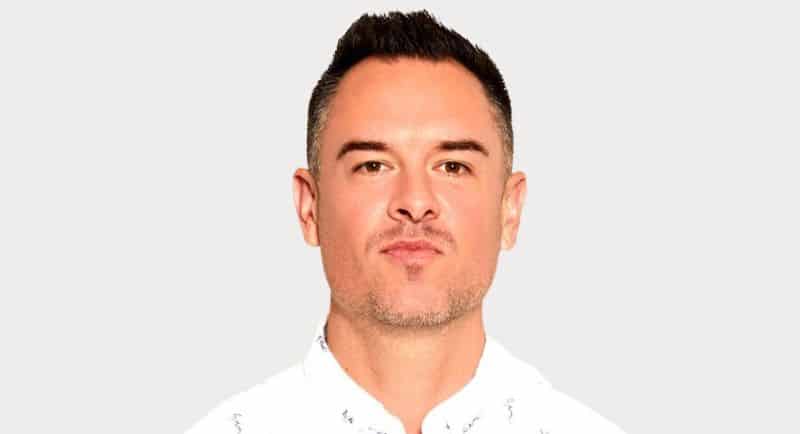
Top image: Mark Pollard

WPP and Spotify announce a new global strategic partnership
WPP and Spotify have teamed up to announce a new global strategic partnership.
The partnership will enable WPP to offer its clients early access to Spotify’s innovative ad products, first-party intelligence and creative ways to reach engaged audiences at scale.
As part of the partnership, Spotify will become the first digital audio platform to be integrated directly into WPP’s products and solutions.
This includes an exploration in connection with Choreograph’s insights platform. In a first-of-its-kind partnership, WPP will look to use Spotify to develop integrations that provide Spotify’s first-party occasions insights to help clients understand aggregated listening patterns in order to inform more creative and effective digital audio advertising strategies.
WPP will work with Spotify to deliver market-leading thought leadership and scale training programmes for its employees and clients that focus on digital audio creativity and Spotify’s innovative ad products. WPP’s teams and clients will also benefit from early access to Spotify’s neuro-insights research focused on audience trends and insights.
One of the first outputs of the partnership is a WPP client-specific version of Spotify’s Sonic Science insights study, conducted with WPP agency Mindshare, that details the connection between Spotify, digital audio ads and listeners.
Working with research firm Neuro-Insight, Spotify recreated its Sonic Science Volume 1 study using audio ads from WPP clients to explore how their ads trigger engagement, emotional intensity, memory, and more. Notable findings include:
• Immersed Audience: Spotify consistently drives higher levels of engagement vs. other media formats like visual media (+24%), other audio media (+27%) and social media (+38%), with an increase in numbers from Spotify’s 2021 study.
• Increased Ad Engagement: We found that listeners were more engaged with the ads from WPP clients in this study than in the 2021 study, with a 17% increase on ad engagement transference when listeners went from listening to music or podcasts to a real WPP client’s audio ad.
• Strong engagement in both podcast and music environments: The study showed that ad engagement remains high with listeners no matter if they were listening to music (+29%) or podcasts (+36%)[2].
Stephan Pretorius, chief technology officer of WPP, said: “In the fast-evolving media and entertainment landscape, audio streaming has become an integral part of everyday life. At WPP, we recognise the power of audio as a critical component of marketing.
“The intent of this first-of-its-kind partnership is to integrate Spotify’s insights with the Choreograph platform to create more innovative and relevant ways to connect our clients with their customers,” he added.
Brian Berner, global head of advertising sales, Spotify, said: “We’ve long partnered with WPP to enable agency planners and buyers to make more informed decisions when planning for digital audio. With our new global partnership, we’re helping WPP clients modernise their strategy and planning.
“More than 550 million people across 184 markets come to Spotify every month to be entertained, to learn and to discover for nearly 2.5 hours each day. As we continue to drive innovation in audio and the advertising industry at large, partners like WPP are critical to delivering for advertisers, creators and audiences wherever they are,” Berner added.
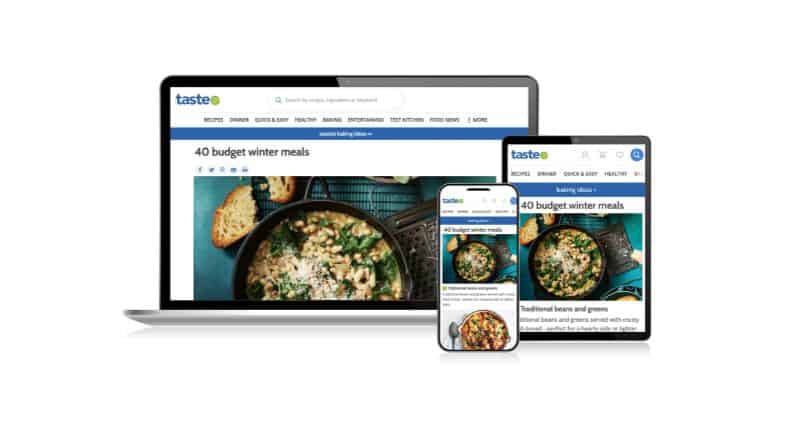
Taste.com.au delivers a digital audience of five million in June
Ipsos iris rankings for June 2023 has shown Taste.com.au has achieved a digital audience of more than five million and is number one in the overall Lifestyle category for the first time.
The digital publication delivered an audience of 5.060 million, up 7.4 per cent month-on-month, and 64 million page views for the month of June. The taste.com.au audience has extended its reach by 14.4 per cent since January when Ipsos iris first launched.
Taste.com.au’s audience is more than double the size of its nearest competitor – with an audience gap of 2.619 million. The site is number one in the Lifestyle (Food & Beverage) sub-category and leads the top 50 across all key metrics, both audience and engagement, including page views and minutes per person.
Editorial director Brodee Myers-Cooke said the jump in numbers reflects a shift in editorial strategy and content mix across all brand platforms, with an overarching objective to meet Australians where they are right now.
“To tackle cost of living, the biggest impact to Australian household budgets in decades, taste.com.au has taken an entirely new approach to its most popular vertical – Dinner,” she said.
“Now rebadged to Smart Saver Dinners, in partnership with Coles, the section highlights recipes to align with in-season ingredients and supermarket specials to help Australians make the most expensive meal of the day easier and more affordable.
“It’s not surprising to see people turn to trusted brands like taste.com.au in times like these to ensure their grocery spend stretches further and is not wasted when it comes to putting meals on the table. We know it is working as we reached almost one in four of all online Australians over 14 in June,” she added.
Myers-Cooke also said there was an increasing appetite for dynamic food content. She continued: “We have doubled the output of our snackable, short-form video to meet this need, utilising taste.com.au audience behaviour data to inform the content. This has seen video views increase 10 per cent month-on-month across the website and our social platforms with 27.5 million* video views in June.”
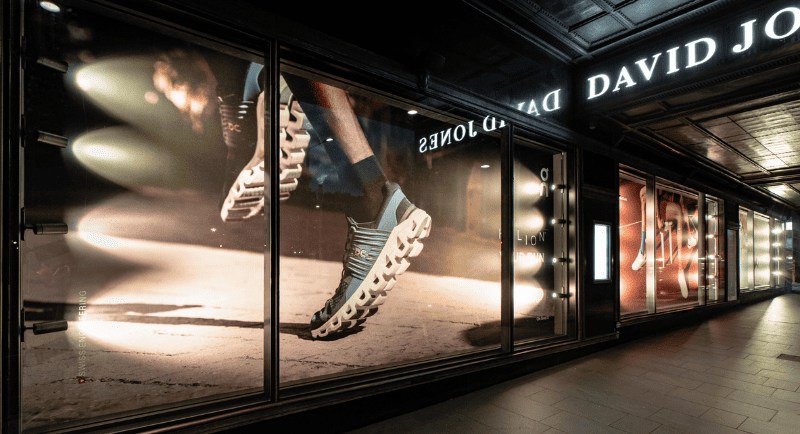
David Jones launches Amplify - a media ecosystem targeting premium shoppers
David Jones has announced their endeavour into the multibillion-dollar Australian retail media market with the launch of its stand alone retail media department David Jones Amplify.
David Jones Amplify is designed to be Australia’s number one media ecosystem targeting the premium shopper giving advertisers access to more than 475 in-store formats, 102 digital formats and 70 print and digital editorial formats.
David Jones’s chief marketing officer James Holloman states that David Jones Amplify is a game changer for both endemic and non-endemic brands wanting to engage with Australia’s most affluent consumers.
“David Jones Amplify can showcase your brand like no other,” said Holloman. “With David Jones Amplify we can help brands increase customer spend and acquire new customers. This is a true partnership. We want to partner with brands to achieve their marketing objectives. David Jones Amplify is designed to put supplier needs first; a destination for partner growth”.
“David Jones Amplify will showcase the real power of our media assets across our marketing properties, both in our physical and digital stores. Additionally, leveraging first-party data to advertise to targeted premium audiences on the open web.
“David Jones Amplify will give our current brand partners and other highly curated advertisers access to customers that no other retailer or media outlet can,” said Holloman.
David Jones partnered with Sonder to audit and value all its 30,000 annual media placements across point-of-sale, solus emails, window displays, JONES magazine, pop-ups, website and digital screens.
“Having worked with most of the country’s leading retail media organisations, we can safely say David Jones’s new retail media offering Amplify, is one of the most exciting and significant media launches of the year. We have been very impressed with the foundations put in place to ensure Amplify’s success. The team understand supplier and advertiser needs and have set up their media channels to deliver on those needs,” said Jonathan Hopkins, Founding Partner, Sonder.
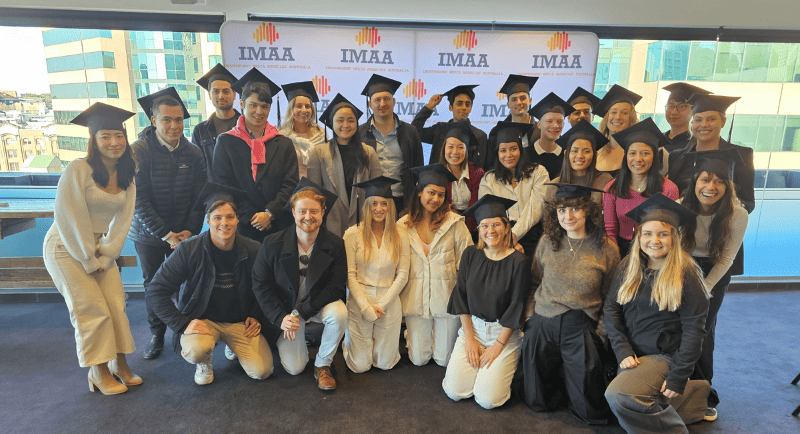
IMAA Academy launches Out-of-Home 101 education module
The Independent Media Agencies of Australia (IMAA) has announced the launch of Out-of-Home 101 – a comprehensive guide to the nation’s out-of-home (OOH) sector as part of its IMAA Academy education program.
The e-learning module is the latest course in the IMAA Academy’s eight-part education program and is a collaboration between the association and the Outdoor Media Association (OMA).
Structured over two modules, Out-of-Home 101 will cover the current state of play of OOH in Australia, the benefits of OOH advertising, along with key players in the industry and formats. The course will also explore how to buy and measure OOH, how to maximise OOH campaigns, digital versus classic OOH advertising, and the future of the sector.
The course is supported by leading OOH companies including Bishopp, Go Transit, JCDecaux, Moove Media, oOH! Media, QMS, Scentre Group (Westfield), Shopper Media, Tonic Media Network, Torch Media and Val Morgan Outdoor, who have all shared resources to accompany the learning module.
Out-Of-Home 101 is the third platform-specific, online learning module created as part of the industry-first IMAA Academy. Launched in March this year, the academy aims to provide a comprehensive learning platform for the media industry, focused on exploring the foundations of Australian media.
OMA CEO, Elizabeth McIntrye, said: “Out-of-home has become the last truly broadcast channel, reaching 82%of the population aged 14+ in Australia every day. Over the past few years, the industry has invested in making the channel easier to buy and proving its effectiveness. And with the introduction of programmatic buying, out-of-home is now even more accessible and valuable for advertisers.
“This information will be part of Out-Of-Home 101, ensuring media planners and buyers learn the benefits of out-of-home, and how to best use out-of-home with other advertising channels for effective campaigns. This course is a comprehensive module, which includes practical information such as industry standards, as well as strategic insights, results of campaign research, and our neuroscience study showing the impact of out-of-home. It’s definitely worth exploring if you’re new to advertising, or just need a refresher course on this evolving and growing channel.”
IMAA CEO, Sam Buchanan, said: “At the end of last year, the Australian out-of-home industry posted a record $1.08 billion in revenue, up from $831.1 million recorded in 2021. It’s demonstrative of the continued power and relevance of out-of-home advertising and how important it is as part of overall media spend.
“We’re thrilled to have resources and information from some of Australia’s leading out of-home companies and executives as part of the Out-Of-Home 101 module. Their expertise has been critical in ensuring the course offers a comprehensive exploration of the medium and how it can be used to reach audiences at-scale. Our experts have also provided rich insights into how to buy and use out- of-home strategically, how to nail the creative for maximum impact, and the future of the industry in a digital-first world.
“The depth of knowledge, tangible advice and expert insights of our eLearning modules continues to be popular with industry newbies and experienced teams alike and we have received great feedback from the participants on the value they received from the program. As we head into a new financial year, I’m certain the courses will be invaluable to agencies and their teams as they plan their budgets and their training goals for the coming months.”
Participants can access the Out-Of-Home 101 learning module via the IMAA Academy’s all-inclusive training package, which includes access to all media course modules and Business in a Box – a training subscription offering 21 additional courses – or via individual module sign-up.
–
Top image: IMAA Academy Graduates
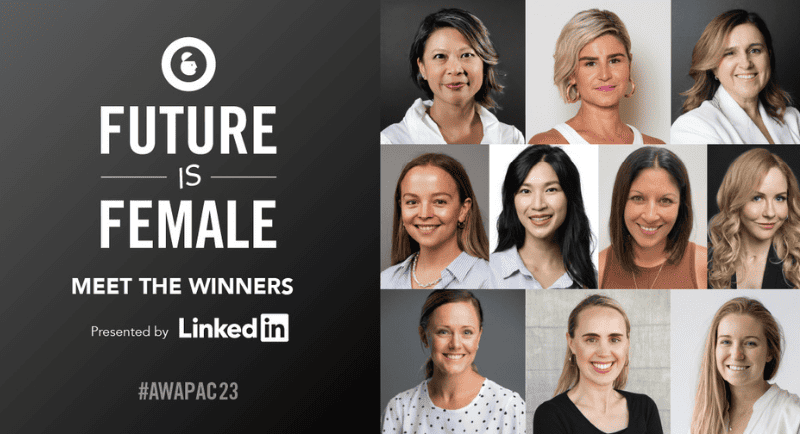
Advertising Week APAC 2023 Future is Female award winners announced
Advertising Week APAC has named the winners of the Future is Female Awards, presented by LinkedIn.
The region’s inaugural event celebrated the achievements and contributions of women in the industry, highlighting their talent, leadership and innovation.
The named winners at the Future is Female Awards include:
• Anne Ngo, Customer Strategy & Martech Director, Akcelo
• Danni Dimitri, Managing Partner, Hatched
• Jacquie Alley, Chief Operating Officer, The Media Store
• Kate O’Loughlin, Associate Strategy Director, Rufus, powered by Initiative
• Kim Dao, Senior Business Partner, Yahoo
• Laura Hamod Barnes, Founder/CEO, Connected Agency
• Lauren Thornborough, Senior Client Director, UM Worldwide
• Lisa Cox, Advertising and Marketing D&I Consultant, Lisa Cox
• Renee Stopps, Sales Director ANZ, Microsoft Advertising
• Summer Treseder, Strategy Manager, Initiative Australia
On the decision to partner with Advertising Week APAC for the Future is Female Awards, Sarah Tucker, head of APAC Marketing – marketing solutions, enterprise at LinkedIn, said:
“Global LinkedIn data illustrates that women represent 41.8% of all workers but only 32.1% of senior leadership (Director+). As a result, we’re on a mission to understand this gap in female representation and how we can help make a difference for generations to come. It’s initiatives like Future is Female that help to identify, showcase and champion women across our industry and provide a platform for positive change. We’re thrilled to be partnering with Advertising Week APAC to launch the awards here in Australia, which in its inaugural year has seen an outstanding calibre of submissions. It’s another example of the high level of emerging and experienced talent across the market, and I wish to congratulate all the Future is Female nominees and award winners.”
This week, Advertising Week APAC saw a continuation of interesting, informative, inspiring and thought-provoking sessions from some of the industry’s brightest minds.
Media, agency and adverting industry folk returned to Sydney’s Luna Park on Sydney Harbour on Wednesday, and once again, the Mediaweek team was on the ground at a number of sessions throughout the day.
Read more: Advertising Week APAC 2023: Day two recap
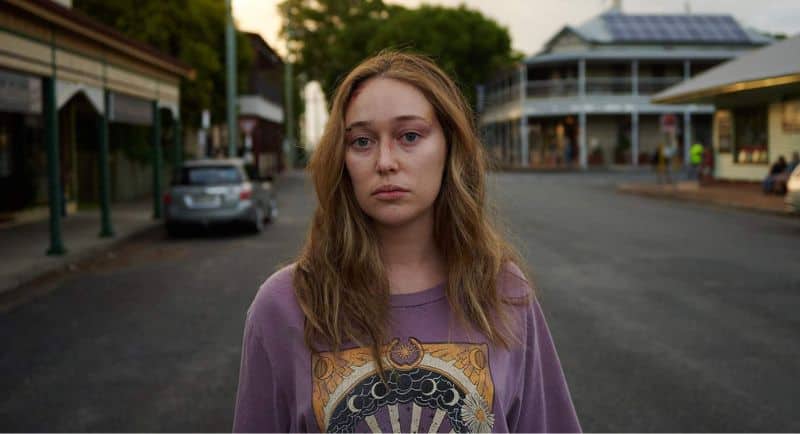
Prime Video's The Lost Flowers of Alice Hart is more than just a TV series, it's a way for people to find "peace"
Prime Video’s The Lost Flowers of Alice Heart is more than just a TV show, it’s a moving and stunning interpretation of the ongoing trauma that humans suffer due to the existence of domestic abuse.
For writer, showrunner and executive producer Sarah Lambert, the seven-part mini-series (which premieres on Friday, August 3) was not only meant to be a haunting adaptation of the novel of the same name, but a vehicle for the audience to “find some peace” if they’ve ever been at the hands of violence.
“This is why we made it,” Lambert said during an interview on Mediaweek and Chattr’s The Entertainment Hotline Podcast. “Because the most important thing for her [author Holly Ringland] when she dedicated this book was that she didn’t want people to feel alone.
“There are so many of us who have gone through this. This is our lived experience and our story. She didn’t want people sitting in that shame or sitting in that experience. That we aren’t alone. By telling our stories, can find some peace and this is why this show is so important.”
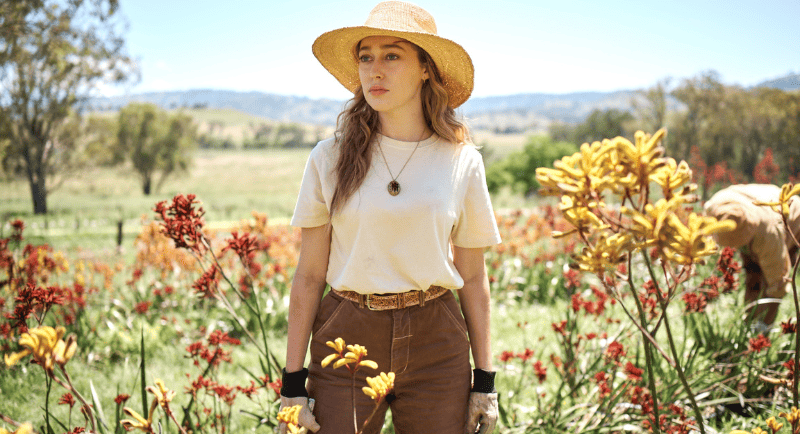
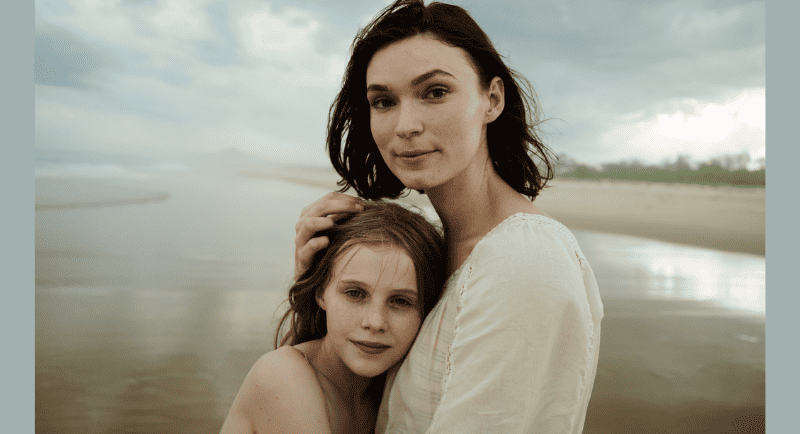
Alycia Debnam-Carey as Alice. Prime Video
13-year-old Alyla Browne wanted to tell the story in the right way
Based on Ringland’s best-selling debut novel, the series tells the story of Alice (Alyla Browne / Alycia Debnam-Carey), when at aged 9, she tragically loses her parents, Clem (Charlie Vickers) and Agnes (Tilda Cobham-Hervey) in a mysterious fire. Alice is then taken to live with her grandmother June (Sigourney Weaver) at Thornfield flower farm, where she learns that there are secrets within secrets about her and her family’s past.
Set against Australia’s natural landscape, Alice grows from her complicated history, with her journey building to an emotional climax when she finds herself fighting for her life against a man she loves.
Lambert herself grew up in a volatile household and due to this, has lived a life of hyper-vigilance, something that Alice embodies at her core. 13-year-old Browne (who stole every single scene she was in) was insistent in telling the story, gaining insight from Lambert.
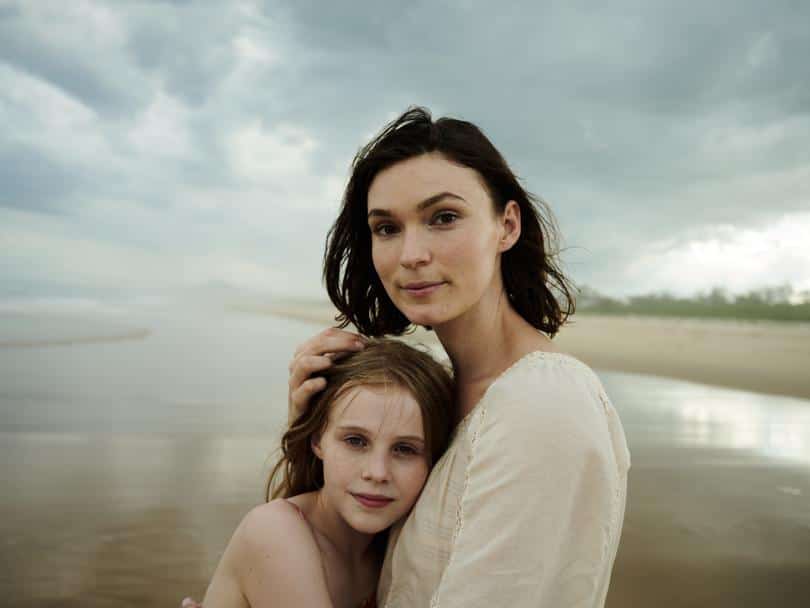
Tilda Cobham-Hervey, Alyla Browne. Prime Video
“She really wanted to sit down and go through the script and talk about it,” Lambert said. “She wanted to understand and wanted to know what I wanted from it. I spoke incredibly candidly about what it’s like to feel hyper-vigilant, what it’s like to always be watching, to get a sense of what’s going to happen before it happens.”
For the majority of her performance, Browne was reliant on movement and facial expressions, given that her character lost her voice due to trauma.
“It was that thing of having your voice taken from you,” she said. That thing of being silenced and trying to kind of gauge where you are all the time. She took all of these things on board so brilliantly. It was such an extraordinary thing to watch.
“She has this incredible ability where she doesn’t act, she just has to find this way of ‘being’ and when she knows what she’s doing and saying, she just embodies it, and it’s an incredible gift that she has.”
Why Sarah Lambert turned the novel into a mini-series
When questioned why she decided to bring Ringland’s novel to the screen, Lambert was “struck” by Alice’s story.
“When I read the opening lines of it, and this girl sort of sitting at the end of this dusty road imagining setting her father on fire, not because she’s an evil person, but because she just wants things to change,” she said. “She just wants it to be different… she wants the worst of him to be burned away and she’s looking at all these images of Phoenix’s and she wants that.
Sarah Lambert. The Lost Flowers of Alice Hart preview screening. Prime Video
“What really struck me was how when I read the novel — I mean the novel is very different to where we ended up, like the structure of it is completely different — we leaned into it, but I really wanted to hold on to what I think Holly did so brilliantly. I loved Alice. I related to her.”
When Lambert was young, her mum raised her kids as a single mum after leaving her abusive father.
“There were lots of things in my own life that I related to,” she admitted. “And then how you can relive it in your adult life… My mum ended up working for DOCS later on in life, and she worked with women’s refuges and children’s programmes. So, she was always I knew everything there was to know about this issue, but you can still go on, and relive that trauma. So there were things [in the story] that I just felt like, this is my story as much as it is of so many other women that I know.”
The Lost Flowers of Alice Hart was produced by Amazon Studios, Made Up Stories, and Fifth Season. It is executive produced by Jodi Matterson, Bruna Papandrea, and Steve Hutensky of Made Up Stories and Weaver, Lambert, and Glendyn Ivin. Ivin also directs all seven episodes and Lambert serves as showrunner.
If you or someone you know has experienced or is experiencing any form of abuse, please call 1800 RESPECT (1800 737 732) – the national sexual assault, domestic and family violence counselling service.
The Lost Flowers of Alice Hart premieres on Prime Video on August 4.
Mercado on TV: The Lost Flowers of Alice Hart the next big Logie winner?
The Logie Awards are over for another year, but here’s a hot tip for next year: The Lost Flowers of Alice Hart (Prime Video).
This extraordinary new Aussie drama can be tough viewing at times because of its depictions of domestic violence (hence trigger warnings before watching). There’s a lot to unpack about why this is happening, but it is also hopeful and beautiful, thanks to stunning locations at a NSW coastal town, flower farm and volcanic crater in the outback, and an amazing cast.
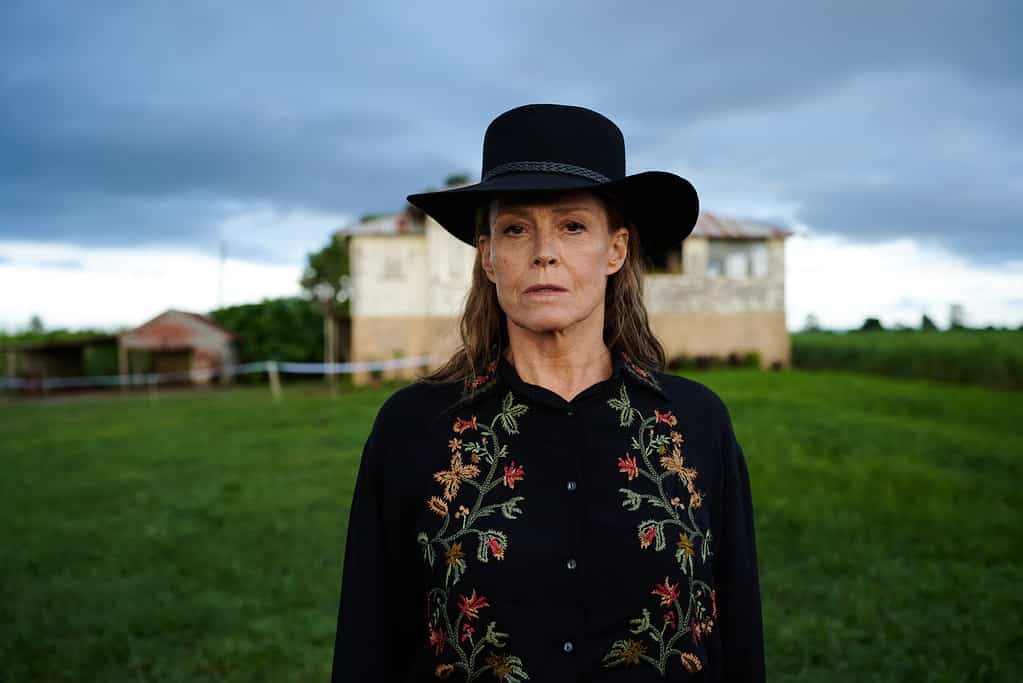
The Lost Flowers of Alice Hart: Sigourney Weaver
Sigourney Weaver is magnificent, as are Alyla Browne and Alycia Debnam-Carey both playing her granddaughter. There’s brilliant support from Leah Purcell, Frankie Adams, Mexican TV superstar Sebastian Zurita, and Asher Keddie and Alexander England as a troubled couple, having last been seen living happily ever after on Offspring (Paramount+) when it ended in 2017.
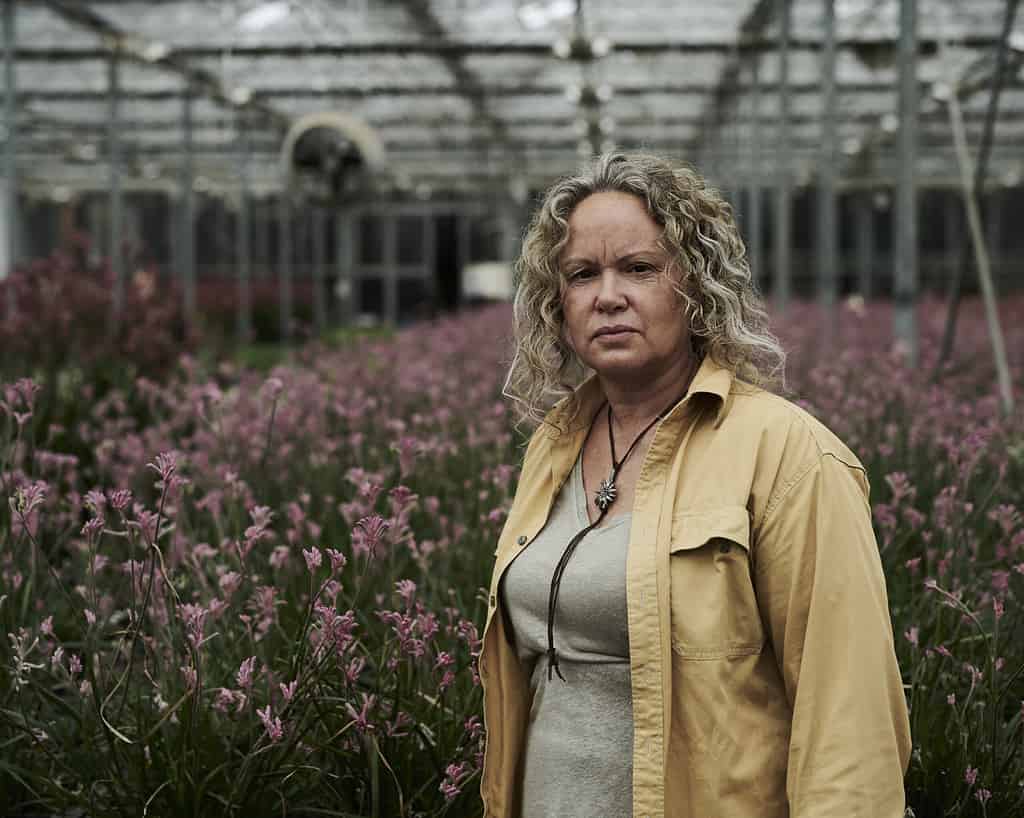
The Lost Flowers of Alice Hart: Leah Purcell
I was amazed to discover on this week’s TV Gold podcast that the book The Lost Flowers of Alice Hart is based on was written by Holly Ringland, the co-host of the ABC nature series Back To Nature (iview). This adaptation of her novel, by showrunner Sarah Lambert, Kirsty Fisher and Kim Wilson, is something to be proud of. For more, don’t miss our extra special podcast about it.
Making the Logie Awards better
Now to the Logies where the move from Nine to Seven didn’t result in it being a better show. Therefore, a total overhaul is needed. Here are My Top 5 on what works, and what doesn’t at the Logie Awards:
• Sam Pang was terrific.
• As seen on The Cheap Seats this week, the scenes selected for Best Actor and Actress nominees are ridiculous. Every moment shows somebody crying, screaming or being stressed. How about showing some happy and tender moments that make people want to watch Aussie drama, rather than laughing at it?
• Barry Humphries got a longer In Memoriam dedication from Karl Stefanovic because his contribution to television was vast. Olivia Newton-John then got similar treatment from Natalie Barr but why? Olivia was an icon, no question, but her career was always more about charity work, music, and movies. However, Kate Miller-Heidke singing “Xanadu” during In Memoriam was perfection.
• The general consensus seems to be the Logies are cringeworthy – it could be because the telecast is so ridiculously disjointed and repetitive. How about splitting the show into two parts? Start with every Most Popular category, telling the audience how these are their people’s choice picks. Then in the second half, explain how the Most Outstanding awards are different because they are voted for by the industry. Then it ends with the Gold Logie.
• Daryl Somers was terrible. Never again.
Top image: Alyla Browne and Tilda Cobham-Hervey in The Lost Flowers of Alice Hart
Read more Mercado on TV here.

Welcome to TV Gold: Mediaweek’s weekly TV podcast
Our name is new and so is the email address asking for feedback and questions – [email protected].
Listen now on your favourite podcast platform for 30 minutes of TV reviews and recommendations every week from Mediaweek’s Andrew Mercado and James Manning.
Listen online here, on the LiSTNR app or on your favourite podcast platform.
Two new TV Gold episodes this week
Bonus episode: Inside The Lost Flowers of Alice Hart
TV Gold takes you inside the biggest Australian drama of the year, Prime Video’s The Lost Flowers of Alice Hart. Join Sarah Christie (Prime Video) and Jodi Matterson (series executive producer) as they talk to Mediaweek’s Andrew Mercado and James Manning about adapting the bestseller and finding the key cast members – from Sigourney Weaver and Leah Purcell to Asher Keddie and Alycia Debnam-Carey. They reveal all the wonderful Australian places where the series was shot and talk about the special effects that created one of the iconic locations.
Listen here.
Regular weekly episode: Reviews of The Lost Flowers of Alice Hart, Justified: City Primevil, Physical S3,
Logie Awards
After recording a bonus episode dedicated to The Lost Flowers of Alice Hart (Prime Video), Andrew and James give their own thoughts on how successful it is. (Spoiler: very) Also this week they review Justified: City Primevil (Disney+), Physical (S3) and they look at the 2023 TV Week Logie winners.
Email the hosts and tell us what you have been watching. The good and the bad. Emails to: [email protected]
TV Ratings August 3, 2023: Drama on Home and Away leads to top in prime time entertainment
Total TV Ratings, July 27
1,464,000 showed their support for the Matilda’s in the FIFA Women’s World Cup on Seven, up 12%.
793,000 also tuned into Session One of day one of the fifth Ashes test match on Nine, up 18% while 555,000 watched Session Two, up 20%.
551,000 watched 10’s Dogs Behaving (Very) Badly, as dog whisperer Graeme Hall met an Aussie cattle dog with a rather unusual quirk. up 22%.
Overnight TV Ratings, August 3
Primetime News
Seven News 850,000 (6:00pm) / 838,000 (6:30pm)
Nine News 759,000 (6:00pm) / 743,000 (6:30pm)
ABC News 556,000
10 News First 199,000 (5:00pm)/ 139,000 (6:00pm)
SBS World News 127,000 (6:30pm)/ 109,000 (7:00pm)
Daily Current Affairs
A Current Affair 594,000
7.30 444,000
The Project 172,000 6:30pm / 261,000 7pm
Breakfast TV
Sunrise 222,000
Today 186,000
News Breakfast 150,000
Nine won Thursday night with a primary share of 21.4% and a network share of 29.3%. 7Two has won multi channels with a 3.4% share.
Nine’s A Current Affair (594,000) explored how police are appealing for help to track down convicted killer Keith Lees, who is now wanted over the unsolved murder of his former partner Meaghan Louise Rose. Then, 289,000 tuned in for NRL Thursday Night Footy. The Roosters took on the Sea Eagles with Easts beating Manly 26 – 16. Nathan Brown was sent off within 30 seconds of coming onto the field after a high shot on Sea Eagles forward Ben Trbojevic. 104,000 then watched Thursday Night Knock Off.
445,000 began their evening in Summer Bay with Seven’s Home and Away as Mali made up ground with his mum and Theo’s humiliation was compounded. Marilyn also tried to voice her concerns to Alf. A second episode followed as 389,000 tuned in to see Kirby flirt with a potential solo career and Eden worry for Cash’s state of mind. Then, 173,000 saw What the Killer Did Next where a man reported finding a woman dead in a hotel room with a suicide note next to her; however, police suspect there was more to her death. 356,000 then tuned in for The Front Bar.
444,000 watched ABC’s 7.30 explored the rise in fatal police shootings across Australia over the past 12 months and Sarah Ferguson interviewed Leslie Caldwell. 308,000 then watched Foreign Correspondent where the program looked at the thousands of statues stolen from temples across Cambodia which are sold to collectors and museums and are being tracked down as part of a global treasure hunt. 219,000 then watched A Life in Ten Pictures: Ella Fitzgerald, where a handful of iconic photographs and snapshots revealed a new story of Ella Fitzgerald.
On 10, The Project (172,000 6:30pm / 261,000 7pm) spoke with Jacob who suffers from an excruciating genetic skin disease that causes pain likened to having third-degree burns. Now, there is hope in a treatment gel, but accessing the treatment does not come cheap. Plus the panel highlighted Taylor Swift’s “Bonus Era”, with the singer reportedly giving $75 million in bonuses to the crew working on The Eras Tour. 324,000 also watched Dogs Behaving (Very) Badly where Graeme attempted to play cupid between Dan and his companion dog, Tinka. A repeat of Law and Order: Special Victims Unit was then watched by 115,000.
The highest-rating non-news show on SBS was Inside Sydney Airport with 129,000 tuning in to see witness a busy Christmas Season. The airport was thrown into jeopardy of a shutdown with the discovery of an unidentified white powder on board an incoming flight. Speculation mounted about whether the powder was harmless, or the deadly terror weapon anthrax.
Week 31: Thursday
| THURSDAY METRO | |||||||||
|---|---|---|---|---|---|---|---|---|---|
| ABC | Seven | Nine | 10 | SBS | |||||
| ABC | 11.7% | 7 | 20.4% | 9 | 21.4% | 10 | 8.2% | SBS | 4.3% |
| ABC KIDS/ ABC TV PLUS | 3.1% | 7TWO | 3.4% | GO! | 2.4% | 10 Bold | 2.9% | VICELAND | 2.2% |
| ABC ME | 0.3% | 7mate | 2.2% | GEM | 1.8% | 10 Peach | 2.9% | Food Net | 1.2% |
| ABC NEWS | 1.9% | 7flix | 1.7% | 9Life | 2.3% | 10 Shake | 1.1% | NITV | 0.4% |
| 7Bravo | 1.3% | 9Rush | 1.5% | SBS World Movies | 1.3% | ||||
| SBS WorldWatch | 0.0% | ||||||||
| TOTAL | 17.0% | 29.1% | 29.3% | 15.2% | 9.4% | ||||
| THURSDAY REGIONAL | |||||||||||
|---|---|---|---|---|---|---|---|---|---|---|---|
| ABC | Seven Affiliates | Nine Affiliates | 10 Affiliates | SBS | Sky Regional | ||||||
| ABC | 9.7% | 7 | 19.7% | 9 | 19.2% | 10 | 6.3% | SBS | 3.2% | Sky News Regional | 3.7% |
| ABC KIDS/ ABC TV PLUS | 4.0% | 7TWO | 6.0% | GO! | 2.6% | 10Bold | 3.7% | VICELAND | 2.5% | ||
| ABC ME | 0.7% | 7mate | 2.8% | GEM | 3.0% | 10Peach | 2.2% | Food Net | 0.7% | ||
| ABC NEWS | 1.4% | 7flix (Excl. Tas/WA) | 2.1% | 9Life | 1.9% | 10Shake (exc N/NSW) | 1.6% | SBS World Movies | 1.6% | ||
| 7Bravo | 1.4% | SBS WorldWatch | 0.0% | ||||||||
| NITV | 0.5% | ||||||||||
| TOTAL | 15.8% | 32.0% | 26.7% | 13.8% | 8.5% | 3.7% | |||||
| THURSDAY METRO ALL TV | |||||||||
|---|---|---|---|---|---|---|---|---|---|
| FTA | STV | ||||||||
| 86.0% | 14.0% | ||||||||
Thursday FTA
- Seven News Seven 850,000
- Seven News At 6.30 Seven 838,000
- Nine News Nine 759,000
- Nine News 6:30 Nine 743,000
- A Current Affair Nine 594,000
- ABC News ABC TV 556,000
- The Chase Australia Seven 492,000
- Home And Away Seven 445,000
- 7.30 ABC TV 444,000
- Home And Away-Late Seven 389,000
- The Front Bar Seven 356,000
- Hot Seat Nine 343,000
- Dogs Behaving (Very) Badly Australia 10 324,000
- Foreign Correspondent ABC TV 308,000
- The Chase Australia-5pm Seven 304,000
- Thursday Night NRL Live Nine 289,000
- The Project 7pm 10 261,000
- Nine’s Afternoon News Nine 235,000
- Tipping Point Nine 231,000
- Sunrise Seven 222,000
Demo Top Five
16-39 Top Five
- Seven News At 6.30 Seven 90,000
- Nine News 6:30 Nine 85,000
- Seven News Seven 80,000
- Nine News Nine 78,000
- A Current Affair Nine 64,000
18-49 Top Five
- Seven News At 6.30 Seven 169,000
- Seven News Seven 160,000
- Nine News 6:30 Nine 158,000
- Nine News Nine 154,000
- A Current Affair Nine 121,000
25-54 Top Five
- Seven News At 6.30 Seven 212,000
- Seven News Seven 200,000
- Nine News Nine 198,000
- Nine News 6:30 Nine 197,000
- A Current Affair Nine 157,000
Thursday MULTICHANNEL
- Would I Lie To You? ABC Kids/ABC TV Plus 108,000
- Octonauts ABC Kids/ABC TV Plus 96,000
- Bargain Hunt 7TWO 92,000
- Father Brown 7TWO 84,000
- Hey Duggee ABC Kids/ABC TV Plus 82,000
- Ben And Holly’s Little Kingdom ABC Kids/ABC TV Plus 80,000
- Bluey ABC Kids/ABC TV Plus 79,000
- QI ABC Kids/ABC TV Plus 78,000
- Pfffirates ABC Kids/ABC TV Plus 77,000
- The Adventures Of Paddington ABC Kids/ABC TV Plus 74,000
- Peppa Pig ABC Kids/ABC TV Plus 74,000
- Spicks And Specks ABC Kids/ABC TV Plus 73,000
- Bull (R) 10 Bold 72,000
- NCIS (R) 10 Bold 72,000
- ABC National News ABC NEWS 71,000
- NCIS: New Orleans (R) 10 Bold 70,000
- The Big Bang Theory (R) 10 Peach 69,000
- Tish Tash ABC Kids/ABC TV Plus 68,000
- Interstellar Ella ABC Kids/ABC TV Plus 67,000
- The Big Bang Theory (R) 10 Peach 66,000
Thursday STV
- Live: NRL: Roosters V Sea Eagles FOX LEAGUE 166,000
- Live: NRL Thursday Night League FOX LEAGUE 75,000
- Live: The Late Show With Matty Johns FOX LEAGUE 74,000
- Credlin Sky News Live 64,000
- The Bolt Report Sky News Live 54,000
- Live: NRLW Post Game FOX LEAGUE 44,000
- Sharri Sky News Live 42,000
- The Great Pottery Throw Down Lifestyle Channel 38,000
- Paul Murray Live Sky News Live 36,000
- Live: NRLW: Roosters V Dragons FOX LEAGUE 35,000
- Live: Netball World Cup: Aus V Eng FOX SPORTS 505 34,000
- Chris Kenny Tonight Sky News Live 30,000
- Aussie Gold Hunters: Mine SOS Discovery Channel 30,000
- Selling Houses Australia Lifestyle Channel 28,000
- And Just Like That… FOX SHOWCASE 27,000
- The Late Debate Sky News Live 25,000
- Eastenders UKTV 25,000
- Business Now With Ross Greenwood Sky News Live 21,000
- Live: AFL 360 Plus FOX FOOTY 21,000
- Parliament Live Sky News Live 21,000
Shares all people, 6pm-midnight, Overnight (Live and AsLive), Audience numbers FTA metro, Sub TV national
Source: OzTAM and Regional TAM 2023. The Data may not be reproduced, published or communicated (electronically or in hard copy) without the prior written consent of OzTAM
Media News Roundup
Business of Media
Lionsgate closes deal to acquire eOne from Hasbro for $500 million
News of the sale — which broke just ahead of Hasbro’s Q2 2023 earnings call, scheduled for Thursday morning — comes nearly four years to the date when Hasbro announced their intent to acquire eOne in a $3.8 billion deal in August 2019.
According to a press release from Hasbro, “The sale will include a talented team of employees, a content library of nearly 6,500 titles, active productions for non-Hasbro owned IP like The Rookie, Yellowjackets and Naked and Afraid franchises, and the eOne unscripted business, which will include rights for certain Hasbro-based shows like Play-Doh Squished.” The sale also includes Hasbro’s interest in the Canadian film & TV operations of eOne Canada Limited.
Fran Drescher visits New York picket lines, tells producers: “Yield to our deal”
“We’re in it to win it. And our new hashtag is, ‘Yield to Our Deal,’” Drescher said.
Speaking in front of the Netflix offices near Union Square, and flanked by former SAG presidents Melissa Gilbert and Richard Masur, Drescher urged the gathered union members to keep up their morale as the strike goes on, while touching on key issues such as residuals and the use of artificial intelligence.
“We have to keep up our resolve. We are not going to back down. We are not going to be stepped on anymore for CEO greed and Wall Street greed at our expense when they can’t do it without us,” Drescher said.
“We are the foundation of the wheel. Nobody can own our likeness,” she continued, referencing AI. “And our minimums have to meet with inflation. None of this other B.S. And we must get a piece of the platform that we are building for them.”
US Writers to meet with Studios over strike, Aussie crews show support
The meeting, sought by the Alliance of Motion Picture and Television Producers (AMPTP) is scheduled for Friday. It marks the first formal communication between the AMPTP and the WGA since negotiations broke down on May 1.
But there is -at best- cautious optimism about whether it may lead to the end of the strike.
“It’s a meeting to discuss meeting,” said John Rogers, a member of the WGA negotiating committee told Variety. “We’re trying to urge members to remember that this is a great first step, but not to get your hopes up too much.”
Meanwhile Australian crews remainin solidarity with US comrades.
Television
William Shatner opens up on filming reality TV show Stars on Mars in Coober Pedy
Shatner was part of a star-studded cast who called the iconic opal mining town home during the filming of Stars on Mars, a reality TV show similar to the hugely popular I’m A Celebrity … Get Me Out Of Here!
“I had a blast filming Stars on Mars in the amazing town of Coober Pedy in Outback South Australia,” Shatner, who hosted the series, said in a recent video posted online by the South Australian Film Corporation.
“The South Australian desert was a totally out of this world filming location like nothing I’ve seen on Earth.
“It was like we really were on Mars.”
Shelley Craft’s brutal Block diss: ‘F**king disaster’
Speaking on Hit Breakfast with Maz & Matty, Craft was asked about the comparative lack of renovation experience among this year’s crop of contestants.
While there are a builder and an architect among their ranks, several teams this season have virtually no reno experience at all.
Craft said the show’s producers generally cast for “characters,” rather than previous experience.
“I always thought the best team would be an accountant and an HR manager, because you have to be able to manage your money and manage your trades,” she said, revealing her own personal pick for a successful Block couple.
“[But] we sort of had that last year and it was an absolute f***ing disaster. That was the worst team that there is, it’s not the recipe!” she continued, to laughter from the radio hosts.
Scott Cam reveals details on The Block apartment he bought under a deal with Nine
The host of the hit renovation series opened up this morning during an appearance 2DAY FM’s Hughesy, Ed & Erin, revealing that he scored the Port Melbourne apartment after striking a deal with Nine.
“I own a Block house,” he told hosts Dave Hughes and Erin Molan.
“Because I live in Melbourne for four months in the year [to film The Block] and I don’t like living… obviously you can’t live in a hotel when you’re doing that. So every now and then on The Block we do a Challenge House.”
Cam explained that in 2016, during season 12 of the show, contestants were asked to renovate an old soap factory in Port Melbourne and turn it into five modern apartments.
But there was a sixth apartment in the building, which was left for the special Challenge House project.
It was this apartment that the long-running host would buy the following year for a reported $2.2 million.