
Thursday May 7, 2026

ARN admits Kyle and Jackie O crisis cost more than their $20m payday
The commercial fallout from The Kyle and Jackie O Show brand safety crisis was laid bare at ARN Media’s AGM, with the broadcaster revealing that advertiser concerns linked to the show contributed to $26.4 million in lost metro and regional revenue during FY25.
It is an extraordinary admission, given the company were paying Kyle Sandilands and Jackie ‘O’ Henderson a combined $20 million each year.
The company is now embroiled in a legal battle against the pair, after the termination of both Sandilands’ and Henderson’s contracts, and the subsequent end of the network’s The Kyle and Jackie O Show.
However, despite the ongoing noise surrounding the saga, Stephenson told the meeting that “we expect a significant percentage of the $26m of revenue that was lost last year because of brand safety concerns to return, improving both our metro radio revenue and revenue share.”
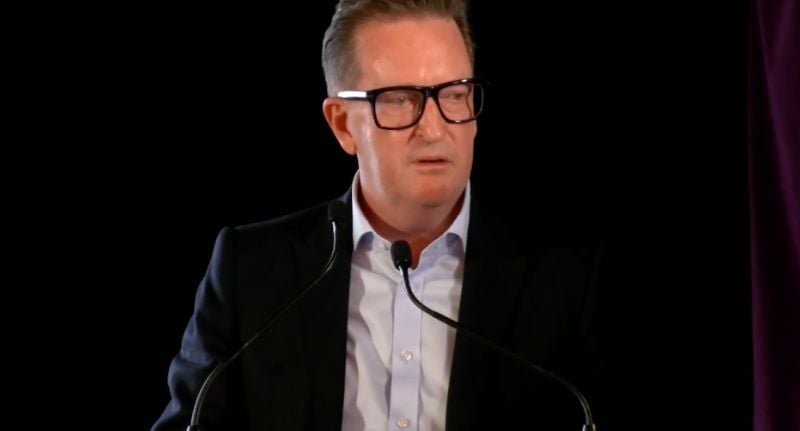
ARN CEO Michael Stephenson addresses shareholders at today’s AGM.
The votes
Chairman Hamish McLennan was re-elected during the meeting, but not without facing a series of brutal questions from investor David Kingston, who took umbrage with McLennan’s description of ARN Media’s “enduring success”.
“Chair, we both speak the English language, and I’ve got a lot of respect for you, Chair, but if you can look everyone in the face and say that ARN is an enduring success when shareholder value has been decimated, I would be shocked.”
McLennan, however, held firm, replying: “I don’t want to get into semantics. We know that the industry is under incredible pressure. And so, we think there’s a pathway forward.”
A vote was also held on ARN Media’s remuneration proposal, which included the $1.1 million annual salary of Stephenson.
According to The Australian Financial Review, proxy adviser CGI Glass Lewis has urged shareholders to vote against the proposal, citing concerns over Stephenson’s pay package.
In its report, Glass Lewis said Stephenson’s $1.1 million salary, excluding incentives, was “materially above the median” of $812,075 for companies within the S&P/ASX250-300 cohort.
ARN shares
The vote was held against the backdrop of reports in The Australian Financial Review that the broadcaster had reclaimed millions of shares from both Sandilands and Henderson.
The pair had each been extended a $3 million loan to purchase ARN shares as part of their 10-year, $200 million contract.
That contract was due to expire in 2034.
According to the publication, under the arrangement, Sandilands and Henderson each acquired 3.2 million ARN shares, giving them stakes worth more than 1% of the company at the time.
The shares were intended to be held for the duration of the contract.
The meeting wrapped up with a clearly tested-looking McLennan before those watching online were taken back to an ARN Media-branded holding page, with the tune Celebration by Kool & the Gang playing in the background.
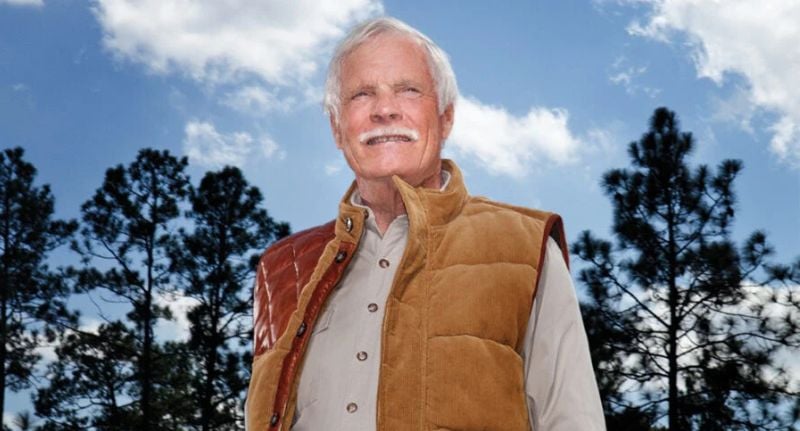
Ted Turner, the CNN founder who rewrote television news, dies aged 87
Ted Turner, the outspoken broadcasting pioneer who launched CNN in 1980, transformed rolling news coverage worldwide and has died aged 87.
The news was confirmed by Turner Enterprises and CNN on Wednesday morning, US time. Turner died surrounded by family, according to a statement from the company overseeing his business interests and investments.
A billionaire businessman, environmentalist and philanthropist, Turner built a sprawling media empire that stretched far beyond news television. Alongside CNN, he founded and owned channels including Cartoon Network, TBS, TNT, and Turner Classic Movies, while also holding stakes in professional sports teams and vast landholdings across the United States.
Known as both “Captain Outrageous” and “The Mouth of the South,” Turner cultivated a reputation as one of the media industry’s most unpredictable and larger-than-life figures.
His blunt delivery and appetite for risk helped define not just his public image, but the aggressive expansion strategy behind Turner Broadcasting.
The man who made news a 24-hour business
Turner’s signature achievement was the creation of CNN, the world’s first 24-hour television news network.
At the time, the concept was widely mocked. Critics derided the channel as the “Chicken Noodle Network” and questioned whether audiences would watch news around the clock. Turner pushed ahead anyway, recruiting journalists and technical crews with the promise of building something entirely new.
The gamble changed television permanently.
CNN’s model, continuous live coverage of wars, political crises, natural disasters and breaking events, became the blueprint for modern rolling news channels worldwide.
The network’s profile surged during the 1990-91 Gulf War, when CNN reporters remained in Baghdad as many other broadcasters withdrew, delivering live coverage that captivated global audiences.
Turner later reflected that his frustration with traditional evening news bulletins had partly inspired the network.
He often worked beyond the nightly broadcast windows of America’s major networks – ABC, CBS and NBC – and saw an opportunity to create a channel where news never signed off.
From billboard business to global media empire
Born Robert Edward Turner III in Cincinnati in 1938, Turner moved to Savannah, Georgia, as a child before later joining his father’s billboard business, Turner Advertising, after being expelled from Brown University.
Following his father’s suicide in 1963, Turner took control of the business and began building what would become Turner Broadcasting.
In 1970, he acquired a struggling Atlanta television station and transformed it into the TBS SuperStation, distributing programming nationally via satellite, a move that helped pioneer the superstation television model.
The company later expanded into film and entertainment, including Turner’s debt-fuelled acquisition of Metro-Goldwyn-Mayer assets, which provided the library underpinning channels such as TNT and Turner Classic Movies.
By the time Turner sold Turner Broadcasting to Time Warner in a landmark 1996 deal, he had built a global conglomerate spanning cable television, sport and film.
Turner later described surrendering control of the company as one of his greatest regrets.
“The mistake I made was losing control of the company,” he said.
Tributes flow from across media and politics
US President Donald Trump paid tribute to Turner following news of his death, calling him “one of the Greats of All Time.”
“Whenever I needed him, he was there, always willing to fight for a good cause!” Trump wrote on social media.
President Donald J. Trump on the passing of Ted Turner: pic.twitter.com/OwIwl58CRT
— The White House (@WhiteHouse) May 6, 2026
CNN chief executive Mark Thompson described Turner as “a giant on whose shoulders we stand,” while CNN anchor Christiane Amanpour said Turner “changed not just the world, but all of our lives, too.”
In a family statement, Turner was remembered for his “no-holds-barred delivery, endearing sense of humour, and undying loyalty to those around him.”
“He charmed people he met with his warmth and general lack of conceit, despite his many successes and celebrity.”
A legacy beyond television
Outside media, Turner became one of America’s most prominent philanthropists and conservationists.
He donated $US1 billion to United Nations causes in 1997 and later co-founded the Nuclear Threat Initiative alongside former US senator Sam Nunn.
Turner also amassed millions of acres of ranchland and became one of the largest private landholders in the United States, helping support conservation efforts, including the preservation of bison populations.
In later years, Turner revealed he had been diagnosed with Lewy body dementia and stepped back from public life, focusing increasingly on philanthropy and environmental work.
Still, his influence over modern television remained impossible to ignore.
As Time magazine noted when naming him Man of the Year in 1991, Turner had succeeded in “turning viewers in 150 countries into instant witnesses of history.”

Abbie Chatfield announces national speaking and comedy tour
Abbie Chatfield has announced a national speaking tour – and the timing demonstrates that she refuses to be silenced.
After her fill-in role on KIIS came under scrutiny this week, leading to her to call on the media to leave her alone, Chatfield made the announcement on her social media last night.
Alongside a a promotional photo with the title of the show, Abbie Chatfield Loves Men*not all men, the popular media identity wrote:
“ABBIE CHATFIELD LOVES MEN*!!! So much so that I’m doing a live show all about them!
“THE MEN ARE IN CRISIS (as they keep reminding us) SO I AM HERE TO HELP!
“Join me for an hour(ish) long exploration of my love of men* and my DEEP concerns about the state and fragility of the idea of masculinity according to the “manosphere” (lol)
“The thing the manosphere doesn’t get, is that patriarchy harms men, and the cure to that harm is feminism, not MORE patriarchy! So let’s talk about it (while laughing at the misogynists)💋
“While this show is a comedy of sorts, I’ll genuinely be speaking about the issues that men suffer from due to patriarchy and an increase in toxic patriarchal messaging in recent years. So please, everyone is welcome!”
View this post on Instagram
Abbie Chatfield announces speaking tour
The timing of Chatfield’s announcement comes after a week of her being scrutinised about her future at KIIS FM.
Earlier this week, Mediaweek said that she reportedly has “no long-term future” as a permanent replacement host for the Kyle and Jackie O morning show on KIIS FM, as The Daily Telegraph reported that The Australian Radio Network (ARN) Board confirmed she has been discounted as a long-term option.
Mediaweek reached out to ARN for comment.
Chatfield, 30, returned on Monday for her second and final week in the breakfast slot.
While presumably satisfied by Chatfield’s performance – as evidenced by her return for a second week – The Daily Telegraph reports it was told “that management, under CEO Michael Stephenson, operates ‘with editorial freedom’ but the board is not supportive of Chatfield on a full-time basis.”
ARN reportedly added that network’s content team “is utilising temporary presenters while it considers longer-term talent arrangements for breakfast.
“This includes balancing existing and new voices. Longer-term decision-making regarding breakfast presenters sits with management, with the board to be consulted in the latter stages of the appointment process.”

dentsu unites Australian media brands under one agency model
dentsu has announced a simplification of its Australian media business, bringing its media brands together under one united dentsu proposition.
The move has been designed to respond to what the agency group said brands are increasingly asking for: clearer accountability, greater scale, and agency partners who can connect the right talent to the right brief.
The global agency brands Carat and iProspect will continue to be activated for global and regional clients as needed, while all local business will now be serviced as dentsu.
Rob Harvey on the structure
Rob Harvey, Chief Executive Officer of dentsu ANZ, said the change is a deliberate structural move to create a more connected business.
“Uniting our media capability under a single brand creates clearer accountability, greater scale and a more compelling proposition for clients,” Harvey said.
“It’s the right structure for where dentsu is heading, and the right move for the Australian market.”
New state leadership model
Under the new model, dentsu’s media capability will be led by a single Managing Director in each state.
All state Managing Directors will report to Chris Ernst, Chief Practice Officer, Media.
As part of the change, Richard Lehocz has been appointed Managing Director, Media in Victoria, overseeing all of dentsu’s end-to-end media services in the market.
The business will also recruit for a new Managing Director, Media for New South Wales.
All other state leaders remain unchanged.
Chris Ernst on the shift
Ernst said the model is designed to create growth opportunities for dentsu’s people, partners and broader industry network.
“This move shapes the future of our agency and creates growth opportunities for all those who intersect with it, from our people, our partners and our industry.
“Under this model, we will move faster, collaborate more effectively and deliver better outcomes in each market.
“We have remarkable people and capability across the business, and I’m excited to see them thrive under this new direction,” said Ernst.
The change is specific to the Australian market and will be implemented in phases over the coming months.
Dentsu loss widens
dentsu Australia has reported a wider annual loss for 2025, despite reducing staff costs and receiving further financial support from its Japan-based parent company.
According to financial statements lodged with ASIC, the local group recorded revenue of A$196 million for the year. Its loss increased to A$76.9 million, up from A$63.9 million a year earlier.
The accounts point to another difficult year for the Australian arm of the global agency group, with revenue declining and losses deepening.
Top Image: Chris Ernst and Rob Harvey
Paramount unifies sales operations under Grant Madigan
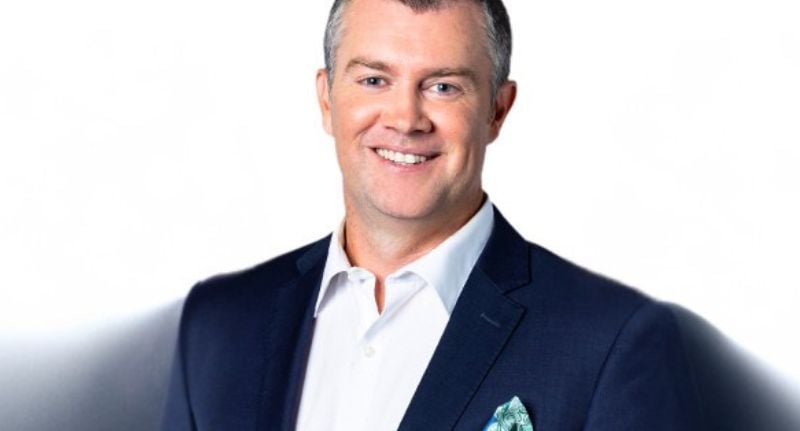
Paramount Australia has unified its linear and digital television sales operations under a single structure, with Grant Madigan commencing as Vice President, Sales.
Madigan will oversee the Australian sales function and report to Lee Sears, President, International Markets Advertising Sales at Paramount.
Sears said the move would align the company’s commercial operations across platforms.
“Bringing together our linear and digital capabilities under a single, cohesive sales team is the right move for our partners and the right move for the market,” she said.
“Grant is exactly the leader we need to drive that agenda in Australia, commercially sharp, deeply connected to the industry, and focused on delivering outcomes that matter to advertisers.”
New reporting structure
Madigan’s direct reports include Nick Bower, General Manager Sales; Diane Ho, National Digital Sales Director; and Tamar Hovagimian, Director of National Advertising Partnerships.
Bower oversees client and agency relationships, as well as the converged national ad sales team. State Sales Directors reporting to Bower are Travis Kirk, John O’Brien, Adam Quick, Helen Elliott and Paul Townsend.
Ho leads Paramount Australia’s digital commercial strategy and revenue delivery, working across data and technology-led advertising solutions.
Hovagimian oversees the company’s commercial partnership portfolio across strategy, creative integration, production and activation.

Nick Bower, Diane Ho, Grant Madigan, and Tamar Hovagimian
Focus on converged advertising offering
Madigan said the company’s sales team and content portfolio positioned the business to expand its market offering.
“We have a talented sales team at Paramount with a real appetite to push what’s possible, guided by experienced leadership across the country and backed by a content catalogue reaching more viewers across more platforms than ever,” he said.
“I’m looking forward to working closely with Nick, Di, Tamar and the broader team in evolving our market offering and delivering powerful outcomes for our advertisers and partners.”
Paramount said the unified structure would provide advertisers with greater flexibility across its linear and digital platforms.
Main image: Grant Madigan

Woolworths pitches lead creative account as M+C Saatchi steps away
Woolworths Australia and New Zealand has commenced an RFP process for a lead creative agency partner.
Incumbent M+C Saatchi, which has held the account since 2017, is understood to have declined to contest the review.
A Woolworths spokesperson told Mediaweek: “We have commenced an RFP process for a lead creative agency partner for Woolworths Australia and New Zealand.”
“We continue to work with our existing partners throughout this process.”
M+C Saatchi’s Woolworths tenure
M+C Saatchi has worked with Woolworths since 2017 and was a founding partner of Greenhouse, Woolworths’ bespoke agency model.
Greenhouse was established six years ago and is powered by a collective of partner agencies, alongside Woolworths’ internal creative, design, experience and production capabilities.
TBWA\ will continue as the creative agency for Everyday Rewards.
According to Nielsen, Woolworths sits among Australia’s top 10 advertisers by budget, making the review one of the more closely watched creative pitches in the market.
Australia is the weak spot
The pitch comes amid pressure on M+C Saatchi’s Australian business. The agency group reported a sharp fall in revenue and profits for the year to December, with Australia a significant drag on the global result.
Global like-for-like net revenue fell 7.3% to AUD$386.0 million, while operating profit dropped 26.1% to AUD$47.0 million.
Australia ended the year down 31.9%, significantly weighing on group results. Without the local market, global revenue would have declined just 3.1%. The company described conditions in Australia as “very challenging”, citing client caution around campaign spend, particularly among consumer-facing businesses.
Other M+C Saatchi clients, including CommBank and Australian Retirement Trust, have also gone under review over the past year.
M+C Saatchi has declined to comment.
Main image: Woolworths Australia
Indigenous actor sues James Cameron for ‘stealing’ her facial features
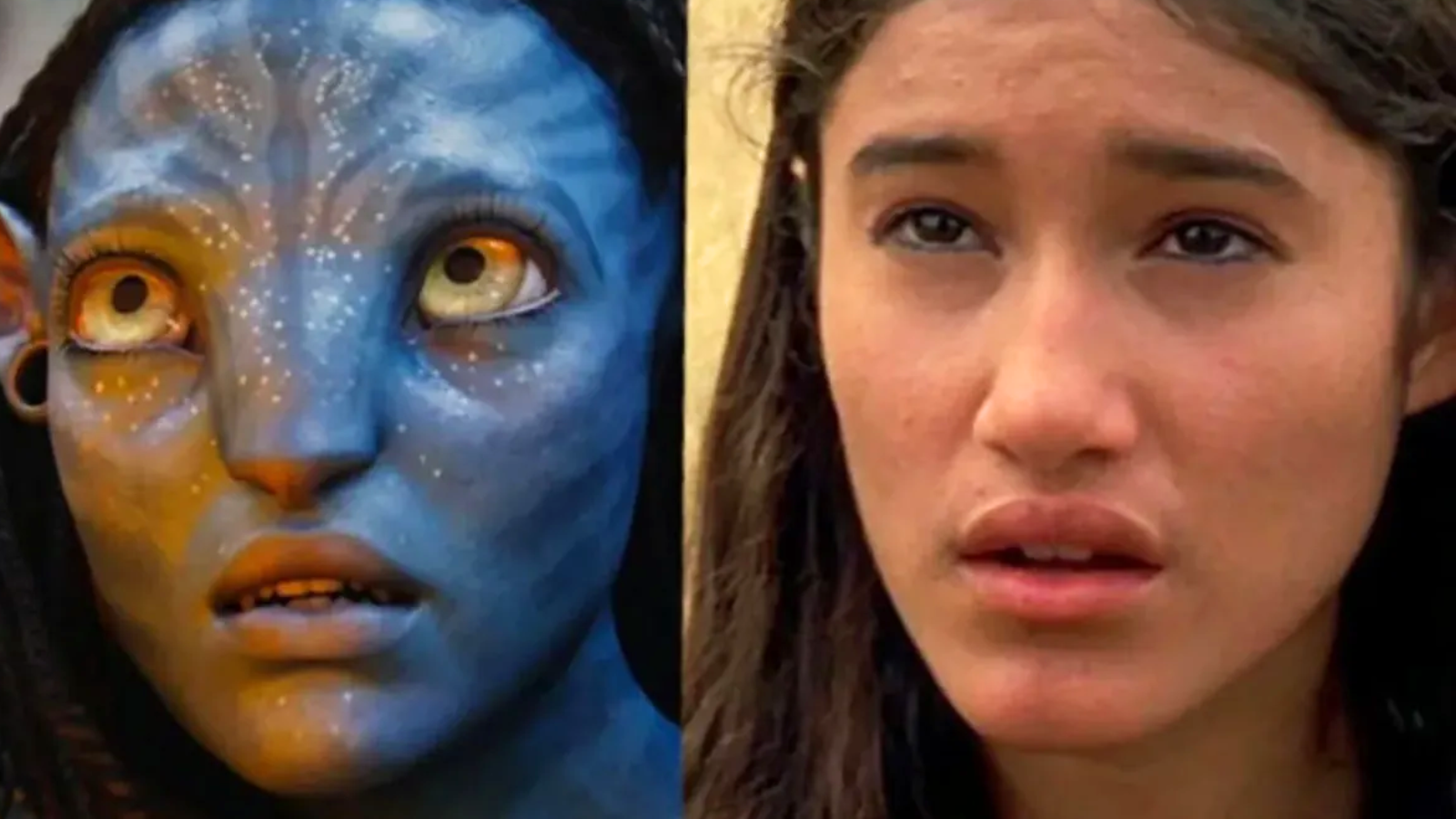
Avatar director James Cameron is being sued by Q’orianka Kilcher, who played Pocahontas in 2005’s The New World, over her allegation that he based a key character on her appearance.
Kilcher, who was 14 when she starred opposite Colin Farrell in Terrence Malick’s film, claims that Cameron told her he based the appearance of Zoe Saldana’s character Neytiri on a photograph of her.
Guardian Australia reports that: “A release about the lawsuit says that “one of Hollywood’s most powerful film-makers exploited a young Indigenous girl’s biometric identity and cultural heritage to create a record-breaking film franchise – without credit or compensation to her – through a series of deliberate, non-expressive commercial acts”.
Legal documents further claim that a photograph of Kilcher was the inspiration for sketches used to create Neytiri’s image, and the result was “a hugely lucrative film franchise that presented itself as sympathetic to Indigenous struggles, all while silently exploiting a real Indigenous youth behind the scenes.”
Kilcher says she did not know she was the character was based on her image until she met Cameron at an event in 2010, a year after the first Avatar movie was released.
According to her law suit, Cameron told her he had a gift for her in his office – a signed sketch of Neytiri by Cameron, along with a note that read: “Your beauty was my early inspiration for Neytiri. Too bad you were shooting another movie. Next time.”
Kilcher claims she was never invited to participate “next time.”
Kilcher later said in a statement: “When I received Cameron’s sketch, I believed it was a personal gesture, at most a loose inspiration tied to casting and my activism.
“Millions of people opened their hearts to Avatar because they believed in its message and I was one of them.
“I never imagined that someone I trusted would systematically use my face as part of an elaborate design process and integrate it into a production pipeline without my knowledge or consent.
“That crosses a major line. This act is deeply wrong.”
Cameron’s legal response says that he first saw Kilcher when a photo advertising The New World ran in the LA Times.
“The actual source for this was a photo in the LA Times, a young actress named Q’orianka Kilcher. This is actually her…her lower face. She had a very interesting face,” he later said.
Kilcher is seeking compensatory and punitive damages, disgorgement of profits attributable to the use of her appearance, and corrective public disclosure.

Honda Australia appoints WiredCo. as social and content agency
Honda Australia has appointed WiredCo. as its new social and content agency following a competitive review process.
The appointment will see WiredCo. lead social and content strategy across Honda Australia’s portfolio, including cars, motorcycles, marine and power equipment.
The agency will be integrated into Honda’s broader agency village as the automotive brand prepares for a series of product launches and a broader repositioning effort in the Australian market.
Honda Australia said the partnership comes as the business enters a new phase focused on electrification and hybrid expansion.
The company is preparing to launch expanded hybrid models across its CR-V and ZR-V ranges, alongside its first battery electric vehicle, Super-ONE, and the return of the Prelude nameplate.
Eva Barrett, General Manager, Brand, Marketing and Digital at Honda Australia, said the company was looking to reconnect with Australian consumers through its next chapter.
“Honda has been an important part of Australian culture for almost 60 years – everybody has a Honda story. As Honda Australia enters a new electrified era, spearheaded by our market-leading e:HEV, we want to help create new stories and stir the same emotions today as we have in the past,” she said.
WiredCo. to lead social and content strategy
David Kennedy-Cosgrove, Managing Director and Partner at WiredCo., said social would play a central role in the brand’s repositioning strategy.
“What a dream team and remit to be part of as we bring Honda back into culture. Eva and her team have that special kind of energy that makes you give them your best thinking and work,” he said.
“It’s going to be a big year for the brand, and social is going to play a huge role in putting it back on the agenda. So, the thinking and work must deliver on that.”
WiredCo. Currently works with brands including Mutti, Peters Ice Cream, Pizza Hut, Boost Mobile, Red Bull and THE ICONIC, and was recently recognised as AdNews Employer of the Year, B&T Independent Agency of the Year and Campaign Asia Social, Content and Specialist Agency of the Year.
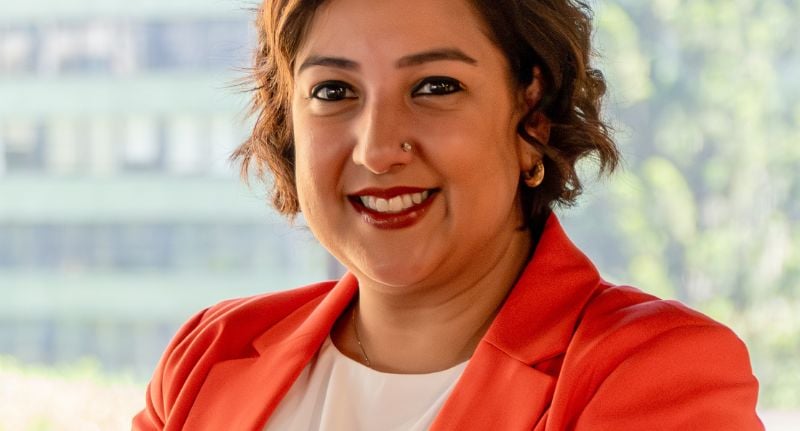
Hey agency leaders, babies don’t care about your Gantt charts
Simran Kaur, Founder and CEO, Pounce Agency
If you’d told me a few years ago that I’d be leading an agency across two countries while raising a nearly two-year-old, I probably would’ve laughed or cried or both.
At Pounce Agency, we’ve always believed that the best outcomes don’t come from following the obvious path. They come from questioning it and staying curious. It’s a philosophy that’s shaped how we build brands, solve problems and importantly, how we lead as a team.
What I didn’t expect was how much that same mindset would be tested in my own life.
Shifting perspectives
As Mother’s Day rolls around, I reflect on my own journey.
Motherhood didn’t begin easily for me. Before my daughter Giana arrived, I lost two boys at 17.5 weeks. It is a kind of trauma that shifts your perspective in ways you can’t quite explain.
So, when Giana entered the world, she wasn’t just our baby; she became my everything.
More recently, I also lost my grandmother, who lived an incredible 100 years. Safe to say it’s been a challenging couple of years.
Now, as my daughter inches towards the terrible twos, I find myself in a very different season. One filled with moments that force you to stop and reflect.
So why am I sharing this?
Because somewhere between raising a toddler, the personal highs and lows, and the pressure of running a business, I realised something: Motherhood didn’t just change me. It changed how I lead.
I realised being a good leader – someone my team could trust and look up to had absolutely nothing to do with having all the answers. It’s about how you show up when things don’t go to plan.
Sim 2.0
I see it all the time: women in media smashing through ceilings with incredible finesse, attention to detail, and a baby monitor perched on their workstations.
Come my turn, I tried my best to hold onto the leadership persona I’d spent years building. That was the wrong move – and I’m really glad I made it, because the lessons I carried over from the experience helped me redefine who I am at work.
This was the birth of Sim 2.0.
Lesson 1: Control is an illusion (and that’s okay)
Becoming a mother broke the illusion that life would always follow my Gantt chart. Babies don’t care about deadlines. And neither, if I’m honest, does agency life half the time.
I used to want visibility across everything. Every client, every deliverable, every decision. But I couldn’t operate like that anymore.
So I changed how I lead.
At Pounce, that meant building a team that doesn’t rely on me to move. We’ve created clearer ownership across accounts, empowered people to make decisions, and shifted from top-down control to shared accountability.
Letting go of control was scary, but it was necessary because it created capability.
Lesson 2: Boundaries aren’t barriers, they’re guardrails
Before Giana, I wore overwork like a badge of honour. The 11 pm emails, weekend brainstorms, and the “I’ll sleep when it’s launched” mindset.
Now, I know that approach doesn’t work because it was a one-way ticket to burnout. Motherhood forced me to get ruthless with my time. It got me thinking about what actually needs my input and what’s going to move the needle.
That shift has changed how we operate at Pounce. We have learned to prioritise, and not everything is a fire that needs to be put out immediately. And we’re far more conscious of protecting our team’s time and energy.
Because burnout is no badge of honour – it’s a business risk.
Lesson 3: Family isn’t separate from leadership; it shapes it
At some point, family stops being something you balance around work. It becomes the lens through which you see everything.
Over the past year, I’ve felt that very deeply. In the everyday moments with my daughter, in the support around me, and in losing my grandmother, who showed me what resilience looks like over a lifetime.
Another experience that has changed my perspective towards Pounce.
It’s no longer just about growth or output. It’s about the kind of environment we’re building and the people we’re supporting. This shapes the example we’re setting as a business, reinforcing the idea that leadership shouldn’t be just about results. It’s about responsibility.
Lesson 4: Vulnerability doesn’t weaken leadership, it deepens it
The hardest thing for me wasn’t balancing work and motherhood. It was admitting that I was struggling.
I truly believed having strength meant keeping it together and never letting anyone sense my vulnerability, but when I finally opened up to my team about what I’d been through, something unexpected happened. They didn’t see weakness; they saw honesty. And that honesty created a new genre of trust that has become the lifeblood of Pounce’s culture today.
Lesson 5: Leadership is legacy
When you’re raising a child and building a company at the same time, you start asking different questions.
It’s no longer about asking the question “Is this working?”, but also “What am I building, and who is it for?”
For me, that’s reshaped how I define success at Pounce.
Yes, growth matters. But so does building something sustainable. Something people are proud to be part of and, more importantly, something my daughter could one day look at and understand what it stands for.
'Failure of their legal obligations': Canva fined $792,000 over late financial filings
Canva has been fined $792,000 by Australia’s financial watchdog after four of its Australian businesses failed to file accounts on time.
The Australian Securities and Investments Commission said Canva Pty Ltd, Canva Operations Pty Ltd, Canva Trading Pty Ltd and Fusion Books Pty Ltd each paid an infringement notice of $198,000 for failing to lodge their 2024 financial reports by the April 30 due date.
Canva says lodgements are up to date
Canva said it has now brought its lodgements up to date.
“We take our reporting obligations seriously and regularly share public updates on our business and growth. As we’ve grown and scaled, we’ve strengthened our reporting systems … and have strong processes in place to maintain this going forward,” a Canva spokesman told Mediaweek.
The company belatedly filed accounts for 2021 and 2022 last September, while its 2024 and 2023 accounts were filed in March, more than two years late.
The latest accounts do not reflect Canva’s global operations, but showed sustained net losses despite revenue growth to US$2 billion, or $2.77 billion, in 2024.
Canva’s timing for a potential IPO has not been confirmed, but it is not expected until next year. The company is working to reposition its platform for the era of artificial intelligence.
At its customer conference in Los Angeles last month, Canva said it now has more than 265 million monthly users, including 31 million paying users. The company also said it generates more than US$4 billion in annualised revenue.
ASIC widens reporting crackdown
The Canva penalties come amid a broader ASIC crackdown on private company disclosures.
ASIC has issued and received payment for 21 infringement notices, worth more than $4 million, for alleged failures to lodge 2024 financial reports on time.
Last month, the watchdog penalised Mecca $594,000 for failing to file audited financial reports on time. In December, ASIC also fined retailers, including White Fox, MJ Bale and Aje, for missing reporting deadlines for the financial year ending June 2024.
ASIC Commissioner comments
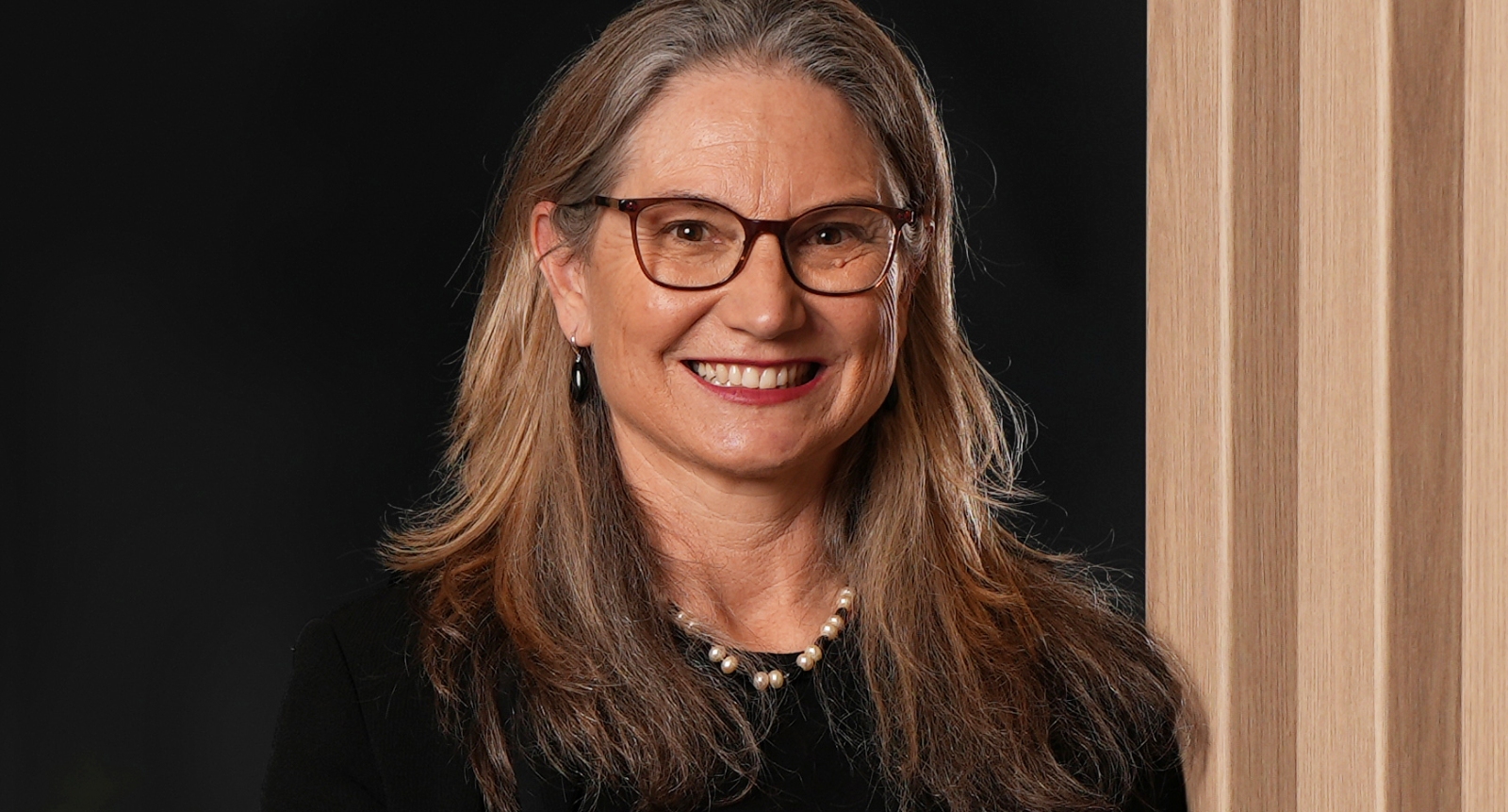
‘In line with our current enforcement priority, ASIC has a number of open investigations into alleged non-lodgment and late lodgement of financial reports, and enforcement action will continue,’ Kate O’Rourke said.
ASIC Commissioner Kate O’Rourke said the regulator has several open investigations and is using targeted, data-driven surveillance to identify companies that persistently lodge accounts late or not at all.
“Companies and other entities with reporting obligations must ensure financial reports are lodged within the required timeframes,” O’Rourke said.
“Both non-lodgment and late lodgement prevents creditors and other users of the reports from making timely and informed decisions when dealing with these companies and is a failure of their legal obligations.”
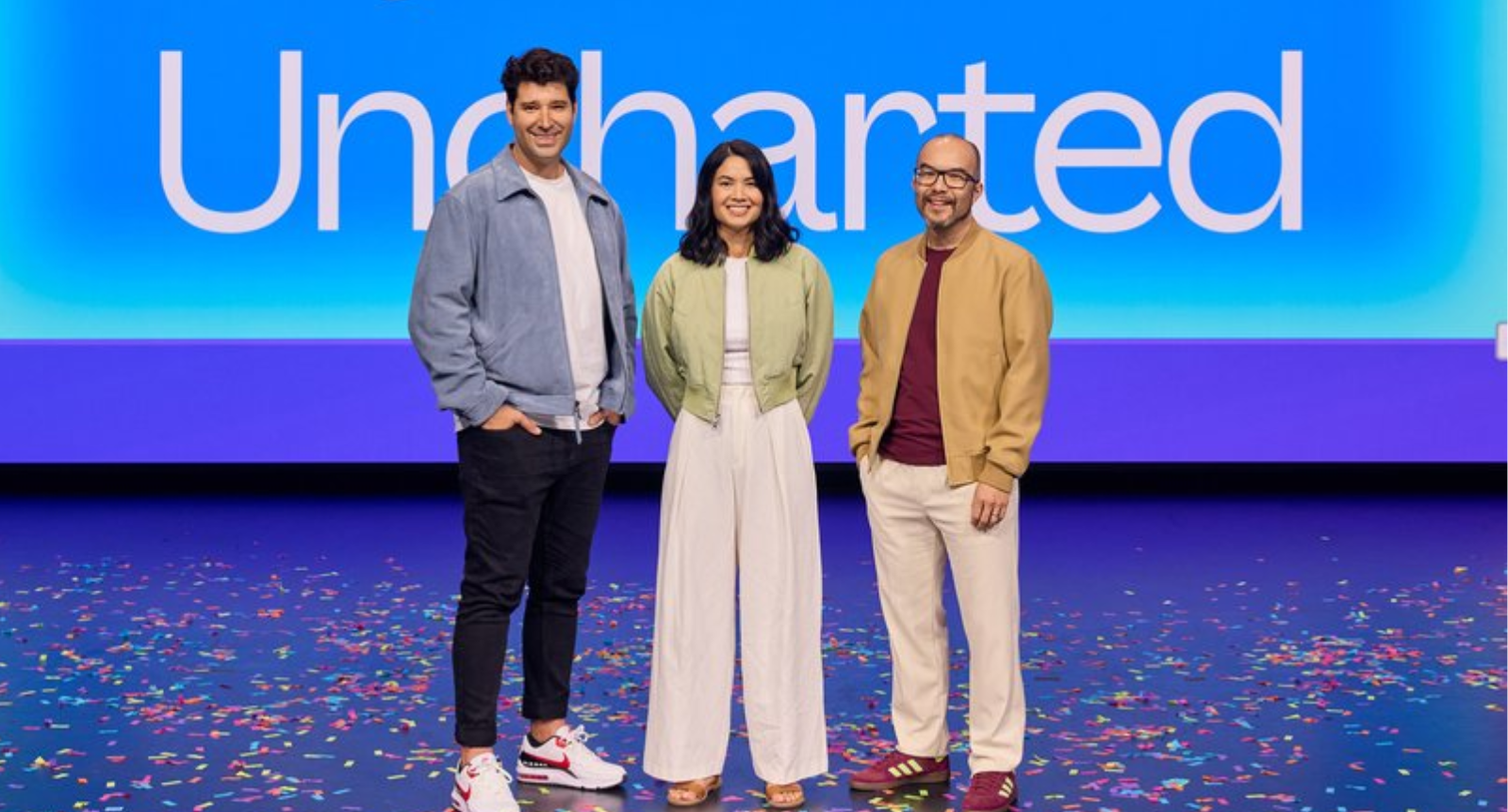
Top Image: Canva’s co-founders Cliff Obrecht, Melanie Perkins, and Cameron Adams. (Credit: Jonathan Young)