
Thursday December 4, 2025

EXCLUSIVE: Crisis experts reveal 2025’s biggest PR fail
In a year stuffed with corporate missteps, governance meltdowns and “please-advise” moments that sent comms teams scrambling, Monash IVF has been officially named 2025’s worst PR performer – taking home the dreaded ‘Brown Eye’ at crisis podcast Up The Creek!’s annual Reputation Eye Awards.
And it wasn’t even close.
How the crisis spiralled
The trouble began in April, when the reproductive health provider confirmed a Brisbane patient had given birth to a baby genetically unrelated to her – the result of the wrong embryo being implanted in 2023. Initially framed as a “one-off human error”, the story ricocheted across the country.
Then came what Up The Creek! co-host Mark Forbes pointed out as the real reputational killer: the sequel.
Just two months later, Monash IVF disclosed a second, unrelated embryo transfer error at its Melbourne clinic.
That update reignited national outrage, triggered a fresh round of regulatory scrutiny and sparked a national review into fertility sector accreditation.
And then came the decision that baffled everyone: the refusal to publicly release the independent review into the incidents.
Forbes told listeners: “I couldn’t agree more with the rebuke from the Federal Health Minister that ‘transparency is the foundation of trust’.
Monash IVF is a reminder that in crisis comms, the sequel matters more than the trailer. If you call something an ‘isolated incident’ and another one pops up two months later, you don’t just lose control of the story, you hand it the microphone.”
He added: “Portraying transparency, regret and acting to prevent repeats is critical, and Monash IVF failed on all three counts.”
For a sector built on vulnerability, ethics and high emotion, the reputational fallout has been – understandably – enormous.
And yes, the competition was fierce. This year’s shortlist also included Optus, after yet another Triple Zero outage, and the Bureau of Meteorology, for its much-maligned website rebuild and rebrand.
The recovery award goes to… Qantas
In a turn no one had on their bingo card, Qantas won the Golden Eye for crisis recovery after a cyber incident compromised customer data.
Co-host Benjamin Haslem said, “Qantas hasn’t made it easy to love them recently, but in this case, they flew the crisis properly. They got out early, kept the updates coming, and backed the talk with visible fixes.”
Rio Tinto earned runner-up recognition for its co-management agreement with Traditional Owners at Juukan Gorge – a long-awaited bridge-building effort after the destruction of sacred sites in 2020.
What this means for Monash IVF
In the fertility sector, trust isn’t a brand pillar – it is the business.
The twin errors, the handling, and the opacity have already created a wave of regulatory pressure and consumer doubt.
As Forbes put it: “In a trust business, that’s lights out.”
The Reputation Eye Awards may come with a wink. Still, the message isn’t comedic: in 2025, poor crisis response doesn’t just bruise a reputation – it invites regulators, rattles customers and reshapes an entire business.
Monash IVF is now the definitive case study of what happens when a crisis isn’t just mishandled… it’s mishandled twice.

White House launches a public media hit list, complete with a ‘Hall of Shame’
As that great American philosopher, and master of malapropisms, Yogi Berra once said: “It’s Deja vu all over again.”
In the depths of the presidency of Richard Nixon, the White House created a media “hate list” featuring some of the biggest names in the American media. Now, the Trump administration seems to have taken a page out of the Nixon playbook to create its own media blacklist.
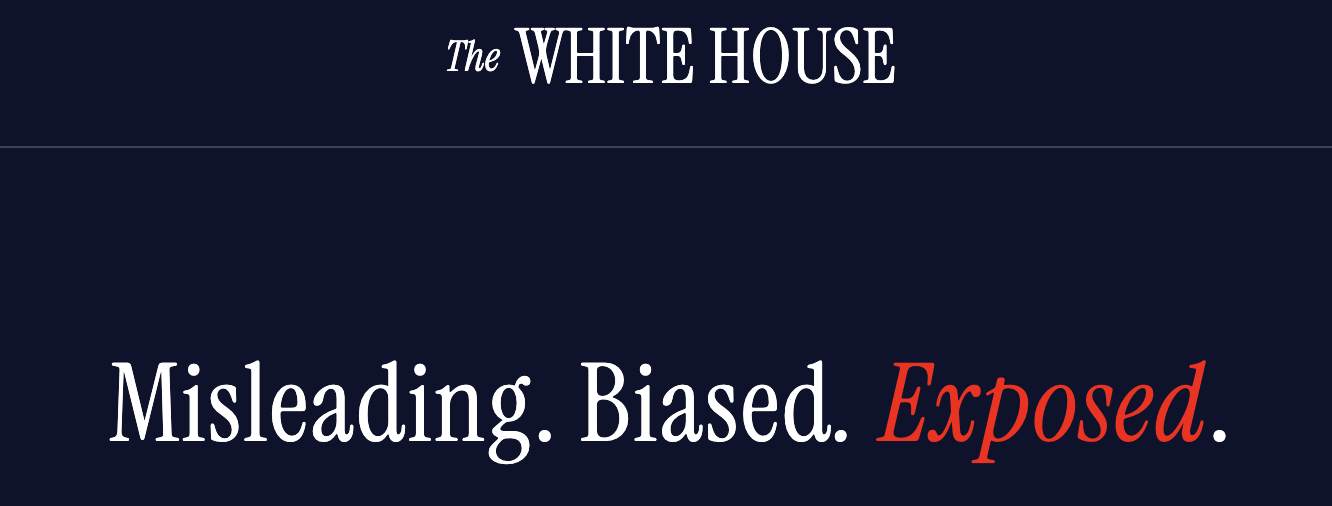
In a move that feels equal parts political theatre, digital innovation and “did someone really greenlight this?”, the White House has launched a new section of its official website dedicated to calling out journalists and outlets it says have distorted coverage of President Trump.
Right at the top of the page is the tagline: Misleading. Biased. Exposed.
This week’s spotlighted “media offenders” – the Boston Globe, CBS News and the Independent – are singled out for reporting on Trump’s comments about six Democratic lawmakers who released a video urging service members not to follow illegal orders.
The White House argues its framing was off.
After Trump said the lawmakers had engaged in “seditious behaviour, punishable by death” and reposted a statement containing the phrase “hang them,” several outlets reported it as the President encouraging unlawful military action.
The new page pushes back hard: “The Democrats and Fake News Media subversively implied that President Trump had issued illegal orders to service members. It is dangerous for sitting Members of Congress to incite insubordination in the United States’ military, and President Trump called for them to be held accountable.”
A searchable ‘Hall of Shame’
Beyond the weekly offenders is the pièce de résistance: the “Offender Hall of Shame.”
Visitors can browse a fully searchable database of articles – and their authors – tagged with labels like “bias”, “malpractice” or the slightly more expressive “left wing lunacy.”
At the moment, the leaderboard looks like this:
1. Washington Post
2. MSNBC (now MS Now)
3. CBS News
Among the listed examples is a Washington Post article on the US Coast Guard’s classification of hate symbols – one that the Coast Guard later walked back.
The White House has even expanded the broader cast list. Beyond the weekly highlights, it names the Associated Press, the New York Times, the Wall Street Journal, Politico and Axios as outlets guilty of bias or misinformation.
Yes, it’s unusual for an official government website to include a running tally of media accuracy. But in a hyper-competitive information environment – and with a President who has always preferred to speak directly to his audience – it’s also very on-brand.
Whether this turns into a permanent fixture or a very committed election-year cameo remains to be seen.

‘I can breathe again’: Brittany Higgins breaks silence as Lehrmann loses appeal
Brittany Higgins has broken her silence following Bruce Lehrmann’s failed appeal, issuing a powerful statement after the full Federal Court upheld the original judgment against him.
“Finally, it feels like I can breathe again,” she wrote on Instagram, thanking the court for its consideration, the defence legal team for its tireless efforts and Channel 10 for being such ardent supporters of survivors of sexual assault.”
Higgins said the defamation case – on its face a fight over a media broadcast – had in reality become “once again a rape trial”.
“I cannot begin to tell you how retraumatising it is to have your rapist weaponise the legal system against you for daring to speak out,” she said.
“Sadly, this isn’t uncommon. It’s a legal tactic that is being increasingly used around the world by perpetrators in a bid to sue victim-survivors into silence as a direct response to the #MeToo movement.”
Appeal dismissed and costs awarded
The statement landed minutes after the court delivered its ruling: Lehrmann has lost his appeal against Network Ten and Lisa Wilkinson – and has been ordered to pay their court costs.
Lehrmann had challenged Justice Michael Lee’s April 2024 finding that he was not defamed by The Project’s 2021 interview, in which Higgins alleged she had been raped inside Parliament House.
The full bench – Justices Michael Wigney, Craig Colvin and Wendy Abraham – unanimously rejected Lehrmann’s arguments. In his summary, Justice Wigney said the court “rejected Mr Lehrmann’s contention that the primary judge erred in finding that Network 10 and Ms Wilkinson had discharged their burden of proving that he had raped Ms Higgins.”
The judges dismissed every ground of appeal. They found no procedural unfairness, no error in how the trial judge interpreted how an ordinary viewer would understand the broadcast, and no basis for Lehrmann’s claim that he deserved substantially more serious damages than the $20,000 figure discussed at trial.

Bruce Lehrmann
What Lehrmann faces now
The decision means Lehrmann – already verging on bankruptcy – could be liable for around $2 million in costs and damages. He may still seek special leave to appeal to the High Court, but if that application fails, this would mark his second unsuccessful appeal in the proceedings.
Network Ten responded to the outcome with a statement welcoming the court’s decision.
“It reiterates that Network 10 prevailed in proving that Brittany Higgins’ allegations of rape were true,” the network said.
“It remains a vindication for the courageous Brittany Higgins, who gave a voice to women across the nation.
“Network 10 remains firmly committed to honest, fair and independent journalism; to holding those in power to account; to giving people a voice who wouldn’t otherwise have one; and to always pursuing without fear or favour, journalism that is firmly in the public interest.”
News Corp unloads final 13% stake in ARN Media
News Corp Australia has sold its final 13% stake in ARN Media for roughly $18 million, drawing a clean line under a long-running investment and leaving the radio group to navigate mounting financial and ratings pressure without the backing of a major institutional shareholder.
A spokesperson for News Corp said the exit reflects a sharper internal focus.
“Our divestment in ARN continues our focus on our core consumer businesses and our digital client products,” the company said.
Aitken Mount Capital Partners handled the block trade, crossing 40.8 million shares at 44 cents. It places ARN’s current market value at about $139 million.
A tougher year behind the numbers
The share sale lands as ARN faces growing pressure on earnings and advertiser demand.
The broadcaster recently warned its full-year EBITDA could fall 25% to 27% amid “significant softness” across the market, surpassing earlier expectations for a softer back half.
October advertising revenue was already down 10% year-on-year, reflecting both cyclical pressures and uncertainty around ARN’s metro performance.
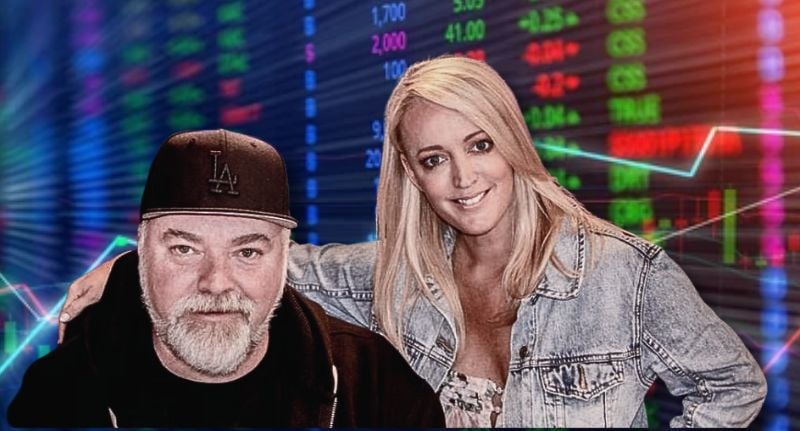
While Kyle & Jackie O continue to dominate in Sydney, the Melbourne expansion – launched 18 months ago – has not delivered the ratings lift the network banked on.
Industry reshuffle raises the stakes
News Corp’s withdrawal comes as the radio sector undergoes its heaviest period of restructuring in years.
Nine Radio is in the process of selling 2GB, 3AW, 4BC and 6PR following a strategic review.
One week later, Southern Cross Austereo (SCA) and Seven West Media (SWM) unveiled plans for a $420 million merger that would combine the Hit and Triple M networks with Seven’s broadcast and publishing assets.
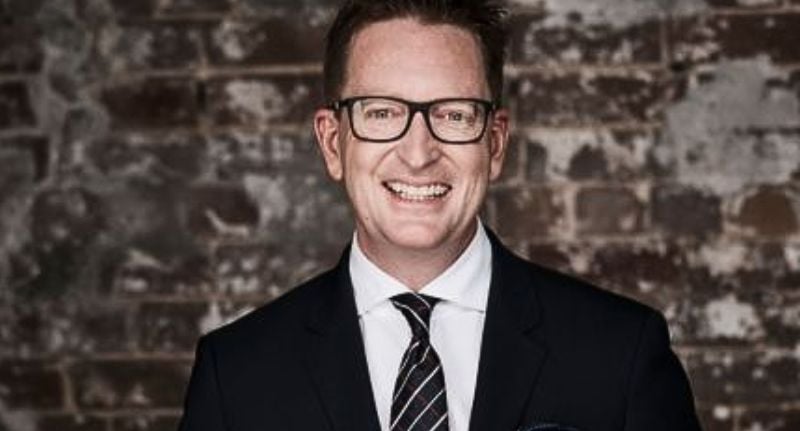
CEO Michael Stephenson
For ARN, the environment is increasingly competitive.
It first brought News Corp onto the register in 2015, back when the company was APN News & Media, and even mounted a takeover bid for SCA in 2023 before that proposal collapsed.
The company also recently confirmed the departure of Chief Content Officer Lauren Joyce, a redundancy sold by CEO Michael Stephenson as necessary to “evolve its content operations” and “build a business that’s ready for the future”.
“This restructure includes the role of Chief Content Officer, who will have sole responsibility for content creation and distribution.”
What ARN must solve next
With News Corp now off the register, ARN enters 2026 under closer investor scrutiny. Stabilising revenue, addressing the Melbourne ratings gap and rebuilding confidence remain top priorities in a market that’s consolidating fast.
ARN maintains it has the foundation to recover – anchored by KIIS and Gold, and by Sydney breakfast strength – but it is now one of the few major audio groups not participating in a merger or divestment.
Mediaweek has reached out to ARN for comment.
Spotify turns Wrapped into an advertiser power play
The writer of this story would like to formally apologise to Spotify for contributing absolutely nothing new to its algorithm this year.
My Wrapped remains a carbon copy of the last five: Baby Shark as the immovable No. 1 – thanks to small children with large opinions – and the K-Pop Demon Hunters soundtrack holding court because apparently I no longer own my own speakers.
Anyway…
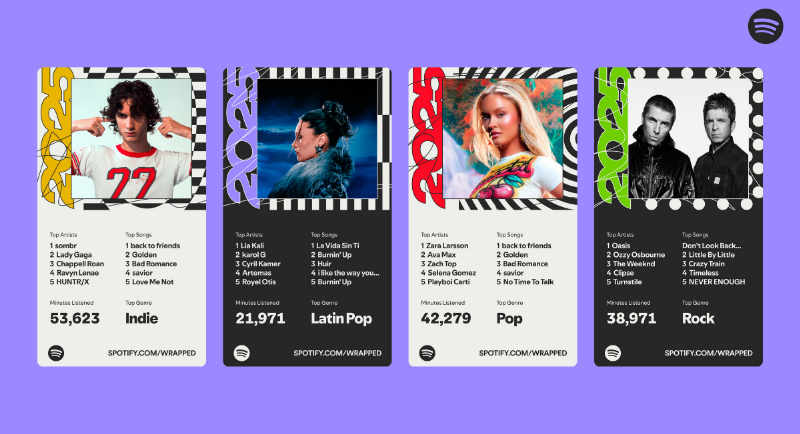
Spotify, however, has chosen innovation over nostalgia – cracking open its cultural juggernaut and finally giving advertisers a seat inside the machine.
For the first time, Wrapped for Advertisers lives inside Spotify Ads Manager, offering brands a personalised insights recap mirroring the consumer experience.
Advertisers can now see:
• total ad streaming minutes their campaigns generated
• the mix of formats they used across 2025
• their audiences’ top podcast and music genres
• a curated highlight reel of their annual activity
Spotify also released its new Wrapped for Advertisers Trend Report, pulling together behavioural insights that will feed into 2026 planning – including the finding that Australians spent more time with local podcasts this year than any other format, and that music discovery among 18–24s grew double digits.
Wrapped lands with helicopters, sand sculptures and Sunrise live crosses
Spotify was big on the halo effect this year, indulging in a raft of offline and off-ground stunts.
Among them, Sydney woke up to a helicopter circling the CBD, towing a giant wrapped banner flown by Aussie DJ CYRIL. Sunrise ran live weather crosses from 6-9am, capturing the stunt in all its aerial marketing glory.
On land, the company rolled out its most theatrical local activation slate yet:
• a 5SOS (Everyone’s A) Star Walk in Sydney
• a sand billboard sculpted in Manly starring Don West
• and Wrapped Clubs kiosks across Sydney and Melbourne, where fans were sorted into one of six “listening personalities”.
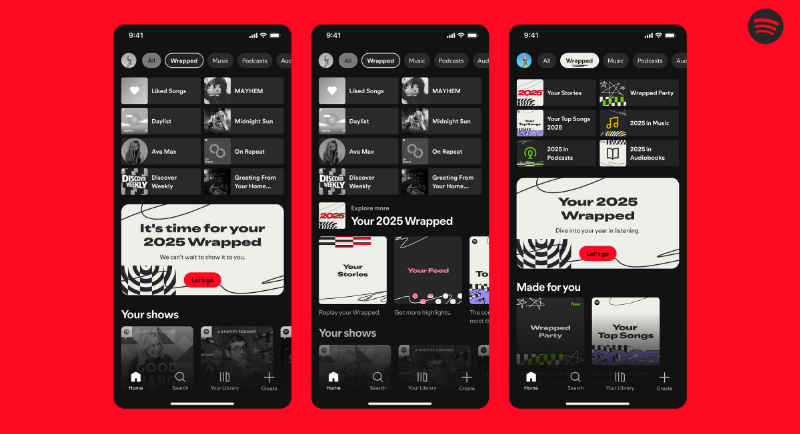
Australia’s 2025 listening habits
Top Artist (Australia): Taylor Swift, for the third year in a row.
Most-streamed track: Ordinary by Alex Warren.
Top Local Artist: The Wiggles – followed by The Kid LAROI.
Top Local Song: Riptide by Vance Joy.
Top Album: The K-Pop Demon Hunters soundtrack, beating global heavyweights and reinforcing Australia’s increasingly chaotic relationship with the genre.
Genre shifts backed the same trend: K-pop growth spiked again, dance-pop surged, and throwbacks (pre-2000) saw a meaningful lift driven by AC/DC, Crowded House and Kylie Minogue.
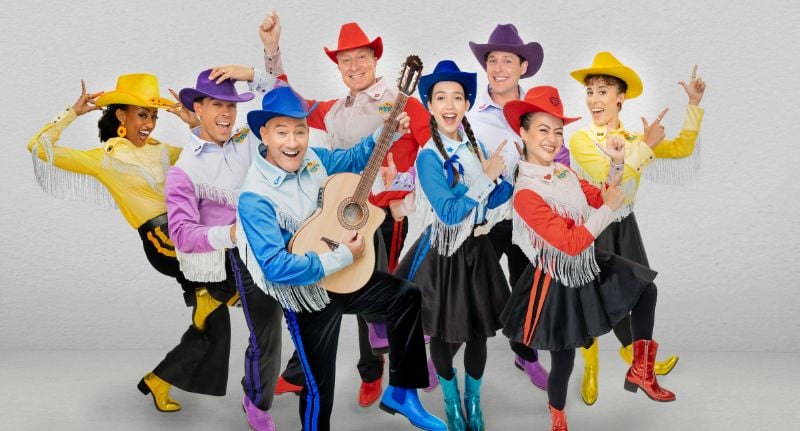
The Wiggles
Podcasts
• The Joe Rogan Experience stayed No. 1 overall.
• Casefile True Crime held the top local position.
• Hamish & Andy remained a cultural constant at #2 local.
Audiobooks became a Rebecca Yarros masterclass, with Fourth Wing and Iron Flame taking the top two national slots.
Globally
Worldwide, Bad Bunny delivered 19.8 billion streams to reclaim the Global Top Artist title for the fourth time.
Lady Gaga and Bruno Mars’ Die With A Smile became the global top song with 1.7 billion streams. Bad Bunny also secured the global top album with DeBÍ TiRAR MáS FOToS.
Wrapped also expanded its audiobook component with:
• Top Audiobook
• Top Audiobook Genre
• Your Author Clip, featuring writers like Dan Brown and James Patterson
A deeper, more flexible Wrapped for listeners
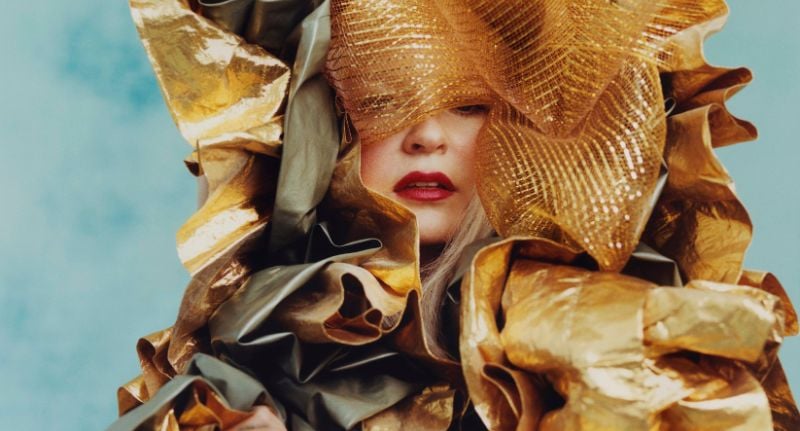
2025 Wrapped adds almost a dozen new data stories to the user experience, including Listening Age, Top Albums, Top Audiobook Genre, Fan Leaderboard, and an AI-powered Listening Archive surfacing key listening days.
Wrapped Party also launches as a social add-on, letting friends replay the year together in real time.
Let’s wrap it up
Wrapped has long been Spotify’s biggest cultural export – half confessional, half competition.
By formally extending the experience to advertisers for the first time, Spotify is turning its most joyful product into a strategic planning tool that blends audience emotion with hard data.
For brands entering 2026, Wrapped isn’t just a conversation starter. It’s now part of the media toolkit.
Martha Stewart replaces Sydney Sweeney as American Eagle’s new star
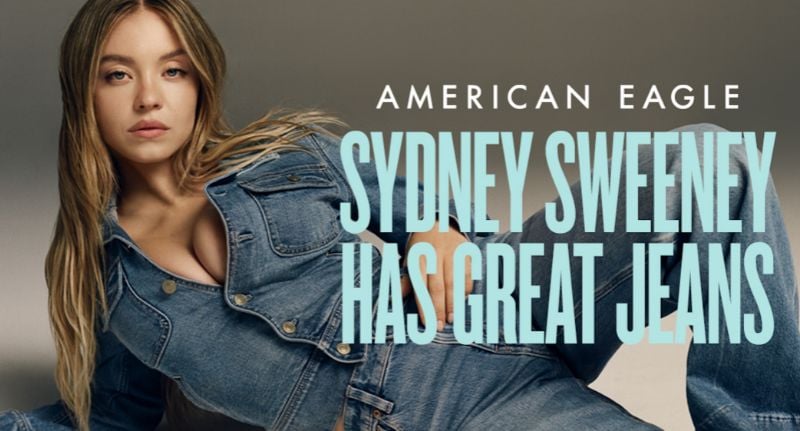
American Eagle is turning heads this holiday season after swapping Sydney Sweeney for Martha Stewart as its newest ambassador.
The US denim brand went with the 84-year-old ex-con after accusations that Sweeney’s campaign was “tone deaf” and promoted eugenics.
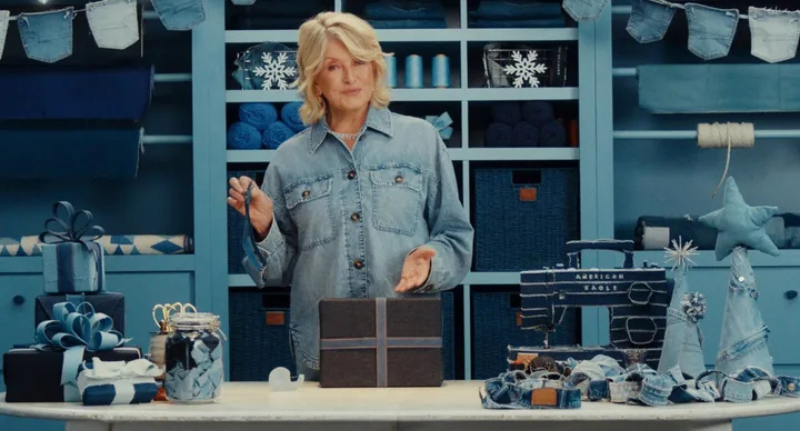
This year’s Christmas ad, ‘The Gift Is Giving’, features Stewart in denim, wrapping gifts in the same signature material.
American Eagle said it has expanded its marketing to reach gift-givers across all age groups, not just its core Gen Z shoppers.
“Martha’s holiday advice naturally spans generations, helping connect with moms, dads, grandparents and younger consumers alike,” the company said.
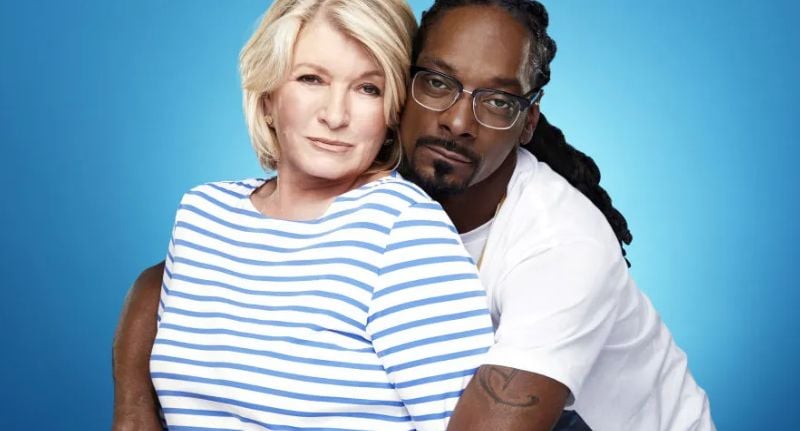
Stewart – who counts rapper Snoop Dog as a close friend – said she’s a “big fan” of the brand, and jeans have always been a staple in her wardrobe.
“When American Eagle approached me about being part of their holiday gifting campaign, I was immediately intrigued,” she told People.
“The concept of an all denim world was playful, smart and whimsical: an entire gift-wrapping workshop constructed from denim, complete with bows, garlands and wrapping paper.”
The campaign is being rolled out across Instagram, TikTok, and CTV.
Stewart is American Eagle’s third ambassador in five months, following Sweeney and Kansas City Chiefs tight end Travis Kelce.

Australian Pork Limited taps Enigma as Media Partner
Australian Pork Limited (APL) has appointed Enigma as its new media agency of record following a statutory review of its media partner.
The process, facilitated by consultancy Madclarity, included a competitive shortlist before the final decision was made.
The appointment signals the end of APL’s eight-year partnership with Slingshot, which has overseen the organisation’s media activity across a period of continued growth for the category.
Get Some Pork On Your Fork
From the beginning of the new year, Enigma will take responsibility for domestic fresh pork marketing, including the long-running and well-loved Get Some Pork On Your Fork campaign.
Rob Farmer, CMO at Australian Pork, acknowledged the outgoing agency while welcoming the new partnership.
“We extend our big thanks to Slingshot for everything the team has contributed to the Australian pork industry’s growth over the past eight years,” he said.
“And a warm welcome to Enigma and our new partnership.”
Enigma joins with a clear ambition for growth
Justin Ladmore, chief media officer and partner at Enigma, said the opportunity energised the agency.
“We’re absolutely thrilled to be partnering with Australian Pork. It’s a bold, creative brand with a clear ambition to make pork famous in Australian kitchens, and we can’t wait to get started,” he said.
“We’re grateful for the trust Rob and his team have placed in us, and we would also like to thank them for inspiring the agency to level up our pork stir fry cooking skills.”
The new partnership will commence in early 2026.

Georgie Tunny appointed weekend presenter for 10 News from 2026
Network 10 has confirmed that journalist and presenter Georgie Tunny will anchor the network’s weekend news bulletin from 2026.
Tunny’s appointment follows the departure of Chris Bath, who announced last month she would leave Network 10 at the end of 2025.
Bath, who joined the network in 2023, said she was stepping back from nightly news to pursue new opportunities and rebalance her workload.
Her decision created one of the network’s most significant newsroom vacancies – one 10 has now been filled with Tunny.
A familiar face steps up
Tunny, well known to audiences through her work across The Project, ABC, Flash, Fox Sports, and national radio, has become one of the country’s most versatile storytellers. She has worked across breaking news, sport and entertainment, and built a strong cross-platform profile.
In a statement, Tunny said she was looking forward to the role: “The trust the viewers, the News team, and the wider Network 10 community have shown in me throughout my career is incredibly gratifying. I can’t wait to get started and deliver the news that matters with integrity and heart in 2026.”
Martin White, VP News, Paramount Australia, said Tunny was a natural fit for the bulletin.
“Georgie is a great journo and presenter, and we’re lucky to have her at 10 News. She’ll do a brilliant job, helping us break down the big stories of the day for Australians every Saturday and Sunday, with her trademark warmth and down-to-earth demeanour.”
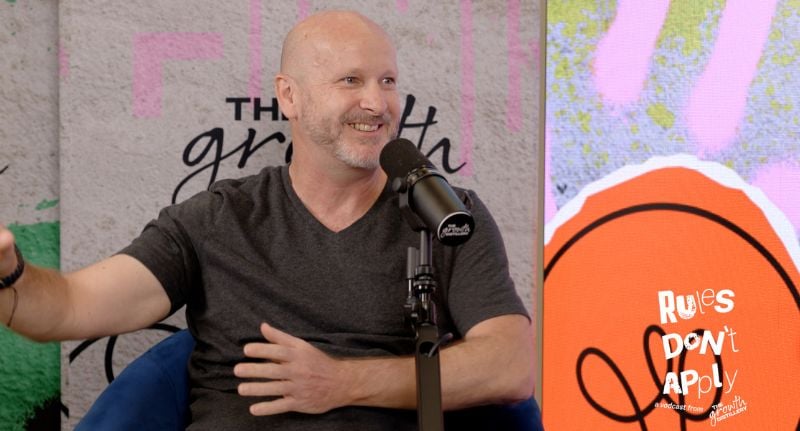
Ricky Sutton says media’s next era belongs to “builders, breakers and believers”
In a wide-ranging conversation with The Growth Distillery’s Dan Krigstein on the Rules Don’t Apply podcast during SXSW Sydney, former Seven digital chief Ricky Sutton argues the media industry has forgotten how to build, why creativity is the last real moat, and how the next wave of growth will come from people unafraid to break things.
Sutton has seen the media business from every angle – journalist, product leader, founder, global executive – but he keeps circling back to the same diagnosis: the industry has become obsessed with optimisation and allergic to invention.
“We stopped building,” he told Krigstein, reflecting on how publishers drifted toward incrementalism while big tech dictated the pace. “We’ve been perfecting the machine instead of making a new one.”
The conversation also explored what’s holding media companies back – and where the next bold leap might come from.
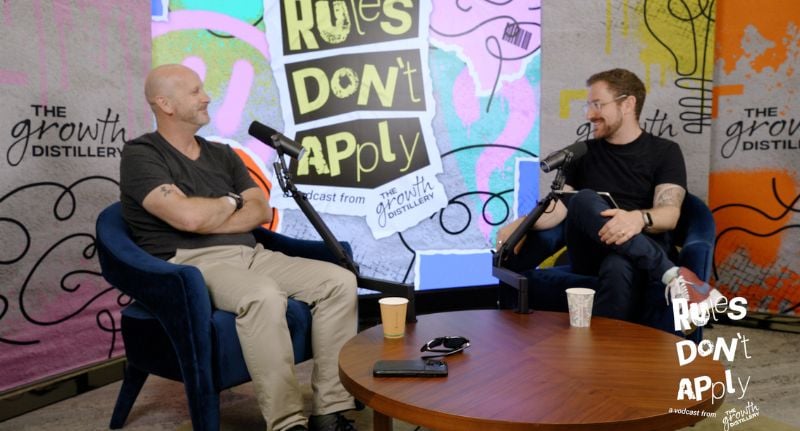
L-R: Ricky Sutton and Dan Krigstein
Creativity as the last competitive advantage
For Sutton, creativity isn’t a nice-to-have; it’s the only durable defence left.
“Technology is getting really good at the doing,” he said. “What it can’t do is originate a weird thought or a truly new idea. That’s where the moat is.”
He argued that companies with rigid hierarchies and risk-averse habits are draining themselves of their most valuable currency: original thinking. “If people are afraid to try something stupid, you’ll never get anything brilliant.”
Audiences, he pointed out, aren’t bored with content – they’re bored with content that refuses to surprise them.
Breaking things with purpose
A recurring theme in the discussion was the value of purposeful disruption – not chaos, but courage.
“You need breakers,” Sutton said. “People who look at something that’s working and say, ‘Yeah, but what if we threw half of it out?’ There’s no evolution without someone willing to smash the mould.”
Those breakers only thrive, he added, under leaders who reward possibility over perfection. “If you’re leading with fear, you’ll kill every good idea within a week.”
The culture gap
Sutton is blunt about the mismatch between what companies say they want and what they structurally allow.
“Everyone says they want innovation,” he said, “but they also want committees, approvals, certainty. You don’t get both. You’ve got to pick.”
He pointed to the organisations winning globally – creators, micro-studios, digital natives – all built for speed, not ceremony. “They don’t have the time or the luxury to be precious. That’s why they’re eating the world.”
What the next decade requires
For Sutton, the industry’s future belongs to people willing to rebuild foundations rather than polish the edges.
“The next era belongs to builders, breakers and believers,” he said. “People who aren’t afraid of being wrong, who care more about the outcome than the process, and who understand that creativity can still move mountains.”
Breakthroughs, he argued, won’t come from legacy teams trimming the edges. They’ll come from people with the urgency – and audacity – to try something uncomfortably new.
“If you’re not creating anything new,” he said, “why would an audience choose you?”
Sutton’s message is ultimately upbeat: media isn’t out of runway – it’s just overdue for reinvention.
“Everything we need is already here,” he said. “We just have to stop waiting for permission.”

Uncomfortable Growth® Uncut. Season 4, Episode 11 – Darren Woolley
In the latest episode of Uncomfortable Growth® Uncut, Rowena Millward is joined by the remarkable Darren Woolley, founder and CEO of Trinity P3. Darren’s journey is a testament to the power of embracing discomfort and the unexpected paths life can take us down. Starting out in medical research, he was pushed towards a career in science due to his aptitude for maths and science, yet his true passion lay elsewhere.
Darren’s story begins with a degree in Medical Laboratory Science from RMIT University, which led him to work in medical research at the Royal Children’s Hospital in Melbourne. While he appreciated the community and the discipline of the scientific method, he soon realised that the rigid structure of research did not align with his natural inclination towards communication and creativity.

This realisation sparked a significant career shift as Darren ventured into the world of advertising. He recounts how his curiosity and willingness to take risks allowed him to thrive in a field that many consider to be vastly different from science. He highlights the parallels between the scientific method and the creative process in marketing, emphasising the importance of observation and questioning in both disciplines.
Throughout the episode, Darren discusses the evolving landscape of the marketing industry, particularly in the context of artificial intelligence. He reflects on how marketers must adapt to rapid changes and embrace collaboration to drive innovation. With a focus on understanding human behaviour, he encourages listeners to cultivate curiosity and creativity in their professional lives.

My three favourite quotes from Darren’s story are:
“If I tell you what to do, you can only be as good as I tell you. Whereas if I work with you and listen to what you have and what your ideas are, then together we could create something better.”
“Yes, we can make all these plans, but in many ways, your life ends up becoming just following a path. And it’s taught me to be cute, to continue to be curious, and to also take risks, and try things that are well outside your comfort zone because sometimes amazing things happen.”
“Be true to your values, but don’t lock yourself into your decisions.”
Tune in to hear Darren Woolley’s inspiring story and learn how you can apply these principles to your own journey of uncomfortable growth.
Learn more about Uncomfortable Growth® & Rowena here.
The world doesn’t need more stories of success; it needs honest conversations about hard challenges, vulnerability, and proof that trials can ultimately become triumphs.
That’s why the Uncomfortable Growth® Uncut podcast was born. It’s a reminder that struggle and success are intrinsically linked, that growth is rarely easy, and that the moments we feel most uncomfortable are where our greatest breakthroughs lie.
Media
Marks on why Q+A was axed
As David Knox writes in TV Tonight, the program was dumped in June after an 18-year run and is still sitting in the “to be replaced” column.
Pressure mounts on CBS over Trump interview edit
According to The Hill’s Dominick Mastrangelo, in a letter to newly appointed CBS ombudsperson Ken Weinstein, Raskin criticised what he called “improper influence” from Trump during the lead-up to the broadcast.
Online
Companies
News Corp steps back from ARN
According to The Australian’s James Madden, the move was framed by the company as part of a sharper focus on core consumers and digital products.