



Michael Stephenson’s turns iHeartLIVE into proof of ARN's ‘entertainment company’ shift
“Vision is easy, execution is everything,” Stephenson said, as ARN looks to monetise live events beyond radio.

Inside Australian Radio Network’s North Sydney headquarters, just 100 fans sat metres away from Margot Robbie and Jacob Elordi, listening as the two global stars unpacked their latest film. It was intimate, rare, and carefully engineered.
For ARN chief executive officer Michael Stephenson, it was vindication.
Hosted by KIIS Network’s Kent ‘Smallzy’ Small as part of the company’s iHeartLIVE series, the exclusive fan event marked one of only three official appearances Robbie and Elordi made in Australia to promote Wuthering Heights. For ARN, the event marked the physical manifestation of a strategy Stephenson had declared publicly just months earlier, a repositioning of ARN from a radio broadcaster into an entertainment company.
From promise to proof point
In October last year, Stephenson stood before advertisers and media buyers and laid out a clear vision for ARN’s future. The company, he said, would no longer think of itself solely as radio. It would operate across audio, video, social and real-world experiences, creating entertainment ecosystems rather than standalone broadcast moments.
 ARN CEO Michael Stephenson
Now, less than four months later, he sees that shift beginning to materialise.
“I think about that moment that I stood up on stage there up front and said, we're ARN, we're an entertainment company, that's exactly how I thought it would come to life,” Stephenson told Mediaweek after the event.


The leading media trade publication in Australia.
Get our top stories straight to your inbox daily by signing up to our Newsletter
By providing your information, you agree to our Terms of Use and our Privacy Policy. We use vendors that may also process your information to help provide our services.
“We've got a huge radio star in Smallzy, who’s got a radio show that's just put on a live event with global stars in front of advertisers and our audiences. And that content's that’s going to be distributed on all of our social platforms in audio and video formats.”
The iHeartLIVE activation captured the full arc of Stephenson’s thinking, featuring a range of content, including footage, audio, and social assets, extending its lifespan across ARN’s distribution channels. In doing so, it inverted the traditional radio model, where broadcast is the starting point and everything else follows.
Instead, he said, it's also proof that content can originate anywhere.
“So when I spoke about being an entertainment company and said we'd be audio, video, social and in real life experience, you've just seen that come to life right in front of your very eyes and you can see that the energy in that room was incredible, the production values were world class, the experience for the audience and consumers was incredible and the challenge now is obviously for us to find ways to monetise that,” he said.
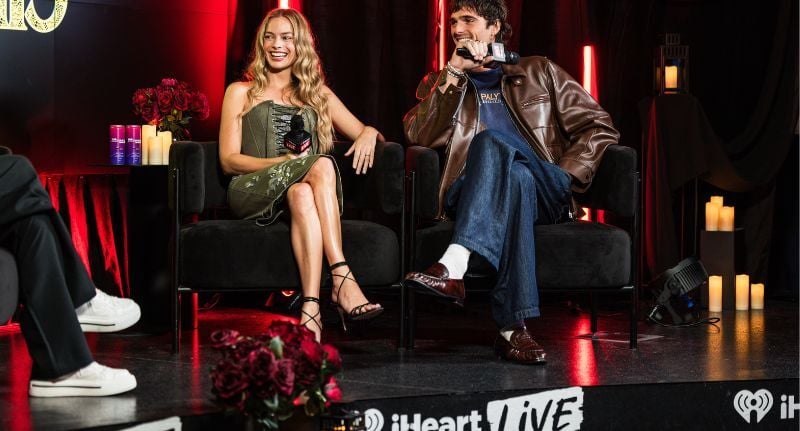 Margot Robbie & Jacob Elordi
Rewiring radio’s role in the entertainment economy
At the heart of Stephenson’s strategy is a recognition that radio no longer exists in isolation. Audience behaviour has shifted, and the economics of attention have shifted with it.
“I think the way in which people consume content has fundamentally changed, so the way in which you create and distribute content has to fundamentally change, but I see it far from keeping radio alive. I see enormous opportunity in everything that we're doing, and you saw it come to life right there,” he said.
“We just created an entertainment platform for an advertiser to take advantage of, and the best bit about that for me is that content doesn't need to start in radio and be amplified across socials. It can start as a live event and become a radio show. It can start as a social or a video product and become a radio show. Content can start anywhere, as long as it's distributed across all platforms. You can create an entertainment opportunity.”
Stephenson is careful to emphasise the foundation of radio remains intact, even as the company builds around it.
“I also realise that things don't change overnight. We've got a very successful radio business in metro and regional markets, and that is the foundation of our company, and I'm not trying to change that. I'm trying to build on it.”
The broader ambition is clear. ARN wants to own moments, and not just those ones that take up airtime.
“When people see what we've just seen firsthand, the more it becomes real,” Stephenson said. “I've said this many times, vision is easy, execution is everything. Having a vision is one thing, but unless you execute brilliantly, it's just a good idea.
“I'll be held to account, and we will be held to account by delivering on what I said we would be, which is an entertainment company. We're not perfect, we've got a long way to go, but I think that's a pretty good example of what I'm trying to do.”
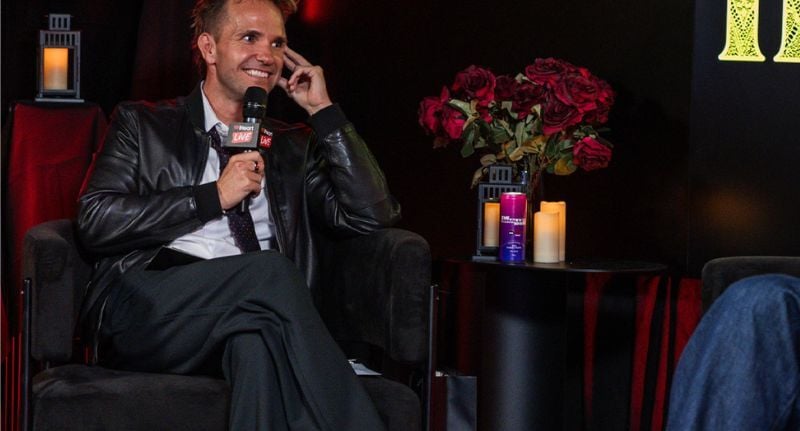 Smallzy
Competition intensifies, but focus remains inward
The shift comes as ARN faces growing competitive pressure across audio, streaming, podcasting and live entertainment, as well as structural change within Australia’s media landscape.
Yet Stephenson maintains his focus remains firmly on execution,
“I don't really think about it like that. Entertainment, by nature, is a ubiquitous term. Nobody owns entertainment,” he said.
“It's a feeling, and it's an outcome, and we will be judged, like I said, on how we execute. We need to create high-quality content, distribute it across all platforms, and monetise it to generate revenue. Everybody is a competitor of some description, but with complete respect, I don't spend that much time thinking about everybody else.
“We've got enough things to do in our own business, and there's enough opportunity in what we've got to be really successful. But you've got to have a plan and you've got to deliver it, and that's what I'm trying to do.”
Financial reality sharpens the stakes
That execution imperative carries real financial weight.
ARN is preparing to release its FY2025 results later this month, marking its first full-year disclosure since News Corp Australia exited its remaining 13% stake, ending a long-standing shareholding and resetting the company’s ownership structure.
The broadcaster has already warned EBITDA could fall between 25% and 27% year-on-year, reflecting what it described as “significant softness” in the national advertising market. Revenue pressures have compounded longer-term declines, with group revenue falling from $344.9 million in FY2022 to $334.3 million in FY2023, and net profit before tax dropping sharply over the same period.
Even so, the digital audio division has emerged as a strategic bright spot, with revenue climbing 36% to $19.8 million, supported by strong growth in podcast listening and monthly downloads. iHeart remains central to that trajectory, maintaining its position as Australia’s largest podcast publisher with a monthly audience approaching seven million.
For Stephenson, initiatives like iHeartLIVE represent more than brand-building exercises. They are part of a broader reset designed to diversify revenue, deepen audience engagement, and reposition ARN within the wider entertainment economy.
The challenge now is turning momentum into measurable growth.
Vision, as Stephenson acknowledges, is only the starting point. Execution will determine whether ARN’s reinvention ultimately delivers.
More from Mediaweek
The leading media trade publication in Australia.
Get our top stories straight to your inbox daily by signing up to our Newsletter
By providing your information, you agree to our Terms of Use and our Privacy Policy. We use vendors that may also process your information to help provide our services.
.png%3Fv%3D1790739665854&w=3840&q=75)


.png%3Fv%3D1789531401239&w=3840&q=75)