



Gen Z now 48% of media workforce as MFA urges leadership reset
The fear? Much of the industry conversation still leans on outdated assumptions.

Gen Z now makes up almost half (48%) of Australia’s media workforce, yet much of the industry conversation still leans on outdated assumptions.
That is the central finding of a new whitepaper released by the Media Federation of Australia on 12 February 2026.
Drawing on data from the MFA’s NGEN Workplace Survey, The Gen Z effect: how a new generation is reshaping work in the media, why it matters and how leaders can adapt argues that leaders need to rethink how they train, manage and develop early-career talent.
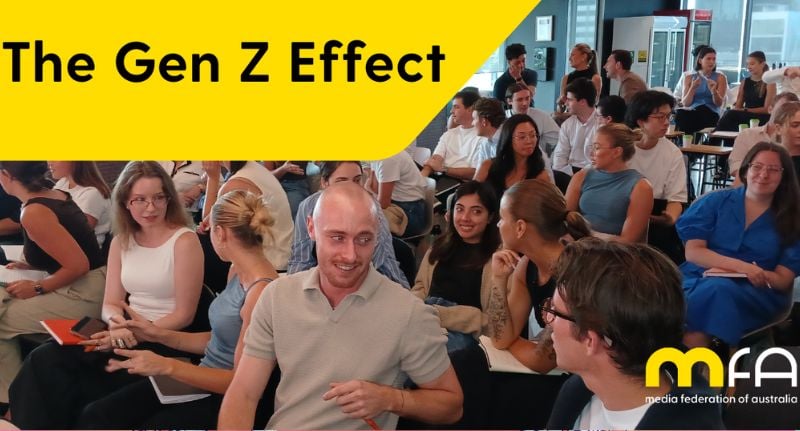
The report, announced at an event launching NGEN’s 2026 workshop series, positions Gen Z not as a problem cohort but as an early signal of bigger structural change across the media industry.
A workforce shaped by disruption
NGEN is the MFA’s flagship training and development program for media professionals with less than five years’ experience. It delivers workshops, events and practical learning designed to build capability across both media agencies and media owners.
Gen Z entered the workforce during a period defined by digital-first workflows, virtual collaboration and limited access to in-person mentoring.


The leading media trade publication in Australia.
Get our top stories straight to your inbox daily by signing up to our Newsletter
By providing your information, you agree to our Terms of Use and our Privacy Policy. We use vendors that may also process your information to help provide our services.
Never Not Creative’s Mentally Healthy 2024 Survey found that younger workers report higher levels of anxiety than older cohorts, a reality that continues to influence workplace expectations.
As automation, AI, and platform-driven workflows reshape the sector, structured support and development have become essential rather than optional.
Melanie Aslanidis, head of NGEN and MFA Foundations, said: “Too often, Gen Z is framed as less resilient, less loyal, harder to manage. In reality, Gen Z is not a problem to solve, but an early signal of deeper changes already reshaping how work is learned, communicated and experienced.
“Understanding Gen Z isn’t about indulgence or accommodation. It’s about recognising how the foundations of work have shifted, and what effective leadership looks like now.”
 Source: FreePik
Clarity, Feedback And Culture
The whitepaper highlights four areas where generational shifts are most evident: learning, communication, culture, and careers. It urges leaders to provide clarity around expectations, feedback and progression pathways.
The report states: “For Gen Z, feedback isn’t a judgement, it’s a developmental tool. It’s part of how they learn, not something saved for formal reviews. Regular, in-the-moment input helps answer the basics: Am I on the right track? What should I focus on next? How am I improving?”
Sophie Madden, CEO of the MFA, said: “What’s often framed as ‘Gen Z needs’ are in fact fundamentals of good work: clear communication, meaningful development, supportive leadership and healthy workplace cultures. When organisations get it right for Gen Z, they create better outcomes for people at every stage of their career.
“This whitepaper is a testament to the important role NGEN plays in listening to early-career talent and translating those insights into practical guidance for the industry. We’re proud of NGEN’s continued leadership in shaping a more resilient, inclusive and future-ready media workforce.”
 Sophie Madden, CEO of the MFA. Source: Supplied
What the data shows
Key findings from the MFA’s NGEN Workplace 2025 Survey underline how Gen Z defines effective work:
• 47% prefer in-person conversations, while only 1.3% favour project-management tools for communication.
• 57% want real-time feedback while on the job rather than waiting for formal reviews.
• Only 6% believe long hours equal working hard, while 82% say efficiency and meeting deadlines matter more.
• 91% rank supportive managers as the most important feature of a healthy workplace.
NGEN’s 2026 program will deliver more than 40 workshops and events covering negotiation, presentation, critical thinking, change management, leadership and the return of the NGEN Charity Cup.
The NGEN Mentor Program will also return after a successful 2025 pilot, pairing rising talent with experienced industry leaders.
More from Mediaweek
The leading media trade publication in Australia.
Get our top stories straight to your inbox daily by signing up to our Newsletter
By providing your information, you agree to our Terms of Use and our Privacy Policy. We use vendors that may also process your information to help provide our services.


