






'Makes no sense': Foxtel CEO Patrick Delany takes aim at Australia's sport siphoning laws
He argues the laws are fundamentally misaligned with how Australians actually consume media in 2026.

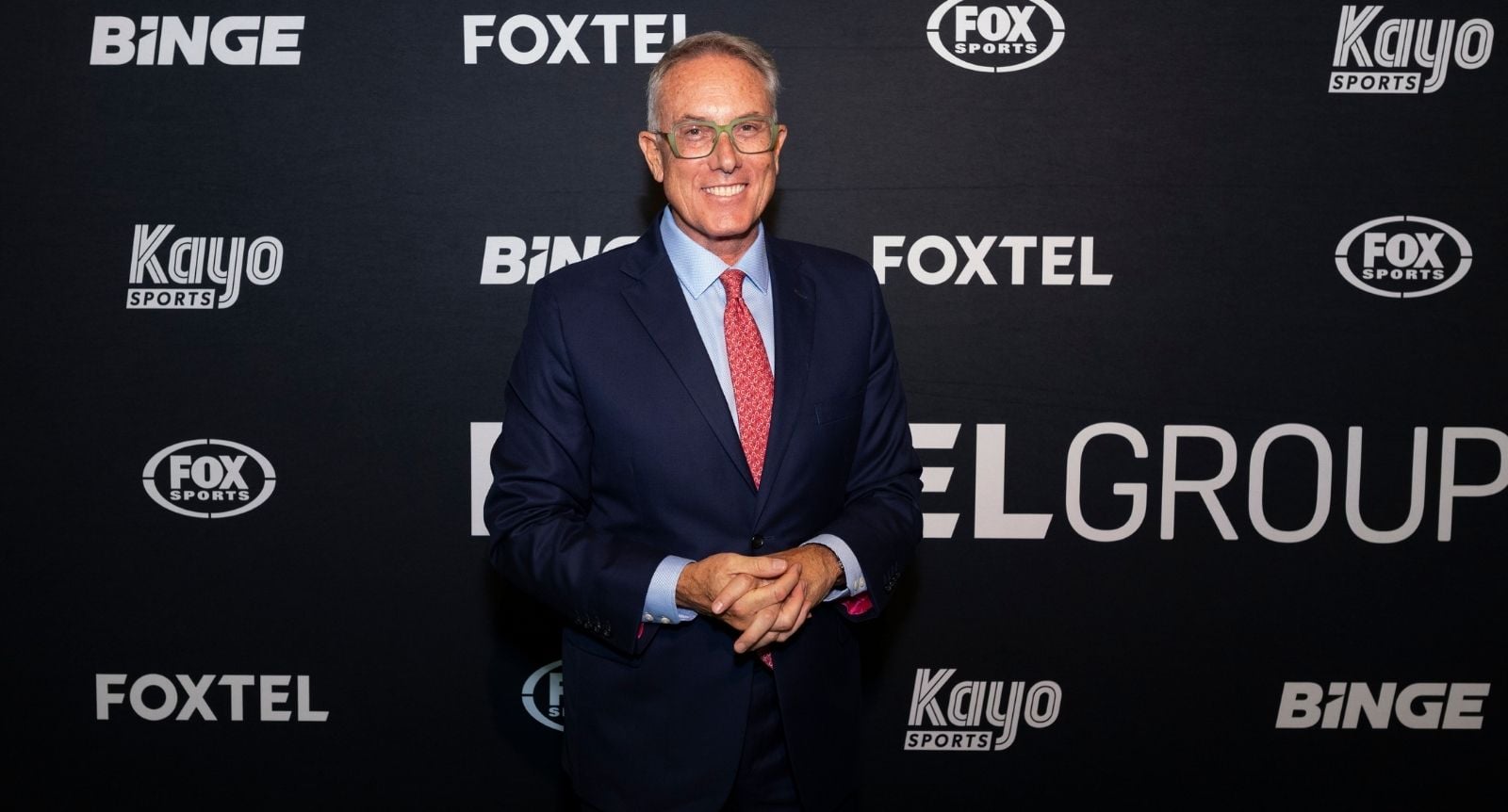
Foxtel Group CEO Patrick Delany has delivered one of his bluntest critiques yet of Australia’s sports anti-siphoning regime, arguing the laws are fundamentally misaligned with how Australians actually consume media in 2026.
Speaking as Foxtel sharpened its policy pitch at a glitzy event held at Parliament House in Canberra, Delany told Mediaweek that broadcasters have been forced to innovate around a framework that no longer reflects reality.
“We have learned to be innovative and compete anyhow,” Delany said. “And at some stage, the government and the Australian people have got to work out that the laws reflect a media world from 50 years ago.”
“And the majority of us are getting our media through digital, not through an aerial. So why is that still a platform through which the whole industry is regulated? Makes no sense.”
The comments come as Canberra continues to reassess competition, media regulation, and the role of global streaming platforms in Australian sport, with siphoning laws increasingly viewed by industry as a structural mismatch in a streaming-first market.
Foxtel makes its post-DAZN case to Canberra
Delany’s remarks came as Foxtel Group used its annual Parliamentary Showcase to reinforce its value proposition to policymakers, reaffirming a multi-billion-dollar commitment to Australian sport and screen production following its acquisition by global sports streaming platform DAZN.


The leading media trade publication in Australia.
Get our top stories straight to your inbox daily by signing up to our Newsletter
By providing your information, you agree to our Terms of Use and our Privacy Policy. We use vendors that may also process your information to help provide our services.
Foxtel invests more than $1 billion a year in sports rights and production, alongside $130 million annually in Australian drama and local programming - positioning itself as one of the country’s largest private investors in sport and screen.
The Showcase functioned as a clear signal to the government that, despite international ownership, Foxtel’s operational, economic and cultural footprint remains firmly Australian.
Before the sale, News Corp held a 65 per cent stake in Foxtel, with Telstra owning the remaining 35 per cent. News Corp now retains a minority stake in DAZN, which is headquartered in the UK.
Why DAZN matters... and where it doesn’t
Delany was explicit about how the partnership with DAZN operates in practice, stressing that creative and commercial decisions remain local, while technology investment scales globally.
“They leave us to do what we do best, which is to know Australian audiences and subscribers, to invest in Australian content, and to continue to grow the company,” he said.
“The other part is, technology is a global thing now. So, knowledge of technology, the way in which it's developed, the way in which AI is developing, all of those things are very big investments, and for a little Australian company to do it alone always is going to be a challenge.”
“So, it's good to be part of the DAZN family, especially in technology, we jump on the back of global deals now. We don't have to worry about that. We only have to worry about entertaining Australia.”
AI, personalisation and the future of Kayo
That global technology backing is already shaping Foxtel’s thinking on artificial intelligence and personalisation - particularly for Kayo Sports.
“Well, a vision that DAZN has, which we share, is that every Australian sports fan should have their own individual experience of Kayo,” Delany said.
“Why shouldn't you? Have a UX (user experience) that's tuned to you, content that's tuned to you, sports and conversations and feeds.”
Delany said AI could increasingly assist in shaping content strategies, discovery and even on-screen talent - without replacing human creativity.
“I don't think there's pendulum swings where you go, it's all going to be robots and AI. I don't think that's the case at all,” he said. “I think it's very liberating, and it will give rise to much better entertainment experiences.”
Rights pressure builds as NRL negotiations loom
Foxtel currently holds broadcast rights to Australia’s most-watched sports, including AFL, NRL, cricket, netball and Supercars.
AFL and cricket rights are locked in until 2031, while negotiations for the next NRL deal - with the current agreement expiring at the end of 2027 - are now underway.
While Delany declined to comment directly on the negotiations, he left little doubt about Foxtel’s intent.
“We never comment on rights because they're highly competitive,” he said.
“But I will say this, that we love the NRL, and we're a strong company. We intend to compete very, very aggressively to keep those rights.”
Why it matters
Delany’s intervention reframes the siphoning debate as a digital policy problem, not a broadcast one - and places pressure on government to reconcile legacy regulation with modern viewing behaviour.
As global capital, streaming scale and AI-driven personalisation collide with Australian sports policy, Foxtel is making its position clear: innovation has moved on, and regulation must follow.
More from Mediaweek
The leading media trade publication in Australia.
Get our top stories straight to your inbox daily by signing up to our Newsletter
By providing your information, you agree to our Terms of Use and our Privacy Policy. We use vendors that may also process your information to help provide our services.


