



Jacinda Ardern calls for stronger social media accountability in preventing online harm
She wants platforms treated less like neutral tech hosts and more like publishers.

Former New Zealand Prime Minister Jacinda Ardern has called for stronger accountability from social media platforms in preventing harm online, arguing they should be treated less like neutral tech hosts and more like publishers responsible for the content they distribute.
Speaking at an International Women’s Day event at the Sydney Opera House on Sunday, Ardern said the current regulatory environment places more scrutiny on individual users than on the platforms themselves, despite their enormous role in amplifying content.
“I often simplify it down to a very simple analogy,” she told the packed room. “We need to start treating social media companies as publishers, not posters.”
A gap in accountability
Ardern said everyday users face clear rules when posting online, but those same expectations have historically not been extended to the companies operating the platforms.
“At the moment, there is obviously a set of standards and limitations for those who publish on social media,” she said. “Most people publish on social media, but that is not extended to social media companies. That would be the consequence of that.”
Her comments came in response to a question about the role social media played following the Christchurch mosque shootings on 15 March 2019.
The terrorist attack, carried out by 28-year-old Brenton Tarrant, was livestreamed online. Fifty-one people were killed, and 89 were injured, including 40 by gunfire.


The leading media trade publication in Australia.
Get our top stories straight to your inbox daily by signing up to our Newsletter
By providing your information, you agree to our Terms of Use and our Privacy Policy. We use vendors that may also process your information to help provide our services.
Ardern reflected on how the attacker used digital platforms to deliberately amplify the violence and provoke wider social division.
“In the immediate aftermath of March 15[th], this was an attack that, the first time really to this extent, was used to try and create an environment where there would either be a copycat, or that there would be retribution as a result,” she said.
“And of course, the terrorists in our case wanted to create a knock-on effect.”
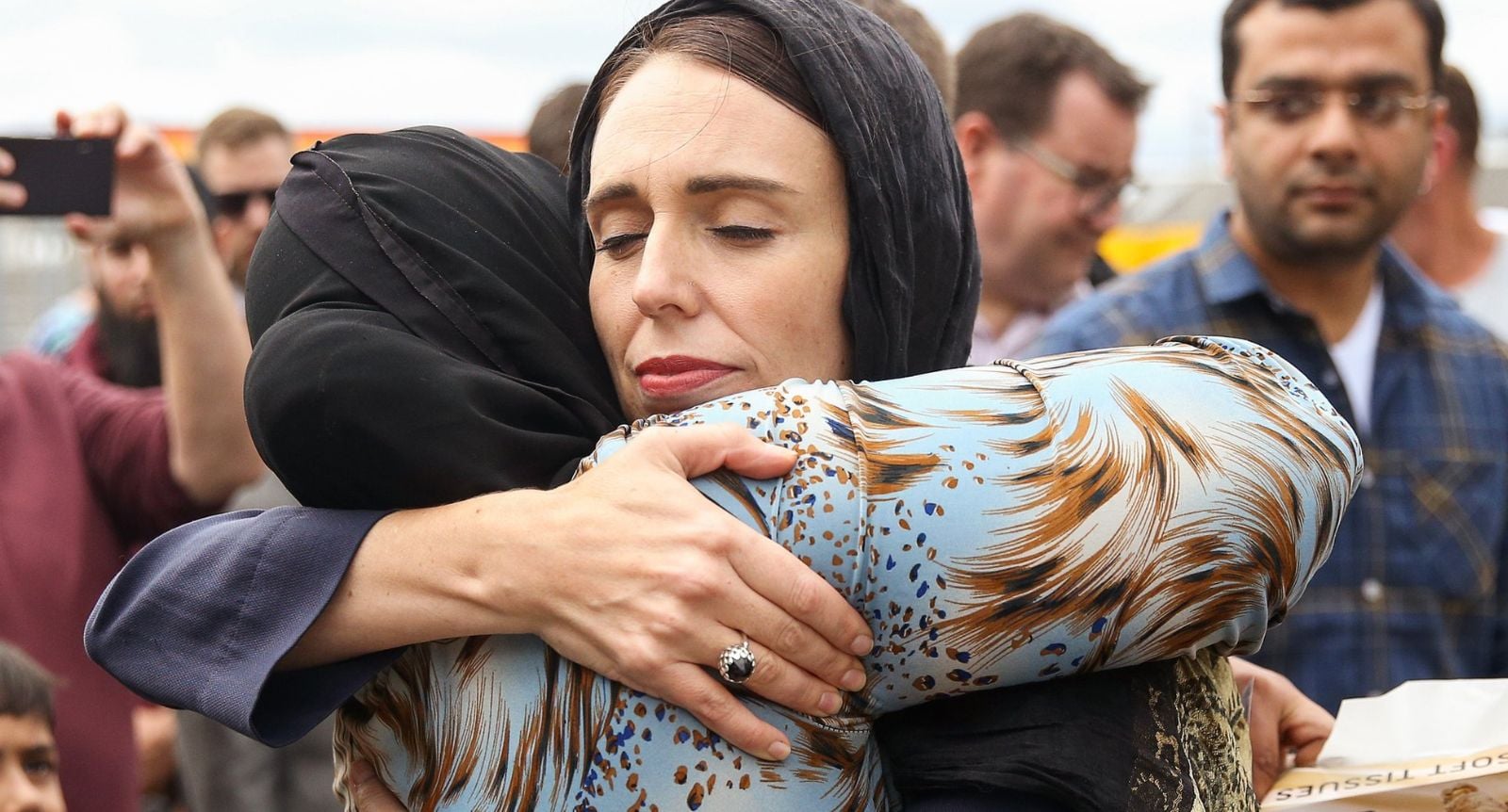 In a now iconic photo, Ardern embraces a member of the Christchurch Muslim community in the aftermath of the attacks.
A moment of leverage
The footage of the attack remained online for 17 minutes before being removed. In the hours that followed, copies of the video spread rapidly across the internet.
Across the following year, Ardern said around 1.5 million copies of the video were ultimately taken down.
The speed and scale of the spread highlighted both the technical challenges facing platforms and the limited accountability they face for harmful material circulating online.
“Because it had been on Facebook, there were a lot of questions from the media,” Ardern recalled. “Have you heard from Facebook executives yet? Will they be coming? Will you meet with them?
“And I had the sense that, for a moment in time, very briefly, we might have had maybe just a little bit more power than the companies at that moment.”
The Christchurch Call
Rather than focus solely on discussions with individual platforms, Ardern said the New Zealand Government pursued a broader international response.
The result was the Christchurch Call to Action, a voluntary agreement bringing together governments, technology companies and civil society groups to combat the use of the internet to promote terrorism and violent extremism.
More than 130 governments and organisations, including Australia, have since joined the initiative.
Ardern said the collaboration has driven tangible changes in how platforms respond to violent incidents online, particularly around livestreamed content.
“There is now a civil defence-style model to the livestreaming of terrorist and violent acts,” she said.
“That’s why you don’t see that same kind of thing happening again.”
Main image: Jacinda Ardern
More from Mediaweek
The leading media trade publication in Australia.
Get our top stories straight to your inbox daily by signing up to our Newsletter
By providing your information, you agree to our Terms of Use and our Privacy Policy. We use vendors that may also process your information to help provide our services.


