



IKEA’s monkey moment shows the speed of culture done right
Why we're all drunk in love with Punch.

It was the picture that launched a thousand million awwws.
An orphaned baby macaque named Punch, rejected by his mother and then by his troop, clinging to a plush orangutan for comfort. The internet did what it does best: it felt something. Deeply.
And then, almost as quickly, it noticed the label. The toy was IKEA’s Djungelskog.
He finds comfort in his favorite plushie 🥰 pic.twitter.com/A4rxdYTJYr
— Interesting World (@_fluxfeeds) February 14, 2026
From zoo enclosure to global timeline
Punch was born in July last year at Ichikawa City Zoo in Japan. His mother rejected him, likely after a difficult birth during a heatwave, leaving staff to raise him by hand. By January, zookeepers began the delicate process of reintegrating him into the “Monkey Mountain” enclosure.
It did not go smoothly.
Videos showed the young macaque edging toward older monkeys for contact, only to be swatted away or ignored.


The leading media trade publication in Australia.
Get our top stories straight to your inbox daily by signing up to our Newsletter
By providing your information, you agree to our Terms of Use and our Privacy Policy. We use vendors that may also process your information to help provide our services.
In response, keepers introduced a stuffed orangutan from IKEA - the now-famous Djungelskog - both as emotional comfort and to help build his muscle strength.
Punch clutched it. Dragged it. Slept with it. It was both heartbreaking and heartwarming, and soon, the images were everywhere.
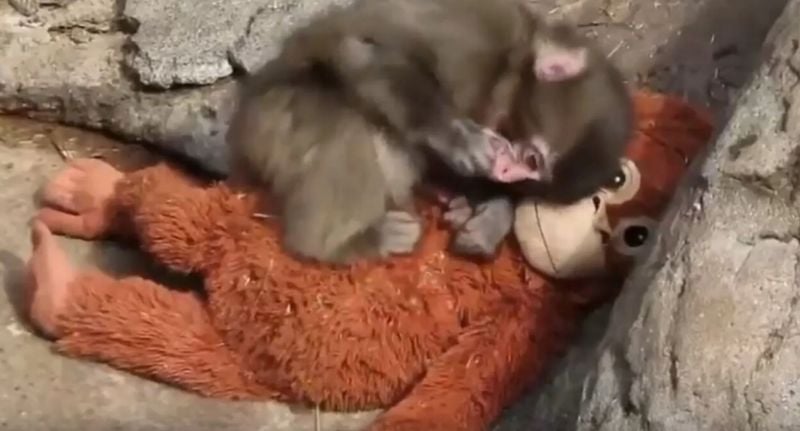 Punch with his monkey. Source: X
How IKEA owned the image
IKEA didn’t manufacture the moment. It reacted to it. The retailer donated stuffed animals to the zoo, with Ichikawa City Mayor Ko Tanaka posting a photo alongside IKEA Japan President Petra Färe surrounded by plush toys for Punch and the other animals.
Global IKEA accounts joined in, with IKEA Spain sharing an edited image of Djungelskog hugging Punch, and IKEA Switzerland spotlighting its Sandlöpare chimpanzee alongside the orangutan toy.
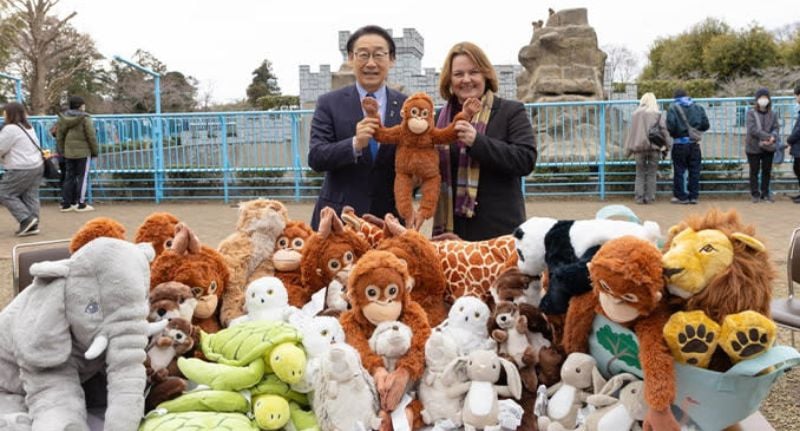 Ichikawa City Mayor Ko Tanaka posting a photo alongside IKEA Japan President Petra Färe. Source: Supplied
Speed as strategy
For Vinne Schifferstein Vidal, Co-Founder of MC&V, the playbook here is about cultural velocity.
“In moments like this, speed isn’t a luxury; it’s a requirement. Culture moves in hours, not weeks,” she told Mediaweek.
“Punch wasn’t a campaign; he was a feeling. And when something genuinely captures the internet’s heart, brands either show up fast or they show up irrelevant.”
She noted that production is no longer the bottleneck it once was.
“It’s not clear whether IKEA has used AI in this work. But in general with AI-enabled workflows, brands can move at the speed of culture without sacrificing craft. The real differentiator isn’t speed, it’s whether you’re structurally set up to respond.”
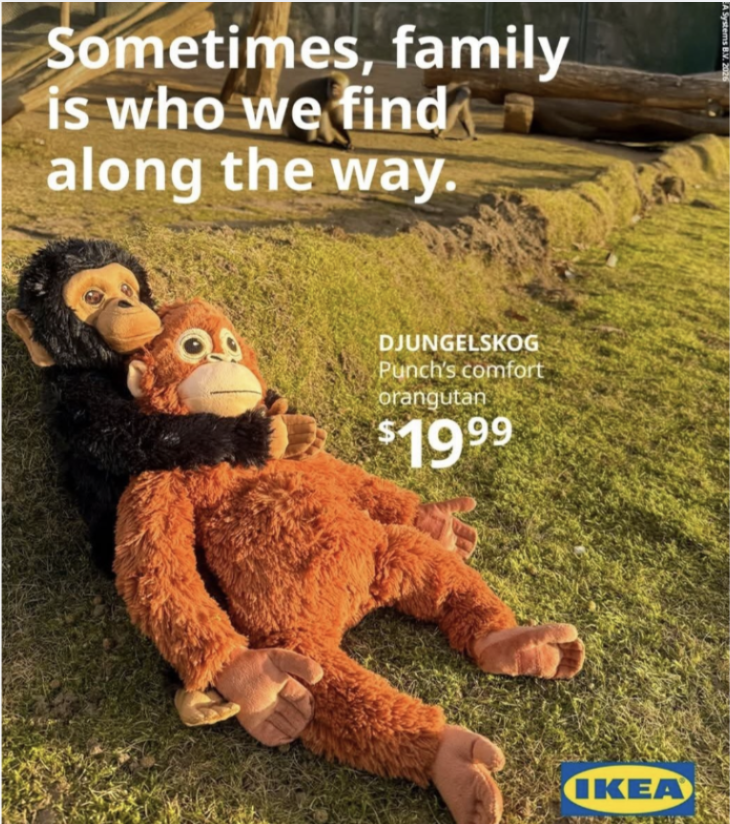 The IKEA ad. Source: IKEA
Echo, don’t hijack
The emotional core of Punch’s story is vulnerability and a sense of belonging. That’s precarious territory for any brand.
“Yes, but carefully,” Schifferstein Vidal said when asked if she would have done the same. “The emotional core of this story is vulnerability and belonging. That’s sacred territory. IKEA did something smart: they echoed the sentiment rather than hijacking it. They didn’t make it about product. They made it about comfort.”
“When a moment is this organic, your job isn’t to amplify yourself. It’s to amplify what people are already feeling.”
Casey Midgley, Founder and Creative Director at Maker Street Studios, framed it more bluntly.
“Cultural moments decay fast. If you wait for board approvals, you can easily miss the boat. Sometimes, it’s better to take the road to forgiveness than permission.”
For Midgley, the response worked because it was on-brand.
“IKEA has spent decades building a brand grounded in warmth, humour and humanity, with systems and confidence that allow it to react in real time. Had the marketing team sat on their hands and waited for the sign-off, they could have missed a once in a lifetime moment. Like when a monkey becomes best friends with one of your soft toys!?”
 Vinne Schifferstein Vidal, Co-Founder of MC&V. Source: LinkedIn
The risk of overreach
Both creatives point to restraint as the quiet hero of the story.
Schifferstein Vidal argues the bigger danger would have been over-commercialisation. “I wouldn’t have pushed a bigger ‘campaign’. In fact, the biggest risk here is over-commercialising something fragile.”
She sees potential in AI as a creative amplifier - not a megaphone. “AI now allows brands to invite people to co-create in meaningful, brand-safe ways. For example, letting audiences generate their own ‘chosen family’ stories or comfort-object moments.”
But she cautioned: “AI can help scale a cultural moment, but it shouldn’t industrialise emotion. The risk is overextension.”
Midgley agrees the execution was largely on point. “Would I have changed anything? Not much. If anything, I’d have anchored it more firmly in IKEA’s deeper idea of home and belonging, to give the work a longer shelf life beyond the meme cycle. But that’s a marginal gain.”
His broader takeaway is less about plush toys and more about preparedness. “Moving at this speed requires a risk tolerance, clarity and strong foundations that a lot of brands just don’t have. If the structures are a little shaky, it’s almost impossible to act this fast when moments like this land on the radar.”
 Casey Midgley, Founder and Creative Director at Maker Street Studios. Source: Supplied
Comfort as brand equity
There was no formal campaign announcement. No media spend breakdown. Just a monkey, a toy, and a brand that understood the tone of the room.
In a feed full of outrage and hard sells, IKEA chose softness.
And in doing so, it reminded marketers of something simple but easy to forget: sometimes the smartest move in culture is not to shout louder, but to hold the same feeling gently... and let the internet do the rest.
More from Mediaweek
The leading media trade publication in Australia.
Get our top stories straight to your inbox daily by signing up to our Newsletter
By providing your information, you agree to our Terms of Use and our Privacy Policy. We use vendors that may also process your information to help provide our services.


