



Advertisers pile into digital audio, but measurement still holding the market back
According to the report, 69% of audio ad buyers plan to increase spend in original content podcast advertising.

Australia’s digital audio sector is poised for further growth, with advertisers signalling increased investment in podcasts and streaming audio, according to the latest Digital Audio State of the Nation Report from IAB Australia.
However, the report also warns that the market’s long-term scale will depend on the industry’s ability to strengthen measurement, prove effectiveness, and responsibly adopt emerging technologies such as AI.
Now in its 10th year, the report tracks the evolution of Australia’s digital audio ecosystem, including shifts in advertising formats, investment drivers, technology adoption, and advertiser sentiment across streaming audio, podcasts, and video-podcast environments.
The findings will be formally unveiled at the IAB Australia Audio Summit, where industry leaders are examining how digital audio integrates with broader digital advertising strategies, trading models and measurement frameworks.
Advertisers signal growing investment
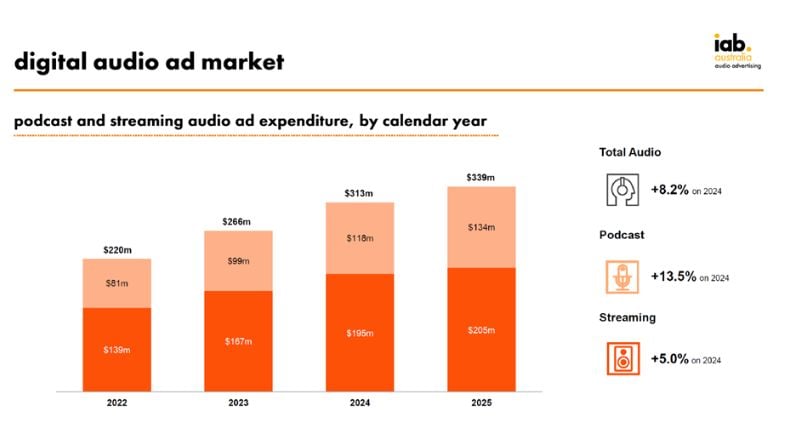
The research found a strong appetite for increased investment in digital audio formats.
According to the report, 69% of audio ad buyers plan to increase spend in original content podcast advertising, while 56% intend to boost investment in streaming music advertising.


The leading media trade publication in Australia.
Get our top stories straight to your inbox daily by signing up to our Newsletter
By providing your information, you agree to our Terms of Use and our Privacy Policy. We use vendors that may also process your information to help provide our services.
Video podcasts are also gaining traction. Around 25% of respondents have already included the format in campaigns, while a further 50% said they have researched the opportunity.
Audience attention, brand-building capabilities, brand integrations and access to talent and content creators were identified as major drivers behind the continued expansion of audio advertising.
The findings build on momentum identified in previous editions of the report, which have tracked steady growth in digital audio’s role within the broader media mix.
Measurement and standards still a hurdle
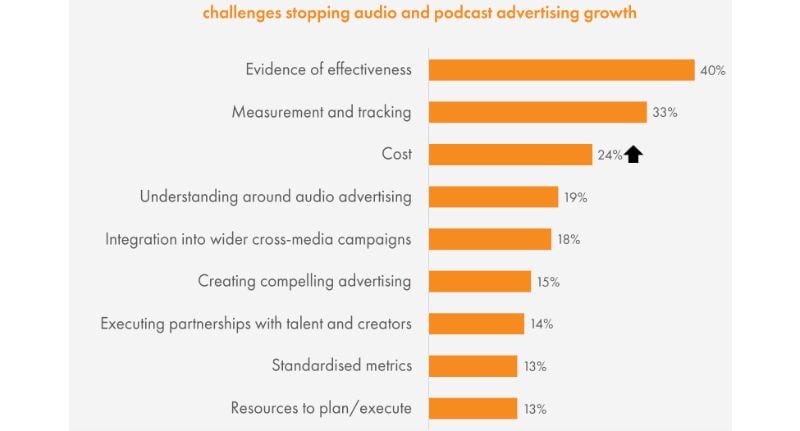
Despite the optimism, the report highlights persistent industry challenges around measurement and standardisation.
Gai Le Roy said advertiser confidence increasingly depends on clearer proof of outcomes and consistent measurement standards.
“There is clear positive sentiment around digital audio, with buyers signalling continued growth across podcasts and streaming. What’s equally clear is that investment confidence increasingly depends on outcomes-based measurement and consistent standards that allow audio to sit comfortably alongside the broader digital mix.
“At the same time, the expansion of the creator economy and the rise of video podcasts are reshaping how brands show up in audio environments. As an industry, we need to innovate around measurement, trading models and creative integration to ensure growth is matched with clarity and credibility.”
The study found standardised data remains essential for integrating digital audio into planning tools such as Market Mix Modelling (MMM), which is now the leading tool for assessing sales impact and ROI, used by 44% of respondents.
However, fragmented formats and the lack of consistent standards across the audio ecosystem continue to present challenges for advertisers.
AI adoption cautious but growing
The report also found the industry is exploring the use of AI in audio planning, campaign activation and ad production, though sentiment remains cautious.
The greatest perceived opportunity lies in performance tracking, reporting and campaign optimisation.
However, 53% of Australian ad buyers expressed concerns about the use of AI in audio content production, particularly around host-read advertising and voice cloning, where authenticity remains a key issue.
Steve Golding, who also serves as Chair of the IAB Australia Audio Council, said digital audio’s evolving capabilities are strengthening its role within the media mix.
“The future for digital audio advertisers is increasingly compelling. As the channel scales within the media mix, advances in targeting, dynamic creative, and experimentation with content creators will make audio campaigns even more relevant, accountable, and effective, allowing them to deepen connections with audiences and build trust at scale.”
Revenue growth reinforces momentum
The report lands just days after the release of the Internet Advertising Revenue Report, also from IAB Australia and prepared by PwC Australia.
That report found digital audio revenue grew 8.5% year-on-year to reach $338.7 million in calendar year 2025, reinforcing the category’s continued expansion within the broader digital advertising market.
Creator economy and programmatic buying gaining traction
Additional findings from the research highlight the growing influence of the creator economy and shifts in buying behaviour.
Access to talent and content creators jumped 10 percentage points year-on-year, making it the second most important driver of digital audio advertising investment after audience attention and engagement.
Around 61% of respondents have already used podcast creators or talent as part of their creator marketing strategy, with a further 17% considering the opportunity.
The report also identified a shift towards performance-focused investment. While digital audio has traditionally been used for brand-building, 37% of respondents said they plan to increase the share of spend on performance advertising, compared with 27% expecting to increase brand-focused investment.
Programmatic audio buying remains widespread, with 72% of respondents purchasing audio programmatically in 2025.
Among those buyers, 68% intend to buy streaming audio guaranteed deals in 2026, up from 51% in 2025, while 62% plan to buy podcast advertising guaranteed deals, up from 43% last year.
Industry backing and methodology
The report was supported by Commercial Radio & Audio and 19 media and technology companies, including Acast, ARN, Blis, Foxtel, Google, Magnite, News Corp Australia, Nine Radio, NOVA Entertainment, Publicis Groupe, SCA, Spotify, The Trade Desk, Triton Digital, Yahoo, WPP Media and Zenith.
Fieldwork for the study was conducted in November and December 2025 and included 128 survey responses from decision-makers involved in allocating marketing spend.
The majority of respondents (95%) were from advertising agencies, including holding groups and independent agencies, while the remaining 5% represented brands or companies that buy audio advertising.
Main image: AI-generated
More from Mediaweek
The leading media trade publication in Australia.
Get our top stories straight to your inbox daily by signing up to our Newsletter
By providing your information, you agree to our Terms of Use and our Privacy Policy. We use vendors that may also process your information to help provide our services.


