


Theresa Miller, author and director TM Media
When an Australian journalist is commissioned to write a piece or broadcast a story on AI, more often than not they turn to UNSW academic Toby Walsh for the ‘expert quote’.
Is Professor Toby Walsh imminently qualified to speak on AI? Absolutely. Is he the only authoritative voice on the subject? Absolutely not. But he’s a ‘safe bet’: a media-trained expert with a proven track record.
Pick any subject, from rising interest rates to the plight of the environment or the cost of childcare, and we’ll see and hear the same commentators trotted out for a ‘sound bite’. Journalists need an expert’s quote to give their story credibility, otherwise it’s just an opinion piece.
Unfortunately, reporters and producers are so time poor, they don’t have the bandwidth to dig deep to find fresh talent. They simply google ‘AI expert near me’ or call the PR person on the media release. More often than not, they contact the trusted, tried and proven talent who ‘gives good grabs.’
The diversity problem
The Women in Media gender score card shows the vast majority of spokespeople quoted in news coverage are older white men. Women are quoted only a third of the time and considerably less on subjects regarding sport, defence and finance.
The picture is even grimmer for people from diverse ethnic backgrounds, young Australians or people living with a disability. This means our media does not accurately reflect the society we live in and appears less relevant to many sectors of the community.
So, if you are a subject matter expert, keen to share your fresh perspective and expertise to influence policy makers and explode outdated tropes, how do you become the go-to-person for media commentary in your field?
Here’s a journalist’s wish list for good media talent:
1. Speak clearly and succinctly
Commercial TV and radio news journalists want sound bites that are between five and eight seconds. In print or online, they’re looking for around 25 words for a quote. If you’re interviewed live on radio, you may get up to 12 minutes. But you still need to be prepared. The advantage – and disadvantage – of a live interview is that you can’t be edited! Prepare your key messages ahead of the interview.
2. Tailor your message to the media platform and its audience
If you’re a finance expert, speaking to a youthful audience on Triple J’s Hack you might explain how to best choose a super fund when you start your first job. Conversely, if you’re being interviewed on Radio National, their older audience would prefer advice on superannuation tax breaks prior to retirement. Do your research on the audience and tailor your examples to be relevant.
3. Be friendly, helpful and available
If a journalist rings for a comment and you say, ‘Sorry, I’m too busy. Call back tomorrow.’ they’ll simply find someone else, maybe even your competitor. The news waits for no-one. However, you can set boundaries. If a harried reporter rings you at 2pm and says they need a comment for the 3pm radio news bulletin, you might put them off until their next deadline at 4pm or 5pm. That will give you time to prepare your response. Otherwise, it could be a case of ‘act in haste, repent at leisure’.
4. Use plain English and avoid jargon
Every industry has shorthand, which is useful when speaking to your peers, but is often unintelligible to someone outside your field. Jargon – including acronyms, foreign words or corporate speak – creates a barrier between you and the listener, who will either switch off or misinterpret your message. Use language understandable to a 14-year-old or you risk your interview hitting the cutting room floor.
5. Prepare brief key messages and underpin them with real life examples and statistics
For example, your key point might be: The sun is particularly harsh in Queensland. Reason: The UV rating is above 3 most days, which causes skin damage. Example: Two out of three Queenslanders will get skin cancer in their lifetime. So what? So, it’s important we all practise sun safety.
The right delivery
And when it comes to your delivery style, ideally, you’ll be confident and calm, empathetic, positive, genuine and enthusiastic. There’s really no such thing as a boring topic, only a boring speaker. So, whether you’re proactively seeking an interview with a journalist or navigating a PR crisis, media training for your executive team is your best insurance policy. If we want to improve the diversity of the voices commenting in our media landscape, we need more people who are willing to step-up and share their expertise, because being ‘good media talent’ is more than just knowing your subject area well.
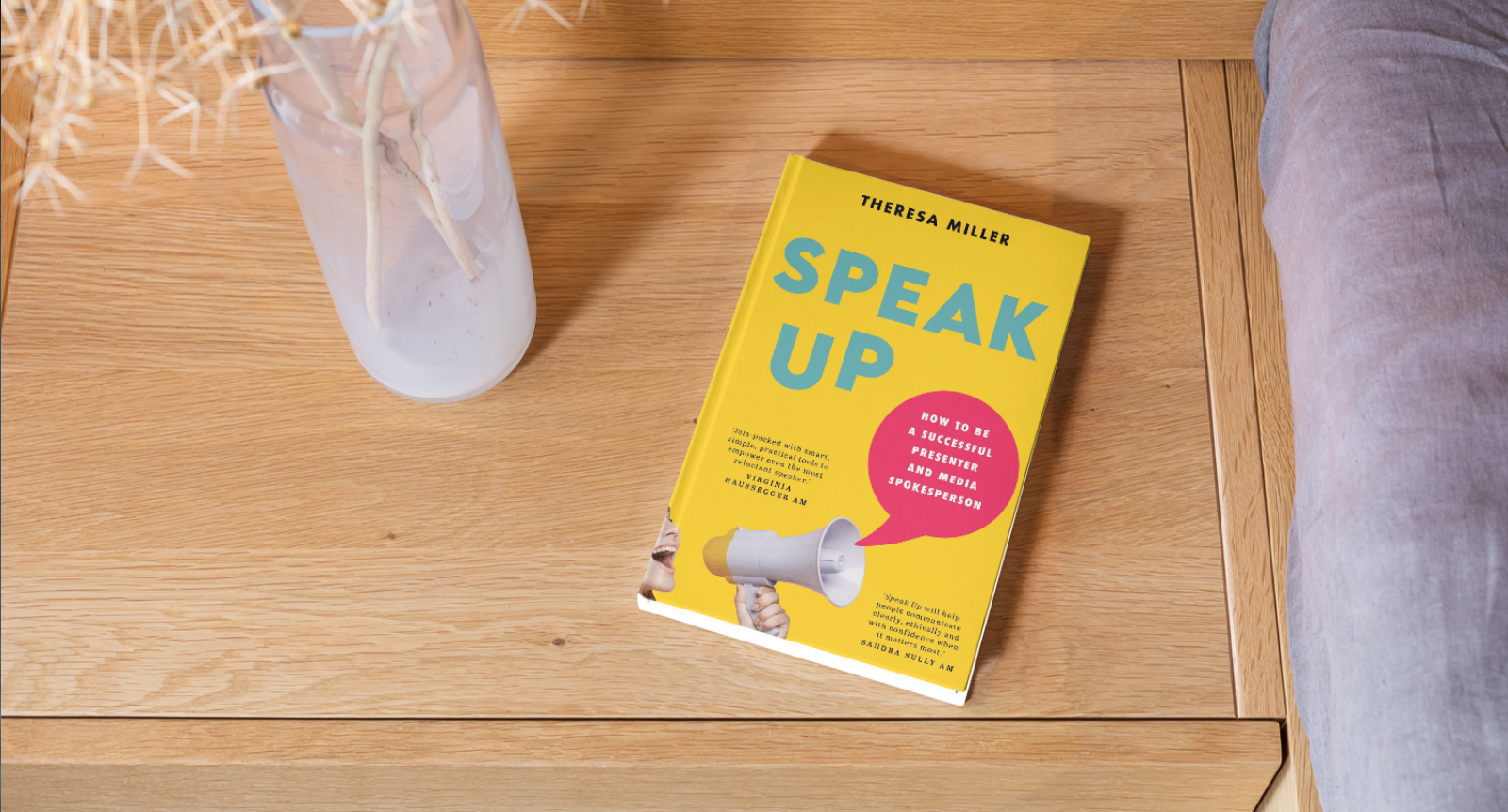
Theresa Miller’s,‘Speak up’. Image: supplied
Theresa Miller is a journalist, media trainer and author of Speak Up – how to be a successful presenter and media spokesperson. Her book is out now.