






Fake podcasts, real risk: why fauxcasts are becoming a brand liability
Welcome to a brand new sketchy era.

It started with a late-night scroll - the kind where your thumb keeps flicking upward, not looking for anything in particular, just trying to quiet the noise in your head.
And then a pattern emerged - the same type of video, over and over again.
There they were: CEOs. Founders. Small business owners. All seated in front of microphones, eyes angled just off-centre, as if answering questions from someone who isn’t there. They’re “being interviewed”. Talking about their business. Their critics. Why they’re “disrupting” their category.
Only... there was no podcast.
No host.
No platform.
No show.
Just the suggestion of one.
What looks like a harmless content trend on Instagram is now prompting a deeper industry question: Should businesses be legally required to disclose when podcast-style content isn’t real? Because once performance begins to borrow journalism's authority, the line between storytelling and misrepresentation blurs.
And this isn’t a fringe behaviour.


The leading media trade publication in Australia.
Get our top stories straight to your inbox daily by signing up to our Newsletter
By providing your information, you agree to our Terms of Use and our Privacy Policy. We use vendors that may also process your information to help provide our services.
In B2B, the persuasion effect is even stronger: buyers are 70% more likely to trust a brand after consuming long-form video or podcast-style content, according to the Edelman/Demand Gen Report.
So, is it a credibility shortcut - or a compliance risk?
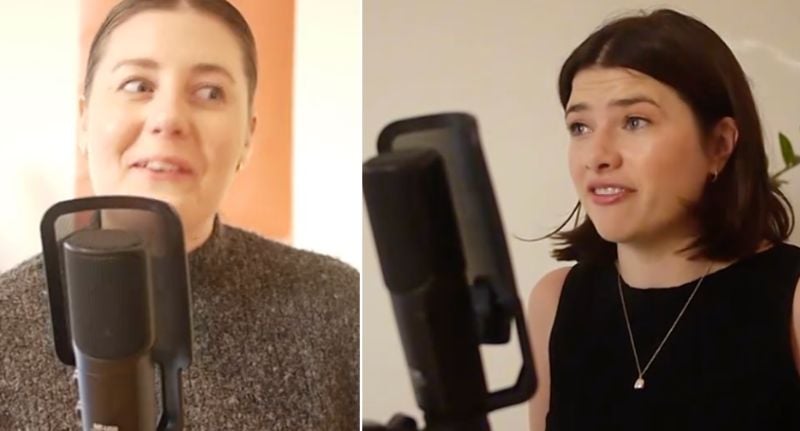 Someone please tell them their mics aren't even on.
Australian law offers a starting point
The Australian Competition and Consumer Commission (ACCC) has warned that misleading social media content can breach the Australian Consumer Law (ACL), which applies to Instagram, TikTok and other platforms in the same way it applies to traditional advertising.
Under the ACL, businesses must not make false or misleading claims online - even if the conduct is unintentional. Creating a false impression, or failing to disclose key information, can still amount to misleading or deceptive conduct.
That includes content that appears to be editorial, independent, or third-party, but is, in fact, staged or promotional.
And this isn’t theoretical.
The ACCC has already taken action against influencers and brands for failing to disclose paid partnerships and for using misleading testimonials. In the United States, the Federal Trade Commission has fined companies for fake reviews and issued warnings to creators for undisclosed endorsements.
The legal foundation is already there.
The question is whether it’s enough for this new grey zone of performance content.
Platform rules already say “don’t fake it”
Meta’s Community Standards echo the same principle.
The company states it does not allow users to “misrepresent who they are or what they’re doing,” adding that authenticity is central to how content should be shared on Instagram.
In the United States, the Federal Trade Commission also requires clear disclosure when content is paid, sponsored or branded, and enforces rules against deceptive advertising and misinformation.
The legal scaffolding exists.
What’s missing is platform-specific clarity for this emerging content format.
 Indianna Symons
'It feels deceitful'
For Lost in Sound podcast producer, Indianna Symons, the discomfort is less theoretical - and more visceral.
“It does feel deceitful when a fauxcast is set up to look as though it’s a legitimate podcast having a legitimate conversation about a brand or product,” she said.
“I wonder if that type of content will end up getting labelled, similar to branded content on Instagram.”
She believes the deception is built into the format's consumption.
“They probably won’t remember the faux ad they’ve been served, but they will remember the name and have a vague recollection that someone was speaking highly of it in recent times. That feels deceptive,” Symons said.
To her, fauxcasts don’t exist outside the advertising ecosystem, rather, they simply remix it.
“We already see prime-time news airing clearly sponsored segments, which aren’t labelled as such, and then there are product placements in film and TV,” she said. “It’s reflective of how brands and companies already insert advertising into other parts of the industry.”
And perhaps, she suggests, podcasting itself has been placed on too high a pedestal.
“Anyone can start a podcast, and just because there’s a microphone in front of someone does not make them a trusted source, or what they say legitimate,” Symons said.
“The brands themselves could launch legitimate podcasts, or pay to be featured on one, and still get editorial say in the interview and final edit.”
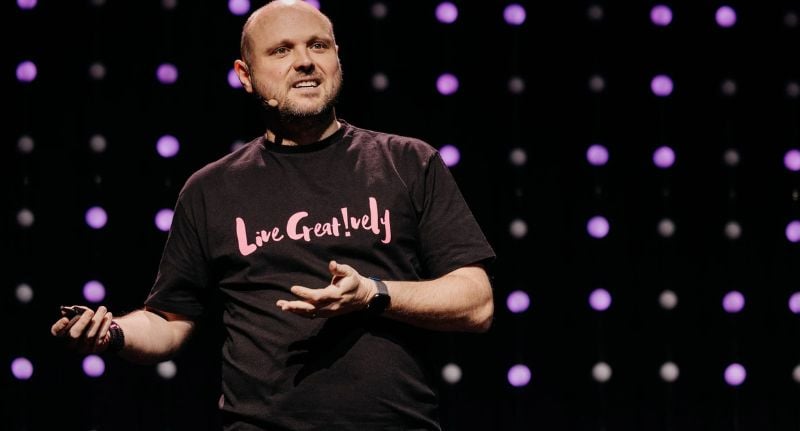 Wade Kingsley
When performance becomes persuasion
That tension, between performance and persuasion, is where The Ideas Business founder Wade Kingsley draws his line.
There is content that performs, and content that persuades, he says. The problem begins when the two collapse into each other.
“If I’m selling something and I’m faking myself being on a podcast in order to sell you something, that’s a problem,” he said.
Yet Kingsley admits the boundary blurs when no transaction is visible. A staged “podcast” clip about a hobby, with nothing to buy and no call to action, might barely register at all - just another piece of social noise.
But he believes the trend still points to something deeper.
“It’s kind of embarrassing, number one. I look at it and think, that’s sad,” he said. “If you feel like you have to pretend to be on a podcast to sell yourself, you probably need to take a harder look at what you’re doing in your business.”
 Josh Butt
Algorithm cheat
Chief Audio Officer Ampel and Executive Producer at The Gingerbread Man Josh Butt sees the rise of fauxcasts as structural rather than cynical, but no less consequential.
“To me, it’s like a B2B tool for businesses to stick on their channel. They can then use it to promote themselves,” he said.
But he believes algorithms are actively shaping the behaviour.
“YouTube prioritises those kinds of videos,” Butt said. “And so we think people are playing it to the YouTube algorithm, because it actually tells the algorithm that it’s a podcast.”
He’s not wrong.
YouTube has elevated podcasts to a core category on connected TVs, placing the format alongside traditional video on its Home screen.
According to the platform, viewers watched more than 400 million hours of podcasts per month in 2024 on living-room devices alone - a signal that podcast consumption is no longer confined to headphones and mobile screens.
The shift reframes podcasts as platform-native content, discovered and recommended in the same way as reels, shorts and creator clips.
Still, Butt agrees the format exposes a tension between authenticity and efficiency. And if money is involved, he says the rules should be clearer.
“Unless they’re putting paid spend behind what they’re doing. And if they’re putting paid spend behind it, then there should be some sort of paid, sponsored, branded.”
With more than 200,000 podcasts published each month, Butt says the ecosystem is already crowded. Fauxcasts add another layer of confusion - for audiences, platforms and regulators alike.
The infomercial comparison
Curiously, all three point to the same comparison: TV advertorials or infomercials - ads designed to look and feel like long-form content.
But even those formats maintain a visible boundary.
The person delivering the news is not the person selling the product. Viewers are given, at the very least, a visual and contextual cue that they are watching advertising.
Fauxcasts collapse that distinction entirely.
They are performed by the owner or CEO themselves, turning the “host” into the advertiser, and in doing so, erasing the line between content and promotion.
Before the final turn, there is one more data point worth sitting with.
Edelman’s Trust Barometer shows trust in business has overtaken trust in media in several markets - including Australia.
Fauxcasts exploit that vacuum, borrowing the language of journalism while bypassing its accountability.
Because the fauxcast isn’t really about podcasts. It’s about credibility, and what happens when people start manufacturing it instead of earning it.
As performance increasingly borrows the authority of journalism, the question now facing brands is not just whether we can make it look real, but whether we should.
More from Mediaweek
The leading media trade publication in Australia.
Get our top stories straight to your inbox daily by signing up to our Newsletter
By providing your information, you agree to our Terms of Use and our Privacy Policy. We use vendors that may also process your information to help provide our services.


