



Dopamine over hype: How Shai Eisenman is building Bubble to outlast skincare trends
Customer-first thinking, in-house formulation and accessibility are shaping the brand’s growth.

For Bubble founder and CEO Shai Eisenman, life - and skincare - isn’t really like a box of chocolates. It’s more like a cookie.
In her world, ingredients alone don’t guarantee results. You can have the best components on paper, but if the formula’s off, the outcome will be too.
"If you over-bake it, the cookie's not going to taste good. It's the same thing with the efficacy of the ingredients," she explained to Mediaweek.
It’s a philosophy that underpins Bubble’s approach to product development: efficacy first, hype second, and absolutely no shortcuts.
That ethos has seen Bubble burst into an already saturated skincare market, growing quickly into a global player.
The brand is now stocked across 10 countries, with retail partners including Target and Ulta in the US, Walmart, Boots in the UK, Sephora in the Middle East and ASOS.
In Australia, it’s now available through Priceline and Woolworths.


The leading media trade publication in Australia.
Get our top stories straight to your inbox daily by signing up to our Newsletter
By providing your information, you agree to our Terms of Use and our Privacy Policy. We use vendors that may also process your information to help provide our services.
The golden thread
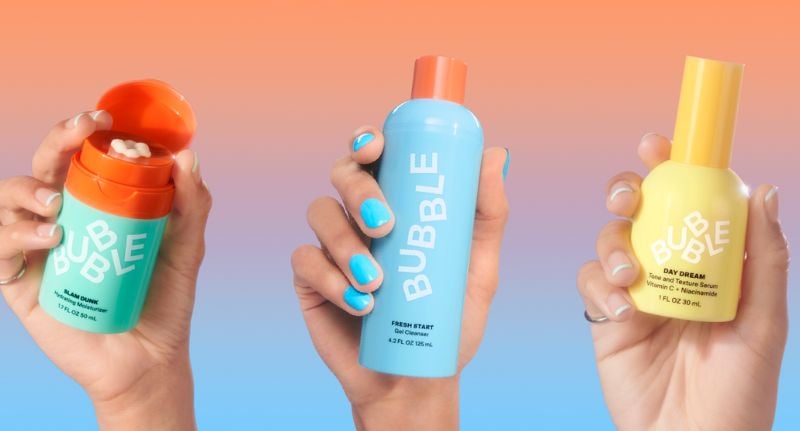
Accessibility has become the defining thread running through Bubble’s growth strategy.
“Such a big part of our mission is to ensure that we're truly accessible in every market that we operate in,” Eisenman said.
That thinking was reinforced during her time in Australia in late 2025, where she experienced firsthand how limited trading hours can become a barrier to purchase.
“When I finished meetings at 5.30pm, I couldn't go to buy anything because everything was closed,” she recalled.
For Eisenman, being stocked in retailers with extended hours isn’t just a commercial win - it’s a customer-first imperative.
“To be able to be in a retailer that is truly available and accessible at all times of day, that people can go on their way back from work, when they go on their grocery run, to really go and be able to pick up our cleanser, to pick up our moisturiser, is so unbelievably important to us,” she said.
Built slowly, tested brutally
That same customer-first mindset carries through to how Bubble builds its products - slowly, deliberately, and with little tolerance for shortcuts.
Eisenman says the development process is intentionally rigorous, backed by 11 advising dermatologists, two in-house chemists, and three product developers, with the team recently expanded to include another chemist in a product marketing role.
Rather than relying on white-label formulations, Bubble develops everything in-house - a process that can take two to three years to produce just five products.
“Our chemists are the best out there. They're absolutely phenomenal. And we don't stop until the products are the best,” she said.
That obsession with quality extends to how Bubble benchmarks itself in the market. Each formulation is tested against prestige competitors - including products priced at $200 - and only progresses once it outperforms them.
“So we would go and test it against every $200 product out there. And if it's not better, we're not going to stop,” Eisenman said.
The result is skincare designed to punch well above its price point - without ever losing sight of the customer it’s built for.
Building emotional loyalty, not trends
For Bubble, the ambition goes beyond efficacy or scale. The real measure of success is emotional loyalty built over time.
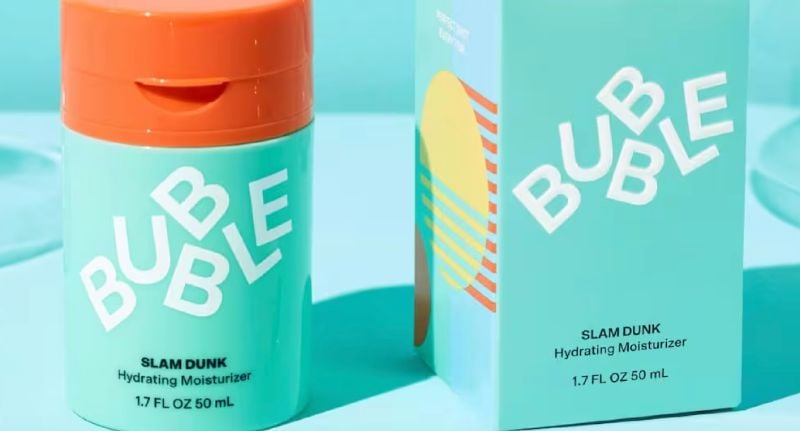
Eisenman wants the brand to earn a permanent place in people’s daily routines, delivering what she describes as a “dopamine effect” - products you’re genuinely excited to use, that feel good, work hard, and don’t feel like a compromise.
“We want it to be something in your routine that will give you that dopamine effect, that it's like you're excited, that you love it, that you actually enjoy it,” she said.
Crucially, that experience has to remain accessible.
Bubble’s ambition is to bring together performance, joy and price in a way that hasn’t historically existed in skincare. “For us, it's really the first time that you can get all these things in a price point that is under $30 AUD.”
That long-term mindset extends well beyond the current wave of skincare trends. Rather than chasing viral ingredients or fleeting hype, Eisenman is focused on building what she calls a “legacy brand of the future” - one designed to last decades, not cycles.
She points to category mainstays like Cetaphil, which has been around for 77 years, and Neutrogena, now in its eighth decade, as the benchmark Bubble is working towards.
“We want to be the staple in your routine. The one you always come back to,” she said.
That means resisting the temptation to launch products simply because they’re trending.
“We're not going to create products just because they're trendy and cool right now or certain ingredients and super hyped,” Eisenman said.
Instead, Bubble is focused on building formulations designed for longevity - products customers will still be reaching for five or even ten years from now.
Main image: Shai Eisenman
More from Mediaweek
The leading media trade publication in Australia.
Get our top stories straight to your inbox daily by signing up to our Newsletter
By providing your information, you agree to our Terms of Use and our Privacy Policy. We use vendors that may also process your information to help provide our services.


.png%3Fv%3D1784776000307&w=3840&q=75)