

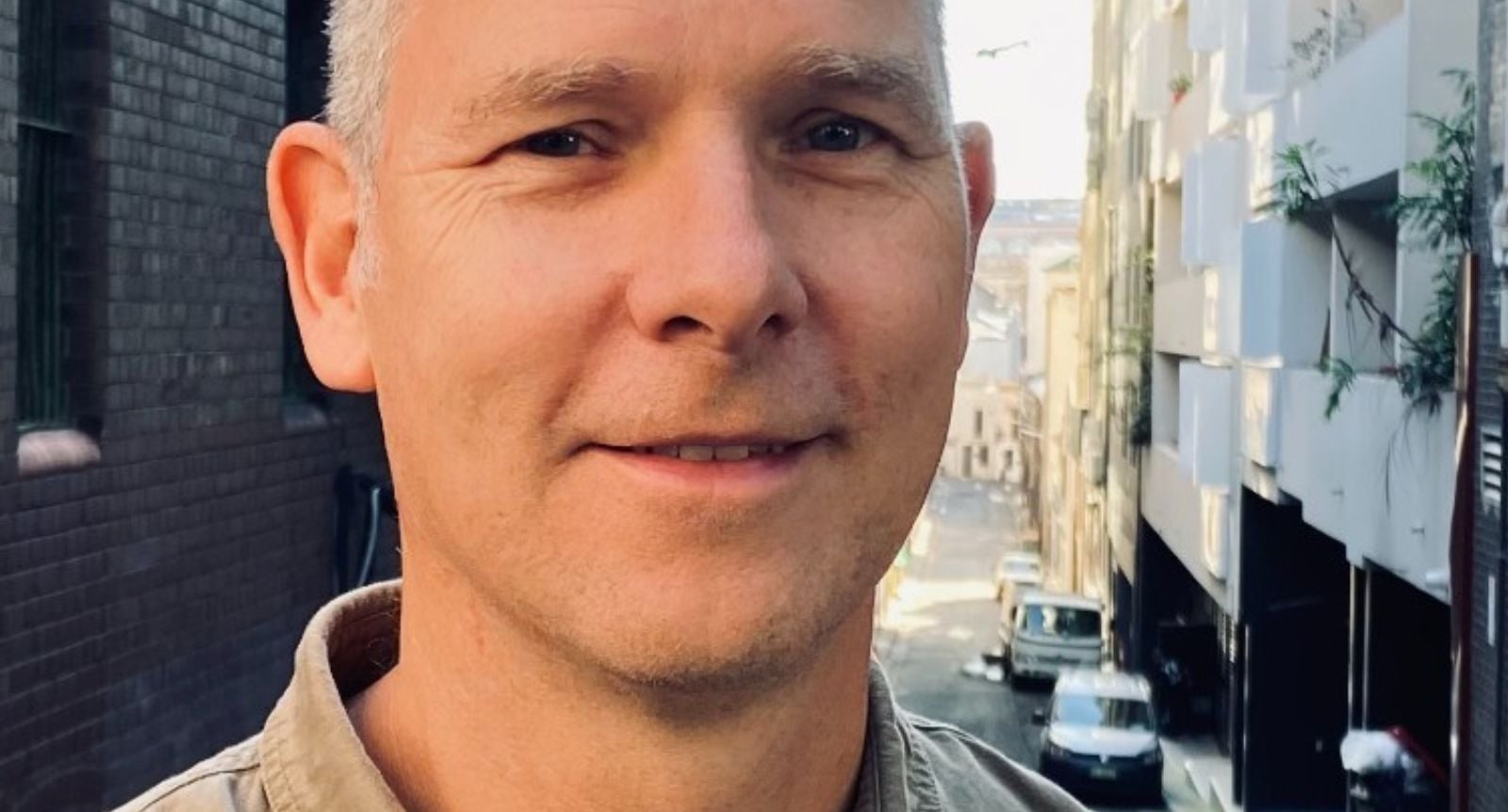
Christian Finucane, co-founder and creative partner, The Core Agency
A few years ago, a mate handed me a beer and asked if I was worried about ChatGPT. ‘Chat what?’ I replied. They gave me a look – part ’where have you been?’ coupled with genuine concern that the creative industry I love was about to be automated into irrelevance.
After their explanation, my immediate thought? I could get my computer to write up my novel idea. Awesome!
Of course, creativity is never doomed. It hasn’t been doomed by television, digital, social, data, podcasts, or influencers, and it won’t be prompted to death by AI. Every wave of new gadgets, widgets and hi-tech tools that were supposed to kill original thinking has actually proven to need it more.
Creativity is like one of those unkillable zombies in The Walking Dead.
I think this proves that every era that was supposed to make creativity (and creatives…) obsolete has ended up more desperate for it and those who are paid to deliver it.
We started our agency in 2007. You couldn’t buy an iPhone yet. Influencer marketing wasn’t a thing. Netflix was still mailing DVDs. But clients were doing exactly what they still do today, needing smart new ways to stand out, drive revenue and build real value in their brands.
Some things will always be immune to disruption.
That same year (an era long before anyone had heard of Mr Beast, Instagram or TikTok), we launched another, dare I say it, disruptive creative business called SuperVirals.
It was a user-generated content platform for brands that incentivised the content creators to drive brand engagement across the newly emerging social platforms. While it was clear there was a growing hunger for a more grassroots form of creativity, it withered a few years later, as creativity found its next outlet.
Forgive me as I don my cardigan and spark up my trusty pipe as I reminisce on the last 18 years of shiny new things.
We’ve seen purpose-driven marketing rise and become the dominant religion of every brand.
We’ve seen the big-data-driven era promise that if you just optimised hard enough, the creative almost didn’t matter.
We’ve seen personalisation at scale, where AI could theoretically serve thousands of ad variations to thousands of micro-audiences simultaneously.
And now we’re elbows-deep in the native content era where everything seemingly has to be platform-first, feed-native and algorithm-friendly. Though, strangely, the creative work often looks like it wasn’t made by an agency at all.
Don’t get me wrong, each of these eras, pivots and platforms has brought real change. The shift from television-first to mobile-first isn’t cosmetic; it changes how stories are told, how quickly trust is built, and how long you have to engage their brain before the brand is swiped into oblivion.
The unstoppable rise of social content has also shifted what ‘production value’ means. A shaky phone video by a real customer can outperform a six-figure shoot. Dynamic creative optimisation, driven by AI, now does in minutes what used to take a whole team weeks. These are not trivial developments, just ask anyone who has been made redundant recently.
None of these evolutions in tech or tools has changed the fundamental problem. Brands still need to mean something to people. Audiences still need a reason to pay attention. The brief is still, at its core, to make someone notice, feel and do something they wouldn’t have otherwise.
If anything, the acceleration of every other variable has made the creative idea more important, not less. When distribution is democratised, and production is commodified, and AI can generate ten thousand asset variations overnight, the thing that differentiates you is the idea underneath all of it.
The AI conversation is a perfect illustration of this. Generative tools are genuinely extraordinary and incredibly useful. And they get better week by week.
Our industry loves to announce that everything has changed. And much of it has. But the agencies and creative people who have lasted through multiple eras tend to share a particular quality: they never confuse the tools or the channel with the idea. They stayed nimble because they stayed curious. They punched above, not because of scale, but because of spark.
We’ve stayed curious for eighteen years, and the pace of change has never been faster. To me, that sounds less like a threat and more like an opportunity.