



Catching evil: Mark Llewellyn & Andy Byrne on their killer podcast
The TV veterans have found themselves in a live investigation for a notorious serial killer.

Mark Llewellyn knows a thing or two about TV storytelling, but for his latest project he’s left the camera crew at home and hit the road with a podcast mic and his author mate, Andy Byrne.
The result is Catching Evil, a podcast examining the crimes of Christopher Wilder, the race car driving 'Beauty Queen Killer.'
What began as a historical retelling has mutated into a live investigation, blowing up global podcast metrics in the process. Mediaweek caught up with the pair to discuss the Wanda Beach connection, generational trauma, and why two 'old journos' just can't let a story go.
From book tapes to live investigation
Mediaweek: This project seems to have evolved quite a bit from its inception. How did ‘Catching Evil’ actually come about?
Andy Byrne: It is quite funny. I bored Mark for quite some time over various beers and red wines about these recordings that I had. Then he listened to some of them, and a lightbulb moment happened.
Mark Lewellyn: And he can bore. Like he can really, really bore.
AB: For me, though, 99 per cent of true crime podcasts focus on the perpetrator, and in this case, Chris Wilder. After speaking with so many of these families, it dawned on me, and I was persuaded to do a podcast from the victims' point of view.


The leading media trade publication in Australia.
Get our top stories straight to your inbox daily by signing up to our Newsletter
By providing your information, you agree to our Terms of Use and our Privacy Policy. We use vendors that may also process your information to help provide our services.
ML: And then we thought, “Oh, okay, well, if we really want to be serious about it, we should go over to America and follow in his footsteps.” The story has become bigger than we expected. We thought it would be a historical retelling, but it has turned into a live investigation.
MW: When you say live investigation, you are uncovering new leads right now?
ML: 100 per cent. We were away yesterday interviewing two people, both of whom came from the podcast. Yeah, these new leads actually came from the podcast.
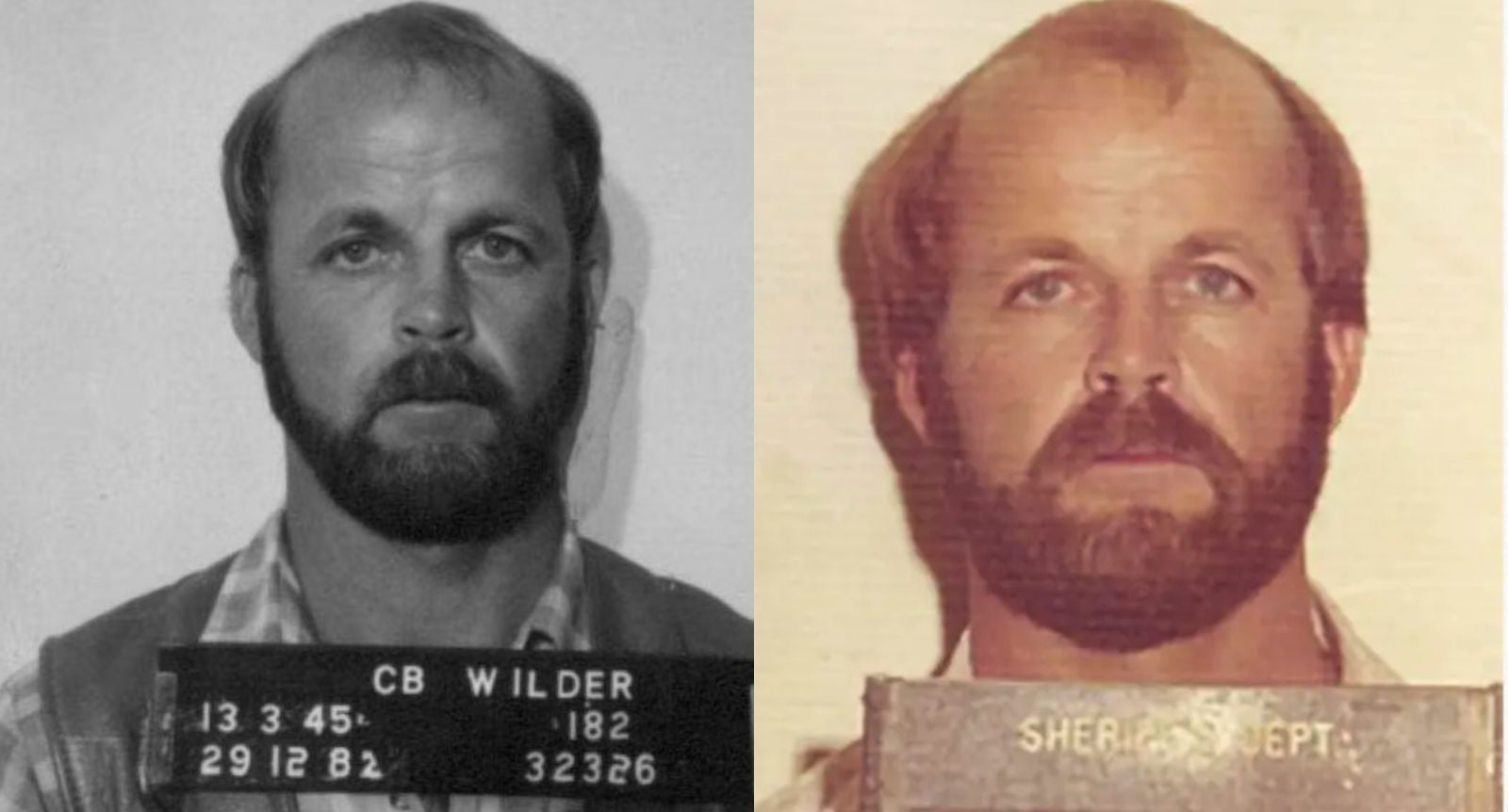 Chris Wilder was branded The Beauty Queen killer and has alleged links to the Wanda Beach murders. Images: supplied
The Wanda Beach connection
MW: One of the most compelling aspects is the potential link to the Wanda Beach murders. How strong is that connection?
ML: One of the people we interviewed is a woman who is critical to our belief, particularly Andy's belief, that Wilder is the Wanda Beach killer. She was 15 at the time, and he approached her just a matter of days before the actual killings.
AB: She was in a department store in a shopping mall with her friend, who was also 15. Wilder worked in the shop, and he approached them every time they came into the store.
ML: He badgered her repeatedly. And she was a girl who bore a striking resemblance to one of the eventual victims, asking her to go with him to Wanda Beach.
AB: It was just an extraordinary coincidence. And I don't believe in coincidences.
MW: And she didn't just provide a story. She provided physical evidence?
ML: Her link is huge because it places him there, it places him wanting to go to Wanda Beach, and it places him approaching a 15-year-old.
But more than that, she came into possession of a critical piece of evidence he had left at the department store where he worked, which she handed to the police. We believe it contains a series of really important clues.
A victim-centric approach
MW: You have made a point to centre the storytelling around victims. Why was that shift important?
ML: We have travelled thousands of kilometres, thousands of miles in Wilder's footsteps. But not only in his footsteps.
We are also in the footsteps of the people he killed and the people who lost loved ones. Consequently, we are getting the fullest picture not only of what he did but also of the generational effect it has on people.
The anticipation is that this would get very maudlin and depressing. But the actual reality is the opposite. Because they remember them really fondly.
And you can see just how vibrant they are. It is almost like they are bringing them to life. They are taking the power away from Wilder, who took away their life. And that is quite a magical thing to experience.
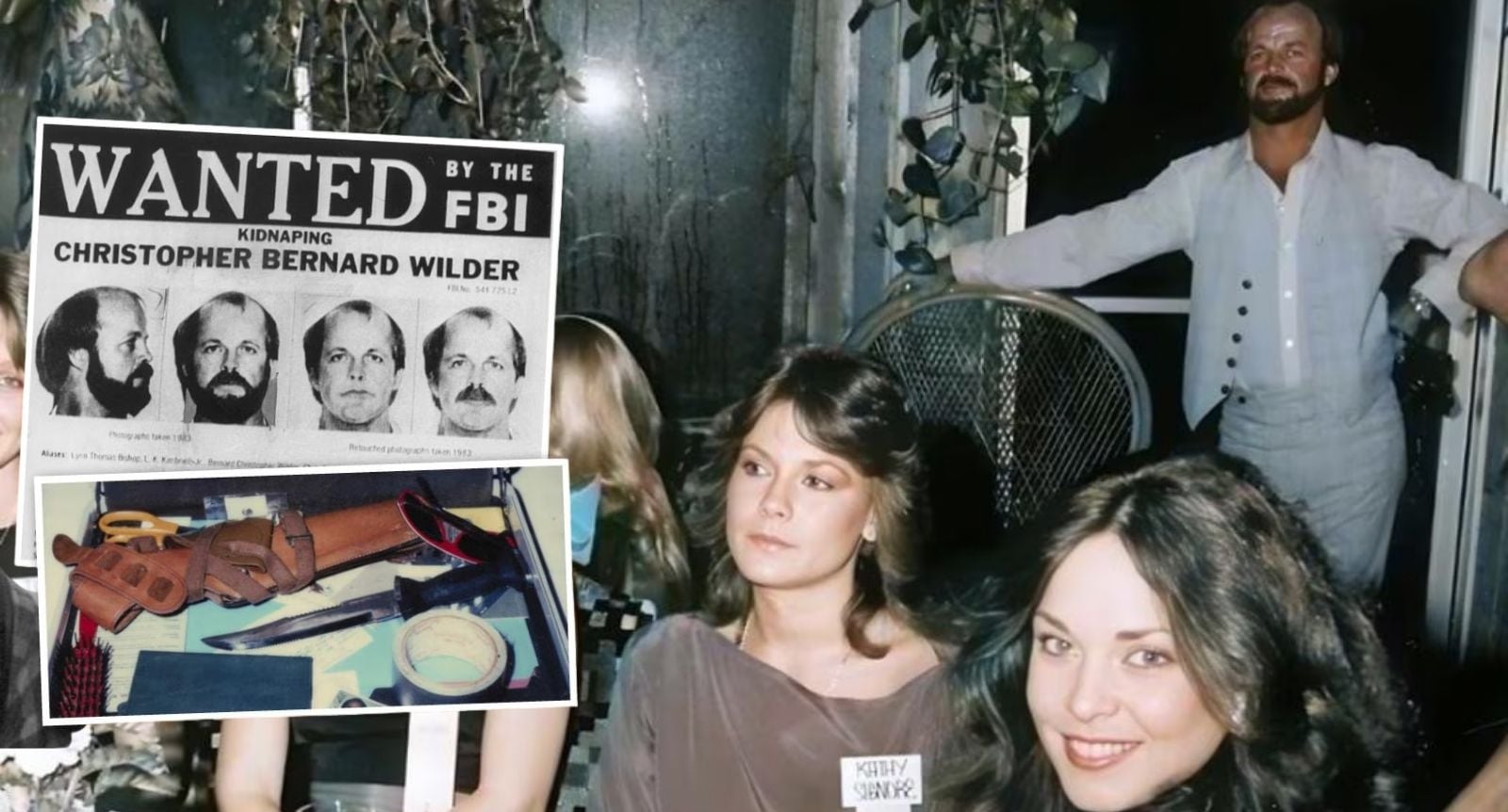 Christopher Wilder was on the ten most wanted fugitive list before his death in 1984. Image: supplied
The near misses
MW: You’ve spoken to survivors who had incredibly close calls. Are there any that stand out?
AB: One girl was 18. She went to his home for a photo shoot on her own. Nobody knew he was a serial killer, but you just wouldn't do that today.
What probably saved her life was that she drove a pink Porsche car. Wilder obsessed over Porsches. He used to race one. The car was so distinctive, he couldn't take the chance. And she got to walk out.
But his parting shot to her was, “Be careful out there... There are a lot of crazy people out there.”
We interviewed another girl, a 20-year-old Sydney girl sent to New York to do the rounds of the modelling agencies. Wilder also posed as a photographer from time to time. He met her, took out his portfolio, and told her she would be perfect for the photo shoot he was planning.
She didn't go. 48 hours later from that encounter, a Jane Doe body turned up by the side of the road in New York State. She rang me back and sent me a photograph of the sunglasses he wore.
When I blew up the picture, they were Porsche Carrera sunglasses, which is the brand that Wilder wore.
Again, that is a coincidence that you just aren't going to get with anybody else.
Smashing the benchmarks
MW: The audience is clearly responding to your approach.
ML: It is! 100,000 downloads in the first 30 days is the benchmark that places a new podcast in the top one per cent of shows, not just in Australia but globally.
But the metric that matters most to the industry, and the one we are most proud of, is consumption rate. That is the percentage of listeners who press play and stay until the end.
The consumption rates on Apple for the first four episodes of Catching Evil are 90, 96, 99 and 100 per cent. Listeners are not just finding Catching Evil; they are not leaving.
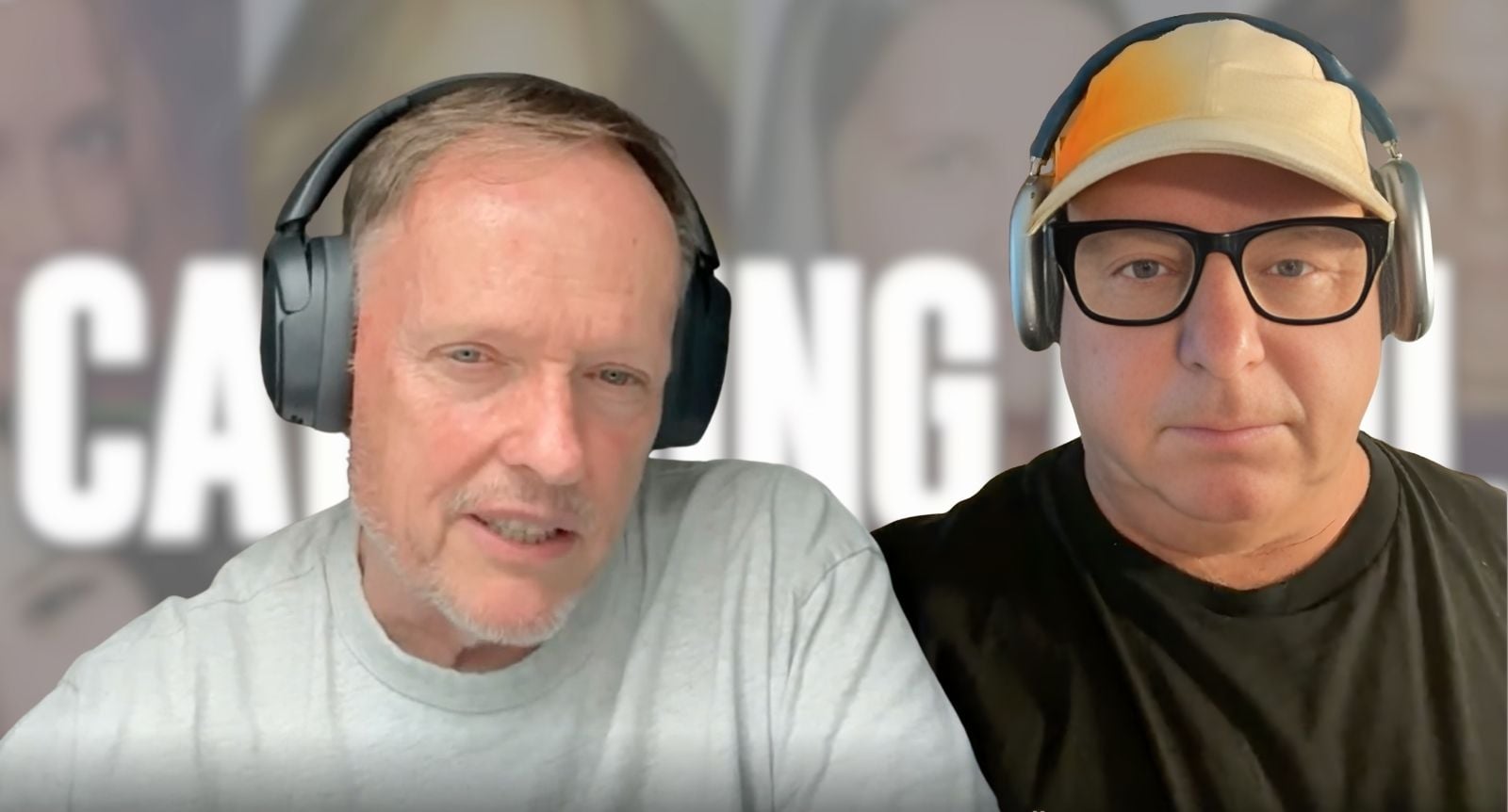 ‘Catching Evil’ podcasters Andy Byrne & Mark LLewellyn.
Trading pictures for sound
MW: For television guys like you, is it freeing not to have to worry about the pictures?
ML: This is fantastic because you are not sitting there agonising over “No, no, no, not that shot, I want that shot.”
It is going back to how we used to tell stories around campfires before the printing press, and that is really, really liberating.
That freedom to move between two similar yet distinct genres is cool for old dogs trying to learn new tricks. It has just pumped a bit of juice back into the beast.
MW: And that juice is clearly still driving the investigation.
ML: Our concern initially was that it was just going to be a historical telling. But this feedback, first of all, shows that we are on the right track.
Secondly, it gives the community that is suddenly becoming our listeners a sense of validation and involvement. They are actually doing real investigative work that is getting results.
So we are not just going “Oh, thanks, thanks for the call.”
We’re following upon the leads.
More from Mediaweek
The leading media trade publication in Australia.
Get our top stories straight to your inbox daily by signing up to our Newsletter
By providing your information, you agree to our Terms of Use and our Privacy Policy. We use vendors that may also process your information to help provide our services.


