



ByteDance vs Hollywood: What makes up the ‘grey area’ in AI and IP
Real, borrowed, or stolen?

Tom Cruise fighting Brad Pitt. Spider-Man battling Jeffrey Epstein on his island. Comic book heroes clashing with rival studio characters.
If your feed has looked anything like this recently, you’re not alone.
A new wave of algorithms has flooded the internet with hyper-realistic AI-generated “studio fights,” blurring the line between fan fantasy and intellectual property infringement.
It all began when the Chinese tech behemoth and TikTok parent company, ByteDance, unveiled a prompt-to-video generation tool called Seedance 2.0 that generates “ultra realistic” videos up to 15 seconds in length.
Within hours of its release, users began pushing the tool to create high-drama crossover battles featuring some of Hollywood’s most recognisable characters and celebrities.
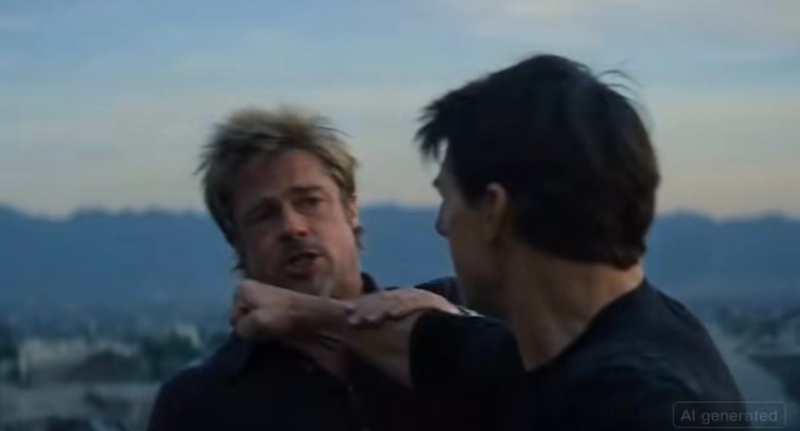 The AI-generated viral clip of Tom Cruise and Brad Pitt fighting. Image: Seedance 2.0
Whether fulfilling a comic fan’s dream matchup or staging surreal clashes between famous faces, the trend quickly went viral.


The leading media trade publication in Australia.
Get our top stories straight to your inbox daily by signing up to our Newsletter
By providing your information, you agree to our Terms of Use and our Privacy Policy. We use vendors that may also process your information to help provide our services.
While some praised its high quality, others were petrified by it.
AI vs Hollywood beef
It also ignited an intellectual property firestorm across major Hollywood studios.
In response to the copyright upheaval, ByteDance’s Seedance 2.0 reportedly received an “immediate cease” warning from the Motion Picture Association (MPA), which represents major studios including Netflix, Paramount Pictures, Prime Video & Amazon MGM Studios, Sony Pictures, Universal Studios, The Walt Disney Studios and Warner Bros. Discovery.
The MPA chairman and CEO, Charles Rivkin, said in a statement:
“In a single day, the Chinese AI service Seedance 2.0 has engaged in unauthorized use of U.S. copyrighted works on a massive scale,” Rivkin said.
 Charles Rivkin
“By launching a service that operates without meaningful safeguards against infringement, ByteDance is disregarding well-established copyright law that protects the rights of creators and underpins millions of American jobs.”
The warning was followed by cease-and-desist letters reportedly sent to ByteDance CEO Liang Rubo by Disney and Paramount’s Skydance after the tool was used to generate content featuring their intellectual property.
This included Marvel’s Spider-Man, Star Wars’ Baby Yoda, South Park and Star Trek, among others, according to Variety.
ByteDance responds
In a statement shared with CNBC, a ByteDance spokesperson said the company respects intellectual property rights and has heard the concerns raised about Seedance 2.0.
“We are taking steps to strengthen current safeguards as we work to prevent the unauthorised use of intellectual property and likeness by users,” the spokesperson added.
Who’s actually liable?
While social feeds may be filled with fans prompting crossover battles, Tony J. Black, Entertainment & Corporate Lawyer (California & NSW) at Wollemi Capital Group, told Mediaweek that studios are unlikely to waste resources chasing individuals.
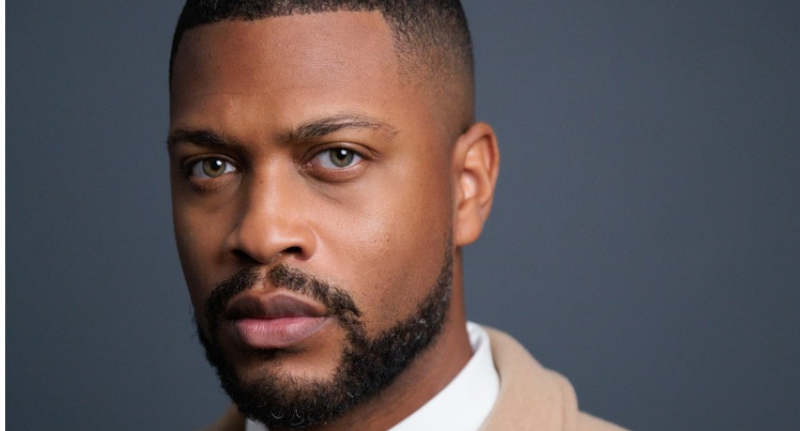 Tony J. Black, an actor by trade, has appeared in productions such as NCIS: Sydney, Apples Never Fall, and Sting. Originally from Detroit, he now lives in Sydney, Australia, and is licensed to practice law in both California and New South Wales. Image: Supplied
“It depends on who’s making money off it and who’s causing financial harm,” Black told Mediaweek.
From a commercial perspective, Black argues rights holders will go “where the pockets are” - meaning the AI developer, not the user.
“If you’re an IP owner, you’re not going to go after someone sitting in their basement giving a prompt for Spider-Man to fight Batman. It doesn’t make sense commercially.”
However, he notes that individuals monetising infringing content at scale could find themselves exposed.
Fair use won’t save you
In the United States, copyright law includes the “fair use” doctrine, which allows limited use of copyrighted material if it is sufficiently transformative.
But Black said most of the viral examples circulating online would struggle to meet that threshold.
“I think in America you get a grey area, possibly - and I say that word on purpose,” he said. “But I don’t think even in America it’s going to be easy to argue it.”
“That’s not going to fly because it’s not really transformative,” he said. “It’s basically just ripping off.”
Under US law, courts apply a four-part balancing test to determine whether something qualifies as fair use.
In Australia, the position is even narrower.
The country operates under “fair dealing”, which is largely limited to research, review, study or news reporting.
For brands or creators experimenting with AI-generated content, that means the legal safety net is thinner than many assume.
If you can’t beat them, join them
It’s not the first time these murky waters have been tested.
From OpenAI’s Sora to Seedance’s own predecessor, Seedance 1.0, generative video tools have been steadily pushing the boundaries of what’s possible.
And if history is any guide, Seedance 2.0 won’t be the last.
But according to Black, the real battle may not ultimately be fought in courtrooms.
Even if Hollywood proves infringement, enforcing it at scale is another matter entirely.
“The court system won’t be able to handle millions of infractions,” he said.
Rather than a prolonged legal war, Black predicts the conflict will eventually pivot toward commercial negotiation.
“It may start in the courts, but eventually it’s going to have to be a commercial solution,” he explained. “Those companies may end up paying a large sum of money to the IP owners to be able to do it.”
In practical terms, that could mean licensing agreements between AI developers and major studios - effectively bringing the technology inside the existing IP ecosystem rather than trying to shut it down.
As Black puts it, when a tool becomes inevitable and widely accessible, prohibition becomes difficult. The more realistic path forward may be monetisation.
Main Image: Seedance 2.0
More from Mediaweek
The leading media trade publication in Australia.
Get our top stories straight to your inbox daily by signing up to our Newsletter
By providing your information, you agree to our Terms of Use and our Privacy Policy. We use vendors that may also process your information to help provide our services.
.png%3Fv%3D1790825914861&w=3840&q=75)

-1.png%3Fv%3D1790650590033&w=3840&q=75)

