

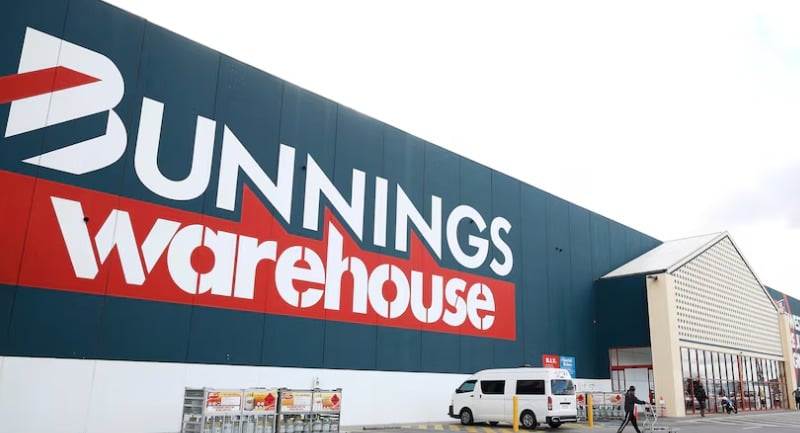
It turns out Australians don’t need to be told where they are.
Show them the red and green, the blocky warehouse font, and the rest does the work itself.
Case in point? Bunnings has been ranked Australia’s most unmistakable brand, according to a new study released on 15 June 2026, with its block logo singled out as the single most recognised and correctly attributed brand asset in the country.
The finding comes from The Make it Unmistakable study, a joint initiative by research firm The Navigators and branding agency Principals. The study surveyed 2,500 Australians across 121 assets from 77 brands, testing recognition and attribution of logos, colours, sonic elements, and other graphical cues.
How the study worked
Respondents were shown brand assets stripped of their brand names and asked first whether they recognised the asset, then which brand they thought it belonged to.
The methodology builds on the Ehrenberg Bass Distinctive Brand Asset framework.
Bunnings’ block logo – without the word “Bunnings” – topped the rankings.
Its combination of a red-and-green colour palette, blocky, utilitarian typography, and warehouse silhouette proved impossible to misattribute.
Which, if you’ve ever spent a Sunday afternoon traipsing around in one, makes a certain kind of sense.
Principals Strategy Director Charlie Rose said the findings pointed to a gap between brand fame and brand recognition.
“Building fame remains essential to brand growth. But fame alone is not always enough. Brands are increasingly seen but not clearly recognised; remembered, but sometimes misattributed. Unmistakability is what makes fame work harder. It ensures that when people notice your brand, they recognise it faster, process it more easily and attribute it to the right source,” Rose said.
Banks and retailers also rank highly
Beyond Bunnings, banking brands Westpac and CommBank performed strongly, as did retailers Woolworths and Officeworks.
Australia, it seems, knows its financial institutions and its supermarkets.
The top five distinctive brand assets were:
• Bunnings block logo
• Westpac W
• Woolworths’ apple
• CommBank diamond
• Officeworks OW symbol
The Navigators founder, Cecile Thornley, said the results underscored the value of assets that function as cognitive shortcuts.
“When attention is fleeting, brands need assets that work together to create cognitive shortcuts, helping consumers identify them quickly and correctly. Even without the word ‘Bunnings’, consumers found the Bunnings logo impossible to mistake,” Thornley said.
Jetstar most misattributed
Not everyone fared as well.
Jetstar’s “jumping people” image ranked as the most frequently misattributed asset, with respondents confusing it with Toyota’s.
Oh, what not a feeling you’d want as a CMO.
The five most misattributed assets were:
• Jetstar people jumping – confused with Toyota
• Harvey Norman catalogue page
• Industry Super Fund hand symbol
• Anaconda “Play more” tagline
• NIB illustration style of people/customers

One is Toyota and one is Jetstar. Can you guess which is which?
Systems, not isolated assets
Rose said the strongest brands do not rely on individual assets alone but layer multiple elements into coherent systems – a point that feels obvious until you see how many brands haven’t figured it out.
“Distinctiveness is not built by isolated assets. It is built with connected systems that make brands so effortless to recognise that marketing investment is immediately working harder. Assets that work together create a compounding effect. They are consistent, but more importantly, coherent and reinforce a clear, ownable idea,” he said.
Thornley added that brands relying on category-wide cues or celebrity equity risk becoming invisible – or worse, being mistaken for a competitor.
“Brands that build consistently used asset systems can compound advantage over time; however, brands that rely on broad cues shared within a category, attempt to borrow brand equity from celebrities, or don’t allow time for assets to bed into the memory structures of their audience risk becoming wallpaper or worse, mistaken for another brand,” she said.