



BBC review finds older women pushed off screen as men gain ‘gravitas’
It comes according to a major independent review into representation at the broadcaster.

Older women are disappearing from on-air roles across the BBC while older men are increasingly viewed as gaining “gravitas and wisdom”, according to a major independent review into representation at the broadcaster.
The report found a “noticeable mismatch” between male and female presenters over 60, with men significantly outnumbering women across BBC News, content production and regional broadcasting - despite women making up the majority of presenters under 50.
Across the BBC’s three major divisions, there were 57 men over 70 compared with just 11 women. In BBC News, there were nearly twice as many male presenters over 60 as females. In the BBC’s content division, which produces programs, there were almost four times as many older men as women.
The data covered almost 1,500 staff and freelance presenters directly contracted by the BBC.
How age changes the rules on screen
The review - ordered by the BBC’s board and conducted by former BAFTA chair Anne Morrison and media consultant Chris Banatvala - found that ageing works very differently for men and women on television.
“There’s evidence that, as they age, women tend to move from television to audio,” the authors said. “We were told that, as they get older, men in the media are portrayed as gaining gravitas and wisdom associated with authority. It works differently for women.


The leading media trade publication in Australia.
Get our top stories straight to your inbox daily by signing up to our Newsletter
By providing your information, you agree to our Terms of Use and our Privacy Policy. We use vendors that may also process your information to help provide our services.
“It was argued that, if they stayed on television, older women had either to try to keep looking younger or to opt out altogether from being judged on their looks and develop idiosyncratic personas.”
While women outnumbered men among presenters under 50, the balance shifted sharply thereafter. Among over-50s, there were 237 women compared with 394 men. The gap widened further with age.
The authors said they had not found evidence of “systemic discrimination”, but the patterns were stark.
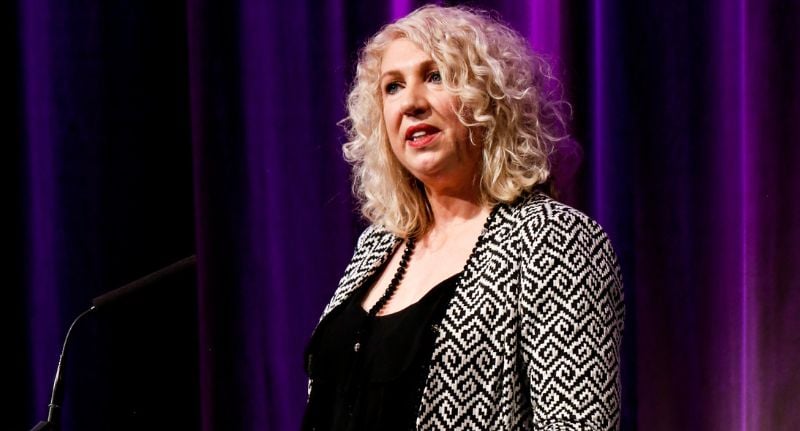 Anne Morrison
‘The double jeopardy of ageism and sexism’
Labour peer Harriet Harman said the findings reflected entrenched bias against older women in broadcast media.
“Women face the double jeopardy of ageism and sexism,” she said. “An older man is admired as a silver fox, but an older woman is written off as past it.
“Women shouldn’t have to make themselves look younger or face being banished from our screens. It’s a waste of talent. And discrimination. Once a woman on TV reaches 50, she’s an endangered species.”
Presenter Selina Scott, who won a settlement from Channel Five in 2008 after bringing an age discrimination case, said the culture had barely shifted since she first spoke out.
“It is telling that the BBC has never had a female director general,” she said. “The BBC … is inward-looking. The effect, however, is devastating. An entire age group in the UK has, in effect, been cancelled.”
BBC insiders went further, describing the findings as evidence of “misogyny – pure and simple”.
“Women know what’s happening … it’s a reflection of society’s view of women,” one said.
A long-running problem
The BBC has been criticised for years over the treatment of older women on air.
In 2011, presenter Miriam O’Reilly won an age discrimination case after being dropped from Countryfile. More recently, four presenters settled claims alleging age and sex discrimination over a recruitment process - though the BBC said that process had been “rigorous and fair”.
The new review also found that male voices still dominate the BBC’s expert commentary. The Ten O’Clock News and the Today programme both interviewed just over two male experts for every woman.
Wider representation gaps
Beyond gender and age, the review warned the BBC was still struggling to reflect Britain’s full diversity.
It found “less positive portrayal of white, working-class men and women” and said coverage often defaulted to narratives of “poverty, crime, addiction and deindustrialisation” with a lack of role models.
The review also flagged a “noticeably low number of black reporters and presenters on-air”, warning against overreliance on Clive Myrie as a single high-profile example.
“We understand that news management is aware of this underrepresentation and is seeking to address it,” the authors said.
BBC response
The BBC said the review had found “significant progress in portraying and representing the UK across its content” and that it would review its content plans “to ensure underrepresented audience groups are reflected authentically”.
It is also committed to improving how it measures representation by socioeconomic background, geography and age - a signal that, for all the progress claimed, the numbers are now too stark to ignore.
More from Mediaweek
The leading media trade publication in Australia.
Get our top stories straight to your inbox daily by signing up to our Newsletter
By providing your information, you agree to our Terms of Use and our Privacy Policy. We use vendors that may also process your information to help provide our services.


.jpg%3Fv%3D1787182076622&w=3840&q=75)

