



Australia puts tech giants on notice with tough new AI rules
The federal government has set out a strict new five-step framework.

Australia has set out a strict new five-step framework for tech companies seeking to build data centres and deploy artificial intelligence, tying future approvals to national interest, energy investment and local access.
Under the federal government’s plan, companies will be required to contribute to renewable energy infrastructure and grid upgrades, in a move designed to prevent costs being passed on to households and businesses.
They will also be expected to use water responsibly and make computing capacity available to Australian businesses.
Projects that fail to meet the new standards will be deprioritised in the approvals process.
Government sets conditions on AI and data centre investment
The framework outlines five core expectations for global tech players: prioritising national interest, supporting the clean energy transition, ensuring sustainable water use, investing in local jobs, and strengthening Australian innovation.
Federal Industry Minister Tim Ayres said the policy was designed to set clearer guardrails for a sector increasingly critical to the economy.
“Australia is open for business – but the kind of business that puts Australia’s national interest first,” he said in a statement.


The leading media trade publication in Australia.
Get our top stories straight to your inbox daily by signing up to our Newsletter
By providing your information, you agree to our Terms of Use and our Privacy Policy. We use vendors that may also process your information to help provide our services.
“Securing this infrastructure onshore strengthens our security, supports our start-ups and researchers and ensures Australian data benefits Australians – not offshore jurisdictions.”
 Federal Industry Minister Tim Ayres
Energy Minister Chris Bowen positioned the move as part of a broader push to align data centre growth with Australia’s renewable energy advantage.
“Data centres have great potential to support our grid and expand new renewable investment, but it’s important we work together across jurisdictions and with industry to get the investment settings right so that we can continue to keep our system secure and energy prices low for all consumers,” he said.
Next step after national AI plan
The announcement follows the release of Australia’s national AI plan in December, which set out a roadmap to capture the economic benefits of artificial intelligence while managing emerging risks.
The plan focused on three priorities: attracting investment in digital infrastructure and local capability, lifting AI adoption through skills development, and ensuring safety by creating a national AI Safety Institute.
The institute is backed by $29.9 million in funding, announced in early 2026.
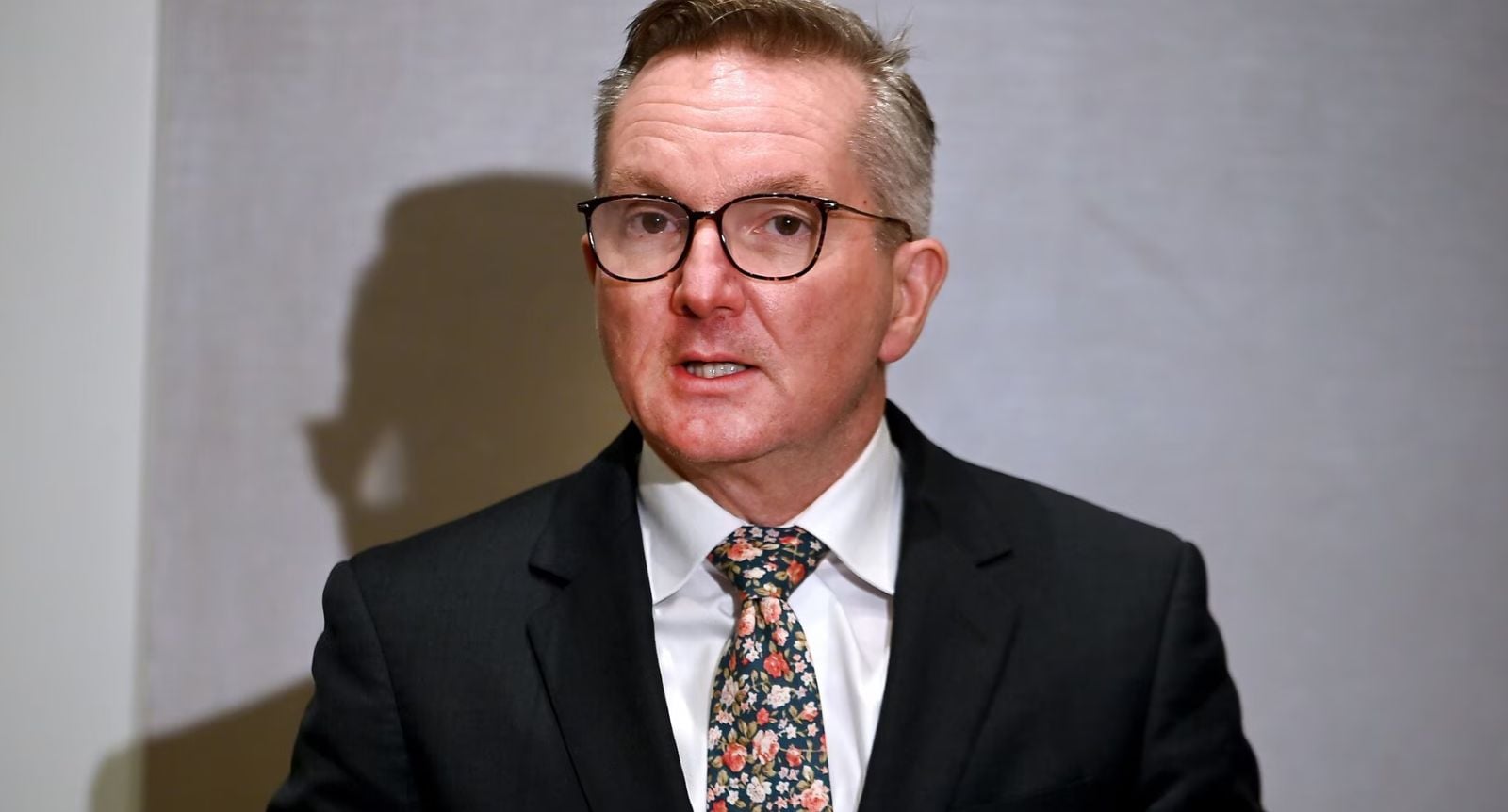 Energy Minister Chris Bowen
Industry warns on reliance on offshore AI
While the broader roadmap was welcomed by industry, concerns remain about Australia’s reliance on overseas AI providers.
Sovereign Australia AI chief executive Simon Kriss said local capability would be critical to building trust and long-term adoption.
“The announced AI Safety Institute is at risk of becoming a toothless tiger if all our AI is purchased from overseas, where they care less about our values and laws,” Mr Kriss said.
“For Australian businesses to begin to trust in and adopt AI, we must be assured that the models we use are built under Australian law and that none of our data ever leaves Australian shores or is processed by servers owned by American companies who are subject to the US CLOUD Act.”
Kriss’ company is currently developing what it describes as Australia’s first large language model.
More from Mediaweek
The leading media trade publication in Australia.
Get our top stories straight to your inbox daily by signing up to our Newsletter
By providing your information, you agree to our Terms of Use and our Privacy Policy. We use vendors that may also process your information to help provide our services.


