






ASIO issues rare warning to ABC ahead of Four Corners Bondi investigation
The agency warned it may take further action if unsubstantiated allegations are aired.

Australia’s intelligence agency has issued a rare public rebuke to the ABC ahead of a Four Corners investigation into the Bondi terrorist attack.
ASIO has accused the program of relying on uncorroborated claims from a “single, unreliable and disgruntled source” and warned it may take further action if unsubstantiated allegations are aired.
The statement, published by the Australian Security and Intelligence Organisation (ASIO) on Sunday, comes before the second episode of Four Corners’ two-part investigation examining whether intelligence or counter-terrorism failures preceded the Bondi massacre, and marks a rare public intervention by the agency against the national broadcaster.
The program, scheduled to air tonight, also investigates what it describes as the “secret lives” of the attackers, Naveed Akram and his father Sajid Akram, who allegedly murdered 15 people at a Hanukkah celebration at Bondi Beach on December 14.
Police have said the pair displayed an Islamic State flag on their vehicle and filmed an ISIS-inspired video ahead of the attack.
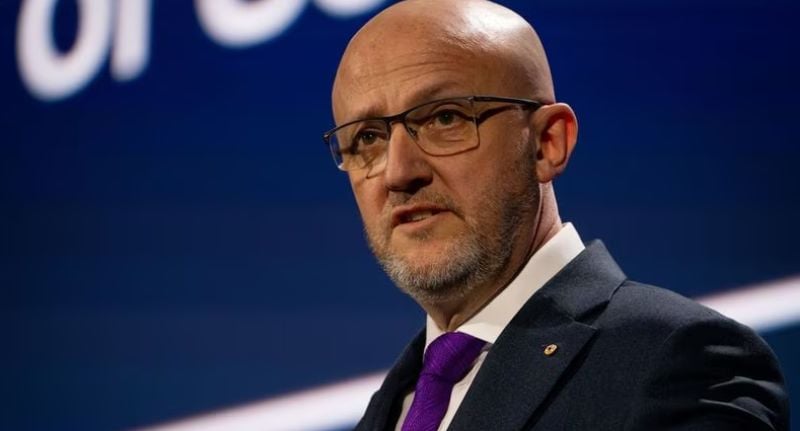 Mike Burgess
ASIO rejects claims of early warning signs
In its statement to Four Corners, ASIO said it had investigated Naveed in 2019 using its “most sensitive capabilities” and assessed that he did not adhere to or intend to engage in violent extremism at that time.


The leading media trade publication in Australia.
Get our top stories straight to your inbox daily by signing up to our Newsletter
By providing your information, you agree to our Terms of Use and our Privacy Policy. We use vendors that may also process your information to help provide our services.
“Having reviewed all available intelligence, we stand by our assessment at that point in time,” the agency said.
ASIO said the ABC’s questioning appeared to rely on the uncorroborated claims of a single source who had misidentified Akram, attributing statements and actions to him that were in fact linked to “an entirely different person”.
“To be clear, Four Corners’ source misidentified Naveed, and therefore the associated claims are untrue,” the statement said.
ASIO added that the source had “a track record of making statements that are untrue”, citing as an example claims that the agency had received intelligence about Sajid being involved in discussions to establish a pro-ISIS community in Türkiye - an assertion ASIO said was false.
In a statement to Mediaweek, an ABC spokesperson said: "The Four Corners program is a comprehensive investigation examining the events that led to the worst terrorist attack on Australian soil.
"Four Corners spoke to numerous people and cited several sources to provide a detailed picture of the Akrams’ actions and associations in the years leading up to the Bondi attack. Detailed questions were put to ASIO, and its response is reflected in the story. The public will be able to watch the full investigation tonight.”
Disputed associations and counter-terrorism context
The intelligence agency also rejected claims that Naveed was a “close associate” of known terrorists, calling that characterisation false.
“There is a significant difference between attending a prayer centre with a large gathering of people and being a ‘close associate’ of known terrorists,” ASIO said.
According to The Australian, Akram had been publicly linked in media reporting to the Street Dawah Movement and was known to have attended a prayer centre later associated with radical figures, but ASIO said such attendance alone did not support claims of operational or close terrorist associations.
'We will reserve our right to take further action'
The most striking element of ASIO’s intervention was its warning to the ABC about the consequences of publishing claims the agency says it has already told the broadcaster are untrue.
“If the ABC chooses to publish claims it cannot substantiate - particularly ones it has been told are untrue - we will reserve our right to take further action,” the statement said.
ASIO said it held “grave concerns about the accuracy of the proposed story”, noting the existence of ongoing investigations, active court proceedings and the establishment of the antisemitism royal commission.
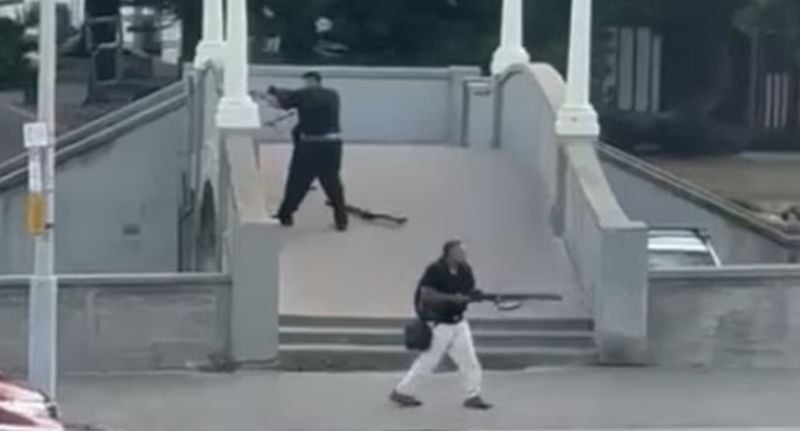 A still from a video showing Naveed Akram and his father targeting people during the terror attack.
Resourcing claims dismissed as 'false and irresponsible'
ASIO also directly addressed suggestions that internal resourcing decisions may have increased the likelihood of the Bondi attack.
“All these claims are false,” the agency said.
While acknowledging that some staff took voluntary redundancies in 2020 as part of an organisation-wide restructure, ASIO said only three counter-terrorism officers departed and that the changes had “practically no impact” on its counter-terrorism mission.
The agency said it had since made significant investments in AI and intelligence capabilities and highlighted that it raised the national terrorism threat level to PROBABLE in 2024, warning that the most likely attack would involve an individual or small group acting quickly with a rudimentary weapon such as a gun - a shift that occurred before the Bondi attack.
ASIO also noted that its Director-General told Senate Estimates in February 2025 that antisemitism represented the organisation’s top priority in terms of threats to life.
“The claim that any resourcing decision increased the likelihood of the Bondi attack is false, irresponsible and demonstrates profound ignorance of ASIO’s prioritisation frameworks,” the statement said.
“Tragically, ASIO did not know what the perpetrators of the Bondi attack were planning - or indeed that they were planning anything. This is a matter of grave regret. It weighs on us heavily.”
Royal commission looms as final arbiter
ASIO repeatedly pointed to the role of the antisemitism royal commission, saying it would ultimately assess intelligence handling, resourcing and information-sharing based on all available evidence rather than “selective claims”.
The agency said it would fully cooperate with the commission and expressed hope that its findings would give the public confidence in ASIO’s counter-terrorism operations - leaving the collision between intelligence secrecy and investigative journalism to be tested in a forum with full access to classified material and statutory powers.
More from Mediaweek
The leading media trade publication in Australia.
Get our top stories straight to your inbox daily by signing up to our Newsletter
By providing your information, you agree to our Terms of Use and our Privacy Policy. We use vendors that may also process your information to help provide our services.


