






YouTube wins Oscars rights from 2029 as ABC era ends after 2028
Hollywood's biggest night is moving house.

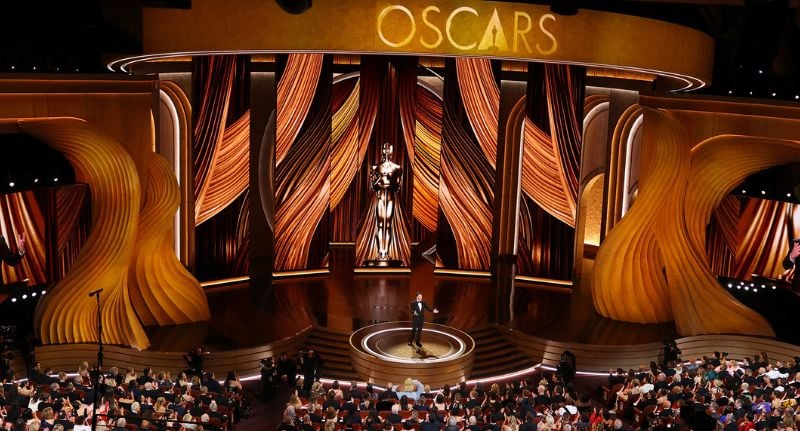
The Oscars are officially on the move, with YouTube winning the rights to host the Academy Awards from 2029 in a deal that runs through 2033.
That means ABC, the one in the US, the ceremony’s long-time broadcast home since 1976, gets three more telecasts before the handover, including the show’s centennial celebration in 2028.
Starting with the 101st ceremony in 2029, YouTube will stream the Oscars live and for free globally, with the red carpet, behind-the-scenes access and Governors Ball coverage all part of the package.
The pact also goes well beyond one night, bundling in year-round Academy programming, including the Governors Awards, nominations announcement, nominee events, the Student Academy Awards, Scientific and Technical Awards, member and filmmaker interviews, film education programs, and podcasts.
What it means for Australian audiences
Closer to home, the Oscars aren’t going anywhere just yet.
Seven has an agreement with Disney Entertainment, locking in exclusive Australian broadcast rights through to 2028.


The leading media trade publication in Australia.
Get our top stories straight to your inbox daily by signing up to our Newsletter
By providing your information, you agree to our Terms of Use and our Privacy Policy. We use vendors that may also process your information to help provide our services.
That keeps the ceremony firmly on Seven and 7plus for the next three years, covering the 97th Oscars on Sunday, 2 March 2025, plus the 2026, 2027 and centennial 100th ceremony in 2028.
It will be interesting to see whether Seven - or any of the other local networks - opts to carry or simulcast the show once it lands on YouTube.
A streaming flex, not just a rights deal
For YouTube, it’s a statement play: premium, appointment-viewing television, now natively digital and worldwide by default.
YouTube CEO Neal Mohan framed it as both legacy and future-building: “The Oscars are one of our essential cultural institutions, honouring excellence in storytelling and artistry,” he said.
“Partnering with the Academy to bring this celebration of art and entertainment to viewers all over the world will inspire a new generation of creativity and film lovers while staying true to the Oscars’ storied legacy.”
It’s also a neat illustration of where live-event value is heading.
Streamers and platforms have been scooping up tentpoles to anchor culture and conversation, with Netflix already holding the SAG Awards, recently rebranded as The Actors Awards for 2026.
And with younger audiences increasingly watching on phones and laptops, the Oscars’ distribution strategy is starting to look like it’s finally following the audience, rather than pleading with it.
ABC’s goodbye, with polite teeth
On paper, losing the Oscars looks like a blow for ABC.
In practice, insiders suggest it may feel like a release valve, particularly if the Academy’s price expectations didn’t align with the commercial reality of a modern awards show, even one Disney has worked hard to modernise.
ABC’s message, though, stayed diplomatic: “ABC has been the proud home to The Oscars for more than half a century. We look forward to the next three telecasts, including the show’s centennial celebration in 2028, and wish the Academy of Motion Picture Arts and Sciences continued success,” an ABC Entertainment spokeswoman said.
The Academy, meanwhile, positioned the move as global reach meets platform scale.
Academy CEO Bill Kramer and Academy President Lynette Howell Taylor said: “We are thrilled to enter into a multifaceted global partnership with YouTube to be the future home of the Oscars and our year-round Academy programming,” adding, “The Academy is an international organisation, and this partnership will allow us to expand access to the work of the Academy to the largest worldwide audience possible - which will be beneficial for our Academy members and the film community.
"This collaboration will leverage YouTube’s vast reach and infuse the Oscars and other Academy programming with innovative opportunities for engagement while honouring our legacy. We will be able to celebrate cinema, inspire new generations of filmmakers and provide access to our film history on an unprecedented global scale.”
Why this matters right now
This isn’t happening in a vacuum.
Hollywood’s dealing with production cuts, shifting economics, and the constant churn of deals, mergers and rival bids.
In that environment, the Oscars landing on YouTube reads less like a quirky one-off and more like a flashing arrow: if you want mass reach, global distribution, and younger viewing behaviour baked in, the “TV home” of the future might not be TV at all.
More from Mediaweek
The leading media trade publication in Australia.
Get our top stories straight to your inbox daily by signing up to our Newsletter
By providing your information, you agree to our Terms of Use and our Privacy Policy. We use vendors that may also process your information to help provide our services.


