



Why the hard part of decision intelligence isn’t the maths
Decision intelligence is improving, and the maths is solid. The challenge now sits in execution.

Ernest Fu, Data Scientist, Prophet
Decision intelligence is improving. The maths is solid. The challenge now isn’t the algorithm. It’s the operations.
The real work lies in turning statistical rigour into decisions that CMOs and CFOs can act on. That means tackling three things head-on: speed, translation, and trust.
MMM models have traditionally been slow. Analysts build models in code, and weeks later, insights trickle out through slides. By then, the market will have already moved on.
The goal for us is that what I see in code on Monday, a client sees in the Prophet app by Wednesday. Fast, automated deployment replaces manual lag.
Inside the platform, everything is designed for speed and clarity. Leaders can scan diminishing returns curves to spot saturation or underinvestment, view confidence bands to separate solid from speculative, and click once to generate an optimised plan for the next quarter.
The loop from analysis to action tightens, and the conversation shifts from “What does this mean?” to “What do we do next?”


The leading media trade publication in Australia.
Get our top stories straight to your inbox daily by signing up to our Newsletter
By providing your information, you agree to our Terms of Use and our Privacy Policy. We use vendors that may also process your information to help provide our services.
Making optimisation feasible
Models often recommend radical shifts. But no business moves 70% of its spend overnight.
Translation matters as much as optimisation. We believe that the approach should be more iterative, half here, add 20% there, learn, repeat.
Step-changes are credible, manageable and more likely to stick.
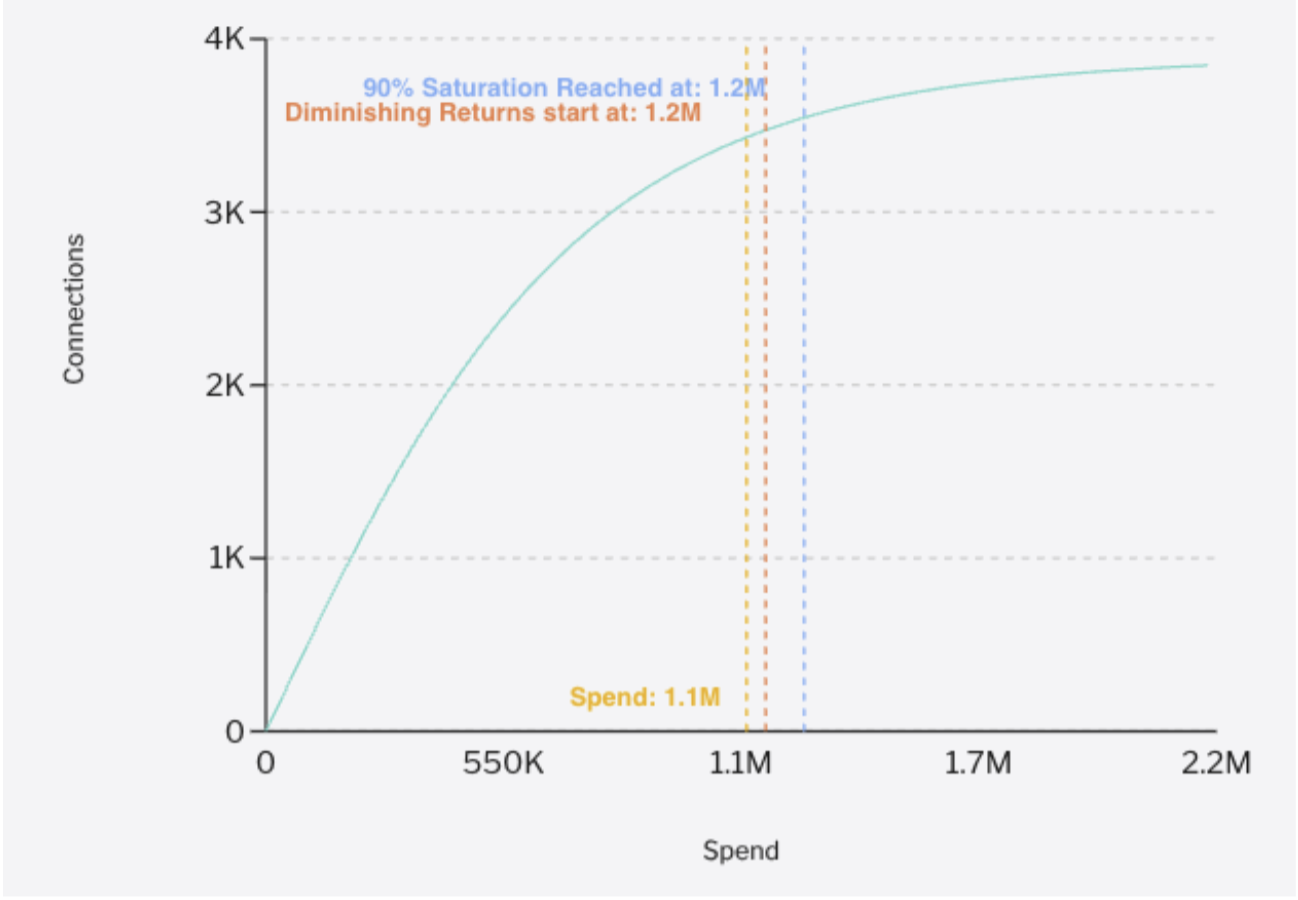
Take one client, a leading real estate platform, spending more than 70% on generic search.
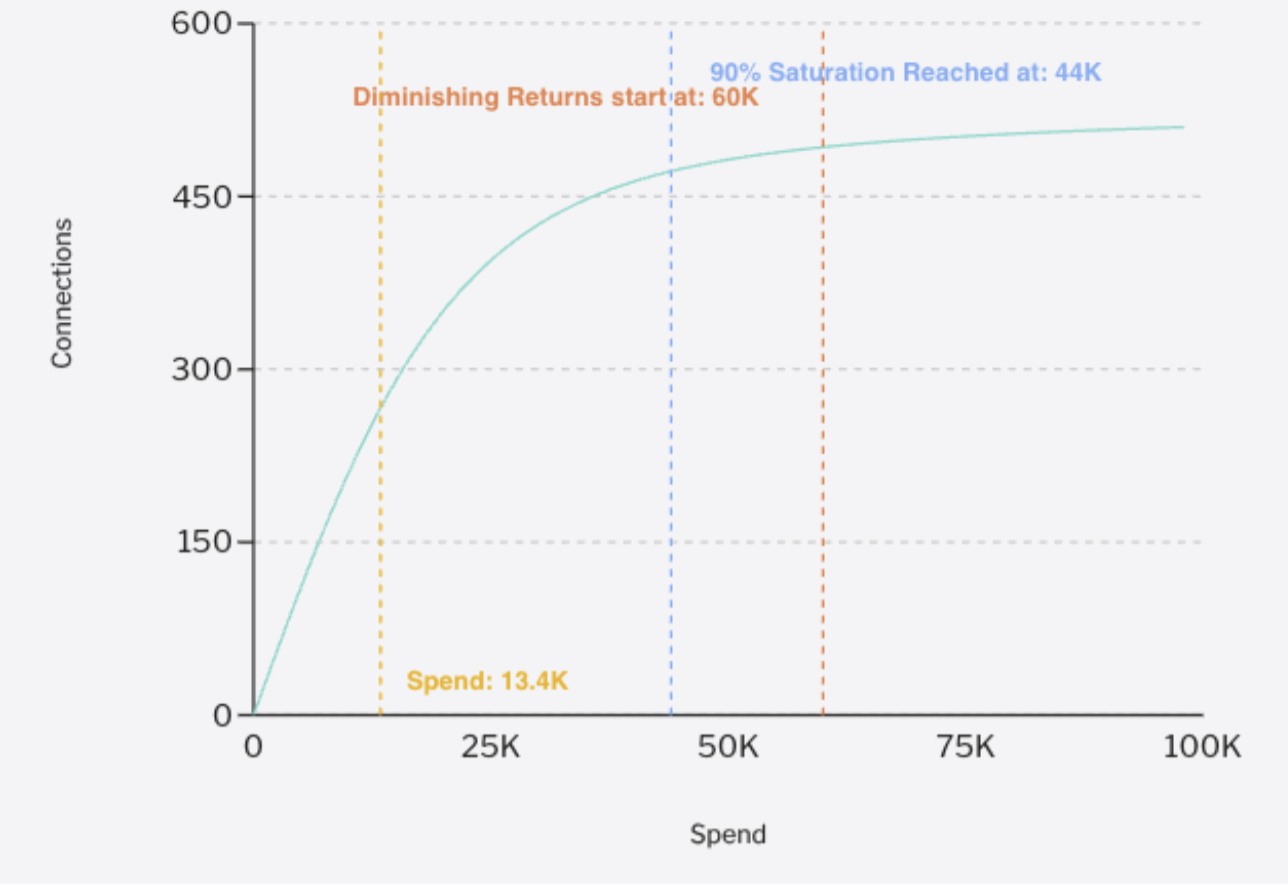
The model showed clear saturation. The recommendation - redirect investment upstream into brand creation.
Conveniently, they were also preparing a rebrand. The timing turned a statistical insight into a strategic decision. The pattern holds and captures channels that saturate quickly. When the curve flattens, growth comes from funding creation, not extraction.
Generic search - investment near saturation (marginal ROI is low):
The model identified that some brand-building channels were underutilised, with a much higher marginal ROI:
Experiments and simulations aren’t rivals – they’re partners.
When experiments run in-market, Prophet uses the results to anchor simulations in real evidence. The platform then scales those insights across regions, time periods and channels that can’t easily be tested, like TV or out-of-home.
The principle is simple - experiment where you can, simulate where you must, and let each inform the other.
Data that keeps up with the business
Data is always the bottleneck.
Multiple agencies, disconnected systems, offline and digital silos - all slow things down. By the time the data’s stitched together, the market has shifted again. The fix is automation and direct connectors, plus daily ingestion where possible.
With granular data, models can be tested at daily, weekly, or monthly frequency and deliver insights at the cadence leaders actually plan with. Fresh beats perfect. The closer the distance between the event and the insight, the more powerful the decision.
Decision intelligence only works if people trust it. Uncertainty needs to be surfaced clearly, showing when results are sharp and actionable and when they’re fuzzy and exploratory.
Confidence bands that show the uncertainty around an estimate, ramp-rate constraints that keep budget shifts between periods realistic and transparent, and priors that make the model’s Bayesian assumptions explicitly help turn black-box outputs into boardroom confidence.
When a tool shows its workings, it earns its seat at the table.
To be truly actionable, decision intelligence must evolve from something displayed on a slide to a usable system. That means living standards: 48-hour turnarounds from data refresh to simulation update, automated pipelines and clear governance.
Leaders can see which inputs informed recommendations, which variables were tested and why one scenario was chosen.
The maths only matters if it reaches the boardroom fast, clearly and credibly. Make maths a product, automate the pipelines, show the curves and respect the constraints.
Then CMOs and CFOs can do what matters most and actually move money around to where it’s best utilised.
More from Mediaweek
The leading media trade publication in Australia.
Get our top stories straight to your inbox daily by signing up to our Newsletter
By providing your information, you agree to our Terms of Use and our Privacy Policy. We use vendors that may also process your information to help provide our services.


