



Why strategy keeps failing and why AI won't save executives
Behavioural scientist Ganna Pogrebna and strategist Graham Kenny challenge management myths.

On stage at SXSW Sydney, two very different thinkers arrived at the same conclusion.
Strategy is not failing because leaders lack intelligence or data. It is failing because organisations still misunderstand how decisions are actually made.
Speaking on Rules Don’t Apply, hosted by The Growth Distillery’s Dan Krigstein, behavioural scientist Ganna Pogrebna and strategist Graham Kenny dissected the quiet myths propping up modern management, from executive omniscience to the idea that AI will somehow clean up human judgment.
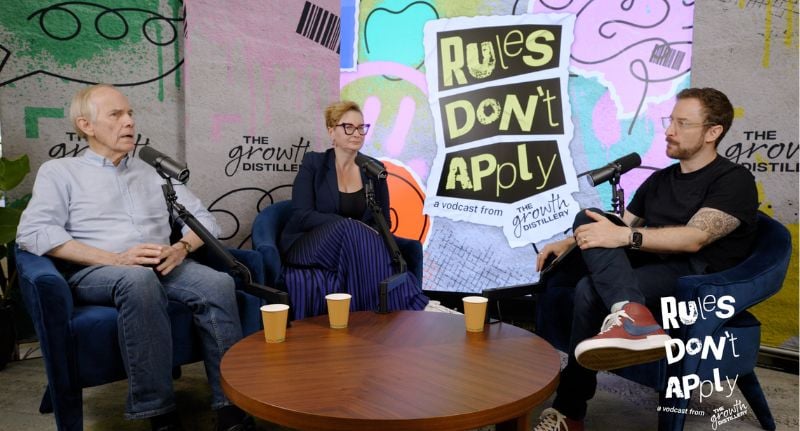 Strategist Graham Kenny, behavioural scientist Ganna Pogrebna and The Growth Distillery’s Dan Krigstein
The execution gap no one fixes
For Kenny, the root of the problem is translation. Strategy might be conceived at the organisational level, but execution lives elsewhere.
“Strategy is conceived at the organisational level, but execution happens at the individual level, and many organisations miss that distinction,” he said.
Too often, strategy becomes just another plan. “Once that happens, it loses its significance,” Kenny said. “Positioning is an organisational issue. Action is an individual one.”


The leading media trade publication in Australia.
Get our top stories straight to your inbox daily by signing up to our Newsletter
By providing your information, you agree to our Terms of Use and our Privacy Policy. We use vendors that may also process your information to help provide our services.
Pogrebna took a different angle, arguing that most organisations fail long before execution even begins because they never plan for things to go wrong.
“People generally don’t plan for failure at all,” she said. “I call it the Samurai approach. If you accept the possibility of failure upfront and plan for what comes next, you’re far better prepared.”
Instead, she said, leaders assume everything will work out, or avoid planning altogether.
The executive myth is cracking
One of the most persistent beliefs under pressure is that executives have the answers. Kenny said AI is accelerating the collapse of that idea.
“The idea that executives have all the answers - AI is pushing against that,” he said. “It’s changing the role of senior executives, flattening organisations, and reshaping culture.”
Leadership, in his view, is moving away from command and control.
“Leadership is moving from dictation to co-creation,” Kenny said. “AI has put executive-level tools into the hands of employees. People can do their own research.”
If leaders resist that shift, the consequences are cultural as much as strategic. “If leaders don’t support that shift, people disengage.”
Pogrebna challenged another long-held assumption: that executives are rational decision-makers.
“Most strategic decisions are made intuitively,” she said. “Data is often used to justify decisions already taken.”
The role of data and AI, she argued, is not to replace intuition, but to make it safer. “AI and data science help de-risk intuition by making uncertainty more manageable.”
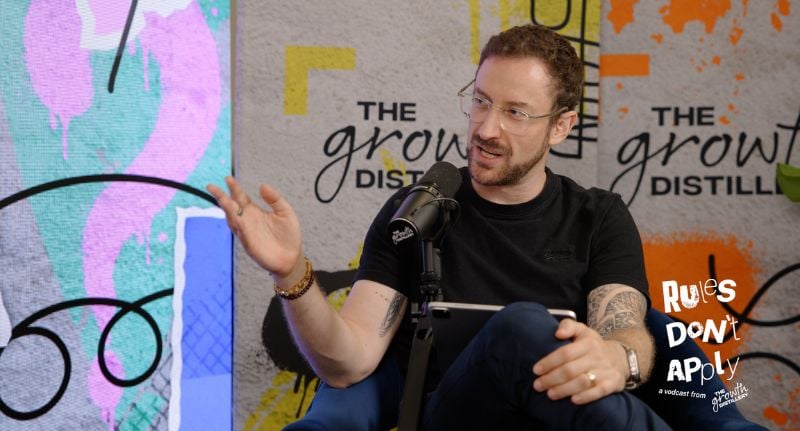 The Growth Distillery’s Dan Krigstein
Uncertainty is not the enemy
If there was a single theme underpinning the conversation, it was this: uncertainty is where value lives.
“Organisations don’t have data problems. They have decision problems,” Pogrebna said. “Uncertainty is where value is created. If you can make better decisions than competitors, you win.”
That thinking extends to how performance is measured. For Kenny, the wrong metrics often feel comforting but miss the point.
“Metrics that don’t measure outcomes for stakeholders,” he said. “Efficiency alone doesn’t matter to customers. They care about service, quality and value.”
Pogrebna agreed, adding that most organisations are drowning in measurement. “We measure too much,” she said. “Organisations track hundreds of variables, but only a handful actually drive revenue.”
AI won’t replace responsibility
Despite the hype, neither believes AI will rescue leaders from accountability.
“AI is useful but overhyped,” Kenny said. “It won’t replace boards. Responsibility must remain human. AI assists decision-making, but accountability can’t be automated.”
Pogrebna warned that many organisations rush toward AI before understanding the problem they are trying to solve.
“Current AI is better at creativity than precision,” she said. “Many organisations want AI before they understand their own problems.”
Her advice was simple but confronting. “Start with the problem, then decide whether AI is the right tool. Co-design with stakeholders is essential.”
Kenny added that even the language matters. “Stop talking about ‘AI strategy,” he said. “You have a business strategy first. AI is a plan that supports it, not the other way around.”
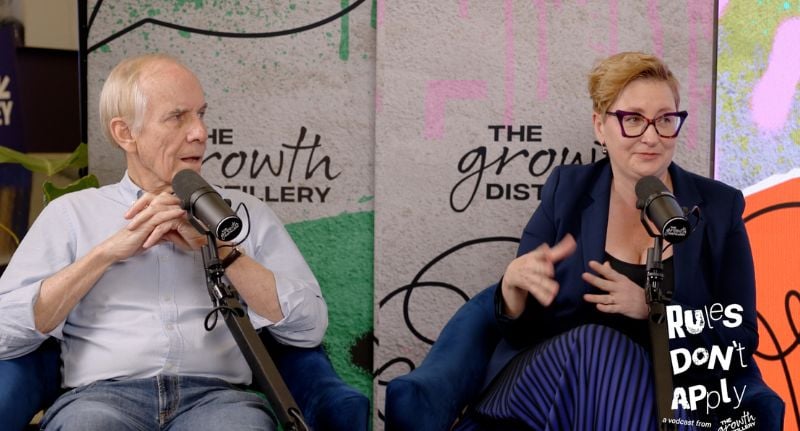 Strategist Graham Kenny, behavioural scientist Ganna Pogrebna and The Growth Distillery’s Dan Krigstein
Adoption is already happening
While executives debate risk and governance, employees are moving ahead.
“Because it saves time,” Kenny said, explaining why staff are adopting AI faster than leadership. “Executives worry about risk, privacy and control.”
That bottom-up adoption creates new governance risks, particularly around third-party tools. Pogrebna said many boards lack visibility into how algorithms are trained or where data originates.
“Third-party AI risk is huge,” she said. “Boards often don’t know how algorithms are trained or where data comes from. That’s now a governance issue.”
Letting go
In a rapid-fire close, Pogrebna warned that autonomy itself is under threat. “Decision independence is disappearing,” she said. “Algorithms influence far more of our thinking than we realise.”
Kenny raised a different concern. “AI funding models may collapse,” he said. “There’s a real risk of a bubble.”
Asked what they have personally let go of, their answers were telling. Pogrebna said “time”. Kenny said “control”.
Together, they left the audience with a clear message. The future of strategy is not about certainty or authority. It is about judgment, humility, and learning to operate without the illusion of total control.
More from Mediaweek
The leading media trade publication in Australia.
Get our top stories straight to your inbox daily by signing up to our Newsletter
By providing your information, you agree to our Terms of Use and our Privacy Policy. We use vendors that may also process your information to help provide our services.


