

Canva has unveiled its third annual Design Trends Report, outlining how creativity, brand content and social media design are set to evolve in 2026, with a clear message emerging.
As AI becomes embedded in everyday creative workflows, human imperfection is becoming the new differentiator.
The global visual communication platform also unveiled a new feature called Design DNA, which gives users a personalised recap of their creative output in 2025.
Trends from creators, for creators
The report draws on analysis of Canva design and search activity, insights from its Designer Advisory Board, and a survey of 1,000 creators across the US and Brazil.
According to Canva, the findings reflect a growing desire among creators to balance the efficiency of AI with individuality, texture and personal taste.
Cat van der Werff, executive creative director at Canva, said 2026 marks a turning point in how creators use AI.
“As more and more creators turn to AI to help them express themselves visually, we believe 2026 marks the year of imperfect by design, a time when blending AI seamlessly with human imagination and creativity has never mattered more,” she said.
Imperfect by design becomes the new standard
Canva’s data suggests creators are pushing back against overly polished, algorithm-driven aesthetics. Eighty per cent of creators surveyed said 2026 will be the year they regain creative control, not by rejecting AI, but by using it on their own terms.
AI remains central to workflows, with 77 per cent of creators describing it as an essential partner. At the same time, searches for DIY and collage-inspired elements have increased by 90 per cent, signalling a renewed appetite for authenticity and visible human input.
Texture, storytelling and sensory design are also gaining momentum, as creators lean into work that feels expressive rather than optimised.
Ten trends shaping creative culture in 2026
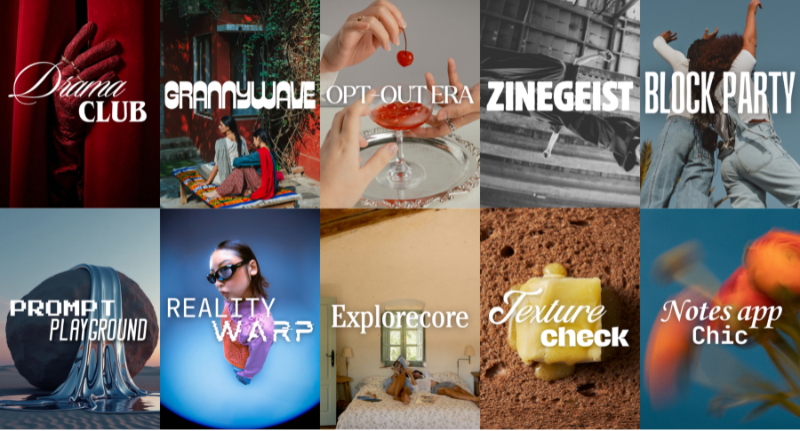
Canva identified ten global design trends expected to influence brands and creators next year:
- Reality warp reflects a deliberate blurring of the real and surreal, with searches for liminal and uncanny visuals up 220 per cent year on year.
- Prompt playground channels early internet nostalgia, emotional experimentation and lo-fi aesthetics. Searches for lo-fi design jumped 527 per cent.
- Explorecore responds to digital overload, favouring calm, clarity and deeper exploration. Zine and Substack-inspired layouts rose 85 per cent.
- Texture check puts tactile, hyper-realistic surfaces front and centre. Searches for textured and CGI-inspired materials grew 30 per cent.
- Notes app chic celebrates scrapbook-style visuals and visible process. DIY and collage elements rose 90 per cent.
- The opt-out era strips branding back to essentials. Searches for clean layouts, serif fonts and simple branding increased 54 per cent.
- Drama club embraces cinematic storytelling and heightened emotion. Interest in dramatic visual motifs rose 27 per cent.
- GrannyWave highlights nostalgia-driven maximalism, particularly in India, as evidenced by growth in searches for Desi and Hindi typography.
- Zinegeist captures Mexico’s revival of bold DIY aesthetics. Searches for brutalist design and type posters rose 77 per cent.
- The block party reflects Spain’s fusion of folklore, vintage tones, and everyday culture, generating more than 1.5 million impressions.
Design DNA personalises creativity at scale
Alongside the report, Canva introduced Design DNA, an AI-powered feature that analyses a user’s design behaviour across 2025.
The tool generates a personalised creative profile, identifying users as styles such as Font Stylist, Prompt Picasso, Chatter Box or Newbie. Canva said more than 111 million unique Design DNA assets were generated last year.
Van der Werff said the feature reinforces Canva’s focus on empowering creativity rather than automating it.
“Canva was built for this shift, to empower anyone to use AI on their terms and bring their ideas to life in a way that feels personal, authentic and unmistakably human,” she said.