



Why Clive Dickens believes AI can protect creatives and journalists
The Meliora Company founder is firm in his belief that AI can be used to our advantage.

Clive Dickens isn’t investing in artificial intelligence companies built to replace humans. He’s backing the ones designed to improve them.
The former Shazam executive and Seven West Media strategist, now the founder of AI advisory and investment firm The Meliora Company, has spent the past year quietly building a portfolio of early-stage startups that use artificial intelligence to support, rather than supplant, creative and knowledge-based industries.
“What these companies do is that they make humans more productive and more creative rather than replace humans, which is aligned with our vision and our purpose”, Dickens told Mediaweek.
“We believe that technology enhances human creativity - it doesn't replace it.”
He’s referring to companies like Springboards.AI, an Australian startup helping creative agencies develop campaign ideas using AI, and StoryDesk.AI, a platform designed to help journalists research, structure and write stories more efficiently.
Both sit inside Meliora Ventures, the investment arm of Dickens’ broader company, The Meliora Company, which operates across advisory, product development and venture investment.
Now, Dickens has formalised that investment strategy with the launch of Meliora Ventures Fund One, a A$4.6 million pre-seed fund targeting around 15 early-stage AI startups globally.


The leading media trade publication in Australia.
Get our top stories straight to your inbox daily by signing up to our Newsletter
By providing your information, you agree to our Terms of Use and our Privacy Policy. We use vendors that may also process your information to help provide our services.
 Clive Dickens. Source: Meliora
Moving beyond AI hype to practical application
Dickens founded Meliora to operate at what he calls the “messy middle”, where ambition meets execution.
The company operates in advisory, product development, and venture investment, with a lean team of around 10 specialists across Sydney, London, and Los Angeles.
His background, spanning senior roles at Optus, Seven West Media, and Shazam, has shaped his view that AI’s future lies not in replacing creative industries but in reinforcing them.
“People wrongly say, for example, things like 'Hollywood is dead', and show you a movie they made through AI," he said.
“But it's not a movie. It's a 47-second video derived from Ridley Scott training data, and it looks like a bad version of Blade Runner. That is not a movie.
“When you watch a movie, it's the characters, it's the stories, and the humanity that make it.”
This belief has translated into a deliberate investment thesis. Meliora is prioritising startups already delivering working products and measurable value, rather than chasing theoretical breakthroughs.
“We're now raising $4.5 million Australian dollars to invest in 15, one, five new companies,” Dickens said.
“We will obviously evaluate Australian businesses, but as we said, most of our investment will be outside Australia because there's a great big world outside of Australia.”
Backing AI built for creative industries
Two early investments illustrate how Meliora is targeting sectors under acute productivity pressure, particularly media and creative industries.
One of those is Springboards.AI, an Australian startup founded in Noosa and now based in Surry Hills, designed to help creative agencies develop campaign ideas and respond to briefs more effectively.
“When you're looking for ideas to build a creative pitch, rather than sort of just whiteboarding or post-it notes or brainstorming, you use Springboards. It's a springboard for your creativity.”
The product emerged from necessity. Its founders built the platform after being made redundant from a creative agency, initially using large language models before discovering their limitations.
“They realised those models were just pattern recognition,” Dickens said.
“So, they created a springboard for the creative industry to allow creatives to be even more creative and productive rather than fearing AI.”
The platform has since attracted significant investment, including backing from Google and Blackbird, validating its commercial potential.
"It's really about using technology to make humans more creative and more efficient," he said.
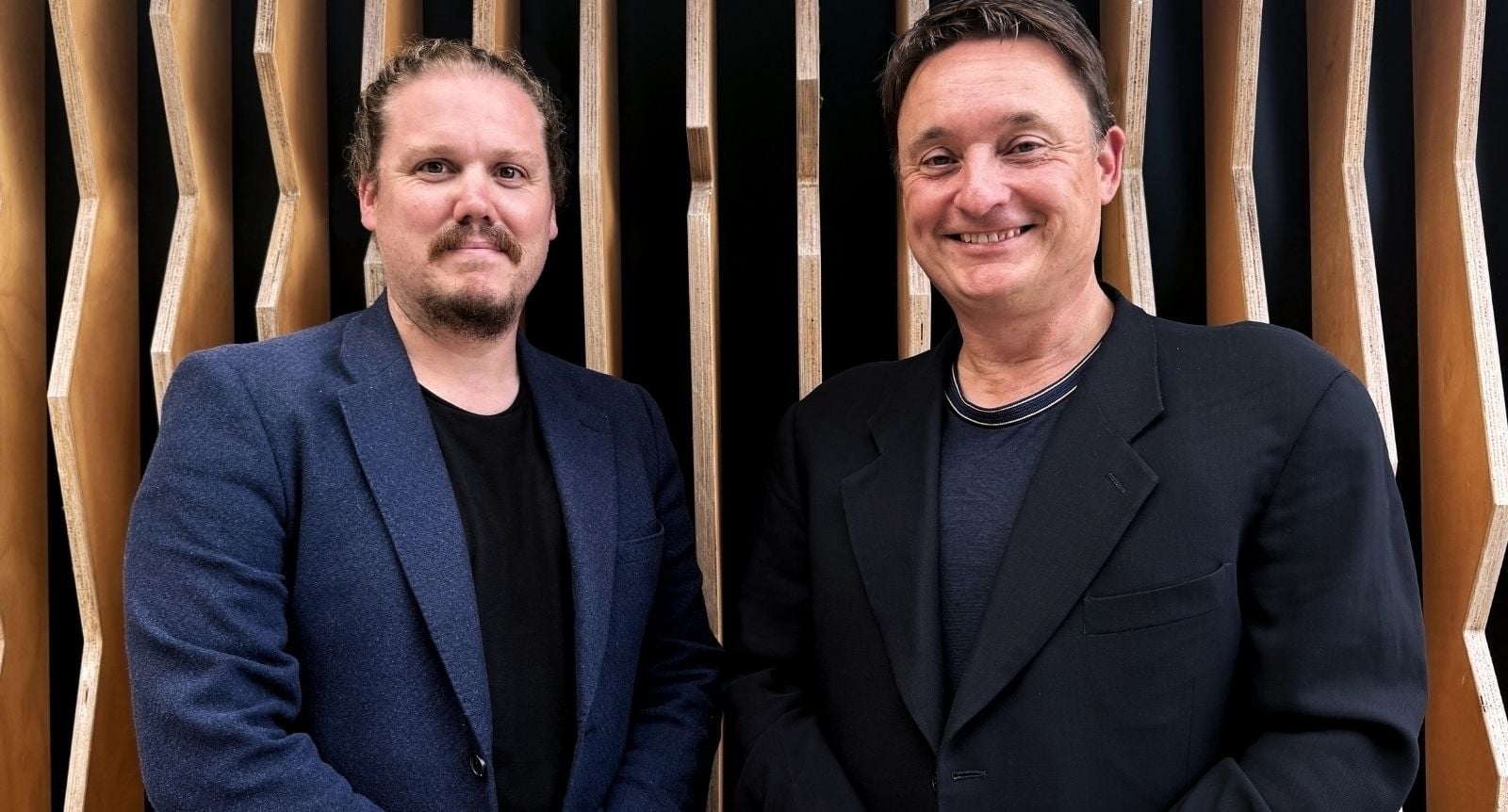 Dickens (R) with his Meliora business partner, Jack Lonergan.
Reinventing journalism workflows
Meliora has also invested in StoryDesk.AI, a platform designed specifically to support journalists navigating rising workloads and shrinking newsroom resources.
“StoryDesk does something very similar, but for journalists. For trained journalists,” Dickens said.
He frames the investment as both commercial and cultural, given journalism’s central role in democratic societies and its growing economic pressures.
“Journalism and freedom of speech and the fourth estate and holding the powerful to account is really important for democracy and society,” he explained.
“But of course, the challenge in journalism is that you have a certain number of stories you need to file every day. You've got to produce so many stories, and you don't have any more time.”
The platform integrates directly into journalists’ existing workflows, helping them organise sources, conduct research, and maintain notes while maintaining editorial integrity.
“It allows you, then, to create original articles in your tone of voice using AI. So it's not AI-generated copy. It's not AI slop. It's human-enabled copy using AI to make you more efficient,” Dickens said.
“The dream would be, say, if you file six to 12 stories a day, then StoryDesk can allow you to produce 16 to 24 stories a day that have actually got your name on it, that have been fact-checked, that have been sourced, that have a trust score on them.”
He sees the technology as essential to sustaining journalism as a viable business model.
“We don't want AI slop. We don't want AI-generated copy. We need journalists,” he said. “So build a product that makes journalism more sustainable.”
Early investments already delivering returns
Meliora’s strategy is already showing early momentum.
The firm’s first five investments, announced shortly after launching last year, spanned startups across Australia, the UK, Ireland and France, covering media, enterprise software and telecommunications.
One standout performer is Fluency AI, a Melbourne-founded operations platform that automates internal business processes.
“Fluency is a very dry company. It's a process operations business,” Dickens said. “But the reason why that's important is that if businesses can streamline their back office, they can spend more time investing in human connections and human stories and humanity.”
Fluency recently raised US$8.5 million in fresh funding from Accel, the Silicon Valley firm that previously backed Facebook and Atlassian, and has since relocated to San Francisco.
“They're going to be a very successful Australian company that attracted high-end investors from the Bay Area,” Dickens said. “And that is a phenomenal return for the original in a very, very short period of time.”
Investing in AI’s creative future
Meliora Ventures Fund One formalises what Dickens had already begun to build, positioning the firm as both an investor and a strategic partner to AI startups operating at the intersection of technology, media, and creativity.
The focus remains consistent: AI that amplifies human capability rather than replaces it.
For Dickens, the opportunity isn’t just technological. It’s structural.
The future of AI, he believes, won’t be defined by synthetic content replacing humans, but by tools that enable humans to do more, create more and sustain industries under pressure.
And increasingly, he’s putting capital behind that conviction.
More from Mediaweek
The leading media trade publication in Australia.
Get our top stories straight to your inbox daily by signing up to our Newsletter
By providing your information, you agree to our Terms of Use and our Privacy Policy. We use vendors that may also process your information to help provide our services.


