



What happens when biases are baked into AI?
If women remain underrepresented in designing and governing those systems, imbalance won’t just persist - it will scale.

Maddie Basso, Head of Yahoo DSP Australia
Over the summer, I asked my music app’s AI tool to recommend a playlist. It suggested a mix of female artists “perfect for baking a cake”.
I hadn’t mentioned baking, cooking, or anything remotely connected to it; I had simply asked for music. It was a small and, on one level, amusing moment. But it stayed with me because it highlighted how easily assumptions and biases can surface in automated systems.
If a light-touch, low-stakes consumer feature can default to a generalisation, it raises a more important question: What happens when similar assumptions are embedded in the systems that shape media investment, audience targeting, and optimisation decisions at scale?
Advertising is now firmly entering its automation era. It’s no longer a peripheral promise, but central to how we operate. Campaigns are increasingly powered by machine learning, optimisation loops are self-adjusting, and agentic systems are being developed to plan, activate and refine activity with minimal human intervention.
The opportunity this presents is enormous - greater precision, faster learning cycles and improved performance across the board.
I firmly believe automation will define the next chapter of our industry and how humans use it to their advantage. The question, therefore, is not whether we automate but how thoughtfully those systems are designed and governed. If biases are baked in, are cake-making offers all I’m going to get
served up?


The leading media trade publication in Australia.
Get our top stories straight to your inbox daily by signing up to our Newsletter
By providing your information, you agree to our Terms of Use and our Privacy Policy. We use vendors that may also process your information to help provide our services.
As more decision-making shifts into automated environments, influence moves upstream. Long before a campaign goes live, someone defines what “performance” means, which signals matter most, and how trade-offs are balanced among efficiency, quality, and context. Those choices shape outcomes in ways that are not always visible day to day, but are foundational over time.
I don’t want to “sound the alarm”, but I do want us to recognise that as AI becomes more capable, leadership accountability becomes more significant. The power in our industry is gradually moving from those who execute campaigns to those who design the frameworks that determine how campaigns function.
That’s why we need to consider women more actively in the equation.
The data crunch
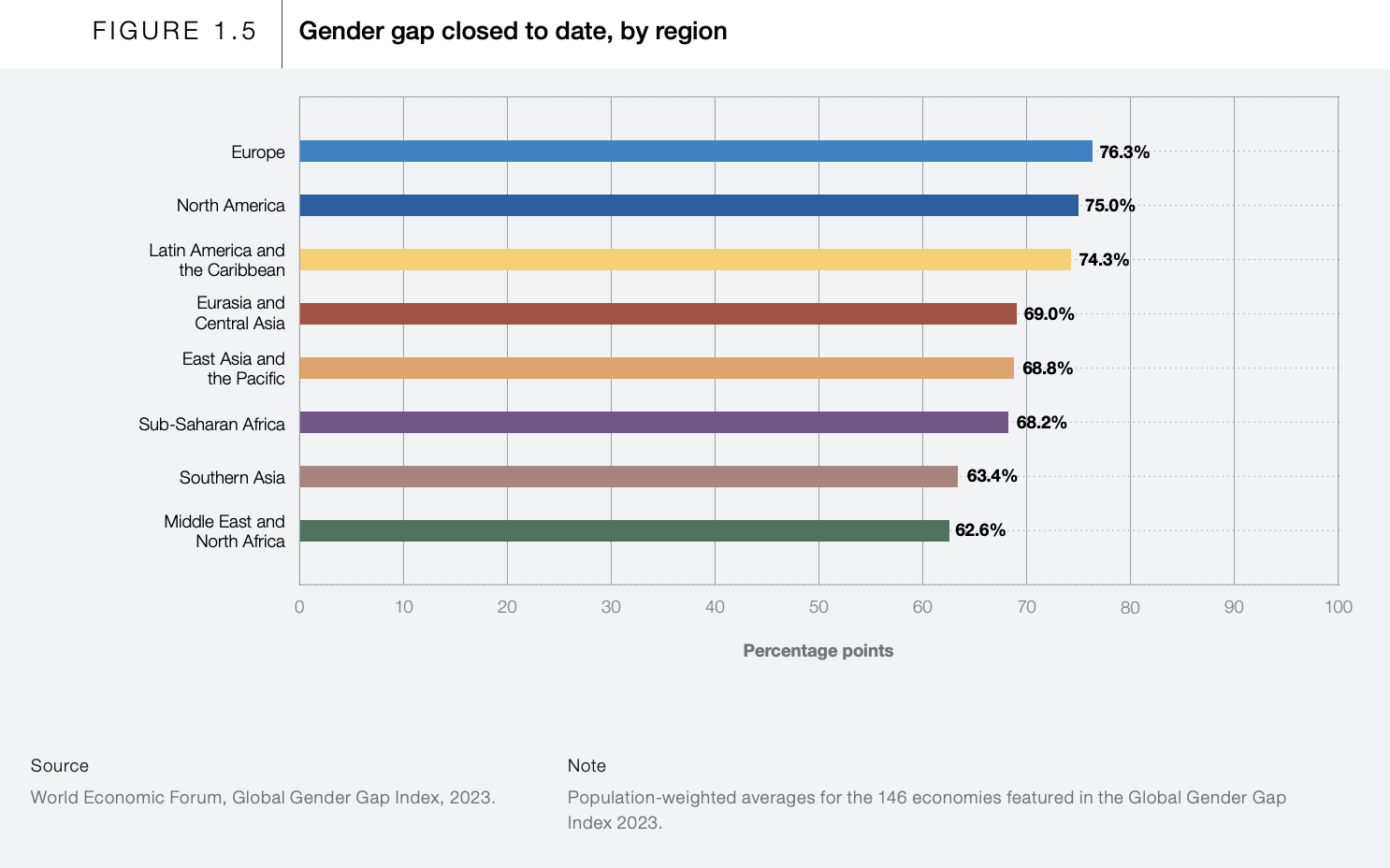
According to the 2023 Global Gender Gap Report, women account for only 30.4% of the global AI talent pool. The same study identified that AI skill penetration is lower among women than among men in nearly every country measured.
I don’t want to dramatise those figures, but I do want to consider their implications. If the group building and governing intelligent systems is relatively narrow, the range of perspectives shaping those systems is narrower still.
The conversation around representation is often framed as a matter of fairness or access. In an AI-led environment, it is equally a matter of performance. Different lived experiences and leadership styles encourage earlier interrogation of assumptions and sharpen our definitions of success.
I strongly believe diverse leadership does not slow automation; it enhances it by making it more considered, resilient and effective.
When I stepped up into an executive position last year, I was conscious of this risk myself. I learnt firsthand the importance of building a broader leadership team of complementary commercial strengths and perspectives.
The entire process reinforced for me that whoever shapes a system matters just as much as the system itself.
There is also, now more than ever, a responsibility aspect to this conversation.
The question of AI
AI is now embedded in the everyday workflows of junior marketers, who use it to draft creative, interrogate data, and accelerate output. That is a positive development, but it comes with a duty to ensure they understand not only how to use these tools, but when to rely on them and where their limitations lie.
If we want AI to elevate human judgement rather than erode it, then leadership, including women’s, must extend beyond use to governance, education and oversight. Sense-checking assumptions, interrogating data sources and modelling disciplined use are all part of shaping a healthy AI ecosystem within our industry.
Encouragingly, the broader conversation is evolving in that direction. Industry bodies and global institutions are increasingly focused on responsible AI, transparency and governance frameworks. Rather than viewing this as caution, I see it as a sign of maturation.
Advertising is entering a phase where intelligence, oversight and design discipline will distinguish market leaders.
International Women’s Day often centres on visibility, which undoubtedly matters - but in an industry increasingly shaped by intelligent systems, influence may matter even more.
As decision-making becomes encoded into technology, the stakes of representation rise accordingly. If influence remains concentrated, imbalance won’t simply persist; it will scale.
I have no doubt the future of marketing will be both automated and deliberately designed. Ensuring that design reflects a diversity of perspectives will make our industry not just more equitable but also more effective.
More from Mediaweek
The leading media trade publication in Australia.
Get our top stories straight to your inbox daily by signing up to our Newsletter
By providing your information, you agree to our Terms of Use and our Privacy Policy. We use vendors that may also process your information to help provide our services.


