

Interviews rarely end the way this one did. You hope to wrap up on the same steady footing you began, not with both the journalist and the subject wiping away tears. Yet that was the reality when Mediaweek sat down with Mel Pilling, editor of The Saturday Courier-Mail and The Sunday Mail, to talk about the News Corp campaign she helped drive into the national conscience: Let Them Be Kids.
On the first morning of Australia’s under-16 social media ban coming into force, Pilling is reflective. The journey from the first editorial meeting to federal legislation has taken almost two years. The cost, both emotional and personal, is still sitting right beneath the surface.
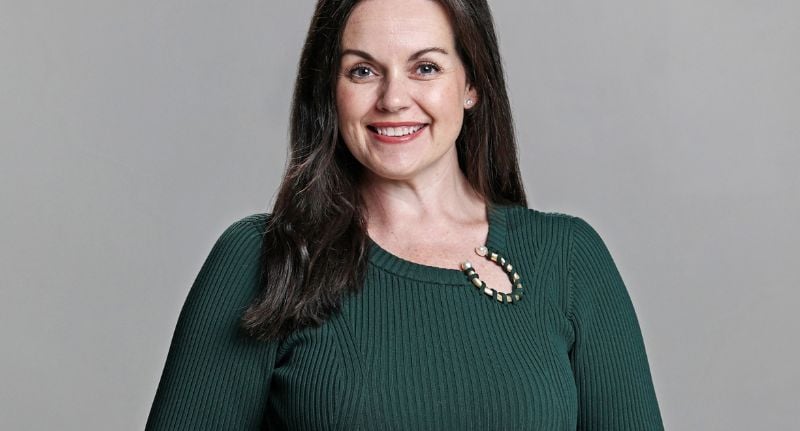
Mel Pilling
A moment of pride and emotion
Asked how she feels on a day of such significance, Pilling pauses before speaking.
“I’m feeling super proud, and a little bit emotional,” she said.
She has spent years reporting on harm, but the past two years have pushed her deeper into the lives of grieving parents, heartbreaking evidence, political corridors, and the fragile space between advocacy and journalism.
“It has been almost two years in the making, and you know, it’s a little bit emotional because this is a big deal, and I hope that it will change lives, save lives. And you know, the parents that I’ve worked with are… they’re amazing.”
The parents became the driving force behind the campaign, giving it shape, urgency and emotional weight. Their losses carried the message further than any editorial could.
“I couldn’t have done this campaign without them,” she said.
For Pilling, their involvement was essential, not optional. Their presence grounded the work and ensured the campaign spoke with authenticity.
“It was essential to me to have parents with lived experience standing side by side with me. They can talk about what they’ve lost better than I can.”
Their stories stayed with her long after each conversation ended, pushing her forward even on the hardest days.
“You can’t hear their stories and not want to do something.”
Where the campaign began
The seed was planted in mid-2024, not long after Pilling had returned to the newsroom following maternity leave. She had already begun noticing a wave of stories involving sextortion, cyberbullying, eating disorders and self-harm linked to social platforms.
“We’d already been reporting on a lot more instances of social media harm.”
A meeting of flagship editors was called. Pilling brought research showing the sharp rise in youth mental health issues from around 2011, the point at which social media embedded itself into everyday childhood.
“It showed how things like self-harm, suicide and eating disorders had been on an upward trajectory, since social media really took off in Australia.”
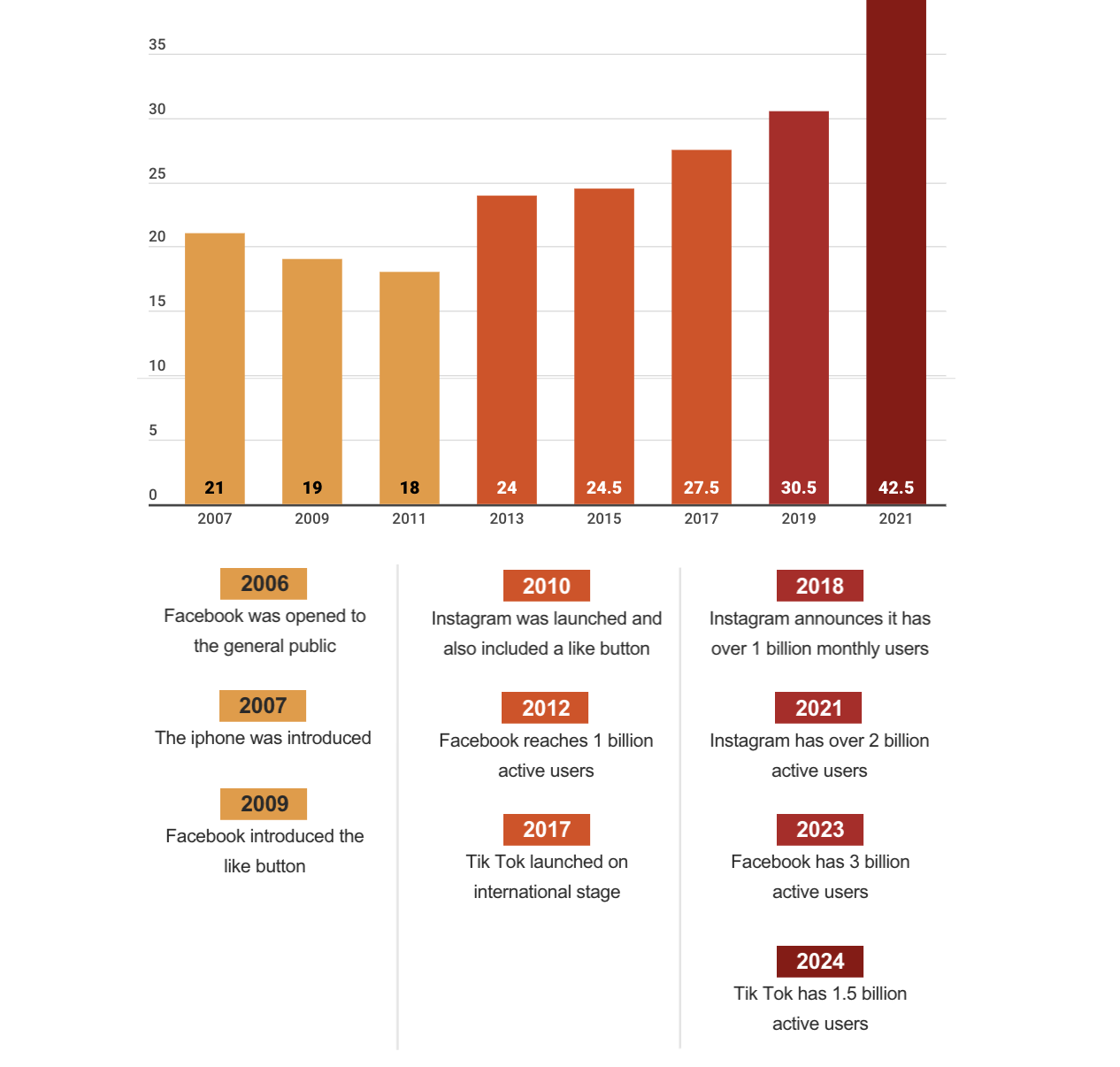
Prevalence of psychological distress by age
What she didn’t expect was unanimity.
“When I presented this research, it was kind of unanimous in the room that we needed to do something about it.”
A month later, Let Them Be Kids launched across Sunday mastheads, introducing the parents whose stories would serve as the campaign’s moral anchor.
Among them were:
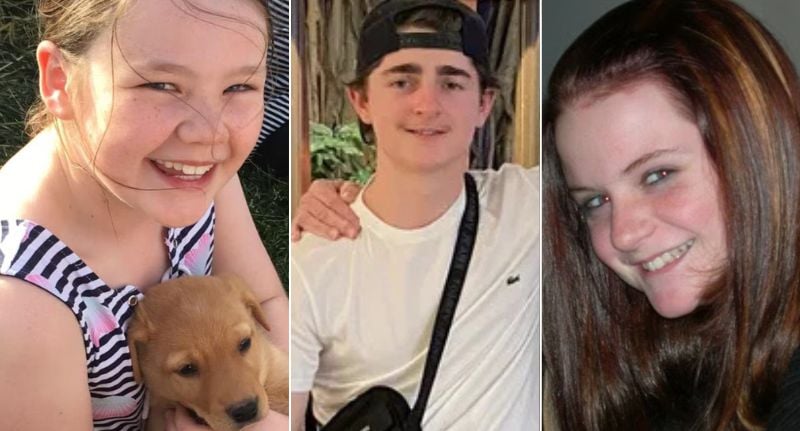
Ness Love, whose daughter Courtney, 15, died by suicide after trolls encouraged her self-harm.
Emma Mason, whose daughter Tilly, 15, died after sustained online bullying.
Wayne Holdsworth, who lost his son Mac, 15, after a sextortion scam, became a national advocate.
Their stories formed the emotional spine of the movement.
The families behind the momentum
Pilling talks about the parents with deep admiration, recognising how much groundwork they had already done on their own. “They’d been doing things to try to get the word out, but it was when they all came together with the backing of News Corp that it really took off.”
As the campaign grew, so did their connection. What began as a shared cause quickly became a support network.
“I’ve spoken to at least one of them every day. We have a group chat. We pick each other up when we’re down,” she said.
They travelled repeatedly to Canberra. They spoke at vigils. They relived their trauma in interview after interview. And they said yes to everything.
“They’re an incredible bunch of people. They show a strength I don’t think I could have in the same situation.”
The UN trip became a defining chapter. Pilling and Mason spent two days in a New York hotel room refining Mason’s speech.
“There was no sightseeing. This was a really important speech to deliver to the world.”
The emotional toll and personal dilemma
Pilling found herself grappling with the same questions haunting the parents.
“I was living it,” she said. At the time, Pilling’s daughter was 10 years old and social media was already high on her agenda, but she felt she was in a ‘lose-lose’ situation: “If I don’t give it to her, she might get bullied. If I do, I’m opening her up to a world outside my control.”
The political turning point
The campaign’s momentum surged after an intimate dinner at the Lodge in September 2024. Pilling, Courier-Mail editor Chris Jones, the PM’s fiancée Jodie and senior staff discussed the ban not as a hypothetical, but as an emerging framework. It signalled a shift.
Weeks later, the Prime Minister called.
A phone call that changed everything
“He said, Congratulations, we’re doing it.”
It was short, direct and transformative.
“He kept his word.”
When critics question whether the ban will work, Pilling keeps her focus on the larger goal.
“Nothing needs to be 100% guaranteed for work in order for you to go after it.”
Instead, for her, the aim is generational.
“All I’m hoping for is a cultural shift. That kids can grow up in a world where social media at 10 is not the norm.”
And she believes parents will embrace the clarity of a legal line.
“The success will come in parents utilising the power they’ve been given to say, ‘No, you can’t have social media because it’s illegal’.”
The eSafety Commissioner, she notes, will now play a crucial enforcement role.
“Kids are crafty, that’s where the Commissioner really needs to utilise the power she’s been given to hold these tech companies to account.”
A national shift forged in grief and determination
Today’s social media ban marks the culmination of a campaign built on raw loss, relentless advocacy, political engagement and consistent reporting. It began with grieving parents and a newsroom noticing troubling trends. It moved through Parliament House, the Lodge, national front pages and eventually the United Nations.
The law now stands as a direct response.
For Pilling, the day belongs to the families who relived their devastation so others wouldn’t face the same fate.
“You can’t hear their stories and not want to do something.”
Their stories were heard – and today, the country changed.
Main image: Tilly Rosewarne, Mac Holdsworth, Courtney Love