



The rise of ‘human premium’: Why mid-tier creators dominate 2026?
Performance data across millions of posts is revealing a clear recalibration in how marketers assess creator tiers.

As influencer marketing takes over brand budgets, the question is no longer whether creators drive results but which tier of creators delivers them most predictably with the fewest consequences.
At the centre of that shift? mid-tier creators.
 Bryce Coombe. Source: Hypetap
Bryce Coombe, managing director of Hypetap, told Mediaweek that performance data across millions of posts is revealing a clear recalibration in how marketers assess creator tiers.
“There are a number of factors driving the performance of mid-tier creators vs micro or macro creators. From a holistic campaign planning perspective, mid-Tier creators (50K–100K followers) provide a sweet spot that offers ‘structural balance’ in campaigns,” he said.
Mid-tier creators over mega and micro?
“It’s primarily driven by the predictability of outcomes.”
Coombe said their data shows that mega creators are often too expensive and “skewed by outliers” that pose a higher risk to client budgets.


The leading media trade publication in Australia.
Get our top stories straight to your inbox daily by signing up to our Newsletter
By providing your information, you agree to our Terms of Use and our Privacy Policy. We use vendors that may also process your information to help provide our services.
While they may deliver strong efficiency on average, performance is frequently driven by a small number of extreme results, making campaigns highly volatile and case-by-case.
“Which can result in some campaigns relying on the ‘celebrity gamble’ - hoping that one or two extreme performers will drive the entire campaign ROI,” Coombe said.
On the other end of the spectrum, “micro and nano creators suffer greater price and performance volatility.”
“Mid-Tier, however, offers predictable, commercially moderate balance, while still delivering CPEs lower than other tiers,” he said.
The realisation is not about deserting macro talent, but rebalancing risk.
“Mid-tier creators are being positioned not as a niche option, but as the stable core of campaign architecture.”
Audiences have developed a filter
The shift is also cultural. An abundance of AI-generated content and overly fabricated brand endorsements has sharpened audience instincts.
“Across all categories, we're seeing that audiences have developed a filter for overly polished, inauthentic endorsements that feel like traditional paid celeb engagements rather than genuine advocacy and relatable experience.”
In contrast, mid-tier creators are filling that gap by building “genuine relationships and connections” with their audiences.
“The rise of high-volume AI content has created a ‘human premium’,” Coombe said.
Creators pushing back to protect authenticity
From the creator side, the tension is tangible.
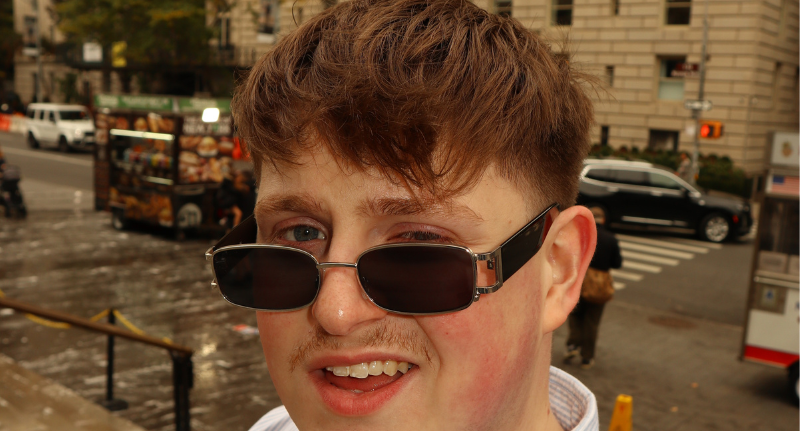 Brock Valesinii. Source: Hypetap
Brock Valesinii, a content creator with more than 140K Instagram followers, told Mediaweek audiences quickly disengage when sponsored content feels forced or overly manufactured.
“I’m not kidding; they can clock an ad from a mile away.”
He said that not only does this create distrust, but it also lowers engagement.
“My audience wants to see the most chaotic, authentic, and sporadic version of that content. It needs to feel like something I’d post organically,” he said.
Valesinii said he has grown more confident defending his creative voice in brand collaborations.
As AI-generated content becomes more embedded, he believes audiences are craving something imperfect and human.
“If I can't connect with them directly in person, I want to give my best shot at making them feel seen and heard through me. I want them to feel a real connection to me every time I pop up on their feed.”
Marketers rethinking budgets across the funnel
For marketers, the implications go beyond talent selection. Coombe argues the shift should reshape budget allocation and creative deployment across the funnel.
“They should also be thinking about how they can use creativity as a targeting tool. Budgets should reflect this by using mid-Tier creators as the stable core of a plan.”
“While macro talent can drive awareness, mid-Tier should support the consideration layer where consistent reach and engagement are key. The key is allocating more funds to this tier, avoiding the concentration risk of mega ‘celeb’ talent and ensuring a more balanced, scalable, and cost-efficient approach.”
Valesinii echoed the need for nuance when scaling creator programs, arguing that a one-size-fits-all approach no longer works.
He said brands need to understand both the creator and their community to deliver results that feel authentic rather than transactional.
“You should have a different strategy for every creator you work with. If you understand both the creator and their community as best as you can, you're one step closer to producing campaign outcomes that actually feel earned.”
For Valesinii, partnerships should feel collaborative rather than purely commercial. Both sides, he said, are investing reputation and trust in the outcome.
“We’re both putting a lot on the line to pull off a partnership, so it should really feel worthwhile.”
Top Image: AI-Generated
More from Mediaweek
The leading media trade publication in Australia.
Get our top stories straight to your inbox daily by signing up to our Newsletter
By providing your information, you agree to our Terms of Use and our Privacy Policy. We use vendors that may also process your information to help provide our services.


