


Teens take social media ban fight to the High Court
The group will escalate its campaign beyond the courts if they lose.

A constitutional challenge to Australia’s under 16 social media ban was launched by the Libertarian Party backed Digital Freedom Project with the face of two teen plaintiffs in November after major technology platforms declined to pursue legal action themselves.
One platform that bucked the trend is Reddit, filing its own High Court case just days after the ban came into effect.
However, the Digital Freedom Project’s challenge is distinct with its focus squarely on the constitutional implications of the legislation.
Speaking about the origins of the case, the Digital Freedom Project's president and NSW Legislative Council member John Ruddick said the group initially expected legal action from major technology companies.
“A year ago, the federal parliament passed a law introducing internet censorship in Australia. At the time, we expected the big tech platforms to launch legal action themselves. Google had publicly said on two or three occasions that it was looking into a High Court challenge to the constitutionality of the bill," Ruddick told Mediaweek.
When no challenge emerged, the group decided to act.
“Then, about two months ago, nothing had happened. We rang around the legal fraternity to see whether anyone was doing anything about a constitutional challenge to censorship. No one was. So we said, if no one else is going to act, then we will.”


The leading media trade publication in Australia.
Get our top stories straight to your inbox daily by signing up to our Newsletter
By providing your information, you agree to our Terms of Use and our Privacy Policy. We use vendors that may also process your information to help provide our services.
That decision led to the formation of the Digital Freedom Project under the Libertarian Party banner.
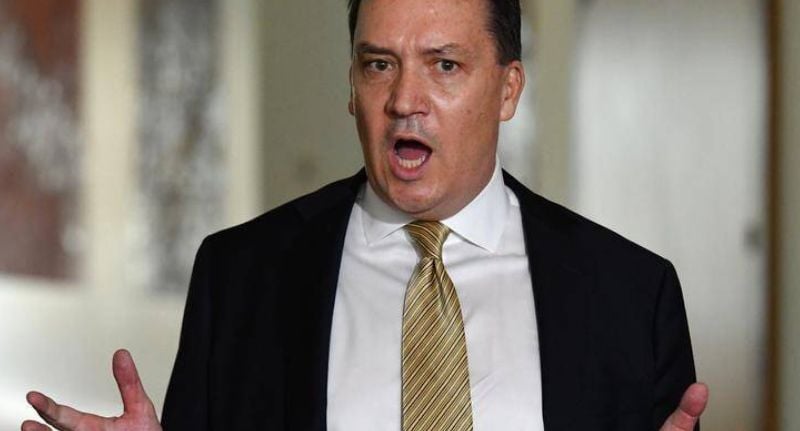 Digital Freedom Project's president and NSW Legislative Council member John Ruddick
Finding plaintiffs directly affected
To bring the case, lawyers advised the group they needed plaintiffs who were directly impacted by the legislation.
“The lawyers told us we needed plaintiffs who were directly impacted by the legislation. That meant finding two people under the age of 16 who are on social media,” Ruddick said.
Through private networks, the group identified two teenagers willing to participate, Noah Jones and Macy Neyland.
“We looked for young people who were articulate and who genuinely did not believe in the ban. That’s how we found Noah and Macey,” Ruddick said.
The constitutional argument
The Digital Freedom Project argues the ban’s most significant flaw lies in Australia’s implied freedom of political communication, a principle upheld by the High Court for decades.
“For the past three or four decades, the High Court of Australia has upheld an implied freedom of political communication.
We believe that young people who are 16 and close to voting age have a constitutional right to engage in political discussion and to hear political ideas,” Ruddick said.
The case argues the legislation restricts young people’s ability to participate in political discourse at a critical stage of civic development.
Privacy and age verification concerns
Age verification sits at the centre of the legislation, raising broader concerns about data collection and privacy.
“I believe kids will get around the ban because they are very tech savvy. The concern is that everyone will eventually be required to prove they are not under the age of 16, which will be extremely intrusive,” Ruddick said.
He described the legislation as government overreach.
“This is about a very bossy government. Its objective is not to protect kids. Its objective is to introduce internet censorship for ideas it does not like.”
The group also warns that the ban could push young users into less regulated online spaces such as Discord and Telegram.
“Kids will get around the ban and move to underground social media. That makes things worse because parents may assume their children are no longer on social media and stop supervising. What you end up with is underground, unsupervised social media use,” Ruddick said.
Mental health claims under scrutiny
While the government has positioned the ban as a child-safety and mental-health measure, Ruddick disputes the evidence supporting those claims.
“They claim social media causes teen suicide, but they have never pointed to credible data or studies proving that,” Ruddick said.
“In fact, since social media emerged around 25 years ago, youth suicide has declined.”
Ruddick argues that online platforms can also play a positive role for young people in distress.
“When young people are in a bad place, social media allows them to find others in similar situations or people who have made it through,” he said.
Parents take the blame
Ruddick states that primary responsibility for young people’s online use should sit with families rather than the state.
“The government should have nothing to do with it. Schools can play a role, but it is fundamentally a parental responsibility,” Ruddick said.
If the High Court upholds the legislation, Ruddick says it will escalate its campaign beyond the courts.
“Whether we succeed or not, the Libertarian Party and the Digital Freedom Project will campaign for a constitutional referendum. We aim to enshrine protections similar to the US First Amendment, ensuring the government cannot regulate media,” Ruddick said.
More from Mediaweek
The leading media trade publication in Australia.
Get our top stories straight to your inbox daily by signing up to our Newsletter
By providing your information, you agree to our Terms of Use and our Privacy Policy. We use vendors that may also process your information to help provide our services.

.png%3Fv%3D1790122730042&w=3840&q=75)


