



'So cliché and so bad': Coldplay kiss cam's Kristin Cabot breaks silence
'I watched my entire career get erased in real time.'

Five months after a few seconds on a stadium screen turned her into a global meme, Kristin Cabot says silence no longer serves her.
The former tech executive, who went viral after appearing on a Coldplay concert kiss cam with her boss, Astronomer CEO Andy Byron, has spoken to The New York Times, giving her first account of what happened and what followed, describing a moment that spiralled far beyond anything she imagined.
“It wasn’t an affair. It was a lapse in judgment that spiralled far beyond anything I could have imagined,” Cabot told the publication.
The clip, viewed more than 100 million times in a matter of days, transformed Cabot from a senior HR leader into an internet shorthand.
What followed, she says, was not a brief wave of embarrassment but a sustained collapse of privacy, safety and professional standing.

Owning the mistake, absorbing the fallout
Cabot does not dispute that she crossed a line. She says she had been drinking, dancing and caught up in the night when she acted inappropriately with Astronomer CEO Andy Byron.


The leading media trade publication in Australia.
Get our top stories straight to your inbox daily by signing up to our Newsletter
By providing your information, you agree to our Terms of Use and our Privacy Policy. We use vendors that may also process your information to help provide our services.
“I crossed a professional line, and I own that,” she said.
That accountability, she says, came with a clear cost. Cabot stepped away from her role and accepted the professional consequences.
“Walking away from my job was the price I chose to pay. What I didn’t expect was everything that came after.”
What followed was a level of scrutiny she says bore little relationship to the mistake itself.
Cabot was doxxed, stalked and flooded with abuse. Paparazzi camped outside her home. Strangers assessed her body, questioned her worth and issued threats. Her children became afraid to be seen with her in public. While the internet cycled on, Cabot says the damage did not.
“The internet turned a mistake into a moral spectacle,” she said. “I watched my entire career get erased in real time.”
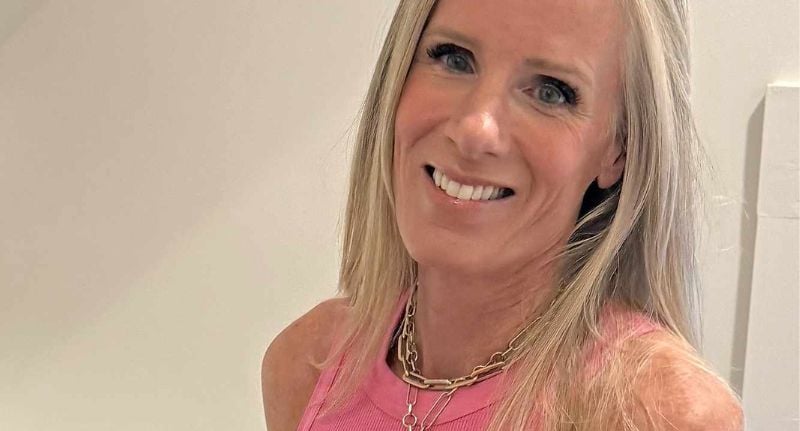 Kristin Cabot
Context lost in the algorithm
Cabot is adamant that much of the context was flattened by virality.
Both she and Byron were separated from their spouses at the time. The concert was not a work event. They attended with friends. She describes the evening as a rare moment of lightness during an otherwise demanding period of work and personal upheaval.
That sense of anonymity vanished the instant the Jumbotron cut to them.
“That moment on the screen flipped everything from freedom to panic,” she said. “My first thought was my kids. My second was, ‘That’s my boss.’”
Cabot says the shock quickly turned into a sinking realisation about optics and power.
“I was so embarrassed and so horrified,” she said. “I’m the head of H.R., and he’s the C.E.O. It’s, like, so cliché and so bad.”
Almost immediately, the focus shifted from embarrassment to damage control. Before they had even left the stadium, Cabot says they were already talking through the following steps. “And the initial conversation was, ‘We have to tell the board.’”
In the aftermath, Cabot says she became “a meme, a target, and apparently unemployable,” with the backlash falling unevenly.
“The abuse landed where it always does, on the woman,” she said.
She points to familiar accusations about women in senior roles as particularly corrosive.
“People decided I slept my way to the top. That erases decades of work,” she said, arguing the narrative wiped out years of professional credibility in a matter of hours.
When accountability turns into punishment
Cabot says her story is not about denying responsibility or minimising what happened. It is about questioning how quickly a mistake becomes a permanent identity online.
“I’m not a public figure, but I was treated like one,” she said.
She briefly remained in contact with Byron to manage the immediate fallout, but that communication has since ceased.
Weeks after the video went viral, Cabot filed for divorce and began the slow process of rebuilding a life reshaped by a moment she says should never have carried a lifetime sentence.
“This isn’t about excusing what happened,” she said. “It’s about questioning why a mistake became a life sentence.”
More from Mediaweek
The leading media trade publication in Australia.
Get our top stories straight to your inbox daily by signing up to our Newsletter
By providing your information, you agree to our Terms of Use and our Privacy Policy. We use vendors that may also process your information to help provide our services.


