

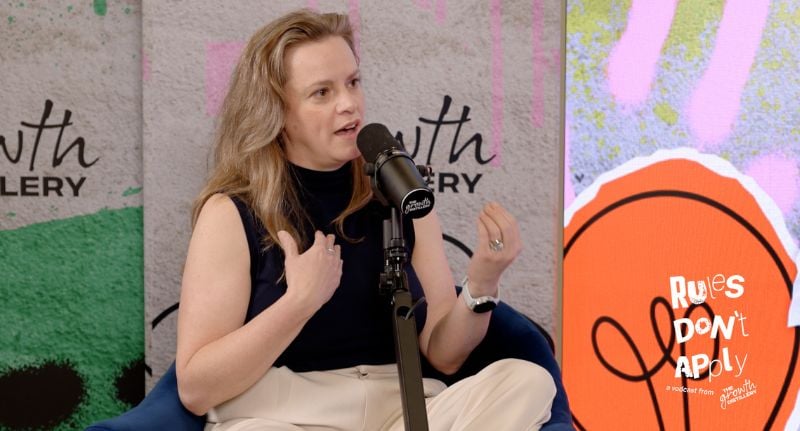
Play, for most adults, is a nice-to-have. For Kate Renshaw, it’s closer to oxygen.
Speaking with The Growth Distillery’s Dan Krigstein on the Rules Don’t Apply podcast at SXSW Sydney, the registered play therapist and founding director of Her Movement Play and Field Therapy argued that play is not a soft extra – it’s core infrastructure for mental health, learning and even how we stay human in a tech-heavy world.
“Play is to the mind like oxygen is to the body,” she said. “We cannot live without warm, playful relationships.”
‘Children’s natural first language is play’
Renshaw didn’t arrive at play by accident. She began in psychology, moved into art therapy, then realised she still hadn’t gone far enough.
“I started my training in psychology, and then I followed that thread towards more playful things, which was art therapy, and that still didn’t have enough playthings in my play therapy room,” she said.
“So I ended up in play therapy, and my PhD is focused on play therapy.”
She describes play therapy as “a pediatric mental health specialist therapeutic approach – a psychotherapy” that lets kids “play it out rather than talk it out.”
“Children’s natural first language is play, not talking,” she said. “As you know, if you try to ask a three-year-old how they’re feeling, they’ll be like. ‘Good.’”
With her own children – and the parents she works with – she suggests swapping interrogation for curiosity.
“I always like to go with Wonder Woman on this one,” she laughed. “Rather than question, I like to reframe as wondering. It softens it a bit. It means that if they don’t wanna answer you, they don’t have to.”
Instead of “How was school?”, she offers: “I’m wondering if anything interesting happened at school today. I wonder who you spoke to.”
“So kind of like noticing, noticing, wondering, being curious, tuning into their pace,” she said. “And not trying, when we know we are misattuned – they will just let us know.”
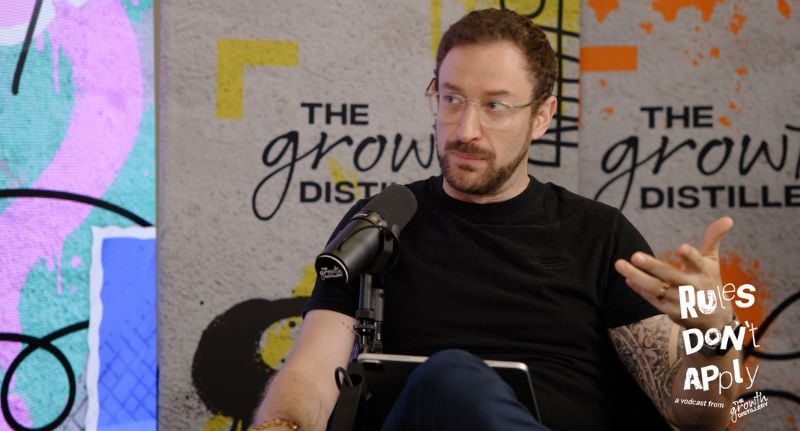
Dan Krigstein
The cost of play deprivation
If play is so fundamental, why do we keep sidelining it?
“As a society, we have moved further away from our humanity over time,” Renshaw said, pointing to the legacy of Victorian structures – the bells, the formality, the sense that productivity must look serious.
“You only have to go to a school, hear the school bell, and you’re almost hearing the whistle of the workday.”
She argues the need for play is actually becoming louder “in this post-humanist space, where we realise that animals and the environment and the world, as well as technology, are important and big parts of our lives.”
We know what happens when play is missing. Renshaw cites Jane Goodall’s work with chimpanzees – “chimps that were deprived of play became homicidal” – and the Romanian orphanage studies where children, though fed and clothed, were “never cuddled, they were never spoken to, they were never played with.”
“Play deprivation has profound developmental, um, and lifelong social, emotional and well-being impacts,” she said.
Play, she added, is “dynamic, contextual [and] changing” – not just fun, but a place where kids can safely dance to the edge of discomfort.
“Play instructs our social skills. Play builds our muscles,” she said. “Play deepens and tempers our emotional regulation, and it leaves us feeling more balanced. And poised for more.”
Teachers, trauma and the ‘emotional splashback’ of joy
Much of Renshaw’s recent work sits in schools, which she calls “microcosms” of the broader system.
“The school’s teachers currently have the highest rate of vicarious trauma, nearly out of any profession, higher than paramedics,” she said.
Children are arriving with heavy loads. “Australians still don’t realise – 62% of Australian children will experience maltreatment or abuse,” she said.
“And that increases to 72% if we add in additional adversities, like a parent might be incarcerated or a parent might struggle with serious mental health.”
Her research has focused on what happens when teachers are given play-informed relational skills rather than just more behaviour management.
When she trained teachers in child and play development, plus practical “language of play” tools they could use in everyday interactions, “they described it as a way of being,” she said.
“They actually called it a paradigm shift because they started to see children differently and their relationship differently, and then things changed.”
Crucially, it didn’t just help students.
“When teachers use humanistic skills with children who are playful, they get an emotional splashback of wellbeing, wellness and joy,” she said. “If we’re thinking about a teacher draining their cup… what would it be like if with each relational exchange they were getting a little zing back?”
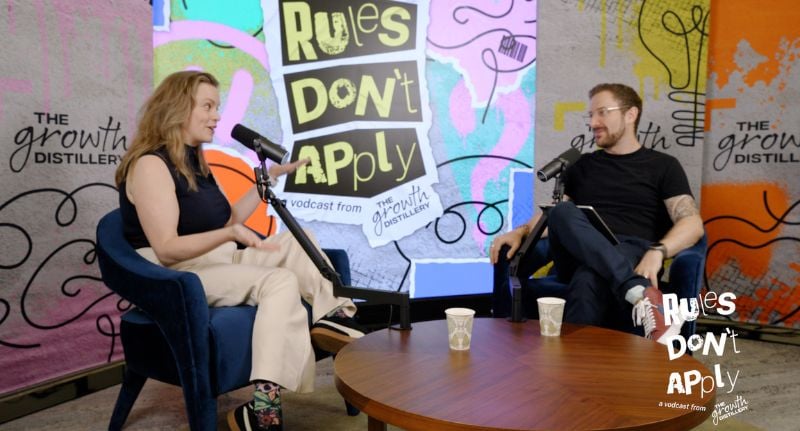
Kate Renshaw and Dan Krigstein
Nature, tech and staying human
Renshaw is a big believer in context – especially green and blue ones. She describes schools integrating play through storyboards, mini-figures and outdoor spaces where kids might literally do maths standing in a creek.
“Green spaces and blue spaces are quite well researched in the world,” she said. “You can actually map wellness and lifespan around different green spaces and blue spaces in the world. We know that our bodies, um, do really well in those environments.”
She links this to EMDR therapy’s origins in a walk through a park, and to First Nations knowledge about land, breath and sound. “We find this wisdom in nature,” she said. “And so I think nature is a, like a source of that as our animals… in a tech-heavy world.”
On technology, she’s blunt.
“I think it makes [play] more important because I think if we were ever to try and raise our children through technology and robots, I think they would be at risk of play deprivation,” she said.
With AI and automation accelerating, she hears a counter-current.
“There almost seems to be this other thing coming out of… the essence of humanity and play and playful relationships at the core of that, for our ongoing humanness,” she said. “For us to remain human.”
‘Every day I feel like it’s a bit of a rebellion’
In Rules Don’t Apply tradition, Krigstein finishes with rapid-fire questions. Asked for a “hot take” few agree with, Renshaw doesn’t miss.
“Play is controversial,” she said. “A lot of people think that play is effortless and we don’t need it, and it’s not important. So I find every day I feel like it’s a bit of a rebellion – choosing to be a play therapist and name myself as a registered play therapist and not pursue my psychology registration, that’s also a rebellion because I’m saying this is where I feel is really important.”