
Monday February 9, 2026
Why the Winter Olympics are proving QMS and Nine can change the Australian media playbook
Long before the first medals were contested at Milano Cortina, QMS was quietly laying the groundwork for this Winter Games moment: expanding its digital footprint, pressure-testing live capabilities during Paris, and preparing for a step-change in what out-of-home could deliver at scale.
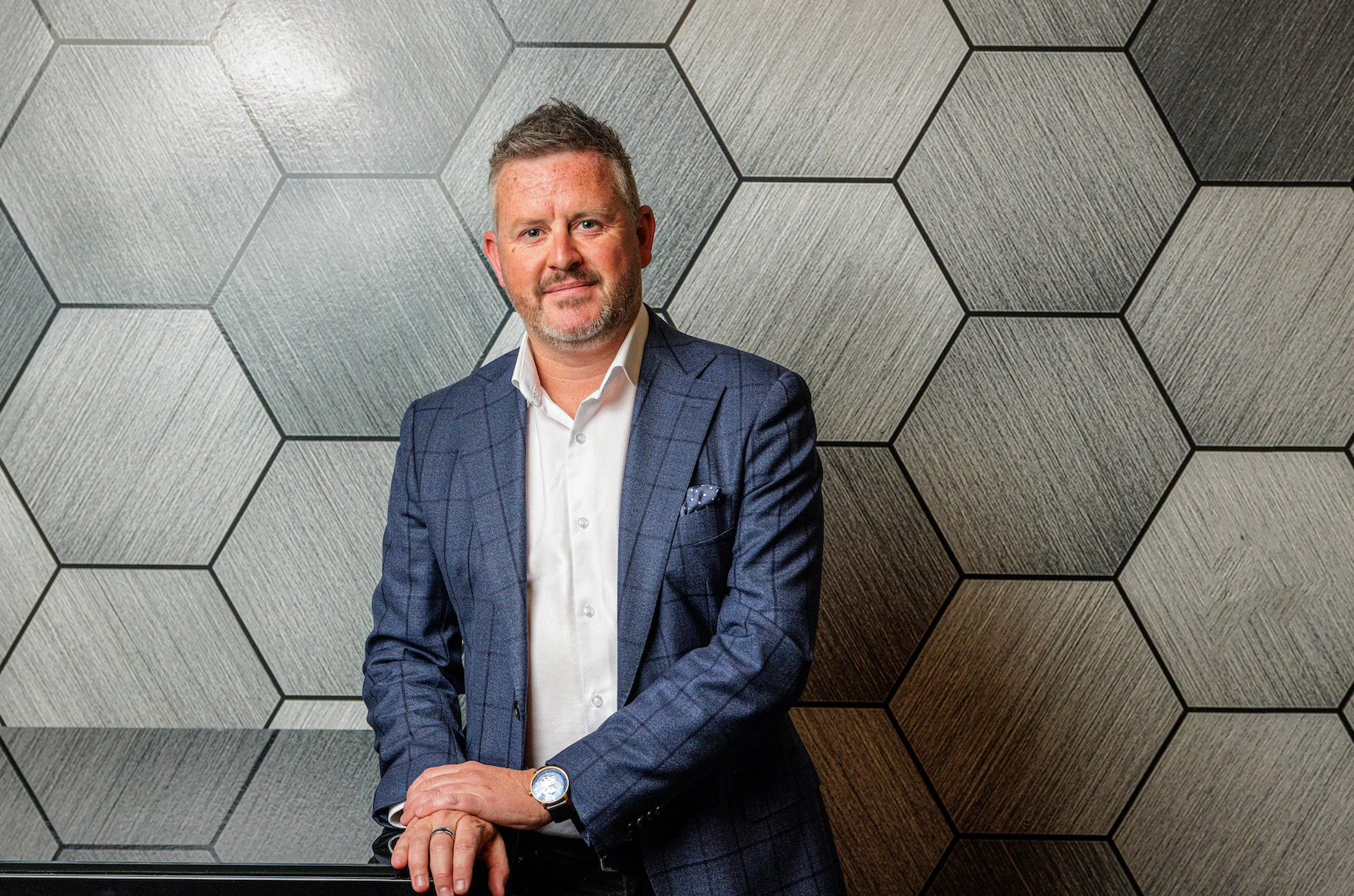
Now, with the Winter Games underway, QMS Chief Sales Officer Tim Murphy said that preparation is coming into focus, amplified by the company’s new ownership under Nine Entertainment.
Speaking to Mediaweek, Murphy said the Nine partnership is unlocking a level of capability the Australian market has not previously seen.
“We’ll be able to do things that no one in the Australian media landscape has done in the past.”
For Murphy, Milano Cortina is not a starting point but a convergence – where Paris learnings, expanded digital assets, and Nine’s scale, data and advertiser relationships are now being activated in real time.
A moment years in the making
Murphy traces the current strategy directly back to Paris 2024, which he describes as the proving ground for both QMS and its advertising partners.
“First, we’ve significantly expanded our asset portfolio since Paris. So there’s 50% of the locations in New South Wales alone, for example, that are new sites, new locations to the network on the back of QMS’s commercial and development momentum and growth.”
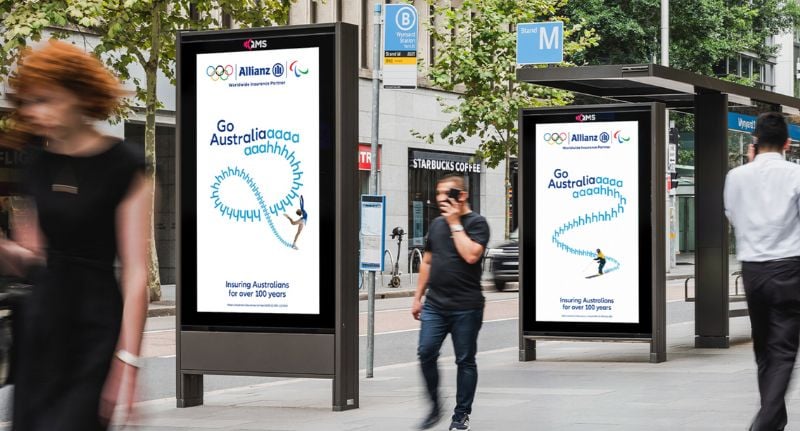
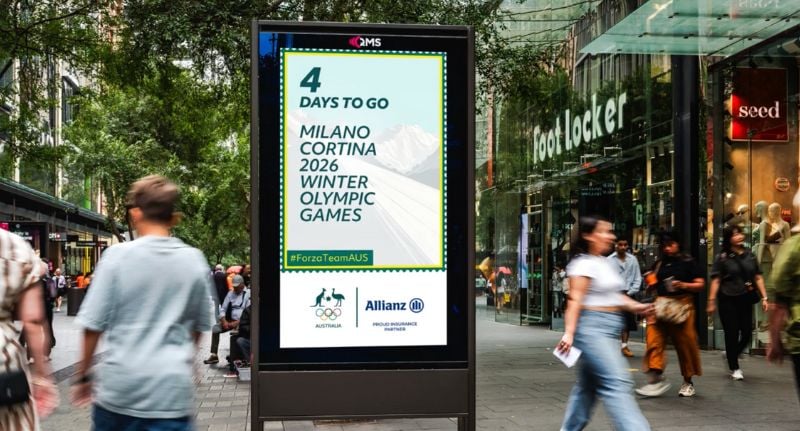
As the official outdoor media partner of the Australian Olympic and Paralympic Teams, QMS has again deployed a dedicated Games Network for Milano Cortina, now reaching an estimated 77% of metropolitan Australians.
But scale was only part of the Paris lesson.
“I think everyone learned a lot through Paris. We adapted as we went through the process, really, really well, with respect to the brands involved. But I think we’ve learned a lot from that, and we’re now putting that into practice again for Milano Cortina.”
That learning curve has translated into returning advertisers who now understand how to extract value from live, context-driven DOOH.
“I also think brands, returning brands in particular, such as Allianz, Samsung, and Visa, have a strong appreciation for the opportunity and the platform it provides.”
One of the clearest evolutions since Paris is QMS’ speed to market – a capability Murphy says fundamentally changes how brands can behave during major global events.
“We can live with any breaking news across our network within 20 minutes of any news breaking. And the brands are benefiting from that.”
That responsiveness has reshaped creative behaviour on both sides.
“So we’re getting better at what we do, and the brands are getting better at how they use the platform as well.”
Nine changes the equation
For Murphy, Nine Entertainment’s acquisition of QMS represents a structural shift rather than a simple change of ownership – one that repositions out-of-home as a core growth engine within a scaled, data-led media business.
Nine’s $850 million acquisition of QMS from Quadrant Private Equity values the business at around 6.5x forecast CY26 EBITDA, with QMS expected to deliver approximately $105 million in EBITDA in 2026.
More than 80% of QMS’ revenue is contracted through to December 2028, providing long-dated earnings visibility at a time when premium digital inventory is increasingly in demand.
“It’s something that we’re incredibly excited about,” Murphy said.
Under Quadrant’s ownership, around $300 million was invested in upgrading and digitising QMS’s national asset base.
Today, digital formats account for the vast majority of revenue, with operating margins of roughly 26% on a pre-AASB16 basis. It’s a profile that aligns closely with Nine’s push to grow digital advertising revenue.
Murphy said the strategic fit goes well beyond balance sheet strength.
“It’s incredibly exciting, I think, for all stakeholders within the industry that you’ve got a scaled, data-driven, solution-focused Australian media company that presents a really interesting opportunity for agencies and advertisers.”
From a market perspective, the deal embeds QMS within a broader advertising ecosystem spanning television, streaming, publishing, audio, first-party data and advanced measurement, allowing out-of-home to be planned and activated as part of a genuinely cross-platform solution.
“We’re incredibly excited by having the power of Nine behind us and to continue to, I suppose, grow and invest in what we do from an out-of-home point of view.”
Nine has said the acquisition deepens its exposure to high-growth digital advertising, with digital growth businesses expected to contribute more than 60% of group revenue from FY27, up from around 45% in FY25.
Within that mix, QMS brings scale, reach, and immediacy, particularly during live, culturally resonant moments such as the Olympic and Paralympic Games.
Murphy said the response from agencies and clients has been swift.
“To be able to bring that together in how we shape solutions for the market is something that we’re really, really enthusiastic to explore over the coming months. The response from the market, the clients, has been overwhelmingly positive.”
“So that’s really encouraging for all of us here at QMS and no doubt the team at Nine as well.”
The effectiveness case is already proven
Murphy said advertiser confidence in the Winter Games network continues to be anchored in neuroscience-backed effectiveness data – particularly research conducted during Paris that examined how the brain responds to dynamic, contextually relevant out-of-home advertising.
QMS recently partnered with Neuro-Insight to measure long-term memory encoding (LTME), a key indicator of whether advertising is being stored in the brain in a way that influences future behaviour.
Unlike traditional recall metrics, LTME tracks the strength of subconscious memory formation, widely regarded as a leading predictor of brand choice and sales impact.
“So statistics show at least 20% to 25% in greater long-term memory encoding. We have a strong awareness of how to run editorial content and news content with advertising to make a significant impact on attention and effectiveness,” Murphy said.
The Paris analysis found that campaigns running on the QMS Games Network delivered a 22% increase in long-term memory encoding compared with non-Games campaigns. Brands placed adjacent to live editorial content – including medal moments, breaking news and real-time competition updates – recorded a further uplift, taking total gains to around 24%.
Paris delivered a 24% uplift in long-term memory encoding for brands appearing alongside live editorial content – results Murphy says are now reinforcing investment decisions during Milano Cortina.
“And so I think the proof in the pudding is that we’ve got these advertisers who are returning and investing significantly to be associated with the games and our platform,” he said.
From a trade perspective, the findings validated the idea that out-of-home performs best when it behaves like a live media channel – combining scale with immediacy, relevance and editorial context, rather than operating as a static broadcast medium.
That effectiveness story is now resonating beyond traditional Olympic advertisers.
“So that’s a huge driver for these advertisers to return and for new ones also to come on board, like Griffith University, for example, which has come onto the network for the first time.”
Built with partners, not just inventory
Murphy is clear that the performance QMS delivers during the Winter Games is engineered well before the opening ceremony – and sustained through relentless execution once competition is live.
For QMS, that work begins months out, with agencies and advertisers brought into the process early to understand what the Games environment can deliver and how to use it effectively.
“I think probably one of the key elements is we spend time with the agencies and the advertisers involved in the lead-up to the games with our creative and our strategy teams, talking about what the opportunity presents, showcasing what great can look like and working really closely with them,” Murphy said.
That preparation is then backed by operational muscle once the Games begin. During Paris, QMS ran a six-week live digital network that served more than 81,000 pieces of dynamic content across its national inventory, requiring constant creative refreshes, editorial alignment, and rapid responses to live sport moments.
“We have 24-hour, around-the-clock teams working on Winter Games packaging for partner clients, working with them to ensure their creative and messaging are as current and contextually relevant as possible,” Murphy said.
“So, we’ve got a really committed group who are working very closely with these brands and agencies associated with delivering these campaigns or delivering this opportunity.”
Education, Murphy said, is a deliberate part of that investment – particularly as brands move from static out-of-home thinking to live, editorially responsive execution.
“We put a huge amount of onus and energy around these partners, a huge amount of education in the lead-up to ensure that they make the absolute most of it.”
From a trade perspective, that approach reflects a broader shift in how premium DOOH is sold: less as inventory, more as a managed, high-attention environment that requires planning, collaboration, and real-time decision-making.
A medium hitting its stride
Murphy said the market response to QMS’ Winter Games network reflects how far out-of-home has evolved, particularly as digitisation has transformed the channel’s flexibility and creative potential.
“Well, I think there’s a growing appreciation for the medium and the role that it plays today in that it is a largely digitised platform allowing for incredibly dynamic, flexible, and creative storytelling, flexible, creative, and incredibly contextually relevant messaging. And at scale.”
That appreciation is reflected in spending.
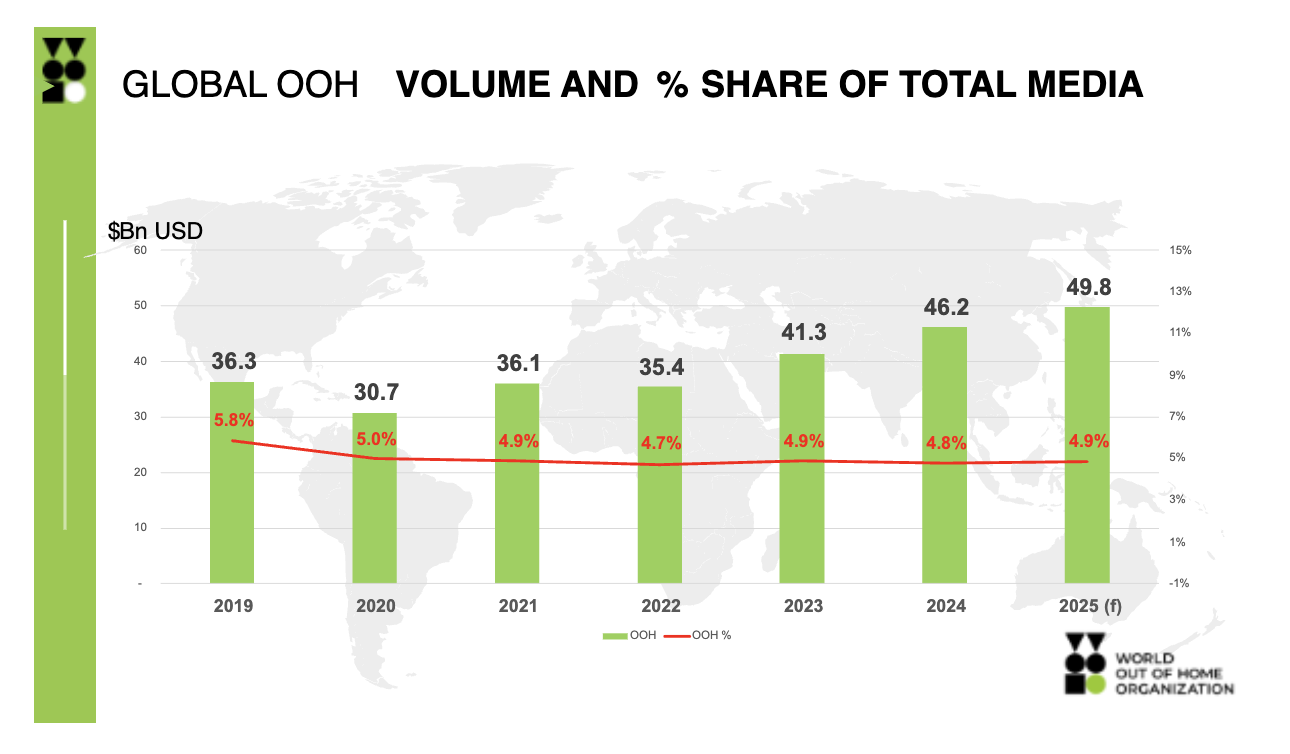
According to the Outdoor Media Association, digital now accounts for more than three-quarters of Australia’s total out-of-home revenue, with the channel delivering double-digit annual growth as agencies increasingly plan it alongside video, audio and data-led digital media.
Murphy said demand is deepening at the top end of the market.
“We’ve got incredible interest and intent for buying from Australia’s biggest advertisers, more so than ever, because of the appreciation for QMS and the entire sector’s growth.”
And the trajectory, he said, remains firmly upward as operators continue to invest in digital infrastructure, data and measurement.
“The growth will continue, you know, as we continue to invest in the platforms and people. There’s a fantastic buying demand for really high-quality, valuable assets across Metro and regional Australia, and that will only continue.”
FOMO… without exclusion
For major advertisers, Murphy said out-of-home has become a foundational part of the media mix.
“If you look at the major brands in Australia, they all have a media strategy that includes, and in a significant way, out-of-home.”
At the same time, digitisation and programmatic access have broadened the category well beyond large brand budgets, opening the channel to a new tier of advertisers.
“You’ve also got this incredible portfolio of small and medium-sized direct businesses that now understand that they can access out-of-home media,” Murphy said.
“So whether it be through programmatic avenues or due to the digitisation of our networks, they can access out-of-home in really specific ways to drive really, really good outcomes themselves.”
That dual dynamic, dominance at the top end, accessibility at the long tail, is now shaping how the market thinks about out-of-home’s role.
“So I think if you create FOMO, you’re winning,” Murphy said.
“But I think we’re also making the medium more accessible to more advertisers, brands, and clients through ongoing digitisation and greater flexibility in how we deliver and offer it to the market.”
“So there’s no need for FOMO, because everybody can get access out-of-home just in different ways.”
The trade takeaway
As Milano Cortina unfolds, Murphy sees the Games as a live demonstration of a strategy years in the making, one where scale, speed, data, neuroscience and creative execution converge, now amplified by Nine’s backing.
For advertisers, the signal is clear: digital out-of-home isn’t testing its credentials anymore.
It’s executing at full throttle.

ASIO issues rare warning to ABC ahead of Four Corners Bondi investigation
Australia’s intelligence agency has issued a rare public rebuke to the ABC ahead of a Four Corners investigation into the Bondi terrorist attack.
ASIO has accused the program of relying on uncorroborated claims from a “single, unreliable and disgruntled source” and warned it may take further action if unsubstantiated allegations are aired.
The statement, published by the Australian Security and Intelligence Organisation (ASIO) on Sunday, comes before the second episode of Four Corners’ two-part investigation examining whether intelligence or counter-terrorism failures preceded the Bondi massacre, and marks a rare public intervention by the agency against the national broadcaster.
The program, scheduled to air tonight, also investigates what it describes as the “secret lives” of the attackers, Naveed Akram and his father Sajid Akram, who allegedly murdered 15 people at a Hanukkah celebration at Bondi Beach on December 14.
Police have said the pair displayed an Islamic State flag on their vehicle and filmed an ISIS-inspired video ahead of the attack.
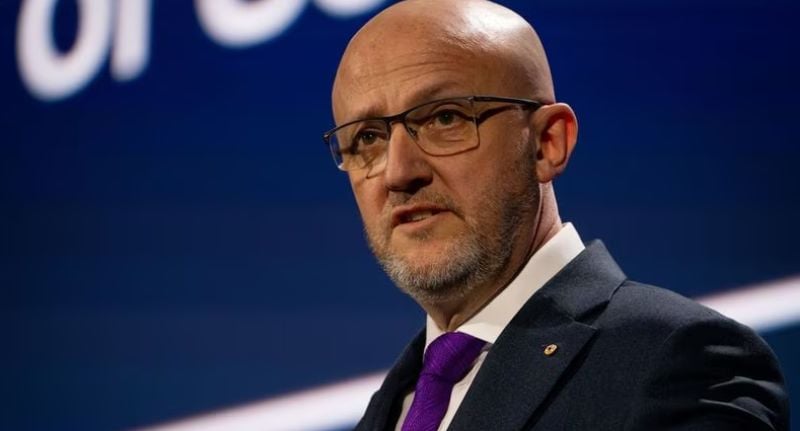
Mike Burgess
ASIO rejects claims of early warning signs
In its statement to Four Corners, ASIO said it had investigated Naveed in 2019 using its “most sensitive capabilities” and assessed that he did not adhere to or intend to engage in violent extremism at that time.
“Having reviewed all available intelligence, we stand by our assessment at that point in time,” the agency said.
ASIO said the ABC’s questioning appeared to rely on the uncorroborated claims of a single source who had misidentified Akram, attributing statements and actions to him that were in fact linked to “an entirely different person”.
“To be clear, Four Corners’ source misidentified Naveed, and therefore the associated claims are untrue,” the statement said.
ASIO added that the source had “a track record of making statements that are untrue”, citing as an example claims that the agency had received intelligence about Sajid being involved in discussions to establish a pro-ISIS community in Türkiye – an assertion ASIO said was false.
In a statement to Mediweek, an ABC spokesperson said: “The Four Corners program is a comprehensive investigation examining the events that led to the worst terrorist attack on Australian soil.
“Four Corners spoke to numerous people and cited several sources to provide a detailed picture of the Akrams’ actions and associations in the years leading up to the Bondi attack. Detailed questions were put to ASIO, and its response is reflected in the story. The public will be able to watch the full investigation tonight.”
Disputed associations and counter-terrorism context
The intelligence agency also rejected claims that Naveed was a “close associate” of known terrorists, calling that characterisation false.
“There is a significant difference between attending a prayer centre with a large gathering of people and being a ‘close associate’ of known terrorists,” ASIO said.
According to The Australian, Akram had been publicly linked in media reporting to the Street Dawah Movement and was known to have attended a prayer centre later associated with radical figures, but ASIO said such attendance alone did not support claims of operational or close terrorist associations.
‘We will reserve our right to take further action’
The most striking element of ASIO’s intervention was its warning to the ABC about the consequences of publishing claims the agency says it has already told the broadcaster are untrue.
“If the ABC chooses to publish claims it cannot substantiate – particularly ones it has been told are untrue – we will reserve our right to take further action,” the statement said.
ASIO said it held “grave concerns about the accuracy of the proposed story”, noting the existence of ongoing investigations, active court proceedings and the establishment of the antisemitism royal commission.

A still from a video showing Naveed Akram and his father targeting people during the terror attack.
Resourcing claims dismissed as ‘false and irresponsible’
ASIO also directly addressed suggestions that internal resourcing decisions may have increased the likelihood of the Bondi attack.
“All these claims are false,” the agency said.
While acknowledging that some staff took voluntary redundancies in 2020 as part of an organisation-wide restructure, ASIO said only three counter-terrorism officers departed and that the changes had “practically no impact” on its counter-terrorism mission.
The agency said it had since made significant investments in AI and intelligence capabilities and highlighted that it raised the national terrorism threat level to PROBABLE in 2024, warning that the most likely attack would involve an individual or small group acting quickly with a rudimentary weapon such as a gun – a shift that occurred before the Bondi attack.
ASIO also noted that its Director-General told Senate Estimates in February 2025 that antisemitism represented the organisation’s top priority in terms of threats to life.
“The claim that any resourcing decision increased the likelihood of the Bondi attack is false, irresponsible and demonstrates profound ignorance of ASIO’s prioritisation frameworks,” the statement said.
“Tragically, ASIO did not know what the perpetrators of the Bondi attack were planning – or indeed that they were planning anything. This is a matter of grave regret. It weighs on us heavily.”
Royal commission looms as final arbiter
ASIO repeatedly pointed to the role of the antisemitism royal commission, saying it would ultimately assess intelligence handling, resourcing and information-sharing based on all available evidence rather than “selective claims”.
The agency said it would fully cooperate with the commission and expressed hope that its findings would give the public confidence in ASIO’s counter-terrorism operations – leaving the collision between intelligence secrecy and investigative journalism to be tested in a forum with full access to classified material and statutory powers.
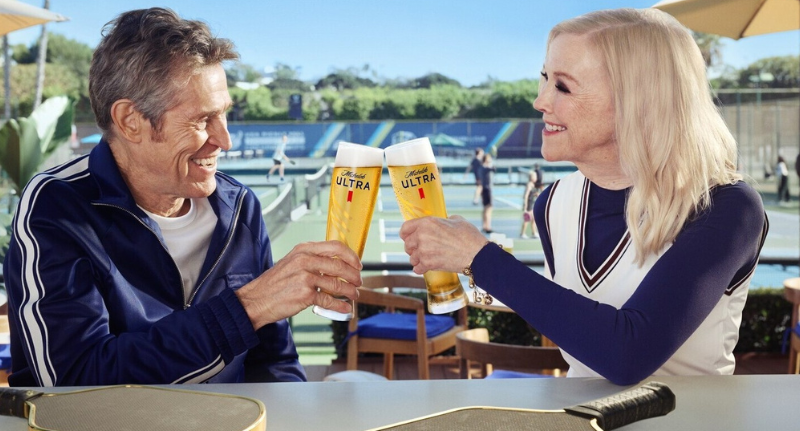
How Super Bowl ads get into our memories
History shows that the Super Bowl ads stick to their playbook.
Brands that consistently use humour, pop culture, storytelling, celebrities, and audience engagement create ads that audiences remember long after the game.
What makes Super Bowl commercials stick?
Millions of people tune into the Super Bowl to watch the commercials that run between each quarter of the actual NFL game.
The 2025 lineup featured more than 50 brands that used this stage to showcase their creativity, humour, and relevance to a captive audience.
In an interview with Creighton University, Tim McMahon, associate professor of practice in marketing management, says the most memorable ads tell a story and have an emotional tug.
“Think of the Budweiser Clydesdales – those ads are about more than beer,” he said.
“They tap into themes of nostalgia, resilience and even patriotism, creating emotional connections that stick with viewers long after the game ends.”
McMahon added that there’s been a noticeable shift from purely entertaining ads to ones that are more purposeful.
“Storytelling has become a dominant trend, allowing brands to communicate their values alongside their products,” he explained.
“Today’s consumers want to align with brands that stand for something, and Super Bowl ads have responded by focusing on values like diversity, sustainability and perseverance.”
A trip down memory lane
Year after year, advertisers push the boundaries to make their Super Bowl spots stand out.
From iconic classics to modern fan favourites, these commercials continue to shape how audiences remember the big game.
Michelob Ultra’s ‘The Ultra Hustle’
Snickers’ ‘You’re not you when you’re hungry’
Dunkin’s ‘The DunKings’
Advertisers snap up Super Bowl LX spots
Airtime during the Super Bowl has become so competitive that advertisers are paying more than AUD$10 million for a 30-second spot.
Despite this, broadcaster NBC confirmed the 2026 ad space sold out earlier than ever.
Here are some of the ads that will be vying for attention during the New England Patriots and Seattle Seahawks rematch.
Squarespace’s ‘Unavailable’
Website building and e-commerce platform Squarespace has unveiled its 12th Super Bowl campaign, starring award-winning actress and producer Emma Stone.
The 30-second spot, ‘Unavailable’, will air between the first and second quarters of Super Bowl LX on Monday.
The campaign follows Stone as she tries to register emmastone.com, only to discover that the domain is already taken.
“This commercial is based on true events,” said Stone.
“Having the opportunity to play myself in my own home was a joy and a memory I won’t soon forget, despite the pain that came rushing back.”
The game day spot is the centrepiece of a broader campaign showing Stone’s journey reclaiming her namesake domain and the risks of waiting too long to claim one.
“We approach our Super Bowl spots like film rollouts,” said Squarespace chief brand and creative officer David Lee.
“That mindset pushes us to create a fully-realised world that feels cinematic rather than commercial.”
PepsiCo’s ‘The Choice’
PepsiCo Beverages has referenced its long-running rivalry with Coca-Cola in its Super Bowl LX commercial.
‘The Choice’, directed by Taika Waititi, follows a cola-loving polar bear who discovers he prefers Pepsi Zero Sugar over Coke Zero Sugar in a blind taste test.
His initial shock turns into a journey of self-discovery, as he confronts long-held assumptions and unapologetically celebrates his newfound identity as a Pepsi lover.
“For decades, Pepsi has embraced being the challenger cola brand, yet we keep proving we’re number one where it matters most: taste,” said Pepsi VP of marketing Gustavo Reyna.
“Cola drinkers care about taste, but when they choose anything other than Pepsi, they leave taste on the table.”
PepsiCo’s Super Bowl campaign follows a strong year of growth as demand for zero- and lower-sugar soda accelerates.
“I love a good challenge, so I jumped at the chance to take part in what many consider the biggest pop culture competition outside of streaming vs theatrical,” said Waititi.
“I’m honored to play a small part in the Pepsi legacy – and the iconic Cola Wars.”
Manscaped’s ‘Hair Ballad’
Men’s grooming company Manscaped is making its Super Bowl debut with ‘Hair Ballad’, featuring “weirdly lovable” singing hairball monsters.
The campaign, developed with creative agency Quality Meats, plays on a simple truth that some men have hair in places they don’t want, and when it’s gone, they feel better.
“We all get grossed out by hair once it leaves our body – especially when it becomes that sad little clump in the drain,” said Manscaped CMO Marcelo Kertész.
“Giving that hair a voice, and a beautifully overdramatic one, felt like the most honest and entertaining way to tell our story.”
‘Hair Ballad’ opens on a man shaving his chest in front of a bathroom mirror and the buzz of The Lawn Mower trimmer. The camera pans to the floor, revealing an anthropomorphised clump of hair which begins to sing a ballad.
Throughout the spot, a cast of hairballs watch as the song builds to an emotional peak, delivering a final farewell before being flushed down the toilet.
“We wanted to create something America’s eyeballs have never seen before,” said Quality Meats co-founder Gordy Sang.
“And not go the typical Super Bowl route of hot new celebrity for the sake of hot new celebrity.”
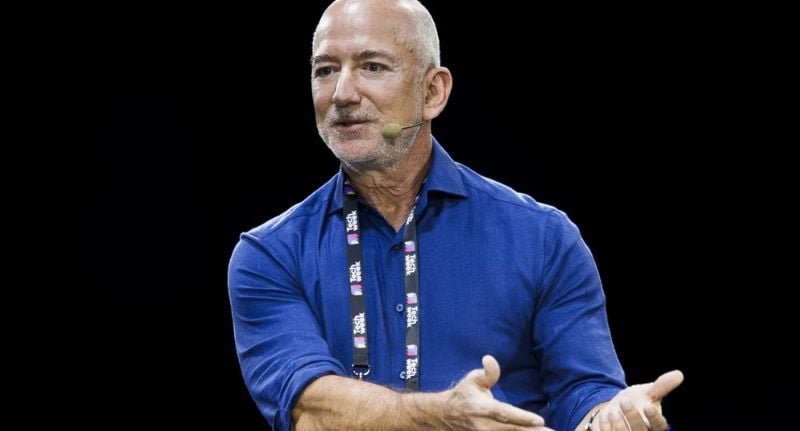
Bezos breaks silence over Washington Post job cuts
The Washington Post owner, Jeff Bezos, has issued his first public statement since the mass lay-offs, saying, “The Post has an essential journalistic mission and an extraordinary opportunity.
“Each and every day, your readers give us a roadmap to success. The data tells us what is valuable and where to focus.”
The billionaire faced intense backlash over the decision to cut more than 300 jobs, about 30% of its staff.
Perhaps most notably, the paper’s own guild warned that the newsroom is being hollowed out at the expense of credibility, reach and mission.
In a stark statement, the Washington Post Guild said the layoffs were “not inevitable,” noting that in just three years the workforce has shrunk by roughly 400 people.
“Continuing to eliminate workers only stands to weaken the newspaper, drive away readers and undercut The Post’s mission: to hold power to account without fear or favour and provide critical information for communities across the region, country and world,” the statement said.
The Guild said it “vehemently opposes any more staff reductions,” calling on readers to stand in solidarity with laid-off colleagues and those who remain, and urging supporters to attend a #SaveThePost rally.
It concluded that if Bezos is no longer willing to invest in the mission that has defined the paper for generations, “then The Post deserves a steward that will.”
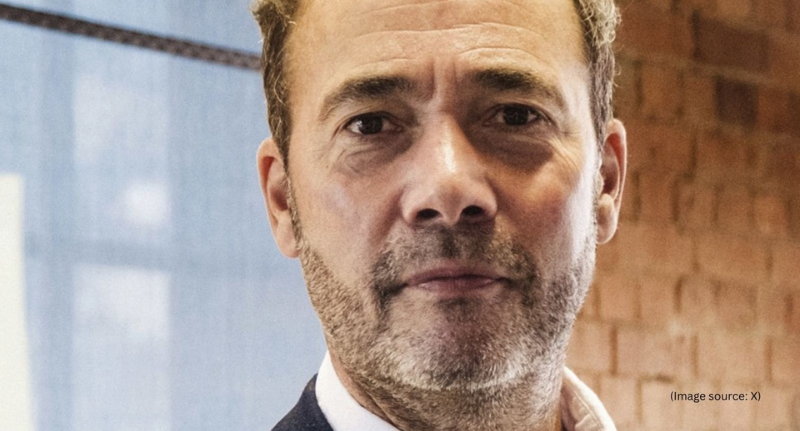
Will Lewis
Editor steps down
Over the weekend, the paper’s editor, Will Lewis, announced he had resigned.
The BBC reports that in a message to staff, Lewis said that it was the right time to leave and that “difficult decisions” had been made to ensure the paper’s future.
Lewis thanked Bezos, writing, “All – after two years of transformation at The Washington Post, now is the right time for me to step aside. I want to thank Jeff Bezos for his support and leadership throughout my tenure as CEO and Publisher. The institution could not have a better owner.”
A former Dow Jones chief executive and publisher of the Wall Street Journal, Lewis, 54, was appointed to the role at The Post in 2023.
Jeff D’Onofrio, who joined as The Post‘s chief financial officer last year, will serve as acting publisher and CEO.
In his own statement, D’Onofrio said, “customer data will drive our decisions, sharpening our edge in delivering what is most valuable to our audiences.”
Will Lewis just sent a note to staff at The Washington Post announcing that he is stepping down as publisher. pic.twitter.com/hNTf6wyrDk
— Matt Viser (@mviser) February 7, 2026
GoFundMe for fired Post staff
A GoFundMe page has been set up to support international employees hired locally or from subsidiaries outside the US – and therefore not eligible for protections afforded to members of the Guild, who may be facing a sudden loss of housing, visas or benefits.
“Among those laid off are reporters in war zones living without electricity, breaking news hub reporters and editors in Seoul and London who cover atrocities around the world every day, correspondents who upended their lives to move overseas just a few months ago, and indispensable local staff without whom our journalism would be impossible,” organiser Michelle Lee wrote on the Guild’s page on Saturday.
Main image: Jeff Bezos

Nielsen names Australia’s biggest ad spenders and fastest-growing categories in 2025
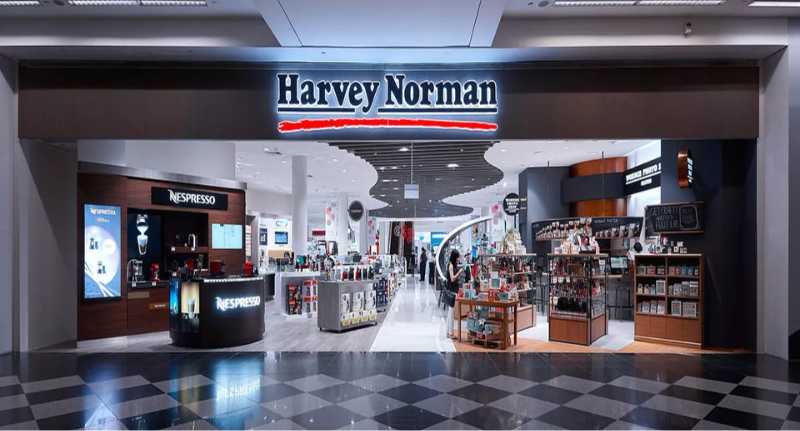
Harvey Norman has emerged as Australia’s biggest advertiser in 2025, topping the national rankings as retail once again dominated total ad investment, according to new data from Nielsen.
Nielsen’s Biggest Ad Spenders of 2025 report, powered by Nielsen Ad Intel, shows intensifying competition across categories tied to household decision-making, with finance, insurance and travel recording some of the strongest year-on-year growth.
The annual analysis tracks advertising investment across the Australian market, highlighting where brands ramped up spend as audiences became more value-conscious and selective in a fragmented media environment.
Retail holds the crown, but finance and travel surge
Retail remained the market’s clear heavyweight in 2025, attracting $2.312 billion in advertising spend, far outpacing every other category.
Finance ranked second at $756 million, followed by Travel & Accommodation on $684 million, reflecting increased competition as Australians shopped around for better deals on banking, insurance and holidays.
Rose Lopreiato, Nielsen Ad Intel’s Australia Commercial Lead, said the data shows that strategic placement matters more than ever.
“More than ever, where you spend matters as much as how much you spend,” Lopreiato said.
“With retail still dominating overall investment and faster growth coming through finance, insurance and travel, advertisers need a clear view of the battlegrounds,” Lopreiato said.
“Independent measurement like Ad Intel helps marketers pinpoint where competitors are most active, so they can invest with confidence, defend share, and avoid being outgunned in categories where customers are actively shopping around.”
New entrants reshape the top advertiser rankings
Harvey Norman led the Top 20 advertiser list, followed by Reckitt Benckiser, Amazon and Hungry Jack’s, but 2025 also saw a notable influx of new and returning players.
Brands entering or re-entering the Top 20 included Westpac, Big W, Stan Entertainment, Budget Direct, Nestlé Australia, Allianz, Kia and Qantas.
Finance and insurance brands showed some of the strongest momentum. Westpac entered the Top 20 at number five, while Commonwealth Bank climbed from 12th to eighth.
Insurance brands also strengthened their presence, with Budget Direct and Allianz entering the rankings, while Youi jumped from 17th to 11th.
Where ad dollars flowed in 2025
Beyond retail and finance, spending was spread across a wide range of categories, underscoring how brands continued to prioritise advertising despite economic pressure.
The top 10 ad categories by investment in 2025 were:
- Retail – $2.312b
- Finance – $756m
- Travel & Accommodation – $684m
- Communications – $656m
- Motor Vehicles – $646m
- Entertainment & Leisure – $549m
- Insurance – $493m
- Food – $407m
- Services – $368m
- Computers – $348m
Growth was particularly strong in finance, which increased spend by $123.3 million (+19.5%), while insurance rose $57.2 million (+13.1%).
Travel & Accommodation grew by $76.5 million (+12.6%), suggesting sustained demand but fiercer competition for bookings.
Computers (+17.7%) and Services (+12.2%) also recorded notable gains, reflecting continued investment in technology and essential consumer services.

‘The View’ is being investigated amid crackdown on equal time for politicians
The US broadcast regulator has opened a formal investigation into whether the talk show The View breached federal equal-time rules, marking the most aggressive move yet in a widening crackdown that could reshape how political interviews are handled across American television – and beyond.
The probe, confirmed by sources to Reuters and first reported by Fox News Digital, centres on a recent appearance by Democratic Texas Senate candidate James Talarico on the ABC daytime talk show.
It follows a policy shift by the Federal Communications Commission (FCC), which declared that late-night and daytime talk programs can no longer assume they qualify for long-standing exemptions from equal-time obligations under the Communications Act of 1934.
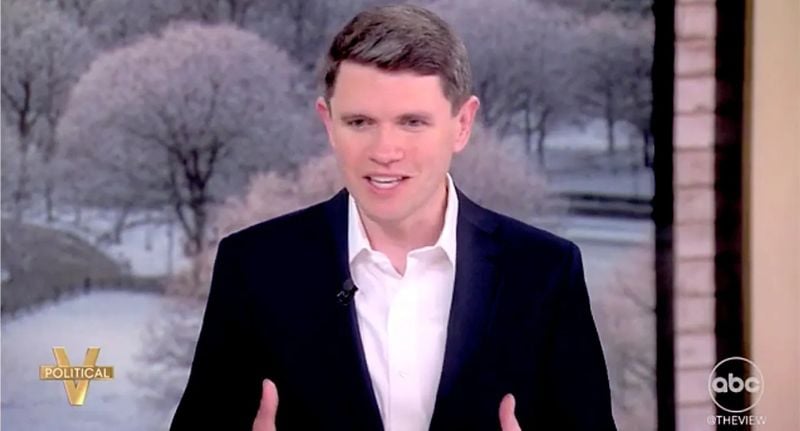
Democratic Texas Senate candidate James Talarico
Equal time moves from theory to enforcement
Under US law, legally qualified candidates are entitled to equal broadcast opportunities, regardless of party. For decades, networks relied on a “bona fide news” exemption to sidestep strict parity requirements for interviews on talk shows.
That assumption is now directly challenged.
The FCC has said it has “not been presented with any evidence” that interview segments on current daytime or late-night talk shows meet the threshold for the exemption.
In practical terms, that means any candidate appearance may trigger an obligation to offer airtime to rivals – including primary opponents and little-known challengers – unless the broadcaster formally argues otherwise.
Talarico’s appearance was among the first since the FCC publicly announced its tougher stance. He received roughly nine minutes of airtime in a single segment.
By comparison, fellow Texas Democrat Jasmine Crockett appeared on the show earlier this year across three segments totalling about 17 minutes, before the new enforcement posture was announced.
Because the equal-time requirement applies to all candidates on the ballot, ABC could, in theory, be required to offer airtime not only to Democratic rivals but also to other challengers.
From precedent to pressure point
Until this year, networks leaned heavily on a 2006 FCC Media Bureau decision that classified interview segments on The Tonight Show as exempt “bona fide” news content. That ruling became the de facto shield for political bookings on entertainment programs.
The current FCC has effectively reopened that logic, transforming what was once a settled precedent into a live compliance issue.
FCC Chair Brendan Carr has publicly questioned whether The View complies with equal-time rules, and the agency’s move represents its first concrete enforcement step against a major broadcast network over candidate interviews.
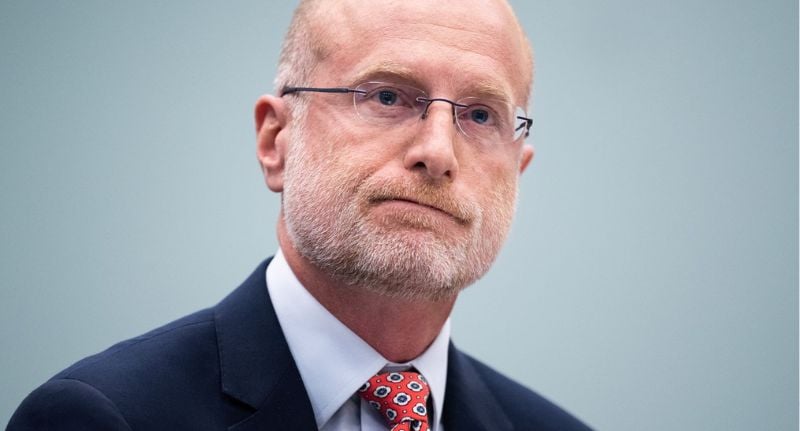
FCC Chair Brendan Carr
Politics meets platform power
The investigation lands amid sustained political pressure on US broadcasters from Donald Trump, who has repeatedly criticised networks for what he characterises as partisan coverage and urged the FCC to act.
Trump shared coverage of the probe on social media and has previously floated revoking licences for stations that air Disney-owned ABC programming. Last year, Carr faced bipartisan backlash after warning broadcasters they could face fines or licence action over content from Jimmy Kimmel.
Democratic FCC Commissioner Anna Gomez sharply criticised the investigation, framing it as a threat to press freedom.
“Like many other so-called ‘investigations’ before it, the FCC will announce an investigation but never carry one out, reach a conclusion, or take any meaningful action,” she said.
“This is government intimidation, not a legitimate investigation.”
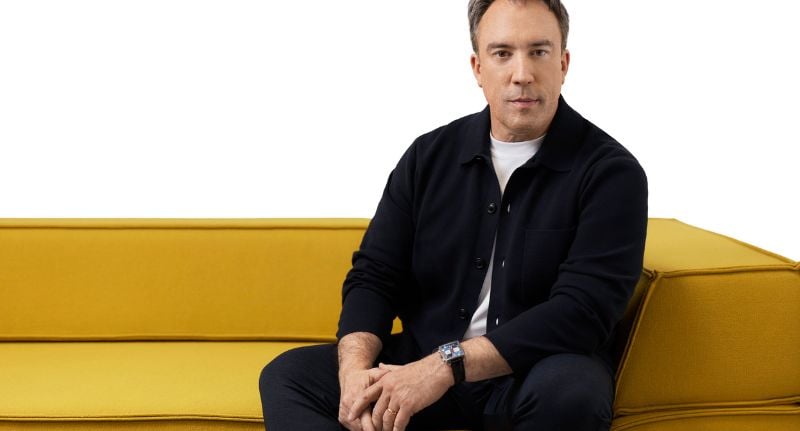
How Christian O’Connell did what Australian breakfast radio said couldn’t be done
Most men, when they hit a midlife wobble, do something modestly unhinged but geographically contained. They drain their super to buy a convertible. They invest in Just For Men. They start a craft brewery with a name that sounds like a dog.
It rarely involves leaving a wildly successful career, uprooting your family, crossing hemispheres, and starting again, publicly, in an industry that treats audience loyalty like a sacred inheritance.
And yet, that’s exactly what Christian O’Connell did.
Back in 2024, THE Australian Radio Network (ARN) made a bold promise: it would build Australia’s first true national breakfast show. At the time, the ambition sounded theoretical – another strategic moonshot in an industry allergic to risk.
Fast-forward two years, and ARN has kept its word. Only the face of that national moment isn’t who the market expected.
For the past month, The Christian O’Connell Show has been broadcasting not just from Melbourne but also into Sydney, now formally networked across the GOLD Network, with Brisbane, Perth, Adelaide, and regional evenings folded into the footprint.
A national breakfast show, achieved not through shock tactics or controversy, but through consistency, craft and a deeply likeable, charismatic broadcaster who understands radio at a cellular level.
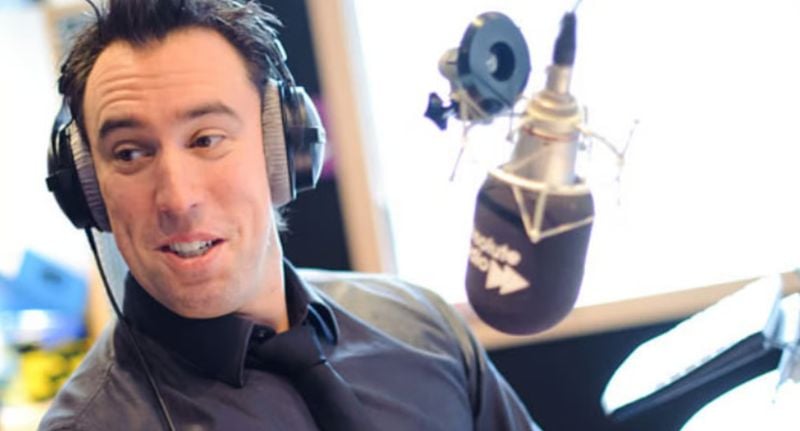
Blowing up a life to start again
O’Connell is unusually frank about how strange the decision looked from the outside, and how final it felt from the inside.
“I think there are very few people who do what I do who have been, who’ve left a successful show and then gone to the other side of the world,” he told Mediaweek.
“It does take a lot of effort, a lot of effort, to build a successful radio show. Same with any business, right? No matter what you’re doing, butchers, whatever. But then to blow up and then go the other side of the world, I’d almost start again as an unknown, which is what I did do, really.”
At the time, O’Connell was walking away from a UK audience of 2.5 million listeners. Professionally, the maths didn’t stack up. Personally, the timing was worse.
“I built a show up to two and a half million listeners and thought, well, are you just going to walk out the door? To, I don’t know, nothing. And we had kids who were just about to become teenagers.”
What made it possible was his wife, Sarah, and the shared sense that this wasn’t escapism, but something closer to a calling.
“But the other thing was I had my wife, huge support of my wife, Sarah. And so, without her support and a rock like that, there’s no way,” O’Connell gushed.
According to the broadcaster, it was Sarah who had the connection to the land Down Under, albeit a fleeting one.
“She came here backpacking when she was 19, and she’d always dreamt of coming back to Australia. But what it really was was I think sometimes in life you have these callings. And actually to resist the calling is to resist, I think it’s actually to resist life.”
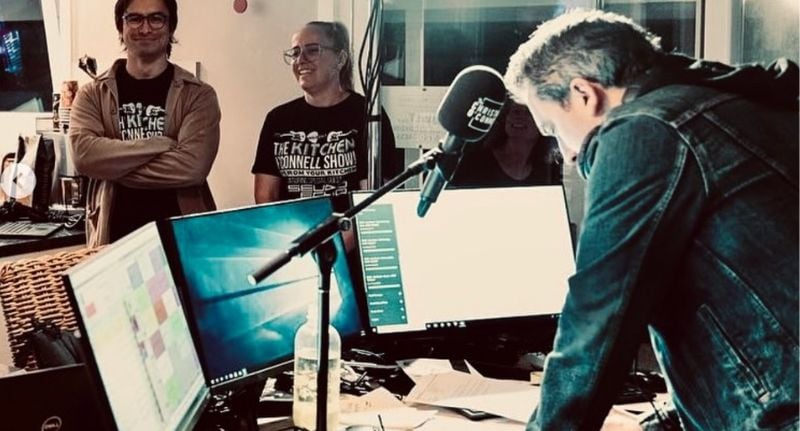
Why the long game worked
Commercially, ARN’s slow and steady build of both O’Connell’s show and his presence on Australian airwaves has paid off.
While the industry remains fixated on the noise, economics and cultural impact of The Kyle and Jackie O Show’s grand national plans that are yet to eventuate, O’Connell has become the group’s most credible networking asset almost by accident.
Not because he dominates headlines, but because he dominates habit.
Introduced gradually, GOLD’s national strategy has leaned into scale without sacrificing intimacy. The show’s expansion into Sydney, now a month in, forms part of a broader play to offer advertisers consistency across markets, while retaining the local warmth that FM breakfast listeners still crave.
Behind the scenes, that approach has been shaped by steady leadership rather than splashy reinvention. Since joining GOLD in 2018, the network’s Head of Content, Sue Carter, has focused less on disruption and more on alignment, across people, tone and expectations.
Her belief in O’Connell as a national proposition predates his Australian arrival. To her, accent and geography were irrelevant compared with connection.
“He’s just a guy with an incredible way of connecting with human beings,” she has said. Not as a slogan, but as an operating truth.
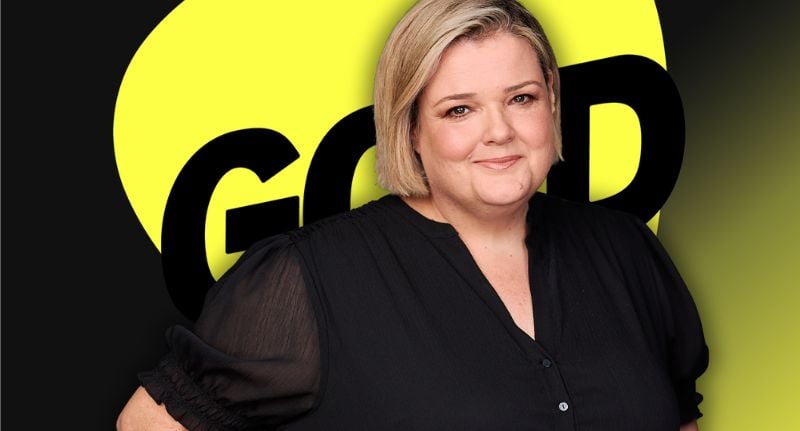
Sue Carter
Standing, sitting, and the religion of radio
What separates O’Connell from many modern breakfast hosts is that he still treats radio as a physical craft, not just a content output.
It shows up in the way he talks about energy. And, famously, in the way he talks about standing and sitting.
“It really matters,” he said. “I love that question because it does matter, right?”
He went on to give this analogy to Mediaweek: “Think of it this way; you’re very excited about something, right? Then sit on your hands. You’re not allowed to move your body or your hands, but tell me this incredible, crazy story. You’d really struggle.”
At 52, O’Connell describes his job not as entertainment, but as transmission.
“I’m in the energy and emotion business. I’m like a utility company. So I have to transfer energy into my words, my stories, and to actually give energy to the people listening.”
That kinetic awareness, when to stand, when to sit, is deliberate, ritualistic, almost priestly.
“If the conversation is a bit more grounded and a bit more heartfelt – I’ll sit down. So it’s a way of literally grounding me more. And if it’s a different thing, then I’ll be standing.”
For radio purists, it’s catnip. Proof that this is a broadcaster who understands that breakfast radio isn’t just spoken, it’s embodied.
Becoming national without losing yourself
O’Connell is clear-eyed about how unknowable the outcome once was.
“There’s no way I could have known I would end up becoming the first person to launch a national show on Australian breakfast radio.”
What Australia got in return for that leap was not a reinvention, but a refinement.
“So starting again, it just gave me a chance to find out a bit more about who I really was,” he said, adding that in the process he has “become more authentic.”
In a medium often obsessed with reinvention, O’Connell’s national moment has landed because it didn’t try to be one. It arrived quietly. It grew patiently. And it worked because radio, at its core, still rewards the same things it always has: trust, craft, and the feeling that someone good is keeping you company.
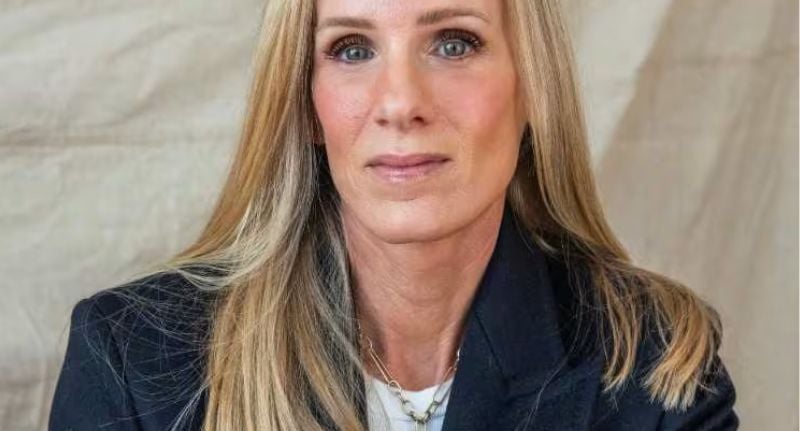
Coldplay kiss cam’s Kristin Cabot set to headline crisis-comms conference
After a few seconds on a stadium screen detonated her private life, Kristin Cabot is stepping back into public view, this time on her own terms.
The former Astronomer chief people officer will appear as a keynote at the PR Crisis Comms conference in Washington, an upcoming, high-priced industry event that positions Cabot’s experience as a live case study in modern reputational collapse and recovery.
A single ticket to the two-day conference is priced at A$1,313, with organisers expecting around 200 attendees.
If it sells out, the event could gross more than A$262,500. According to Newsweek, Cabot is not expected to be paid for her appearance.
Her session: Kristin Cabot: Taking back the narrative – will unpack how she and her publicist moved quickly to “take control” of the online conversation that followed her viral moment, and attempt to “rewrite” a story that spiralled far beyond its origins.
“Cabot experienced firsthand the extremity of public shaming that women have long experienced when in the negative spotlight of the media, one their male counterparts often seem to avoid,” the conference synopsis reads.
Cabot will appear alongside her PR representative Dini von Mueffling, described by organisers as an industry veteran, to outline both immediate crisis-response tactics and longer-term reputation repair.
View this post on Instagram
From meme to moral spectacle
Cabot became a global talking point in July 2025 after briefly appearing on a kiss cam at a Coldplay concert with her then-boss, Andy Byron, CEO of Astronomer.
The clip racked up more than 100 million views in days, eventually snowballing into what conference materials claim were “hundreds of billions” of views across platforms. What looked, from the outside, like a fleeting meme triggered a sustained collapse of Cabot’s privacy, safety and professional standing.
Speaking recently to The New York Times, Cabot said the incident was “not an affair”, but “a lapse in judgment that spiralled far beyond anything I could have imagined”.
“I crossed a professional line, and I own that,” she said. “Walking away from my job was the price I chose to pay. What I didn’t expect was everything that came after.”

When the internet doesn’t move on
According to Cabot, accountability quickly gave way to something else entirely.
She says she was doxxed and stalked, received death threats, and became the subject of relentless commentary about her appearance, character and worth. Paparazzi camped outside her home. Her children, she said, became afraid to be seen with her in public.
“The internet turned a mistake into a moral spectacle,” Cabot said. “I watched my entire career get erased in real time.”
Those experiences now underpin her repositioning as an anti-bullying advocate, with a focus on what she describes as ritualised public shaming – particularly of women – in an algorithm-driven media economy.
A broader industry warning
While Cabot is the headline drawcard, organisers stress the conference is not solely about her story.
The program features 22 speakers examining how brands, companies and individuals can be “turned upside down in seconds” – and what crisis leadership looks like when attention moves faster than facts.
Technology looms large in that conversation. The event website flags AI-fuelled amplification, synthetic media and harassment at scale as new variables crisis professionals must now plan for, often in real time.
SBS throws down a $500k challenge to fix how brands talk about sustainability
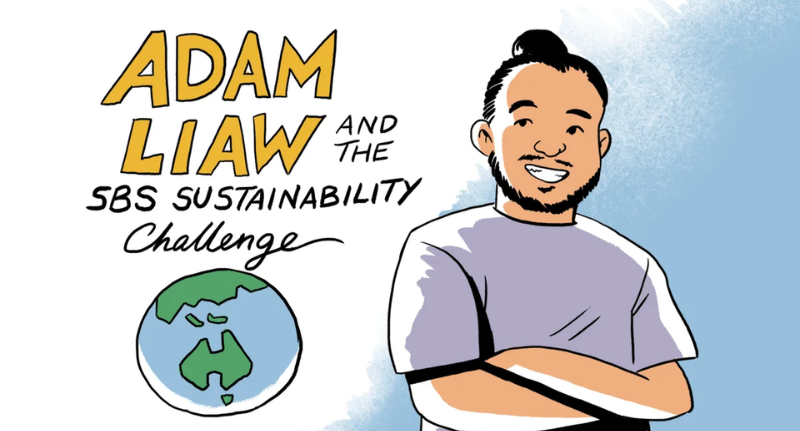
SBS – Special Broadcasting Service has opened applications for the 2026 SBS Media Sustainability Challenge, inviting brands and agencies to develop TV creatives that normalise sustainable behaviour and promote better environmental practices among Australian consumers.
Now in its second year, the challenge offers the winning campaign $500,000 inSBS advertising inventory, selected by a jury of senior industry leaders.
Submissions are open until 6 March, with the winner to be announced in the second half of 2026.
Encouraging sustainable behaviour through creative storytelling
Designed to drive industry collaboration on sustainability, the SBS Media Sustainability Challenge asks brands and agencies to submit a 30-second television script and a 500-word rationale addressing how their campaign encourages positive environmental change.
Kate Young, National Manager of SBS CulturalConnect, said the response to the inaugural challenge demonstrated sa trong appetite from the market.
“We have had so much positive feedback from the market about the SBS Media Sustainability Challenge and are thrilled that it is back for another exciting year,” Young said.
“Last year, we were inundated with some great ideas and campaigns, and we’re so pleased that more of these creative ideas will have an opportunity in this year’s challenge. At its heart, the campaign is asking brands and agencies to work with us to drive positive change to protect our planet by rethinking how they authentically represent sustainability in their marketing campaigns.”
Focus areas for 2026
For 2026, SBS has refined the brief, asking entrants to focus on one of three key sustainability pillars:
• Nature – how the brand protects and restores the natural environment
• Carbon – how the brand reduces carbon emissions
• Waste – how the brand minimises waste through sustainable practices or innovations
Entries will be shortlisted in March, with the shortlisted entries progressing to final judging later in the year.
“This is such a strong opportunity for brands, many of whom are already doing great work in this space, to produce something really creative and interesting that will get noticed and help spark positive conversation around sustainable behaviours,” Young said.
Industry-led judging panel
SBS confirmed the jury for the 2026 challenge will include:
• Adam Liaw, host of The Cook Up and co-chair of Sustainable Screens Australia
• Arum Nixon, Australia chapter lead at Ad Net Zero
• Abigail Thomas, SBS head of sustainability
• Kate Young, national manager, SBS CulturalConnect
• Angus Gordon, SBS head of creative and production services, CulturalConnect
Building on last year’s success
The inaugural SBS Media Sustainability Challenge was won by NRMA, recognised for an electric vehicle campaign that encouraged Australians to consider EV adoption while highlighting the organisation’s growing charger network.
To launch the 2026 challenge, SBS has released a stop-motion film that explains the initiative and encourages entries from across the industry.
Berlei says the quiet part out loud with perimenopause-led ‘I’m not hot’ campaign
Perimenopause has a branding problem. It’s sweaty, unpredictable, deeply unglamorous, and until recently, largely invisible in advertising. Berlei is done pretending otherwise.
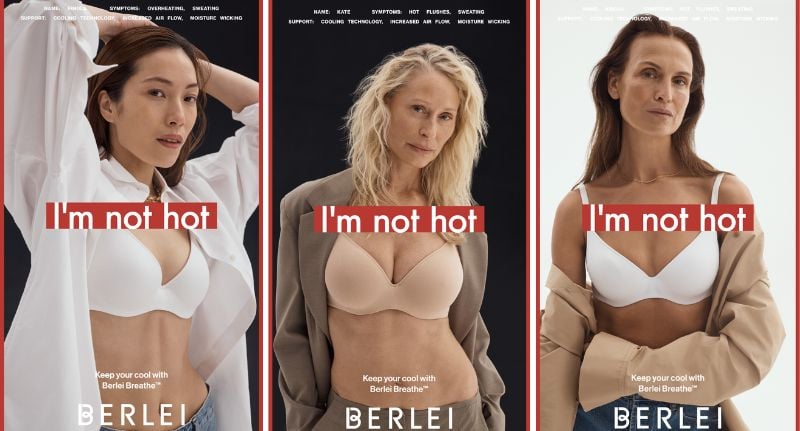
The intimates brand has partnered with FABRIC to launch I’m not hot, a bold new campaign introducing Berlei Breathe, a range designed to support women through perimenopause with cooling comfort and breathable performance, and to say the quiet part out loud.
Rather than sidestepping the experience or dressing it up in euphemism, the campaign flips a loaded phrase and reframes it on Berlei’s terms. This isn’t “hot” in an aspirational sense. It’s “not hot” because she can feel cooler, calmer and more in control, and supported by a bra built for a body in transition.
Reframing a loaded word
Built around the line “I’m not hot,” the campaign flips a phrase that carries real emotional and physical weight for women experiencing perimenopause.
Rather than leaning into aspirational gloss, the work reframes “hot” away from discomfort, flushing and quiet endurance – and toward feeling cooler, calmer and more in control, supported by a bra designed for a body in transition
According to Fabric’s Managing Partner, Gemma Rees, the creative strategy focused on meeting women where they already are.
“‘I’m not hot’ is confident, honest and a little rebellious. It says what women are already living, and it connects straight to what Berlei Breathe is designed to do: help her feel cooler and more comfortable.”
The result is a campaign that speaks plainly, without trivialising the lived reality of perimenopause – a balance that remains rare in mainstream brand communications.
Product-led, not platitudinal
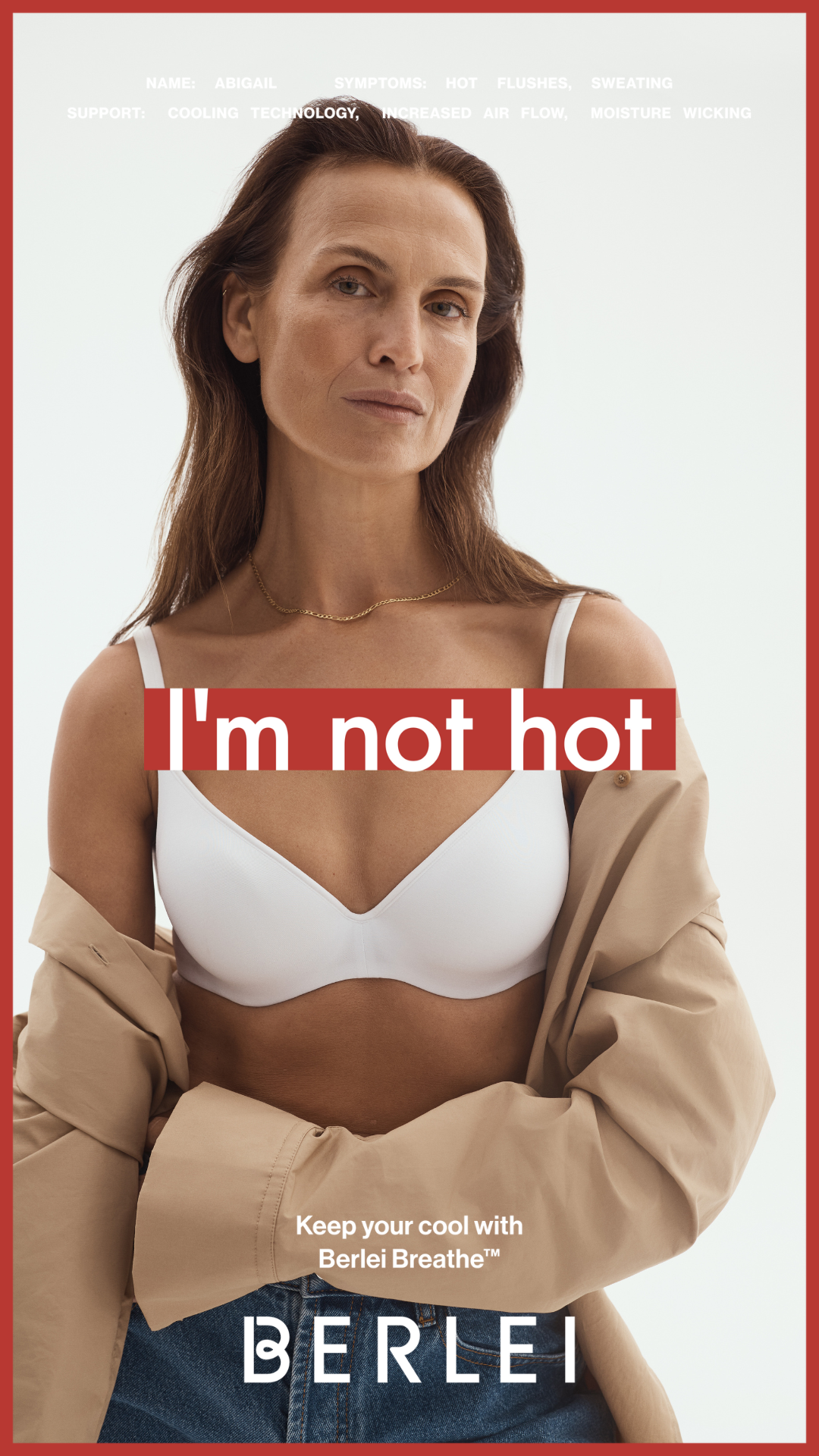
At the centre of the campaign is Berlei Breathe, a new intimates range featuring perforated foam cups to increase airflow, breathable stretch fibres for comfort, and moisture-wicking fabric with a discreet liner.
The range is available in both wire and wire-free styles, across multiple cup shapes, reflecting a product-first approach rather than a purely brand-led message
For Berlei’s Merchandise and Marketing Manager, Kelly Cashman, the range is designed around everyday reality rather than idealised bodies.
“Berlei Breathe is designed for women who want comfort that keeps up with real life. It’s breathable support, made for the moments no one prepares you for, and for the woman who refuses to shrink because her body is changing.”
That positioning aligns with a broader shift in women’s categories, where brands are increasingly expected to acknowledge life stages like perimenopause, menopause, and postpartum – and back that acknowledgement with functional design, not just inclusive language.
The I’m not hot campaign is supported by a hero film and key visuals rolling out alongside the product launch, underpinned by a simple line that lands with confidence rather than apology.
Media
Seven News flare-up fuels industry chatter
It happened about two weeks ago in Lake Cargelligo, where crews were covering the manhunt linked to the alleged murders of Sophie Quinn, John Harris and Nerida Quinn.
The rumoured trigger? Off-duty reality.
Speaking of hot mics….
An announcer for NBC was caught over the weekend calling the Winter Olympics’ big air finals ‘so boring’.
ASIO pushes back ahead of Four Corners probe
The agency said it would reserve its right to take further action if allegations it has already flagged as untrue are broadcast. In media terms, it is a clear shot across the bow before transmission.
The episode, part two of a two-part investigation, is set to examine possible intelligence and counter-terrorism failures and the private lives of the attackers.
GetUp recruits David Sharaz
The Guardian’s Tom McIlroy reports that Sharaz comes from a recent stint in public relations and is married to Brittany Higgins, whose case has loomed large over federal politics since 2021.
Advertising
Radio
Hadley snub overshadows Continuous Call Team anniversary
According to The Daily Telegraph’s Matthew Benns, the former 2GB star said he was disappointed to be left out of the February 19 function, given he helped establish the iconic rugby league broadcast.
Companies
Sarandos shrugs off Trump interest in Netflix Warner deal
According to Variety’s Marc Malkin, Pat Saperstein, Sarandos said Trump has a long-standing interest in the entertainment business and cares about the health of the industry, but that interest should not be read as influence.