
Tuesday December 9, 2025
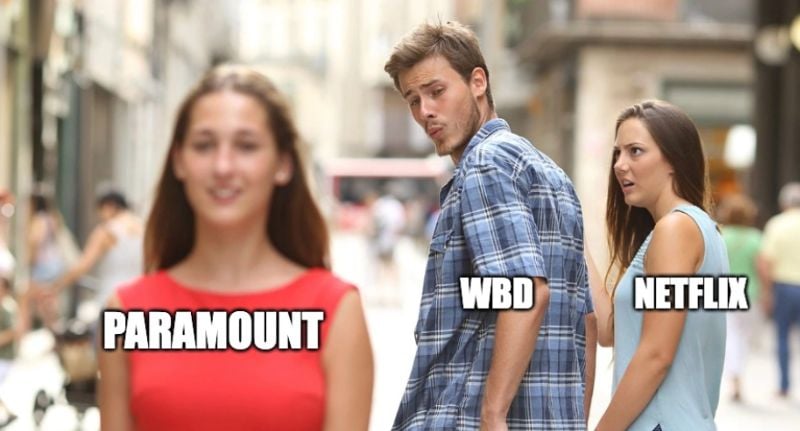
Not so fast, Netflix: Paramount launches hostile $165bn bid for WBD
Netflix barely had time to pop the champagne before Paramount flipped the table.
A hostile, all-cash bid for Warner Bros Discovery (WBD) has reignited the takeover war – and suddenly Hollywood’s biggest deal is anything but done.
Paramount has gone directly to shareholders with an offer of $45 per share (AUD) to acquire the entire company, including its traditional television networks – a sharp escalation from the studio’s earlier, unsuccessful bids.
The proposal competes head-on with Netflix’s agreement to acquire WBD’s studio and streaming assets for around $127 billion (AUD) once debt is included.
Paramount, backed by the billionaire Ellison family, framed its offer as a cleaner and more attractive alternative.
“WBD shareholders deserve an opportunity to consider our superior all-cash offer,” David Ellison, chairman and CEO of Paramount, said.
The company described Netflix’s proposal – which excludes parts of WBD’s cable portfolio – as “inferior and uncertain”.
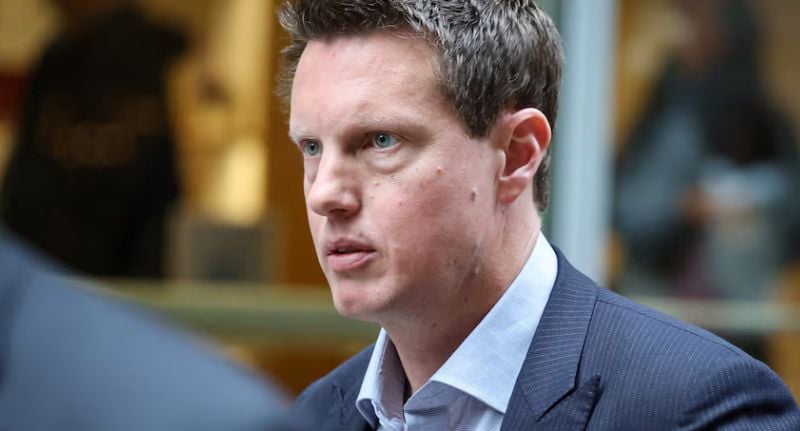
David Ellison
What Paramount wants that Netflix leaves behind
Unlike Netflix’s bid, which focuses on the studio and streaming operations, Paramount’s hostile offer includes WBD’s major cable networks, such as CNN, TNT, TBS and Discovery – keeping the full suite of assets under one roof.
The move would place those brands inside a company with close political ties to the Trump administration.
Larry Ellison, Paramount’s owner and a Republican megadonor, is a long-time ally of President Donald Trump, a relationship widely seen as strategically positioned for regulatory approval.
Trump has already weighed in, saying Netflix’s effort to buy WBD “could be a problem” due to competition concerns about market concentration.
Paramount’s offer represents a 139% premium over WBD’s September share price of approximately $19 (AUD), when takeover interest first ignited.
Netflix brush-off: ‘Today’s move was entirely expected’
Despite the scale of Paramount’s counterpunch, Netflix executives publicly brushed off the threat just hours after the bid landed.
According to Variety, at a UBS conference in New York, Netflix co-CEOs Ted Sarandos and Greg Peters addressed the challenge head-on.
“Today’s move was entirely expected,” Sarandos said.
“We have a deal done, and we are really happy with the deal for shareholders, for consumers, it’s a great way to create and protect jobs in the entertainment industry. We’re super confident we are going to get it across.”
Peters added that Netflix was comfortable leaving the regulatory question to authorities.
“I think we want to start by saying it’s not our position to tell the regulators how to think about this,” Peters said.
“They have to do their work and define the market the way that they do it. Clearly, they’ll do their analysis, and we’ll support them with whatever they need in that regard.
“But if we go back to the fundamentals of this deal, we are very confident that regulators should and will approve it. At the end of the day, it’s pro-consumer.”

Ted Sarandos
Why this fight matters
WBD – home to HBO, CNN, Discovery, and a catalogue spanning Looney Tunes to Harry Potter – formally opened a bidding process after Paramount began submitting quiet offers months ago.
Netflix ultimately emerged as the “preferred” buyer last week, stunning Hollywood with the proposed $127 billion (AUD) transaction.
Under Netflix’s plan, WBD will spin off parts of its business, including CNN, into a separate company, before selling its studio and streaming networks.
Paramount’s offer blows that structure apart – and puts the entire empire back on the table.
Wall Street analysts have long argued that a Paramount–WBD combination makes strategic sense, creating a traditional Hollywood counterweight to Netflix and Disney with enough scale to compete globally.
Paramount’s bid values the entire company at approximately $165 billion (AUD) – substantially higher than Netflix’s studio-focused deal.
Adding another political and financial layer: Trump’s son-in-law, Jared Kushner, is among the financial partners backing Paramount’s move, according to filings with the US Securities and Exchange Commission.
They couldn’t write a better plot twist if they tried.


Australia’s ad market to reach $30.7 billion in 2026
Australia’s advertising market grew 5.2% to $28.9 billion in 2025, according to WPP Media’s This Year Next Year report.
The holding company forecasts a further 6.5% rise, to roughly $30.7 billion, by the end of 2026.
“As we close out 2025, the Australian advertising market has demonstrated resilience and adaptability,” said WPP Media ANZ chief investment officer Melissa Hey.
“The structural shift continues as investment continues to move away from traditional linear channels and into digital ecosystems, reshaping how brands connect with audiences. While the broader economy wrestles with modest GDP growth and stubborn inflation, advertising investment is accelerating.”
According to the report, pure-play internet advertising accounts for 75.9% of total ad revenue and is expected to climb to 83.5% by 2030.
• Retail media is the fastest-growing channel, with spending forecast to rise 28.1% in 2025 and a further 24.4% in 2026. The sector is also on track to surpass total TV ad revenue for the first time in 2027.
• Search advertising is set to grow 10.2% in 2025 and 9.1% in 2026, holding a steady 23% share of total ad revenue.
• TV and streaming ad revenue fell 8.7% and is expected to decline a further 5.1% in 2026.
• Audio ad revenue, including digital and podcasts, rose 1.1% this year, offsetting declines in radio.
• Print continues to decline, with newspaper ad revenue down 17.4% in 2025 and magazine ad revenue down 2.9%.
• Out-of-home advertising rose 8.2% in 2025 and is set to grow another 6.2% in 2026.
• Cinema ad revenue also grew 5.2%, remaining a niche, premium environment.
Hey, said the story behind the numbers is “compelling”.
“Advertising is no longer the domain of big brands alone. Small businesses are driving this surge,” she said.
“Looking ahead, 2026 promises continued digitisation, and a market increasingly shaped by agile, data-driven investment decisions.”

Edgell celebrates a century with summer cricket partnership
Edgell has teamed up with OMD and News Corp to mark 100 years in Australian mealtimes with a new content partnership featuring cricketer Alex Carey.
A three-part video series brings Edgell’s ‘Grown For This’ platform to life, showcasing its century-long commitment to growing quality produce for Australian families.
It celebrates cricket and all its quirks, helping fans, casual or committed, make sense of the game’s eccentric language and culture.
Carey sits down with sports journalist Daniel Cherny over a beetroot burger to unpack everything from cricket’s rules to the iconic tea break.
“We’ve always believed that great meals bring people together, and nothing brings Australians together quite like cricket in summer,” said Simplot senior director marketing APAC, Katie Saunders.
“Partnering with News and shining a light on cricket’s place in our culture, we’re proud to be part of the moments that make an Australian summer feel like summer.”
Emma Ray, head of OMD Create Melbourne, said aligning Simplot’s heritage with the season’s biggest tradition was a natural fit.
“For a brand that has been integral for Australian families for a century, it’s important we show Edgell’s cultural connections in an authentic way, and there’s no moment more deeply woven into our summer than cricket,” she said.
“This partnership lets Edgell show up where Australians gather, celebrate, and share food.”
Credits:
Simplot
Katie Saunders – Senior Director Marketing APAC
Jess Romeo – Director of Marketing Communications
Eleanor Henry – Marketing Manager, Brand and Communications
OMD Create
Ayesha Kiely – Director of Content and Partnerships
Emma Hook – Partnerships Account Director
Niesha Happell – Partnerships Account Manager
OMD
Laura Nathan – Business Director
Carly Heverin – Account Director
Lara Paull – Media Implementation Manager
Jinny Jornkhokkruad – Account Executive
NewsCorp
Louise Nasalio – Client Project Manager
Lulu Freedman – Creative Director
Mariam Digges – Commercial Content Writer
Madeleine Hobson – Client Partner
Haylee Porter – Client Executive
Elizabeth Calwell – Head of Strategy and Solutions
James Prosser – Client Insights Manager
James Hall – Client Planning Lead
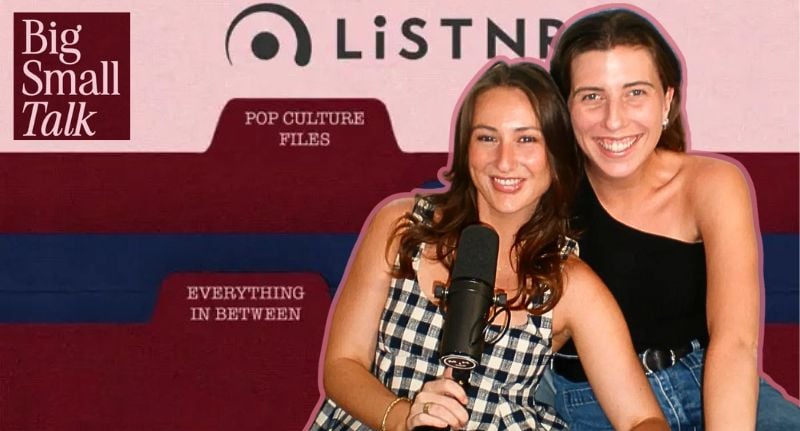
Big Small Talk levels up as Hannah Ferguson and Sarah-Jane Adams join LiSTNR
For a podcast that happily jumps from Roe v. Wade to reality TV in a single breath, Big Small Talk has always lived in the in-between – serious but never self-important, playful but rarely shallow.
Now, after just two and a half years on air, hosts Hannah Ferguson and Sarah-Jane Adams are entering a new chapter, taking their fast-growing political and pop-culture brand to LiSTNR.
The flagship show – alongside companion podcasts Small Talk and Big Talk – will officially debut on the platform today, marking a significant milestone for a project that launched in August 2023 and has since grown into a cultural mainstay for millennial and Gen Z women.
Across social channels alone, Big Small Talk now reaches more than 700,000 people each month – a number that speaks not just to scale, but to loyalty.
After all, this is a podcast where listeners tune in for Trump indictments and Sex and the City energy in equal measure – then stay for the chemistry.
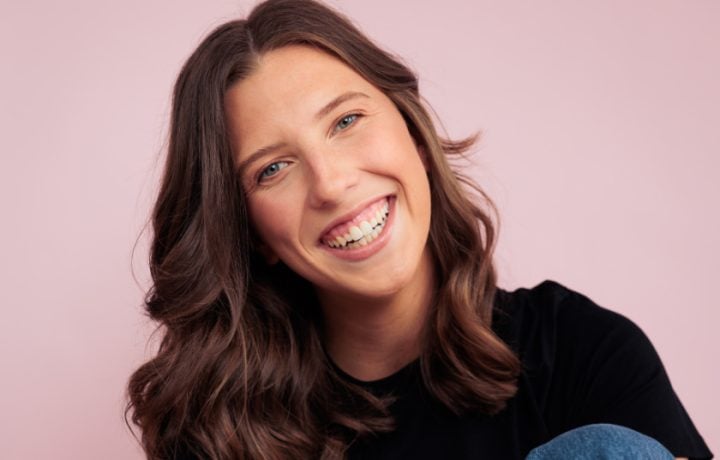
Hannah Ferguson
‘We wanted to grow it properly’
For Ferguson, the decision to join LiSTNR wasn’t just about a logo swap. It was about what comes next.
“After two and a half years of doing this podcast, we’ve grown an amazing, loyal, invested, intellectual audience of, you know, predominantly young women. And really, we wanted to grow that more. We wanted to grow our audience, we wanted to accelerate our offering, we wanted to elevate our offering, and LiSTNR is the network to go to do that,” she told Mediaweek.
“We’re going to have much more support and assistance to continue producing high-quality work for hopefully a bigger audience now that we’ve joined this network.”
Behind the scenes, that growth has largely been powered by a tiny, intense operation – with Adams wearing multiple hats as creator, producer, interviewer and editor across all three shows.
“I have always been the sole producer of this show since ideating it. And it’s been such a journey. So, to be able to jump between host and producer is just so much fun,” she said, adding that while she feels “protective” over the content, this year brought a turning point.
“A realisation that I had to have this year was, if you want to continue to grow this show and to reach as many people [as possible], and you really believe in the ethos of it, you can’t do it alone,” she said.
“For me, a really exciting part of it was to be able to work with other producers again, and learning from people and having that sort of support.”

Sarah-Jane Adams
The non-negotiable: creative control
For both hosts, editorial independence was the first line on the checklist.
“When it comes to editorial control, that was one of the first questions, probably the first question we asked when having initial discussions with the network, is that we really wanted to maintain that editorial independence and creative oversight,” Ferguson said.
“And Sarah will continue being our executive producer, which I think points to the fact that they are so willing and open for us to continue developing the product that we are very proud of.”
Looking across the broader LiSTNR lineup – including It’s A Lot with Abbie Chatfield and The Briefing – that confidence only deepened.
“We know that the people on this network pride themselves on independence and that LiSTNR works with them to actually evolve and elevate their voice and amplify their angles and points of difference,” Ferguson added.
“We feel very confident that we’ll be able to continue reporting on exactly the issues we’re reporting on, to use the same language, but actually just have more support and more experience in the room to help us improve our show rather than actually change anything about the editorial independence of it.”
Sarah echoed that assurance.
“Editorial control was my first question as well, because it was really important to me that I was able to continue to have that and make sure that the show stayed true to us in every way,” she said.
“That was a big part of choosing LiSTNR as well”.
From pop gossip to political primers
What’s made Big Small Talk resonate so widely is its refusal to pick a single lane. One week, it’s dissecting election discourse and reproductive rights. Next, it’s unpacking celebrity weddings and dating drama.
And that balance is entirely intentional.
“We are often the place that people come to get their first bite of political news and pop culture information every week,” Ferguson said.
“The fact that they’re engaging with our conversations and hearing us disagree and change our minds and remain open to making mistakes is a really important facet for me of being a role model.”
But she’s quick to point out that the show doesn’t pretend to replace traditional journalism.
“We are not a replacement for a news diet. We are simply a discussion point, a conversational piece, an opinion, an opinion-based podcast that delivers the facts of the news but reflects modern progressive conversations about the issues that matter across news and pop culture,” she said.
“We want to be part of a really broad news diet for people as opposed to just their one-stop shop.”
A podcast that crosses generations
While the show is often framed as youth-driven, one of its most surprising strengths has been who else is listening.
“One of my favourite things about the podcast is that we sit across generational lines,” Ferguson said.
“We have mums and daughters and grandmas that will tune into the podcast, and people saying that they get their 15-year-old sons to listen in the car with them, and it sparks interesting conversations.”
Sarah sees the same pattern play out.
“One of the most beautiful feedback we get is people saying, I listen with my mum or ‘ my grandmothers listen with their granddaughters,” she said.
“It’s just so cool when I hear stories of women listening to the podcast together and then having different feedback based on their different lived experiences.”
It’s also why the hosts reject the idea that their influence only extends to people who look and sound like them.
“We really want to have listeners that disagree, listeners that come from different backgrounds, listeners that want to have a conversation,” Ferguson said.
“That’s what we’re trying to model. Healthier discussions in the public square.”
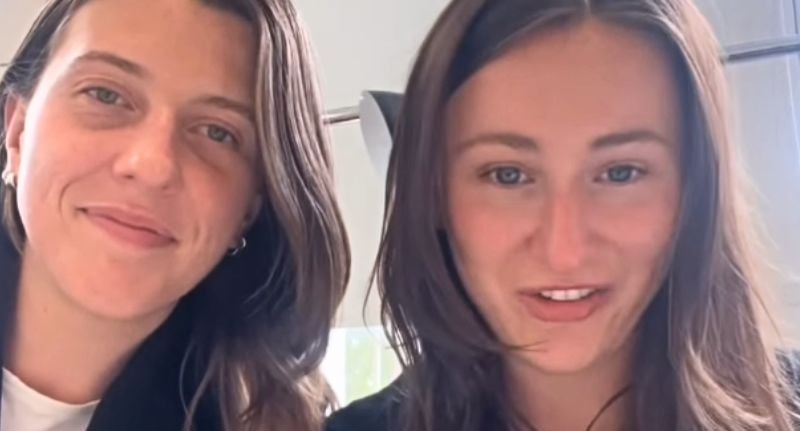
Ferguson and Adams.
‘It’s cool to care’
With audience scale comes a different kind of pressure – and neither host shies away from that.
“This is so surreal and such a sweet concept to be a role model for somebody, and of course, at the same time, that is super daunting and a huge, huge responsibility,” Adams said.
“If people are looking at us or the show to learn anything – I would really just hope the takeaways are that women are multifaceted, and that it is cool to care, and it is cool to have opinions and that knowledge is a superpower.”
For Hannah, that responsibility is something she actively embraces.
“I think it’s important to feel the pressure and feel the responsibility,” she said.
“I take it very seriously. I think it’s a privilege to be taken very seriously.”
Why LiSTNR wanted them
LiSTNR’s Head of Factual, Clair Weaver, said the partnership was a natural fit.
“Hannah and Sarah are smart, engaged and inspiring – and we’re delighted to welcome them into LiSTNR,” she said.
“They’ve done a fantastic job building Big Small Talk into a really strong show with a loyal community, and we look forward to working with them as they continue to grow their audience, influence and success.”
Big Small Talk will continue to drop every Tuesday at 5pm, with the first LiSTNR-era episode landing on Tuesday, 9 December. Listeners can tune in for free via the LiSTNR app.

Australians back the social media ban, we just don’t think it’ll work
The short-lived countdown is on to Australia’s social media ban. That phrasing seems to have more value to Communications Minister Anika Wells than the successful execution of the ban itself.
Addressing the ban at the National Press Club, Wells leaned heavily on analogy, comparing older siblings helping minors access social media to buying them alcohol.
But is it even possible to induce a cultural shift when the loopholes are already widely understood?
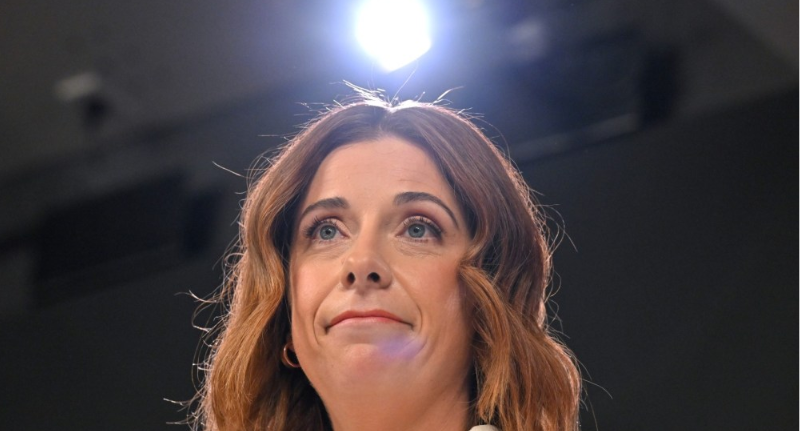
Australians support the ban, but don’t believe it will work
Pureprofile’s research shows the tension clearly: while 73 per cent of Australians back the ban on mental health grounds, 68 per cent also believe children will find ways around it.
That is where the policy begins to crumble, according to Pureprofile CEO Martin Filz.
Speaking to Mediaweek, Filz said the starting point is not disagreement; instead, all groups share the same concerns.
“Across adolescents, parents and both high school and primary teachers, there are a few shared themes,” he said.
“Everyone agrees that the overuse of social media is not good for children’s health. And at the same time, they agree it has become an important communication tool part of friendships, community and daily interaction.”
What’s the issue?
Support, therefore, is not the problem. It is a straight-out belief that it will not work.
“Another point of agreement is people’s back restrictions. But they also think enforcement is almost impossible,” Filz explained.
“When you drill down, another question emerges: who is responsible for managing children’s social media use? And that is where disagreement begins.”
“Teachers tend to support bans more strongly, citing disruptive behaviour at school and parents they believe are not enforcing limits,” he said.
“Parents, meanwhile, argue they already manage access by restricting time rather than banning platforms outright, and many believe those measures work. Adolescents prefer education and guidance rather than prohibition. And children themselves say directly that they will find alternatives if platforms are blocked.”
“So teachers say parents are not controlling it, while parents say they are,” Filz said.
“But everyone agrees kids will still get around the ban. And that raises the real challenge: is enforcement actually possible?”
Extending the analogy, Filz said, using the alcohol example: “If an under-18 uses a fake ID to buy alcohol, the fine sits with the shopkeeper.”
According to Filz, Australia has invested enormous effort into alcohol education, but not into educating children, parents or teachers about social media harms.
“We have gone straight to ‘this is bad’ and then to ‘ban it,’ skipping education,” he said.
“And again, kids will find workarounds regardless.”
A hidden issue caused by the ban
Dr Ellese Ferdinands, an expert and lecturer in social media influencers and digital identity at The University of Sydney, recognises the ban’s well-intentioned nature but points to its deficiencies.
“Young people will look for workarounds. They will find alternative platforms and ways to communicate. With any ban, whether it is alcohol or cigarettes, you are never going to get complete compliance. That is one of the dangers of outright bans,” she told Mediaweek.
She also warned that many of the platforms young people may move to could be far less regulated than the ones facing the ban.
“My worry is that some of the platforms they might move to, like Discord.”
“While those apps still have a lot of work to do, at least there is some level of monitoring. With alternative platforms, we don’t always know where young people will spend their time, and those spaces may be even less regulated,” she added.
What is missing, she said, is the necessary literacy for parents and teachers around social media culture:
“How to recognise when something unhealthy is happening online, and how to report concerns.”
She highlighted a hidden risk that can potentially occur when the ban is imposed:
“A young person being cyberbullied might not speak up if they feel they are already doing something wrong by being online.”
Wells has made it clear there will be no penalties for adults or older teenagers who provide under-16s access to social media when the rules take effect, adding that the ban is “not about punishing under 16s or parents” but about shifting responsibility onto platforms that have operated “in a wild, wild west” for years.

TrinityP3 urges agencies to submit pitches for New Business Report
Agencies have just over two weeks left to submit their 2025 new business wins as TrinityP3 prepares to publish its first New Business Report, a comprehensive snapshot of client wins across the Australian market.
The inaugural report, due in January, follows the consultancy’s benchmark State of the Pitch survey and is designed to give New Business Directors and agency leaders clearer visibility on the trends shaping the year ahead.
A clearer lens on 2026 opportunities
Darren Woolley, CEO of TrinityP3, said the new report expands on the company’s long-running focus on pitching transparency.
“2025 has been a fascinating year for pitching. We saw tremendous amounts of activity in the first half of the year, but in the second half, that activity across the media and creative really slowed,” Woolley said.
“We expect that 2026 will see many brands look to go to market. The purpose of the TrinityP3 2025 New Business Report will be to give the market a clear picture of where the opportunities are and how they can best position themselves for what we expect will be an interesting year of pitching.”
Early internal data from TrinityP3 shows that throughout 2025, the consultancy recorded more than 100 media pitches, 88 creative pitches, 23 PR pitches, 12 social pitches and nine full-service pitches.
A broader view beyond media
Senior Global Consultant Kylie Ridler-Dutton, who is authoring the report, said the focus is deliberately across the whole pitch landscape.
“For too long, new business reports have focused almost exclusively on the media side of things. The data clearly shows that media is still a big driver of new business in 2025,” Ridler-Dutton said.
“But equally, we are conscious that a lot is happening in other areas such as creative, PR and increasingly social. The TrinityP3 2025 New Business Report will be designed to give anyone working in the new business space clarity on the competitive market and where the opportunities are in the new year.”
If you’re an agency and want to submit new business wins, click here.
State of the Pitch still open for feedback
Alongside the New Business Report submissions, agencies also have two weeks remaining to complete the 2025 State of the Pitch survey, now in its third year.
“The State of the Pitch is now firmly on the radar in Australia but also globally,” said Woolley.
“The report gave the industry a clear lens on the state of new business for agencies and how marketers handle the pitching process, and has now been rolled out in Canada, the US and Germany.”
“Each year it’s helpful for agencies, marketers and the industry bodies to hear the real-world stories of what pitching is like for agencies and where things can improve.”
Agencies can access the 2025 State of the Pitch survey via TrinityP3’s website, where the full 2025 edition will also be available for download.

The human connection: Why Banter is betting big on experience
In an industry obsessed with automation, Banter is doubling down on the one thing technology can’t replicate: genuine human experience.
To find out how they do it, Mediaweek caught up with the leadership team at Banter: founders Paul Den, and Mitch Loadsman, along with Head of PR & Social, Andie Crawford.
From The Haus to independence
MW: Kick us off by telling us a bit about the Banter origin story and philosophy.
Paul Den: Mitch and I originally set up Banter in 2016 on the premise that traditional advertising is about pushing a message out and hoping people pay attention. We saw a shift towards engagement marketing.
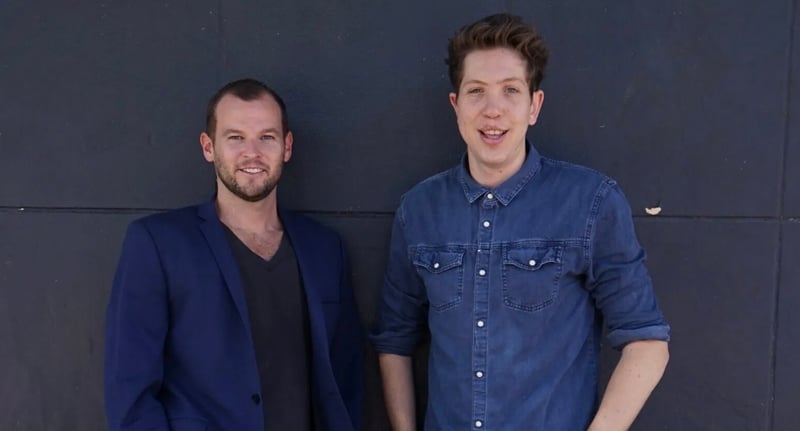
Banter founders, (L-R) Mitchell Loadsman & Paul Den
PD: This means creating ideas people choose to engage with rather than forcing it on them. While consumers are disengaged with advertising, they are actually more connected with brands than ever before and expect them to be more human and real-time.
At the time, we didn’t want to just be ‘two boys in a garage,’ so we partnered with an independent PR group called The Haus, run by Judi Hausman. The setup was that we would partner with her subsidiary PR businesses and earn equity over time.
Recently, Mitch and I bought the business back, became sole owners, and went completely independent. But straight away, moving out on our own, not having that earned and social thinking integrated, felt like a limb was missing. That’s when we brought Andie in.

Banter burger magic… The Grill’d / ‘Wicked: For Good’ collaboration drove more work to the agency
The ‘earned’ factor and the metrics problem
MW: Andie, why is that ‘earned’ piece so critical right now?
Andie Crawford: The media landscape has changed dramatically. I was talking to a journalist yesterday who told me that six months ago she was getting six stories past her editor, now she’s getting two signed off. And it’s the same for PR people.
It’s harder because the media is stretched thin, and the end user is demanding something truly authentic and informative.
MW: That brings me to the tricky question of ROI. How do you actually measure the value of ‘earned’ and experiential work?
AC: If somebody invented the most accurate and best way to measure and evaluate earned media, they would be a very rich person because I honestly don’t think it’s been nailed yet.
The struggle we still have is with stakeholders who are still requesting ad value equivalents (AVEs), which is so antiquated.
The CPRA in Australia will no longer use that measure, yet we’re still asked for it.
We’re using much more cost per view now, message sentiment, and key message delivery, but there is still a gap in the market.
PD: Thing is, a couple of projects in the last six months, especially like the Grill’d, and the R.M. Williams‘ work have actually won us further work. That’s ROI.
The science of experience
MW: Does having an experiential brand moment create a longer tail of value?
AC: Absolutely. We talk a lot about behavioural science and behavioural change. We know that the way the human mind and memory work, you have to experience something for that feeling to last longer than the five minutes you spend at an activation.
If you can spin that out so the activation connects with the earned media people are reading and what they see on social, you’re telling a powerful story that actually ticks those behavioural change boxes.
MW: Can you give us a practical example of that philosophy in action?
Mitch Loadsman: Nespresso came to us because people weren’t experiencing their products in boutiques as much. So we built them a mobile sampling vehicle using the new Volkswagen ID. Buzz, which leans into the sustainability side for them.
We basically open the back door, roll out, and we’ve got local partners and Nespresso machines, so they get that sampling moment right where they are. It’s about taking the experience to the consumer rather than waiting for them to walk in the door.
It was also about creating that sample opportunity from a business perspective on the B2B side. Not just a consumer lens.
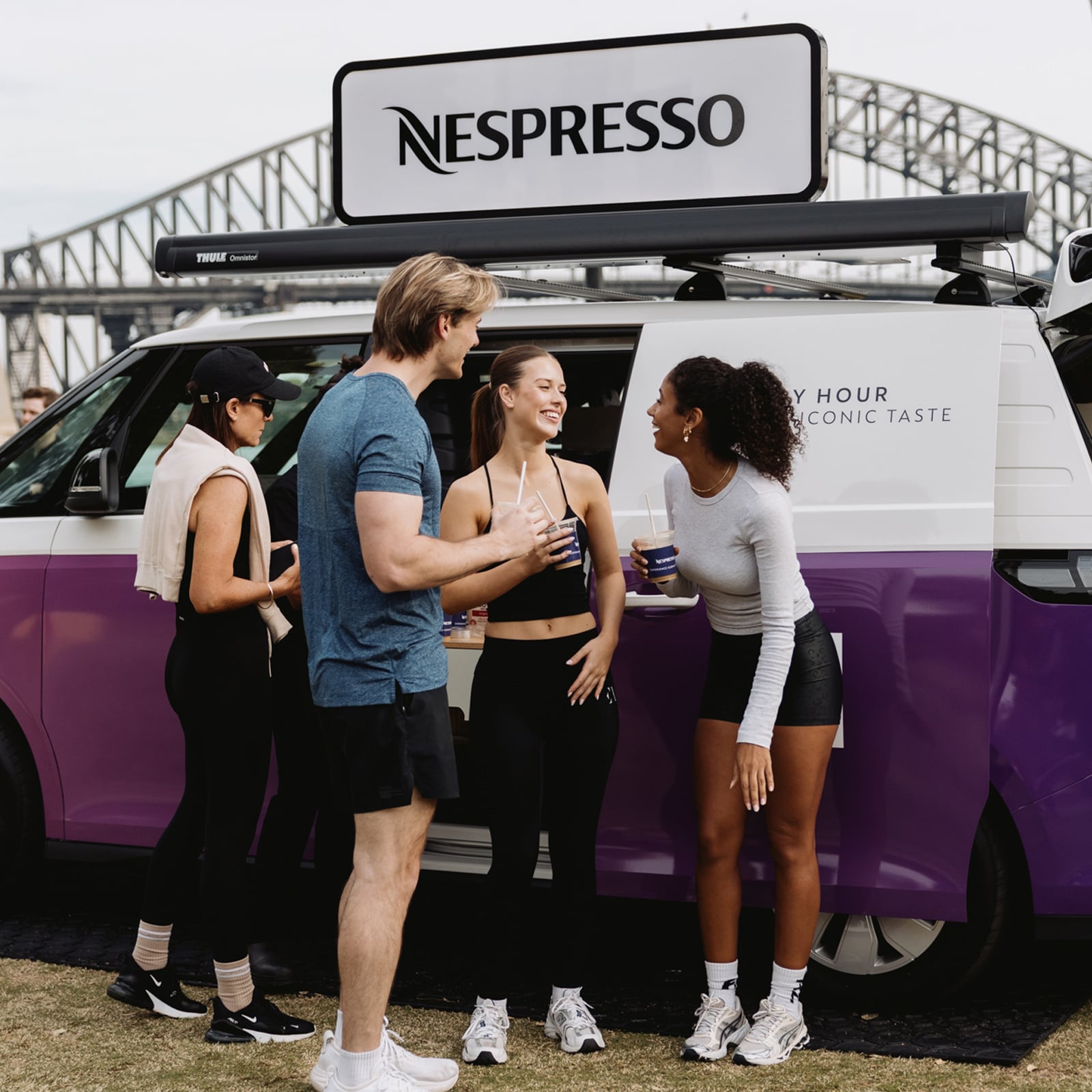
Nespresso mobile sampling experience using the new Volkswagen ID. Buzz created its own buzz
Future trends and what’s next
MW: Looking ahead, where do you see the biggest opportunities for brands?
PD: I think you’re going to see more brands investing into sport, music, and culture. Sponsorships and partnerships help bring brands to life. It’s a great environment to talk to people from a reach perspective, but also to engage them in a relevant way.
MW: Is there anything that keeps you up at night?
PD: We do a lot more than what people know us for, and that keeps me up at night a little bit because I don’t want to miss out on opportunities.
We’re turning ten in January, and I want to make sure the market knows we aren’t just an experiential agency with a PR bolt-on. We are a fully integrated shop. We’re approachable, we’re transparent, and we have the values that clients actually want right now.
Main Picture: Paul Den, Andie Crawford & Mitch Loadsman.

Big promises, rising risks: Meta spruiks 3x ROI as scams surge and laws tighten
Meta is positioning artificial intelligence as both its primary growth engine and its frontline defence against platform fraud, as advertisers in Asia Pacific are now claimed to be achieving more than triple return on ad spend – even as scam enforcement scales into the hundreds of millions.
Meta Vice President of Asia Pacific Benjamin Joe said AI now underpins both performance outcomes and the integrity of Meta’s advertising environment.
“AI is at the core of everything we do for a global community of 3.4 billion people that are using our apps every day,” Joe said.
“For every $1 that an advertiser in APAC puts into meta, they get over three times that return.”
Those performance claims arrive as regulators worldwide sharpen expectations around scam prevention, data protection and AI transparency – pressures that are now reshaping the economics of digital advertising.

Meta Vice President of Asia Pacific Benjamin Joe
Scams move from safety issue to structural economic risk
Meta used this week’s Global Anti-Scam Summit in Washington, DC, to outline the scale of its enforcement efforts – and to make a broader point: that scam activity is no longer just a platform safety issue but a structural commercial threat.
For performance marketing, where credibility, speed and predictable audience behaviour underpin acquisition and lifetime value, sabotage of trust now directly suppresses conversion efficiency.
So far in 2025, Meta says it has:
• Removed more than 134 million scam ads
• Supported international investigations resulting in arrests
• Driven a more than 50% decline in user reports about scam ads across the past 15 months
Joe framed scams as an existential risk to the advertising system itself.
“Scams undermine the very trust that our business is built on,” he said.
“Scams don’t just harm individual victims; they undermine trust in our entire advertiser ecosystems. And as you know, this is the very foundation of Meta’s business model.”
For advertisers, that trust is now directly tied to media efficiency: hesitation weakens acquisition; weaker acquisition pressures loyalty economics, pricing power and growth models downstream.
From clean-up to prediction: AI becomes the new fraud firewall
Meta detailed a new suite of AI-driven detection systems designed to identify scam behaviour earlier and reduce downstream exposure.
These models are trained to flag:
• Emerging scam tactics
• Coordinated criminal behavioural patterns
• Network-level account anomalies across Facebook, Instagram and WhatsApp
One of the most commercially sensitive upgrades centres on facial recognition technology used to detect ads that misuse celebrity images or manipulated likenesses.
Meta says early testing more than doubled the volume of violative ads detected and removed.
This marks a strategic pivot from reactive content clean-up toward predictive, pre-exposure intervention, particularly as generative AI increases the speed, realism and scalability of fraud.

Targeting the criminal infrastructure behind scams
Beyond individual ads, Meta is now prioritising enforcement at the network level.
In the first half of 2025, the company says it:
• Detected and disrupted nearly 12 million accounts tied to what it describes as “criminal scam centres,” particularly in Southeast Asia
• Supported the US Department of Justice’s Scam Centre Strike Force and the FBI in dismantling a network linked to the Tai Chang compound in Myanmar, resulting in the takedown of 2,000 Facebook accounts
• Shared intelligence with Singaporean authorities, leading to the dismantling of an illegal online gambling network tied to digital fraud
These actions sit alongside more than 60 lawsuits Meta has filed in recent years targeting impersonation networks, account-takeover schemes, and coordinated abuse.
From social discovery to AI-guided decision-making
By 2026, Meta expects product discovery to increasingly begin on social – a creator video, a friend’s post, a Reel or a live stream – before AI agents step in as decision-making intermediaries.
That journey now typically follows a new commercial loop:
Social inspiration – AI-powered judgement – purchase – AI-driven post-purchase creation – renewed discovery.
Meta is already testing virtual try-ons, allowing users to see products on themselves before purchasing – designed to lift confidence at the moment of transaction.
Meanwhile, Meta Advantage+ automates end-to-end campaign optimisation, compressing the execution layer of performance marketing into real-time AI.

Messaging becomes the new storefront
Commerce is also consolidating inside chat environments. “Messaging is now the primary storefront on WhatsApp, Messenger and Instagram,” Joe said.
“APAC businesses are using AI agents to handle sales, support and loyalty at scale.”
Rather than pushing consumers between apps and websites, Meta’s strategy is to enable discovery, enquiry, and purchase within a single continuous conversation.
A real-world example comes from Philippines-based medical apparel brand White Coat Manila, which deployed business AI on Messenger to answer customer questions and guide users directly to cart – delivering a 20% drop in support costs and a 5% uplift in customer conversations.
The AI-driven creator loop
Creators are increasingly operating as product discovery infrastructure rather than just distribution channels.
The Facebook Affiliate Partnership with Shopee, now live across Southeast Asia, Taiwan and Brazil, allows creators to convert content directly into sales using in-platform affiliate links – collapsing content, commerce and conversion into a single performance loop.
Video, meanwhile, is now the default commercial language across mobile-first APAC markets.
Meta is piloting tools that let creators embed product links directly into Instagram Reels, while nearly two million advertisers are now using generative AI video tools to create custom ads, deploy AI-generated music, and optimise for multiple audiences and languages.
Live shopping, AR try-ons, and short-form video are now driving direct revenue, not just awareness, pushing video firmly into the performance media stack.

White Coat Manila
Cross-border commerce becomes the APAC growth engine
Asia Pacific is increasingly operating as the core engine room of global cross-border e-commerce.
As geopolitical and economic pressures reshape traditional trade routes, intra-APAC trade is accelerating, with AI-driven automation reducing friction across creative, budget allocation, placement and localisation.
Singapore-born furniture brand Castlery used Meta’s automation tools to expand into Australia, while Korean beauty label ANUA leveraged Reels and creator-led Partnership ads to crack the US market.
In both cases, automation reduced the complexity typically associated with cross-border scaling.
Agencies, automation and the changing value chain
While buying is increasingly compressed into automated systems, Joe argued agency value is not shrinking – it is shifting.
“We actually believe that the large advertisers who use creative agencies will continue to do that with the advantage that AI tooling will actually turbocharge those creative development processes.”
Execution is becoming machine-led. Strategy, creative systems, behavioural insight and brand architecture remain stubbornly human.
Meta is now prosecuting a single strategy across six converging fronts simultaneously:
• AI as a revenue engine
• A fraud suppression system
• A regulatory compliance buffer
• A media automation layer
• A creator-commerce infrastructure
• And a cross-border trade accelerator
Its assertion that advertisers are achieving 3x ROI while removing more than 134 million scam ads in a single year underscores the new reality of performance marketing: Trust is no longer moral capital – it is now economic infrastructure.
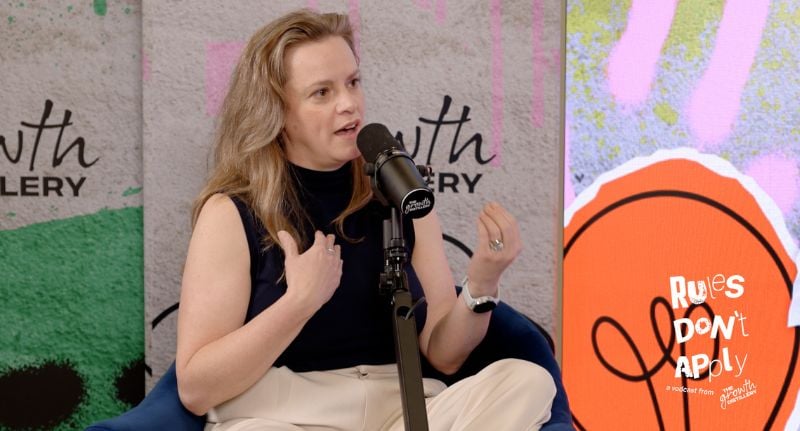
‘Play is controversial’: Why Kate Renshaw wants us to take fun seriously
Play, for most adults, is a nice-to-have. For Kate Renshaw, it’s closer to oxygen.
Speaking with The Growth Distillery’s Dan Krigstein on the Rules Don’t Apply podcast at SXSW Sydney, the registered play therapist and founding director of Her Movement Play and Field Therapy argued that play is not a soft extra – it’s core infrastructure for mental health, learning and even how we stay human in a tech-heavy world.
“Play is to the mind like oxygen is to the body,” she said. “We cannot live without warm, playful relationships.”
‘Children’s natural first language is play’
Renshaw didn’t arrive at play by accident. She began in psychology, moved into art therapy, then realised she still hadn’t gone far enough.
“I started my training in psychology, and then I followed that thread towards more playful things, which was art therapy, and that still didn’t have enough playthings in my play therapy room,” she said.
“So I ended up in play therapy, and my PhD is focused on play therapy.”
She describes play therapy as “a pediatric mental health specialist therapeutic approach – a psychotherapy” that lets kids “play it out rather than talk it out.”
“Children’s natural first language is play, not talking,” she said. “As you know, if you try to ask a three-year-old how they’re feeling, they’ll be like. ‘Good.’”
With her own children – and the parents she works with – she suggests swapping interrogation for curiosity.
“I always like to go with Wonder Woman on this one,” she laughed. “Rather than question, I like to reframe as wondering. It softens it a bit. It means that if they don’t wanna answer you, they don’t have to.”
Instead of “How was school?”, she offers: “I’m wondering if anything interesting happened at school today. I wonder who you spoke to.”
“So kind of like noticing, noticing, wondering, being curious, tuning into their pace,” she said. “And not trying, when we know we are misattuned – they will just let us know.”
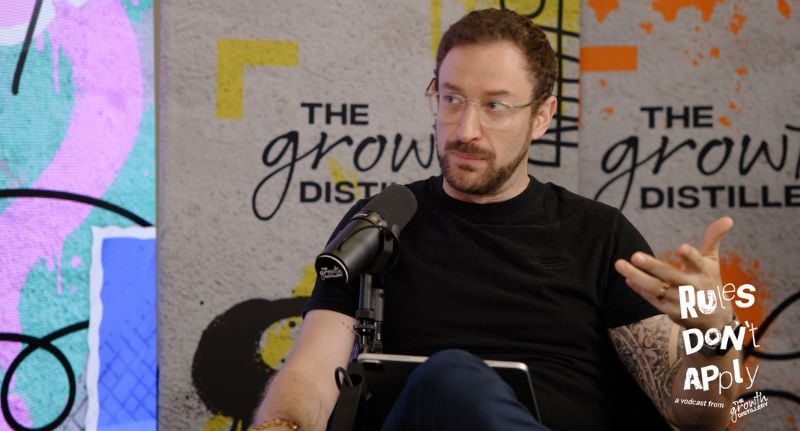
Dan Krigstein
The cost of play deprivation
If play is so fundamental, why do we keep sidelining it?
“As a society, we have moved further away from our humanity over time,” Renshaw said, pointing to the legacy of Victorian structures – the bells, the formality, the sense that productivity must look serious.
“You only have to go to a school, hear the school bell, and you’re almost hearing the whistle of the workday.”
She argues the need for play is actually becoming louder “in this post-humanist space, where we realise that animals and the environment and the world, as well as technology, are important and big parts of our lives.”
We know what happens when play is missing. Renshaw cites Jane Goodall’s work with chimpanzees – “chimps that were deprived of play became homicidal” – and the Romanian orphanage studies where children, though fed and clothed, were “never cuddled, they were never spoken to, they were never played with.”
“Play deprivation has profound developmental, um, and lifelong social, emotional and well-being impacts,” she said.
Play, she added, is “dynamic, contextual [and] changing” – not just fun, but a place where kids can safely dance to the edge of discomfort.
“Play instructs our social skills. Play builds our muscles,” she said. “Play deepens and tempers our emotional regulation, and it leaves us feeling more balanced. And poised for more.”
Teachers, trauma and the ‘emotional splashback’ of joy
Much of Renshaw’s recent work sits in schools, which she calls “microcosms” of the broader system.
“The school’s teachers currently have the highest rate of vicarious trauma, nearly out of any profession, higher than paramedics,” she said.
Children are arriving with heavy loads. “Australians still don’t realise – 62% of Australian children will experience maltreatment or abuse,” she said.
“And that increases to 72% if we add in additional adversities, like a parent might be incarcerated or a parent might struggle with serious mental health.”
Her research has focused on what happens when teachers are given play-informed relational skills rather than just more behaviour management.
When she trained teachers in child and play development, plus practical “language of play” tools they could use in everyday interactions, “they described it as a way of being,” she said.
“They actually called it a paradigm shift because they started to see children differently and their relationship differently, and then things changed.”
Crucially, it didn’t just help students.
“When teachers use humanistic skills with children who are playful, they get an emotional splashback of wellbeing, wellness and joy,” she said. “If we’re thinking about a teacher draining their cup… what would it be like if with each relational exchange they were getting a little zing back?”
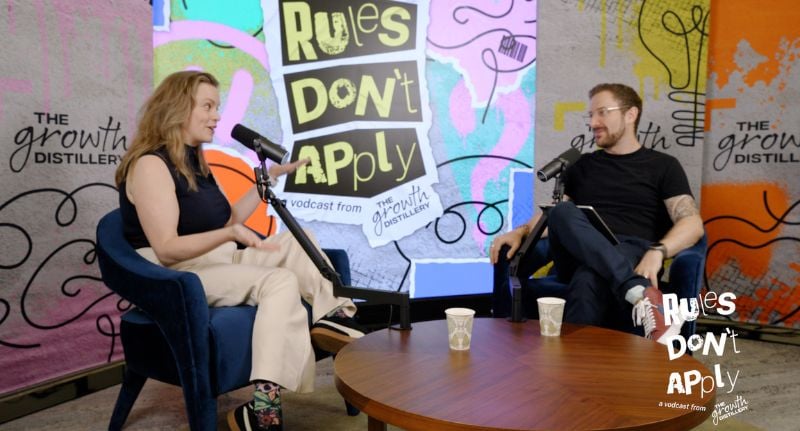
Kate Renshaw and Dan Krigstein
Nature, tech and staying human
Renshaw is a big believer in context – especially green and blue ones. She describes schools integrating play through storyboards, mini-figures and outdoor spaces where kids might literally do maths standing in a creek.
“Green spaces and blue spaces are quite well researched in the world,” she said. “You can actually map wellness and lifespan around different green spaces and blue spaces in the world. We know that our bodies, um, do really well in those environments.”
She links this to EMDR therapy’s origins in a walk through a park, and to First Nations knowledge about land, breath and sound. “We find this wisdom in nature,” she said. “And so I think nature is a, like a source of that as our animals… in a tech-heavy world.”
On technology, she’s blunt.
“I think it makes [play] more important because I think if we were ever to try and raise our children through technology and robots, I think they would be at risk of play deprivation,” she said.
With AI and automation accelerating, she hears a counter-current.
“There almost seems to be this other thing coming out of… the essence of humanity and play and playful relationships at the core of that, for our ongoing humanness,” she said. “For us to remain human.”
‘Every day I feel like it’s a bit of a rebellion’
In Rules Don’t Apply tradition, Krigstein finishes with rapid-fire questions. Asked for a “hot take” few agree with, Renshaw doesn’t miss.
“Play is controversial,” she said. “A lot of people think that play is effortless and we don’t need it, and it’s not important. So I find every day I feel like it’s a bit of a rebellion – choosing to be a play therapist and name myself as a registered play therapist and not pursue my psychology registration, that’s also a rebellion because I’m saying this is where I feel is really important.”
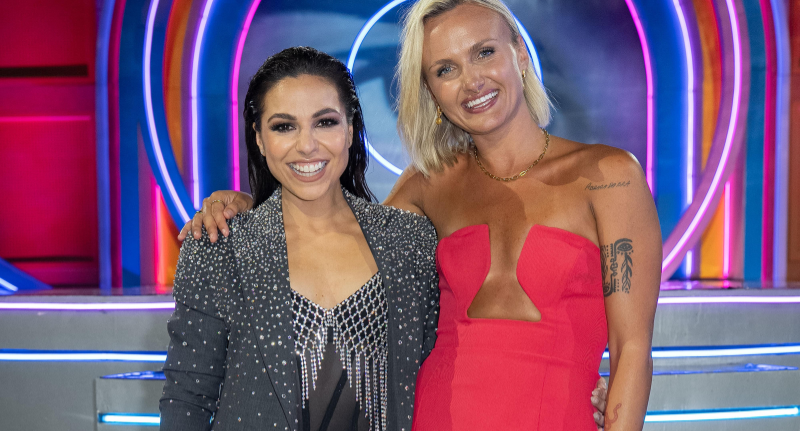
Coco wins Big Brother 2025
Big Brother 2025 has officially wrapped, with its winner Coco taking out the eye (title) and a 135 thousand prize in a finale that delivered surprise twists, emotional exits and a last-minute showdown between two of the season’s standout housemates.
The win caps an unpredictable run for Coco, who closed out the night reunited with her three children on stage, telling the crowd: “Thank you so much, you don’t know how much this means to me. Thank you, every single one of you… I’m honestly lost for words.
“I went in there, and I was myself. My whole life, I’ve been myself, and it was never accepted, so to be accepted by all of you… My kids finally get their mum full-time. There’s going to be presents under the Christmas tree, you name it!”
A finale built on twists, tears and one very tense game of chance
With five housemates remaining, the night opened not with an eviction but with a nostalgia-filled final dinner as the finalists toasted their journeys. But Big Brother had one more surprise: a brand-new Suzuki Jimny XL.
Bruce and Allana went head-to-head in a game of chance for the car, with Allana ultimately winning the keys and ending her time in the house.
“I’ve never won anything! I was pretending that I was on a TV show that everyone was watching,” she joked, before the audience reminded her she was indeed on one.
Moments later, Bruce was the first to be evicted for the night. Reflecting on his experience, he said: “Halfway through there I was ready to go home… so, for everyone sticking by me I really appreciate it. We’ve had our ups and downs, and I just want to thank you all, honestly.”
He added: “I think I had a bit of a preconceived idea of myself… when you’re put in those circumstances, you get beaten down, and you realise that may not be what you thought… I’m excited to see, you know, explore a bit of myself on the outside and see what comes.”
In the next shake-up, Colin was announced as the next evictee, leaving Coco and Emily as the final two.
Known for his catchphrase, he explained to host Mel Tracina:
“Brev, you know, there’s no distinct meaning for it; it’s literally just whatever comes to your soul in that exact moment. I know that we’ve all got Brev moments… This is a Brev moment right now, bro!”
Emily finished the competition as runner-up and described her time in the house as transformative. “At the end of the day, I’ve learned a lot about myself… It’s been an absolute pleasure. Highly recommend it.”
Top image: Host Mel Tracina and Big Brother Winner Coco
Media
ABC, Trump and a Senate showdown reignite old media wars
According to Calum Jaspan in The Sydney Morning Herald, the exchange, brief but pointed, reopened old wounds over the national broadcaster’s 2021 coverage of the January 6 Capitol riot.
10 News Perth says goodbye to a newsroom lifer
TV Blackbox’s Kyle Laidlaw reports that staff were told last week, drawing a line under one of the longest editorial tenures in the market.
Social media
Agencies
Companies
Paramount crashes the Warner Bros deal
The Sydney Morning Herald’s Michael Koziol writes that the offer on the table is $US30 a share in cash for Warner Bros, backed by a mix of Middle Eastern finance and Affinity Partners, the investment outfit run by Donald Trump’s son-in-law, Jared Kushner.
But it doesn’t look like Netflix CEO Ted Sarandos is bothered.
According to Alex Weprin in The Hollywood Reporter, he addressed the move made by Paramount during a talk, saying it was “entirely expected”.