
Thursday April 9, 2026
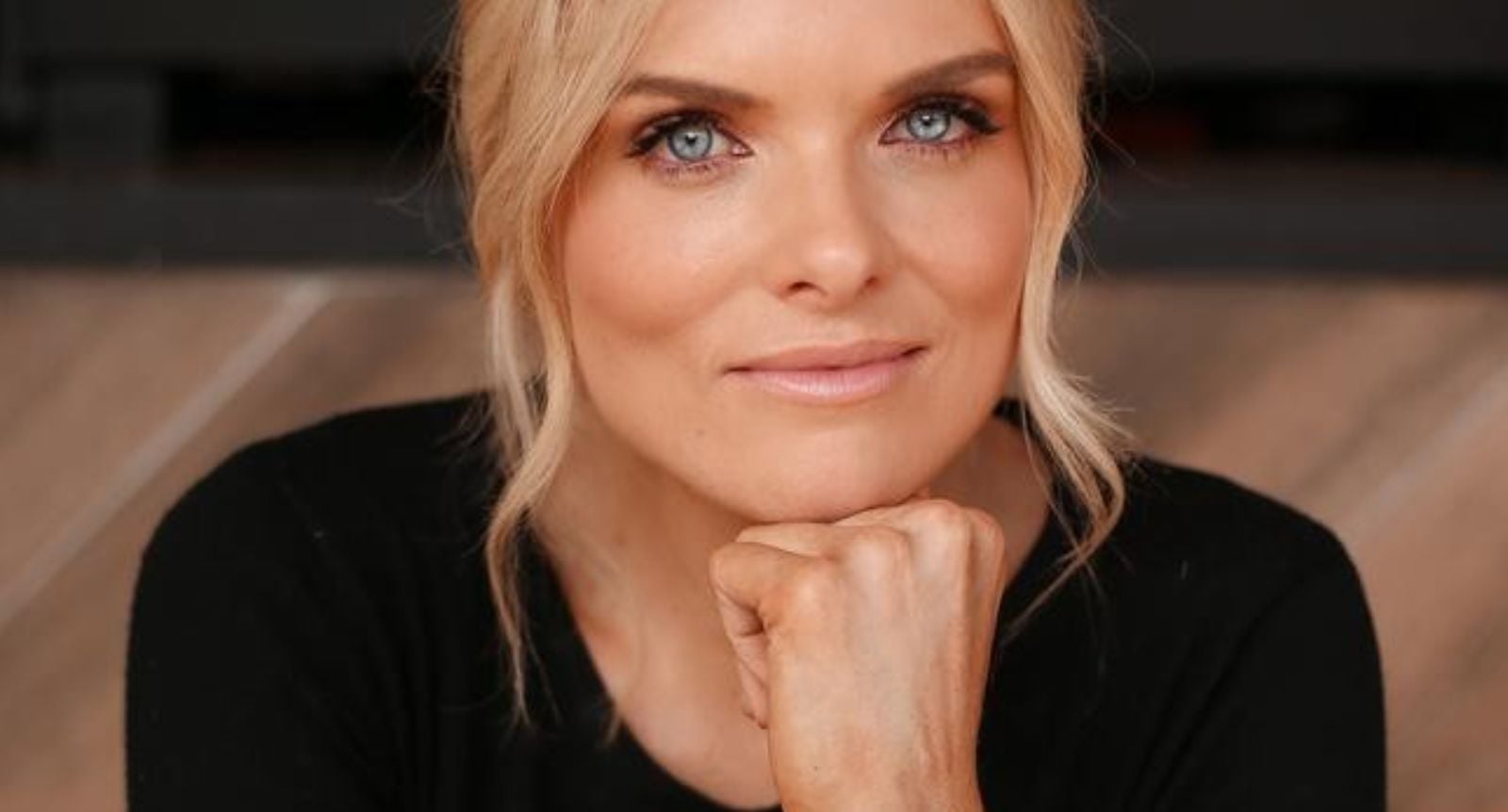
EXCLUSIVE: Erin Molan shuts down ARN rumours as Stefanovic speculation swirls
Erin Molan has dismissed speculation linking her to a role at ARN, as reports continue to circulate about a potential audio move involving Karl Stefanovic.
In an exclusive interview with Mediaweek, Molan rejected suggestions she was in the running for a newsreader position as part of a broader show deal.
“I have zero interest, possibly less,” she said.
“My focus is The Erin Molan Show.”
Molan has been building her independent media presence via YouTube, where The Erin Molan Show sees the former television presenter tackle topical and often contentious issues, including geopolitical developments such as the war in Iran.
The strategy appears to be gaining traction, with some videos attracting more than 400,000 views, as Molan continues to grow a direct-to-audience model outside traditional broadcast.
Stefanovic rumours swirl
Separately, speculation around Stefanovic’s future in audio has intensified, with sources telling Mediaweek that talk of a move to ARN aligns with earlier internal discussions.
One concept previously floated involved Stefanovic co-hosting alongside Kyle Sandilands on a new program. That scenario now appears unlikely, as Sandilands and ARN remain in a legal dispute following the company’s decision to terminate his contract.
Stefanovic has since launched The Karl Stefanovic Show podcast, which could offer an alternative entry point into audio and potential future collaborations.
Main image: Erin Molan
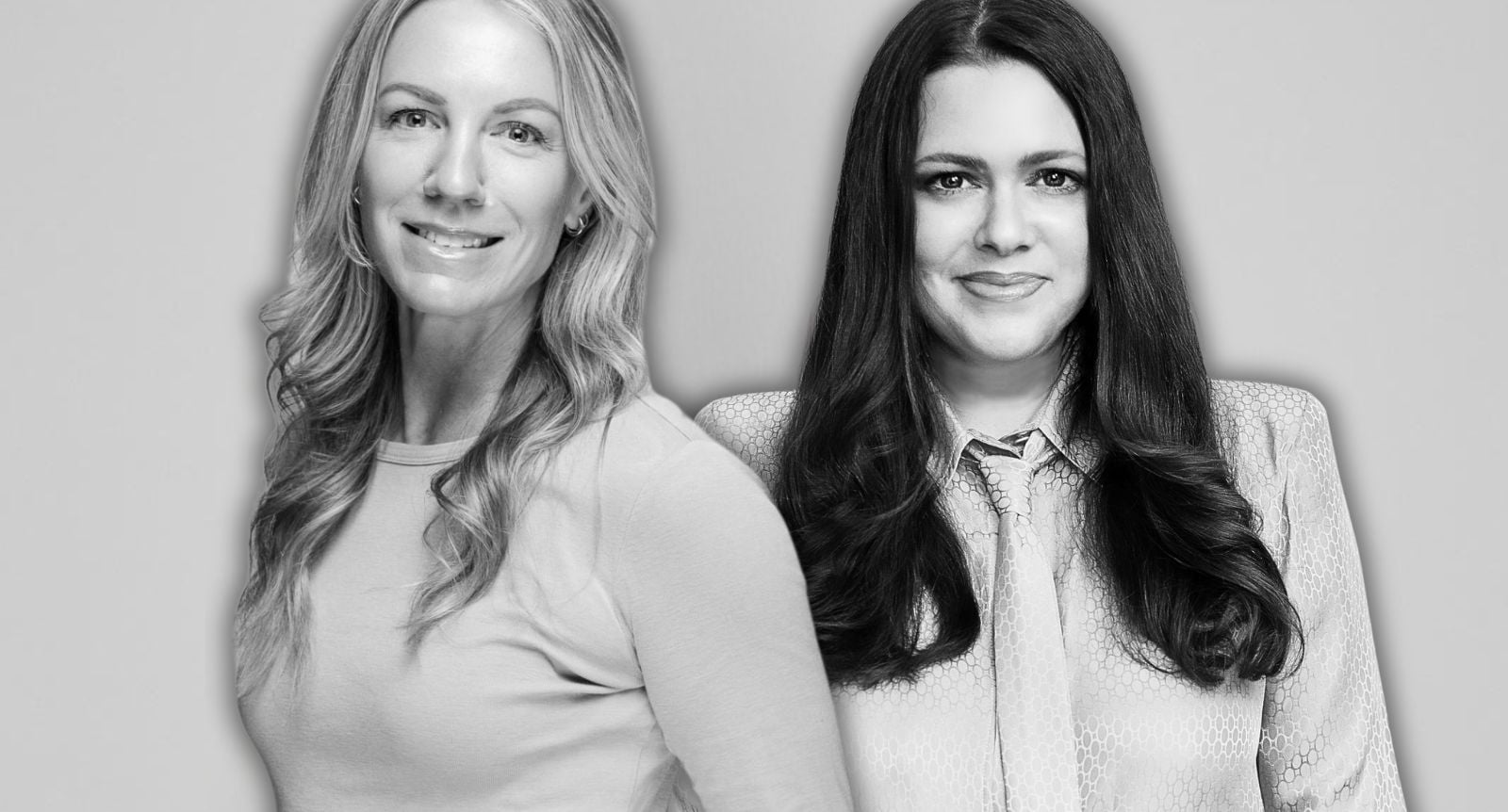
Omnicom sharpens its edge: Hamilton elevated, Prettyman installed to drive delivery
Changes are continuing at Omnicom Oceania, with the agency announcing that it has appointed two senior leaders to its executive leadership team.
The move comes as the business continues to reshape its structure and strengthen its client delivery model following a sweeping global merger.
Kim Hamilton has been promoted to chief marketing and communications officer, Omnicom Oceania, expanding her remit beyond Omnicom Media Australia into a broader enterprise leadership role across the region.
At the same time, Paige Prettyman has been appointed chief of staff, a newly created role designed to support executive alignment and operational delivery.n
The appointments come as Omnicom Oceania continues to evolve its operating model, with CEO Nick Garrett positioning the business around a more connected, client-focused structure.
Hamilton steps into the newly expanded role after establishing Omnicom Media Australia’s first centralised marketing and growth function. In her new remit, she will lead enterprise brand, communications and market positioning across the region, while continuing to play a key role within the media division.
Garrett said the appointments reflect the group’s broader ambition to align its internal structure with the transformation it is advising clients to undertake.
“We talk a lot about helping our clients navigate transformation and elevating the role of marketing at an executive level. What’s important is that we’re doing the same ourselves.
“These appointments are about putting that into practice, building a business that is more connected, more focused on the customer, and set up to deliver real commercial impact.
“Kim has proven herself as a leader who delivers, driving growth, shaping our strategic direction and playing a central role in the transformation of our business and the value we create for clients,” he said.
Hamilton said she is focused on translating that transformation into clear outcomes.
“I’m genuinely energised by the vision and transformation that Nick, KK [Kristiaan Kroon, Omicom Media Australia CEO] and the broader team are building together at Omnicom Oceania. We are building something genuinely different, more connected, more capable and better set up to help our clients navigate increasing complexity.
“Now it’s about bringing that to life in the market and for our people – simple, clear and with impact.”
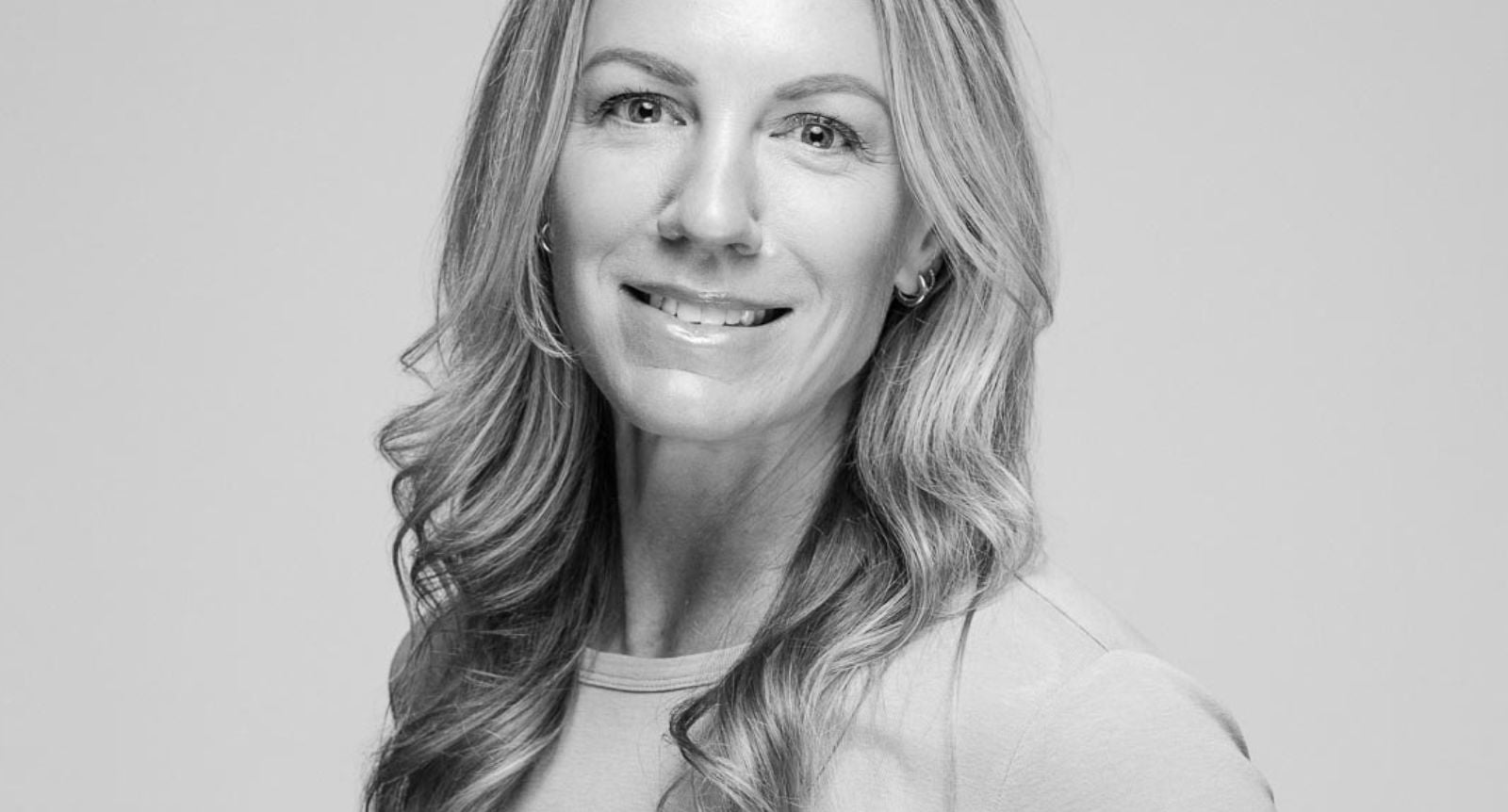
New chief of staff role adds operational focus
Prettyman joins Omnicom Oceania from Deloitte Digital, where she was managing director, following senior roles at Special Group Melbourne and Clemenger BBDO.
Her appointment brings together experience across creative, agency and consulting environments, aligning with the group’s push toward a more integrated model.
In the newly created chief of staff role, Prettyman will focus on driving alignment across the executive leadership team and ensuring that strategy translates into execution as the business scales.
Garrett said Prettyman’s cross-disciplinary background made her well-suited to the role, particularly as client expectations continue to evolve.
“Paige brings a strong mix of creative, agency and consulting experience, along with a clear understanding of what clients are looking for from partners today.
“This role is about making sure we stay aligned and focused as we scale, and that strategy turns into action,” he said.
Prettyman said the opportunity to bring together creativity, media and advisory under a more connected structure was a key driver behind the move.
“What’s really compelling about Omnicom Oceania is the opportunity to bring together creativity, media and advisory in a genuinely connected way and the impact that can have for clients,” she said.
She added that her experience across both agency and consulting environments had highlighted the value of integration when executed effectively, and that her focus would be on ensuring that translates into clear priorities, alignment and consistent delivery across the business.
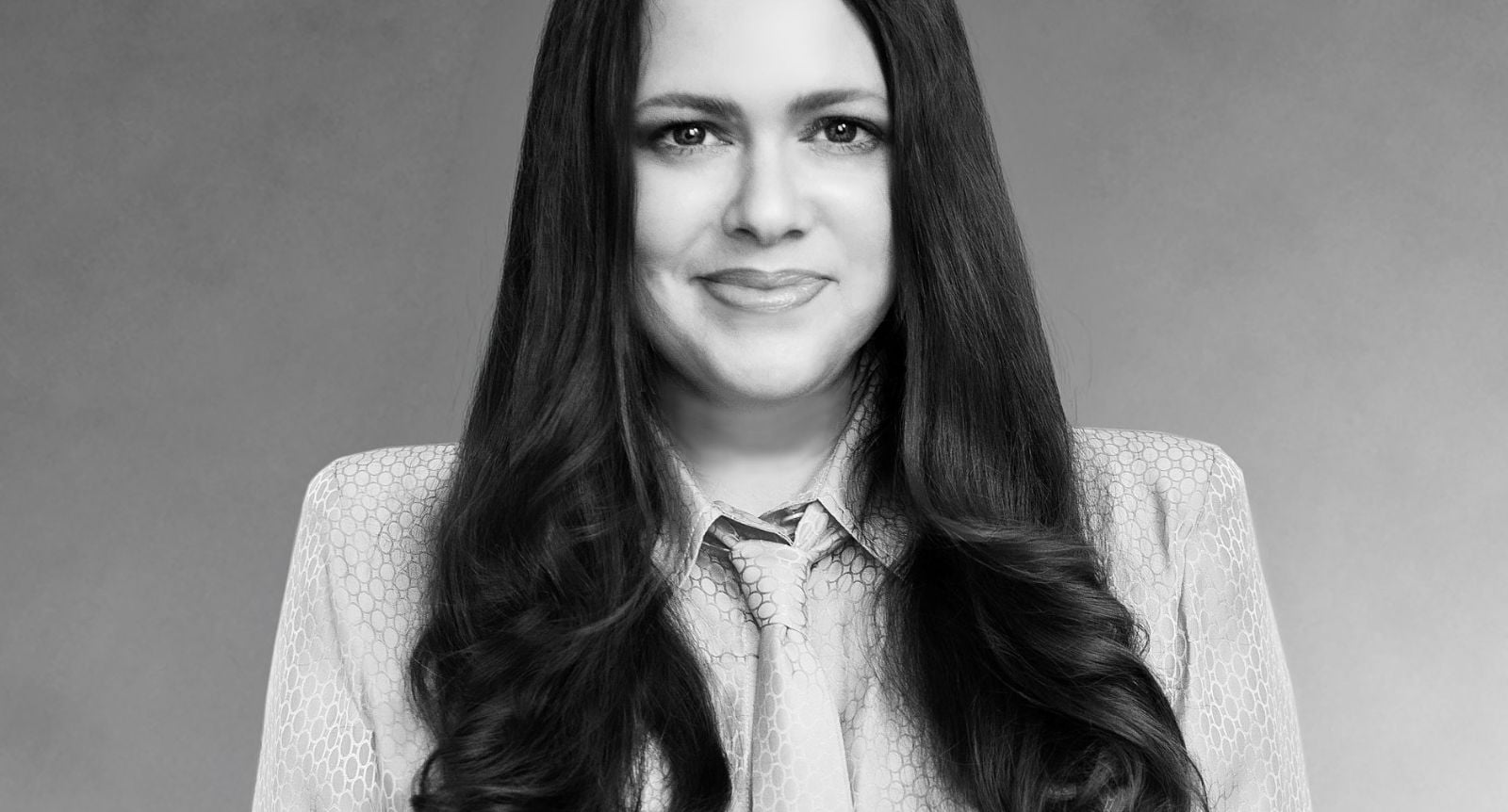
Paige Prettyman
Merger backdrop reshapes local market
The leadership changes sit against a broader backdrop of structural change across Omnicom’s Australian and New Zealand operations following its A$13.5 billion acquisition of Interpublic Group in late 2025.
The deal triggered a significant reshaping of the business locally, including the merging of DDB Australia with Clemenger BBDO Australia into a single national agency under the Clemenger BBDO brand.
Globally, the consolidation has seen legacy creative brands folded into larger networks, while the combined business is now structured around five core divisions spanning media, PR, production, commerce and advertising.
The integration also came with workforce reductions, with layoffs representing around three per cent of the combined 128,000-strong workforce.
That follows earlier cuts across both organisations, as the newly merged entity moves to streamline operations and deliver scale efficiencies.
With annual revenue exceeding A$37 billion, the combined Omnicom-IPG group is now one of the largest marketing services networks globally, placing added pressure on regional leadership to deliver both integration and growth.

We asked a lawyer to unpack Jackie O’s $82m case, and where it could land for ARN and Kyle
The ongoing legal drama surrounding Jackie ‘O’ Henderson, Kyle Sandilands and ARN took yet another turn yesterday, when Henderson’s full Statement of Claim was filed with the Federal Court.
In them, Henderson accuses ARN Media of failing to act on repeated complaints about Sandilands’ on-air behaviour, as part of Federal Court proceedings seeking more than $82 million in compensation.
Henderson also alleges she raised concerns with senior executives months before the February 20 incident that ended the pair’s long-running partnership, warning the on-air dynamic was being perceived as an “abusive relationship” and detailing a series of incidents across August and September 2025.
To help make sense of the never-ending legal drama, Mediaweek spoke with Michael Byrnes, a partner at Swaab and workplace relations lawyer.
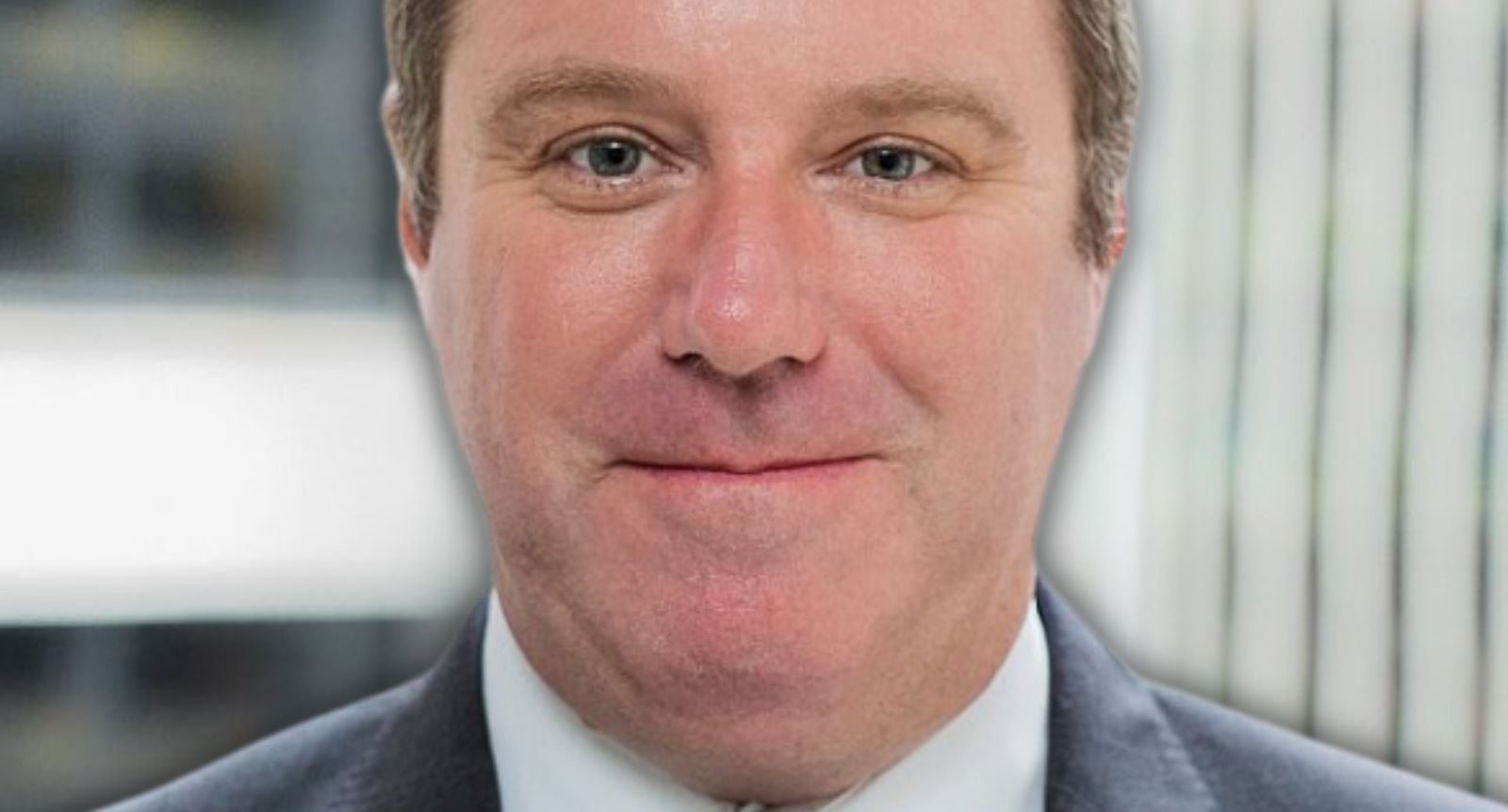
Workplace lawyer Michael Byrnes
Mediaweek: Firstly, was there anything in Jackie’s Statement of Claim that, I guess, shocked you?
Michael Byrnes: I wasn’t shocked because it had been reported that Jackie had expressed concerns about Kyle’s conduct in the past and that Jackie had reservations about the way in which Kyle was treating her.
There had been talk of a dossier or a log going back 14 months, but it seems that isn’t the case; rather, there have been a limited number of incidents she raised.
Those incidents occurred in 2025: one in August, one in September, and then again after the now-notorious February 20 incident. So I wasn’t shocked by it, but it is clear that her case rests on her having previously raised issues. Albeit on only two occasions.
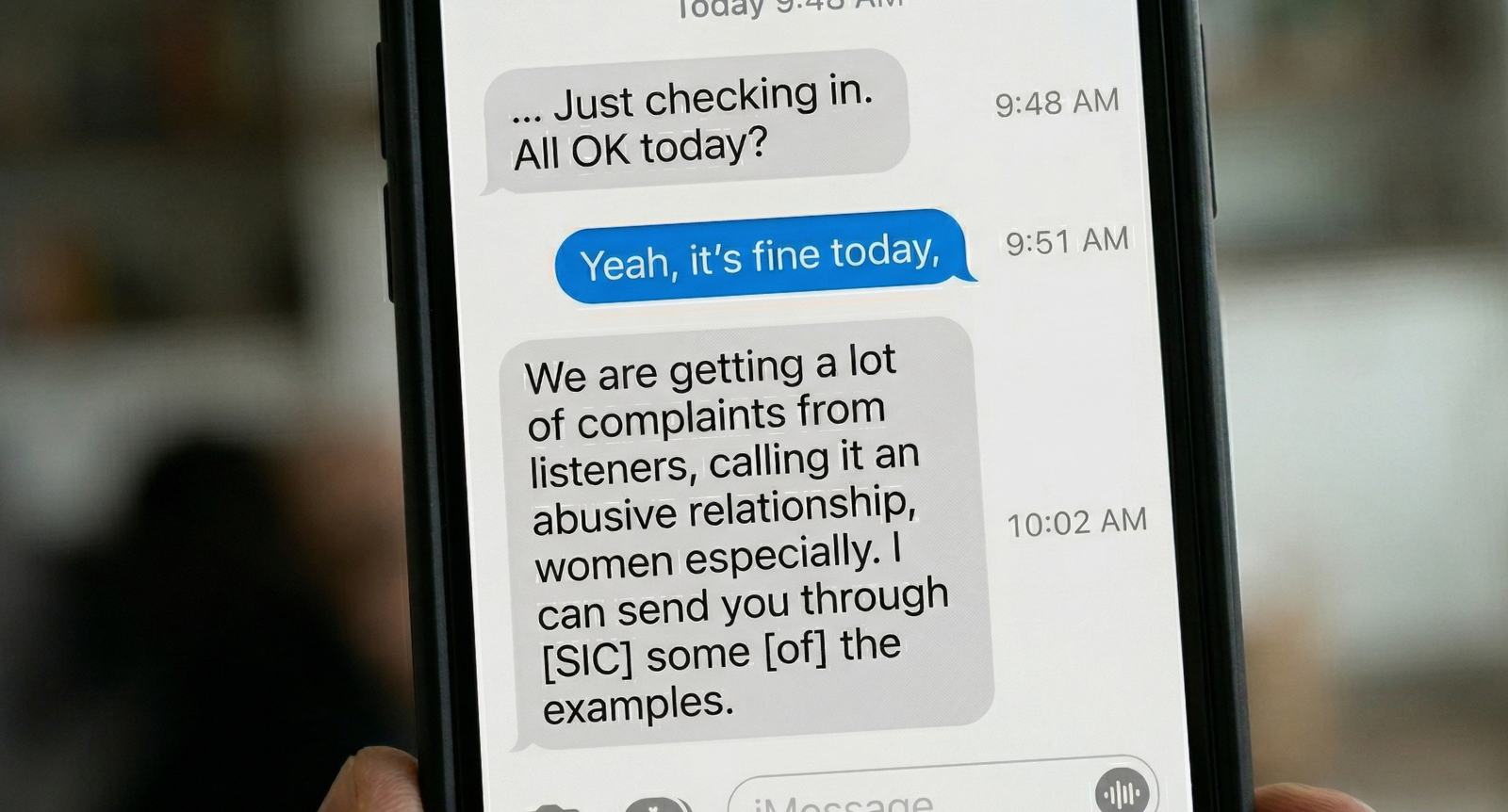
An AI recreation of an alleged SMS exchange between Jackie and senior management about Karl’s behaviour.
MW: What are the main allegations Jackie is making?
MB: There are really three elements to it. One is a misrepresentation element, which is probably the least significant aspect, and it relates to ARN’s market statement to the ASX on the 3rd of March, which asserts that misrepresentations were made in that statement. In particular, regarding the offer of an alternative programme to her.
The claim also alleges that ARN’s statement that she initiated the termination of her services agreement is false.
Then there is what is perhaps the most complex technical aspect of her claim: the Fair Work Act claim. That is a breach of the general protections provisions of the Fair Work Act. Jackie claims that because she exercised workplace rights, ARN terminated the services agreement.
In this regard, ARN bears the onus and must prove or demonstrate that it did not terminate the services agreement for a prohibited reason.
Then there’s the contractual aspect, which has been a bit overlooked and overshadowed by the Fair Work Act claims, but I think, objectively, it seems that could be her strongest limb.
In this element, Jackie claims that ARN terminated her agreement after she sent a letter stating that she could not continue working with Mr Karl Sandilands.
They then treated that as a repudiation of her services agreement, that is, that she no longer intended to be bound by the services agreement, and terminated that agreement.
Jackie is saying that the termination was wrongful and she should receive damages for the balance of the contract, which is $82 million.
It’s a relatively straightforward contractual argument about whether or not that letter constituted a repudiation of the contract and whether ARN was therefore entitled to terminate as they did, or whether, as Jackie asserts, no, they did not have the right to do that because Jackie’s proposition is that the services agreement was about more than just presenting the breakfast show.

Image: Kyle and Jackie O on KIIS
MW: What, in your opinion, is Jackie’s strongest position in this case?
MB: The spotlight is on what ARN did in response to those matters raised in August and September.
If ARN didn’t take action, then that supports Jackie’s assertion in the complaint letter, which is the February 26 letter, which included the words she cannot continue working with Mr Sandilands, and it provides context to that statement. It also supports the assertions in that letter that ARN had failed to address safety concerns she had previously expressed, and that they had failed to provide, or to discharge their obligations to provide, a safe workplace under the Work Health and Safety Act.
MW: OK, I’m going to ask you to put your psychic hat on for this one. How do you see this all unfolding?
MB: Well, at the moment we’re yet to hear from ARN, so in fairness this analysis has all been pretty one-sided, but it strikes me that both Kyle and Jackie have a credible case.
However, there are aspects of Jackie’s case that might act to the detriment of Kyle’s case because if ARN took Jackie’s complaints or the issues that she raised in August and September had spoken to Kyle about it and issued him with some warning about this is and Kyle had persisted with his conduct in February that could could potentially weaken his argument that he did not engage in serious misconduct, and strengthens ARN’s argument that he did.
Now, ARN foreshadowed at the first case management hearing in Kyle’s matter that they would go back beyond February 20 and look at some previous incidents as well, which might have been a reference to the matters Jackie had raised in August and September. But if ARN did nothing, it may well be that they’ve let down Jackie, as set out in her Statement of Claim.
It may also make it far more difficult for them to argue that Kyle engaged in serious misconduct if they let these matters go to the keeper.
Main image: Jackie ‘O’ Henderson. AI-generated (would you believe?)
Canva buys Simtheory and Ortto... as IPO wait goes on
Canva has acquired Sydney-founded startups Simtheory, and Ortto, adding more AI and marketing technology to its growing product stack as the company continues to expand beyond design into workflow, automation and campaign tools.
The deals, announced ahead of Canva Create on 16 April, bring in AI collaboration software from Simtheory and customer data and marketing automation capabilities from Ortto.
Canva said the acquisitions will help it support more of the process from early ideation through to campaign delivery, measurement and optimisation.
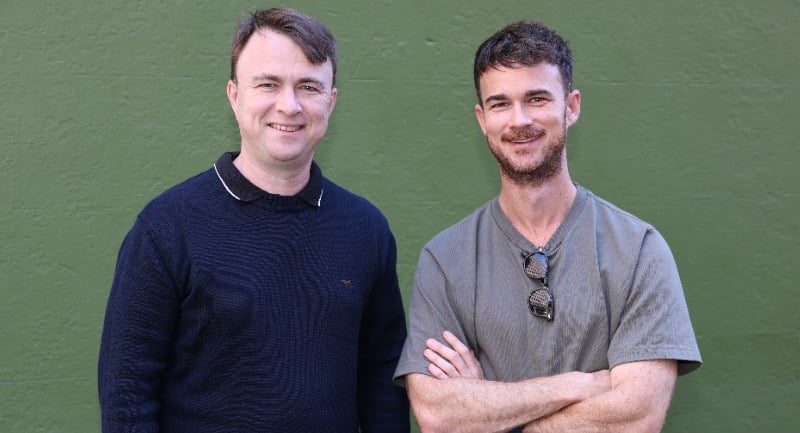
Both businesses were founded by brothers Chris Sharkey and Mike Sharkey, who previously co-founded Stayz. The pair will join Canva in leadership roles spanning its AI and marketing technology teams.
Cliff Obrecht, co-founder and chief operating officer at Canva, said the acquisitions were part of a broader shift in the company’s strategy.
“We’re excited to welcome Simtheory and Ortto to Canva. They’ve built exceptional teams and technology, and this acquisition marks an important step toward evolving Canva from a design tool into the system where work happens end-to-end, whether it’s a quick idea or a full campaign,” he said.
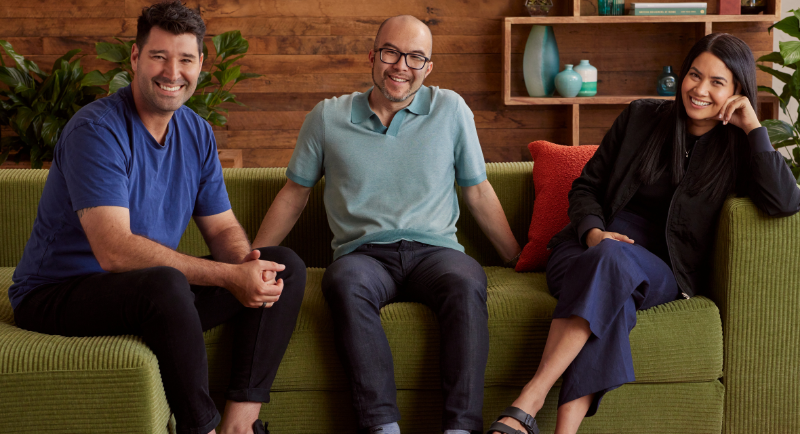
Canva founders – Cliff Obrecht, Cameron Adams and Melanie Perkins
More than a design play
The Simtheory deal gives Canva greater capabilities in agentic AI and enterprise collaboration at a time when software companies are racing to build tools that do more than just generate content. Canva said Simtheory’s platform helps teams build AI assistants that can work across apps, tasks and business processes.
Ortto adds a different layer. Its platform combines customer data with marketing automation across email, SMS, push notifications, in-app messaging, forms and surveys, and Canva said the product will continue to be supported while its team contributes to Canva Grow.
The acquisition also builds on Canva’s recent deal run, following moves for MagicBrief, MangoAI and Doohly. The company said Ortto is used by more than 11,000 customers across 190 countries, while Canva itself now says it serves more than 265 million monthly users.
IPO still has no date
The obvious question is whether this kind of buying spree is laying the groundwork for a long-awaited IPO. For now, the answer is still: not yet.
Canva has not announced a listing date or filed for an IPO. In April 2025, chief executive Melanie Perkins said an IPO was still “on the horizon” but that there was “no news” to share, and later in 2025, Obrecht said a Nasdaq listing made more sense than the ASX whenever Canva eventually goes public.
That has not stopped the speculation. Canva launched an employee share sale in August 2025 that valued the company at $US42 billion, and Reuters reported at the time that the transaction came ahead of a widely discussed float. But there is still no official timetable, which means the listing remains a matter of if and when, not when exactly.
Canva grows while others cut
The timing is notable in the context of the broader local tech market. While Canva is using acquisitions to build out its AI and marketing capabilities, Atlassian moved in the opposite direction in March, cutting about 1,600 jobs globally, including roughly 480 in Australia, as it redirected spending towards AI and enterprise sales.
That distinction matters. Atlassian’s move was publicly framed as an AI-driven restructuring rather than a simple expansion of its AI teams, with chief executive Mike Cannon-Brookes saying it would be “disingenuous” to pretend that AI was not changing the mix of skills and the number of roles the company needs.
For Canva, the strategy appears more additive. The company ended 2025 with 260 million monthly users and $3.5 billion in revenue, and these latest acquisitions suggest it wants to keep broadening the platform before making any move to public markets.
Mike Sharkey, co-founder and chief executive officer of Ortto and Simtheory, said: “We’re thrilled to be joining Canva. The opportunity to bring our technology to the quarter of a billion people using Canva every month and to help more people make the most of AI in their everyday work is incredibly exciting to us.”
Top image: Chris & Mike Sharkey
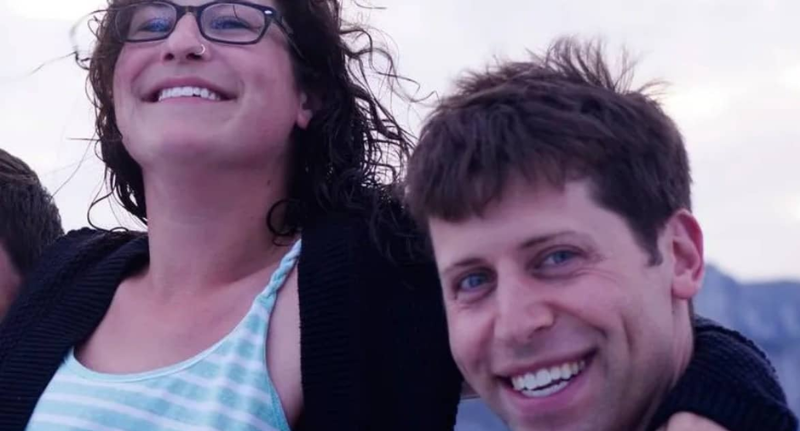
OpenAI co-founder Sam Altman accused of sexual abuse by sister
The sister of OpenAI co-founder Sam Altman has accused him in a civil lawsuit of sexually abusing and raping her when they were both children.
According to Annie Altman‘s complaint, the alleged abuse at their family home in Clayton, Missouri, began in 1997, when Annie was three and her brother was 12. It allegedly continued until 2006.
Sam, 40, has denied the claim and has countersued for defamation over public comments and social media posts.
In March, US district judge Zachary Bluestone said Annie’s sexual assault and sexual battery claims expired in 2008 due to the statute of limitations, but said that she could try to file a case under Missouri’s child sexual abuse statute which offers extended time limits.
This week, Annie filed an amended complaint in St. Louis federal court.
View this post on Instagram
Sam Altman’s defence against Annie Altman
In a statement posted to X in January 2025 (below), Sam, his mother and two brothers stated that Annie has “mental health challenges” and “refuses conventional treatment and lashes out at family members who are genuinely trying to help”.
He has denied all allegations, describing them as “utterly untrue” and claimed the lawsuit is “extortion”.
The statement reads in part:
“Our family loves Annie and is very concerned about her wellbeing. Caring for a family member who faces mental health challenges is incredibly difficult.”
Sam adds that the family has tried to support Annie in many ways for years, but claims they are only now speaking out because of the legal action – which they assert is motivated by money.
“The worst allegation that she’s made is that she was sexually abused by Sam as a child… her claims have evolved drastically over time.
“Newly for this lawsuit, they now include allegations of incidents where Sam was over 18.”
My sister has filed a lawsuit against me. Here is a statement from my mom, brothers, and me: pic.twitter.com/Nve0yokTSX
— Sam Altman (@sama) January 7, 2025
Scrutiny of Sam Altman’s credibility
There is no doubt that Sam Altman is an incredibly powerful man. A co-founder of OpenAI, the company behind AI chatbot ChatGPT, Sam is worth billions – Forbes says $US3.3b – thus naturally attracts attention for how his wealth was created.
Sam has this week been deeply scrutinised by a number of international media outlets, most notably in a video and essay by Ronan Farrow.
In terms of the court case with his sister, the timing is not ideal for Sam – but does not mean any allegations are true until legally proven.
Farrow has accused the CEO of dishonesty in business dealings on multiple occasions, and has in general questioned his integrity in business.
(🧵1/11) For the past year and a half, I’ve been investigating OpenAI and Sam Altman for @NewYorker. With my coauthor @andrewmarantz, I reviewed never-before-disclosed internal memos, obtained 200+ pages of documents related to a close colleague, including extensive private… pic.twitter.com/XdYhNIhoQ4
— Ronan Farrow (@RonanFarrow) April 6, 2026
Farrow says: “OpenAI was founded on the premise that A.I. could be the most dangerous invention in human history—and that its C.E.O. would need to be a person of uncommon integrity.
“We lay out the most detailed account yet of why Altman was ousted out by board members and executives who came to believe he lacked that integrity, and ask: were they right to allege that he couldn’t be trusted?”
Sexual assault support lines:
• 1800 Respect National Helpline: 1800 737 732
• National Sexual Abuse and Redress Support Service: 1800 211 028
• Bravehearts, counselling and support for survivors of child sexual abuse: 1800 272 831
• Men’s Referral Service: 1300 766 491
• Lifeline (24-hour crisis line): 131 114
• Victims of Crime Helpline: 1800 819 817
Top image: Annie Altman, Sam Altman. Image: X
BBC found to have breached editorial standards over BAFTAs racial slur
The broadcast of a racial slur shouted out during the BAFTA awards breached the BBC‘s editorial standards, the corporation has ruled.
The finding from the BBC’s executive complaints unit (ECU) came on Wednesday.
In response, the broadcaster’s chief content officer, Kate Phillips, insists that the breach “was not intentional.”
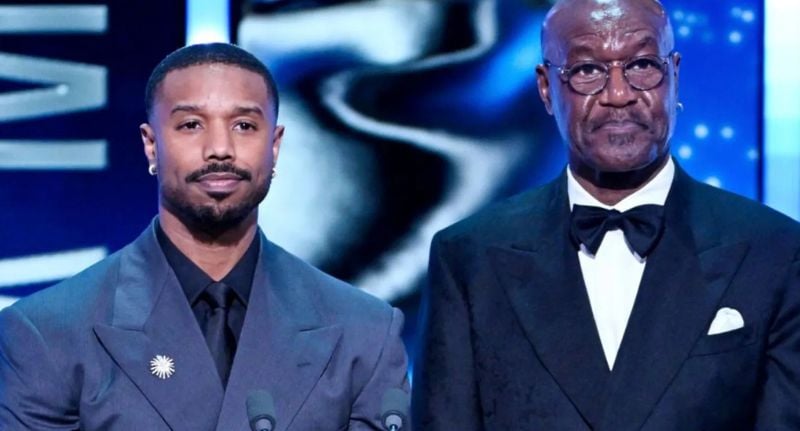
At the BAFTAs in February, John Davidson, executive producer on I Swear (and whose life growing up with Tourette’s inspired the film), shouted the the N-word while Michael B. Jordan and Delroy Lindo presented the award for best visual effects.
The backlash was international, and savage, particularly towards the BBC, who was criticised for airing the moment.

John Davidson. Source: BBC
BBC found to have breached standards over BAFTA’s racial slur
The ECU said it had received “a large number of complaints” about the BBC’s BAFTAs coverage, and upheld those “relating to editorial standards on harm and offence.”
It said in its report: “The ECU found that the inclusion of the n-word in the broadcast (which was also streamed live on iPlayer) was highly offensive, had no editorial justification and represented a breach of the BBC’s editorial standards, but that the breach was unintentional.”
Phillips revealed in her response to the report that she wrote to Lindo, Jordan, and their Sinners co-star Wunmi Mosaku, who was also exposed to one of Davidson’s outbursts, to apologise directly.
She also apologised to Davidson.
Her statement reads in part that the production team “did not hear the n-word at the time it was said and therefore no decision was taken to leave the word within the broadcast.”
The ECU accepted this was a genuine mistake, but said that leaving the coverage on iPlayer was also a “serious mistake” and breached guidelines.
“The fact that the unedited recording remained available for so long aggravated the offence caused by the inadvertent inclusion of the n-word in the broadcast,” the report said.
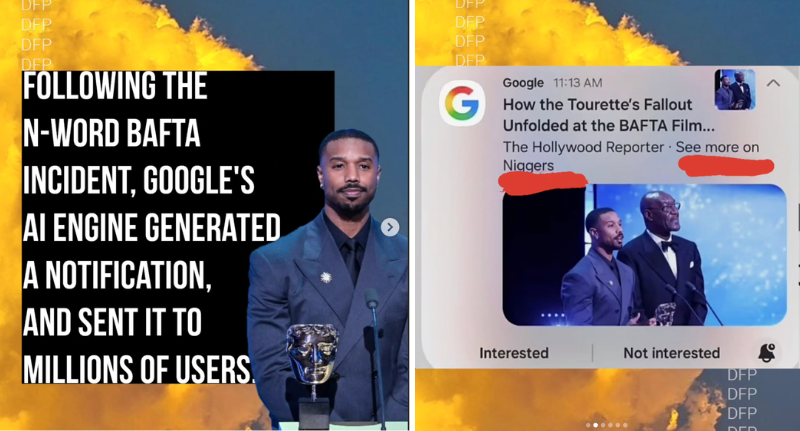
Danny Price’s screenshots of a Google alert on BAFTA’s racial slur. Image: Instagram
Phillips further explained, “The team did correctly identify and edit out a subsequent use of the same word, in line with the protocols that were agreed in advance of the event regarding offensive and unacceptable language.
“There was a lack of clarity among the team present at the event as to whether the word was audible on the recording. This resulted in there being a delay before the decision was taken to remove the recording from iPlayer.”
She said that the BBC “must learn from our mistakes and ensure our processes are as robust as they can be.”
The fallout from the airing of the moment included an offensive Google alert and weeks of commentary on the moment, from those living with Tourette’s, people in the industry, and those who supported Jordan and Lindo.
Top image: Michael B Jordan and Delroy Lindo. Source: BBC
JCDecaux nabs Western Sydney International Airport OOH account
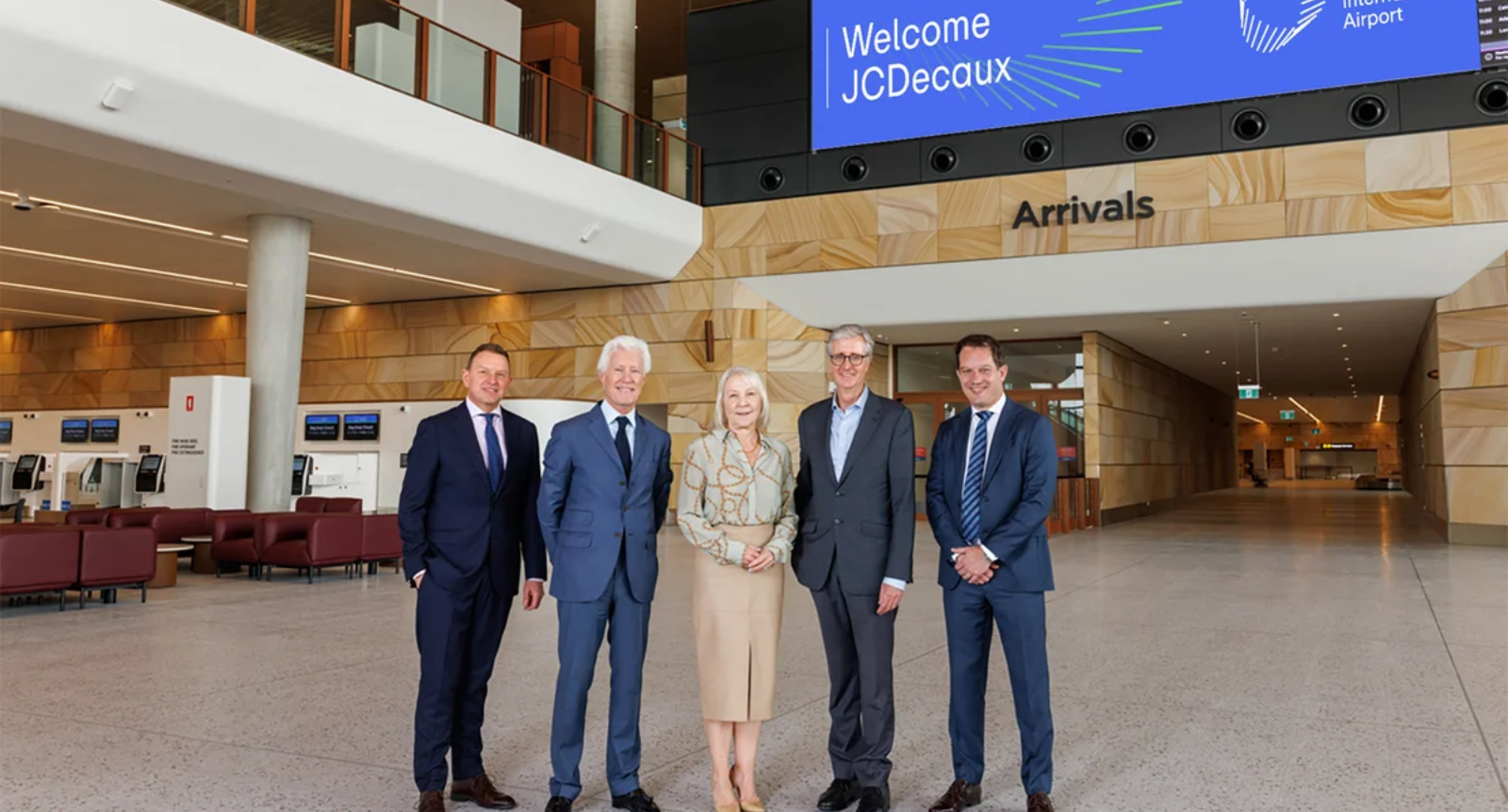
JCDecaux has been awarded the advertising contract for Western Sydney International Airport (Nancy-Bird Walton Airport), securing a long-term deal to build a premium digital out-of-home network at the new aviation hub.
The win will see JCDecaux design and deliver a full-scale digital airport network from the ground up, spanning both internal and external precincts.
A major infrastructure moment
JCDecaux Co-CEO David Watkins said the partnership represents a significant opportunity tied to one of Australia’s largest infrastructure projects.
“Western Sydney International is one of the most important infrastructure developments in Australia… giving us the opportunity to design a premium digital airport network from the ground up,” he said.
Co-CEO Max Eburne added that the deal strengthens the company’s airport footprint across Australia and New Zealand.
“This enables us to offer advertisers unrivalled access to Sydney’s airline traveller audience across our airport portfolio,” he said.
New platform for brands
WSI CEO Simon Hickey said the partnership will create a new advertising platform targeting a highly engaged travel audience.
The airport is designed as a 24-hour global gateway and will initially accommodate 10 million passengers, with capacity set to expand over time.
Under the agreement, JCDecaux will roll out a suite of premium digital formats under its airport product pillars: Connected Journeys, Iconic Impact and Immersive Experiences.
First-mover opportunity
The partnership opens up early opportunities for launch partners ahead of the airport’s opening, positioning brands to establish a presence at a new major transport hub.
Early airline partners include Qantas, Jetstar, Singapore Airlines and Air New Zealand.
Western Sydney growth
WSI is expected to play a key role in supporting the rapid growth of Western Sydney, already one of Australia’s largest economic regions.
The airport’s connectivity will expand through major road and metro links to Parramatta and the Sydney CBD, reinforcing its role as a future transport and commercial hub.
Main image: David Watkins, Jean‑Francois Decaux, Alison Webster, Simon Hickey, Max Eburne
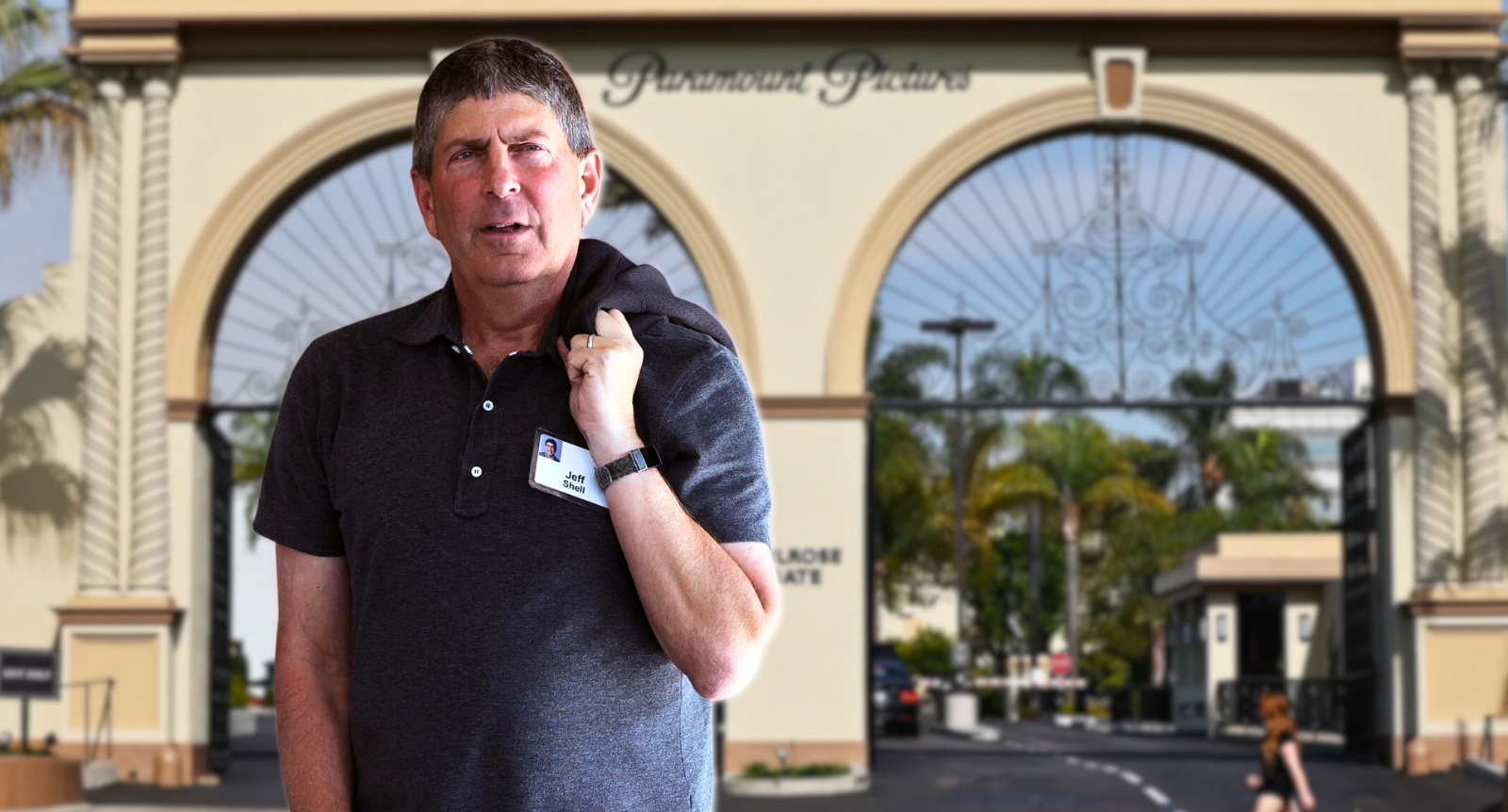
Two strikes: Jeff Shell ousted at Paramount over AU$211M ‘fixer’ fiasco
In the global media industry, and locally for that matter, executives usually blame a sudden departure on a desire to “spend more time with family.”
Outgoing Paramount Skydance President Jeff Shell has pioneered a far more dramatic exit strategy.
He is stepping down “to focus on ongoing litigation.”
A Las Vegas gambler and self-proclaimed “fixer” slapped Shell with a bizarre US$150 million (AU$211 million) lawsuit just last month. Now, Shell is officially out as the second-in-command of the world’s newly minted entertainment behemoth.
As The New York Post and Variety detailed, this departure marks the second undignified exit for the veteran media executive in exactly three years.
NBCUniversal famously fired Shell from his CEO post in April 2023. That exit followed an internal investigation into an inappropriate relationship with a CNBC anchor.
Cleared by the board, convicted by the PR
Weeks of intense legal wrangling and corporate paranoia preceded Shell’s sudden exit. The controversy stems from a lawsuit from Robert James ‘R.J.’ Cipriani. The gambler claims he provided 18 months of unpaid ‘crisis communications’ to help Shell bury negative press.
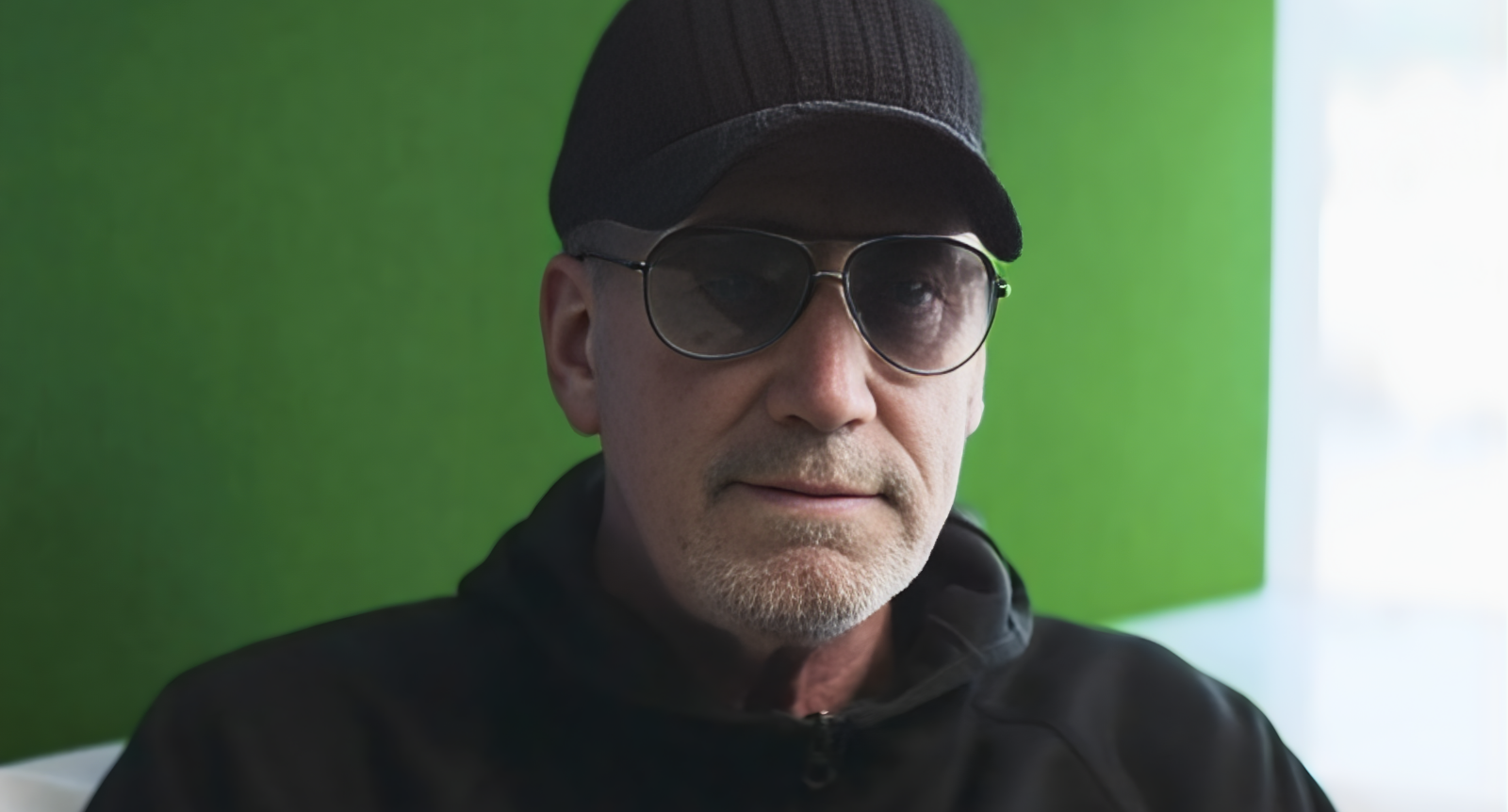
R.J. Cipriani as he appeared in the 2025 Amazon Prime docuseries ‘Cocaine Quarterback’, which Cipriani later claimed inaccurately portrayed him as complicit in money-laundering. Image: Amazon Prime
Crucially, Cipriani alleges Shell recklessly leaked highly confidential corporate secrets.
These leaks supposedly included details about Paramount’s US$7.7 billion (AU$10.8 billion) UFC broadcast deal and its mammoth US$111 billion (AU$156 billion) takeover of Warner Bros. Discovery.
Paramount brought in independent counsel from law firm Gibson Dunn to investigate the leaks. The board needed to know if Shell violated SEC disclosure rules. The internal review ultimately found the facts “do not establish a securities law violation.”
His own board legally cleared him, but the public relations damage proved terminal. Shell has since filed a countersuit against Cipriani. He alleges defamation and extortion, calling the entire ordeal a “shakedown.”
“Consistent with Mr. Shell’s commitment to prioritising [Paramount’s] success, he has elected to transition from his positions as president… and a member of the board of directors to focus on this lawsuit,” Paramount said in a statement.
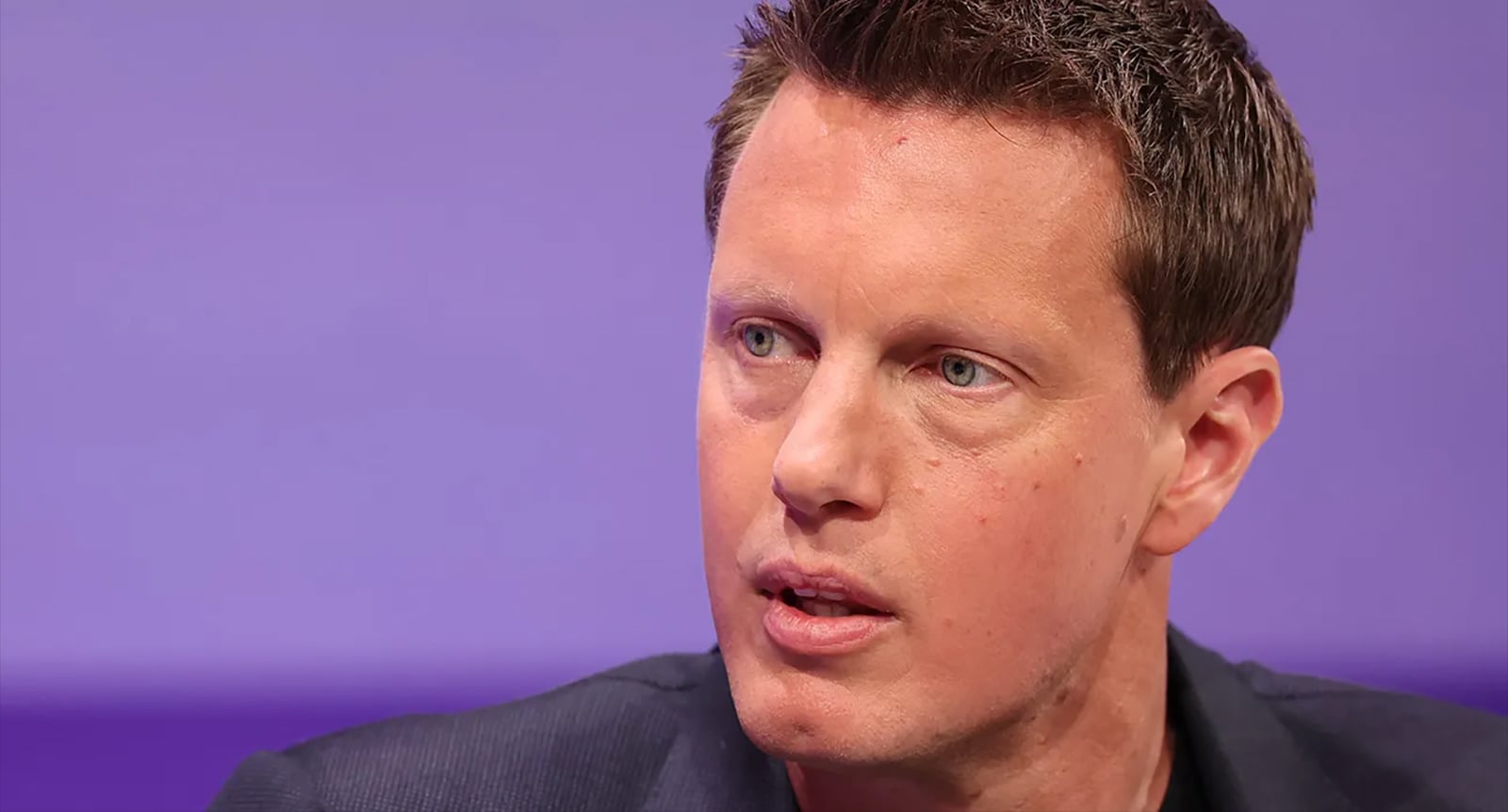
Never a dull moment for David Ellison. Image: file
A massive headache for David Ellison
Shell now prepares for a vicious courtroom battle in California. Meanwhile, he leaves behind a massive structural headache for Paramount Skydance CEO David Ellison.
Shell operated as Ellison’s right-hand man.
He architected the strategy to unify Skydance, Paramount, and the newly acquired Warner Bros. Discovery. Ellison hired him to provide a seasoned, steady hand to guide a merged entity currently drowning in US$79 billion (AU$111 billion) of inherited debt.
Instead, Shell became a headline-generating liability.
This saga serves as a stark reminder for the broader industry: risk management trumps all at the highest echelons of global media. Allegations linking a top executive to a Vegas gambler create impossible optics for the boardroom.
Even the best internal lawyers cannot save you from a PR disaster.
Main image: Jeff Shell
The Indie hustle: Speed, strategy, and the $42 billion passion economy
The Australian independent agency landscape operates in a competitive arena.
Agility, sharp elbows, and a constant battle for a share of voice against holding company heavyweights define the space.
But, despite the varied challenges and vastly different client needs represented by the almost 100 agency leaders packed into the room, a distinct degree of unity was palpable.
Of course, some of that unity oozes from the Independent Media Agencies of Australia (IMAA) and its CEO Sam Buchanan. His presence was impossible to ignore at the News Australia Frontiers roadshow as he held court across various corners of the heritage-listed Alpha function space in Sydney last week.
The event marked a clear shift in focus. If the first chapter of Frontiers introduced the passion framework, and the second showcased the magic of holding companies and clients collaborating, this third instalment belonged entirely to the Indies.
And the independent sector strikes a different chord.
Setting the scene for the Indies
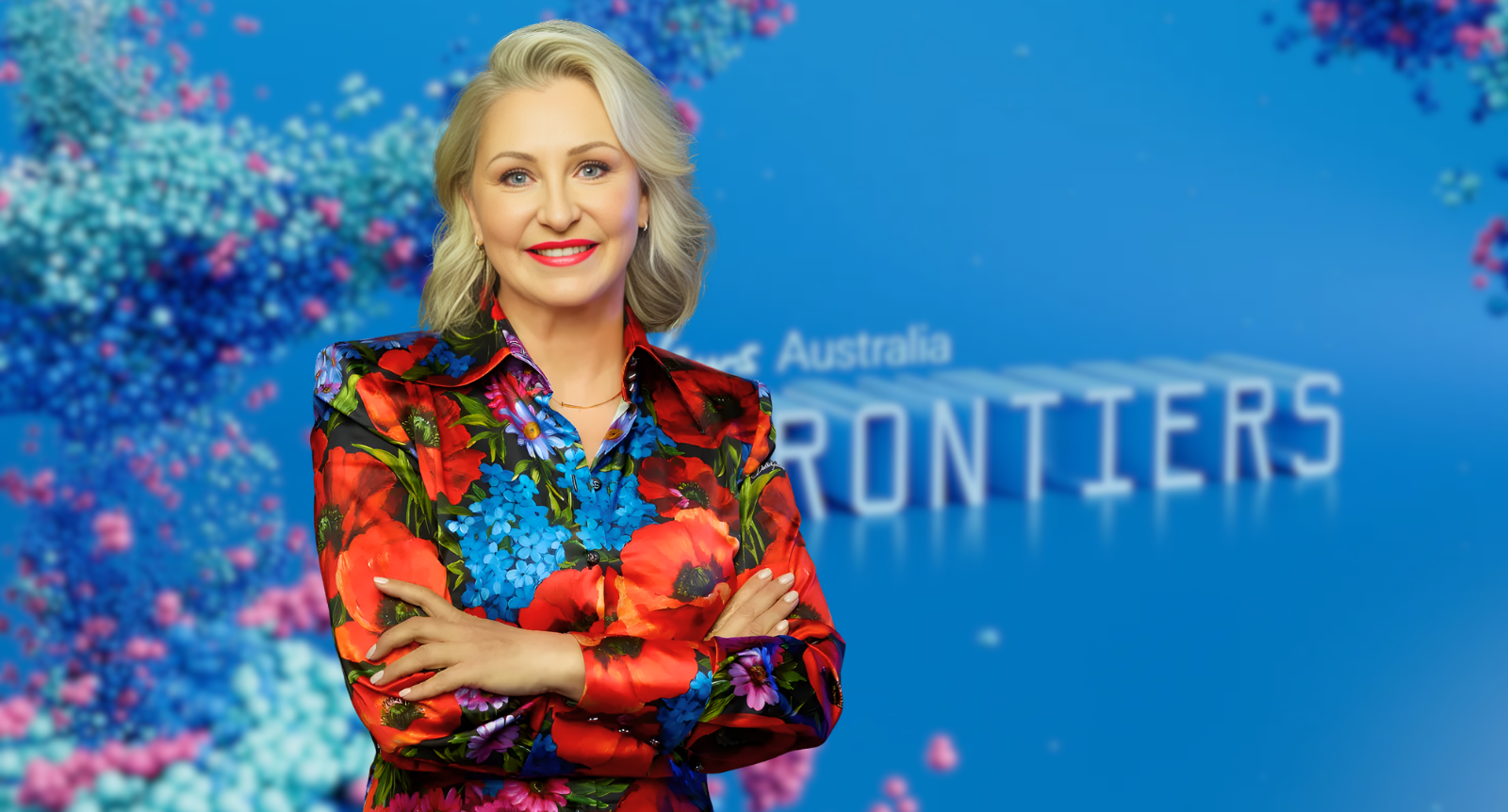
Event host and managing director – client partnerships Lou Barrett kicked off proceedings. She acknowledged the evolution of the program over its six-year history, before introducing general manager of The Growth Distillery, Leigh Lavery.
Lavery once again unpacked the polycrisis thematic and Australia’s booming $42 billion passion economy.
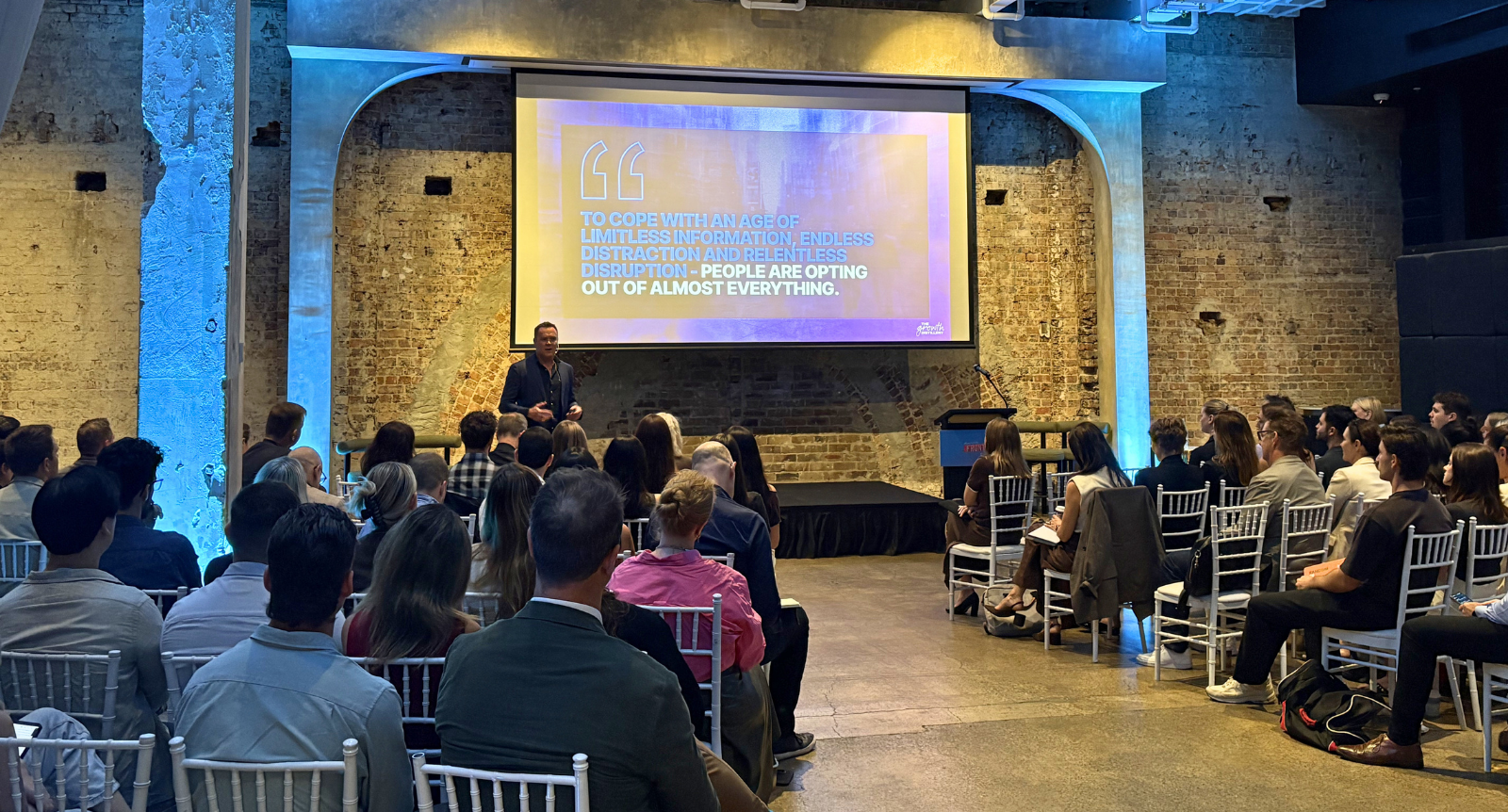
The Growth Distillery’s general manager, Leigh Lavery exploring passions and fandom with the Indies. Image: supplied
The Indie hustle: freedom and speed
Watching the presentation from the crowd, Sam Geer, managing director, media, of Accenture Song A/NZ, admitted he usually approached these pitches with a healthy dose of scepticism. “Honestly, I’m pretty cynical. And I bought it,” Geer laughed.
On a personal note he acknowledged that even as a positive person, he actively shut off from the relentless bad news cycle.
Instead, he goes on “deep spirals” to escape the world and consume content about the things he’s into. Things like the AFL, film, and music. “Consumers don’t care if they read a paper, scroll through TikTok, or watch TV; they only care that the content covers the thing they love.”
Mediaweek asked Geer how independent agencies might react to this data differently than traditional Consortium agencies. He carefully explained that independent agencies typically manage a smaller roster, which would allowed them to provide greater focus.
Although he made a point of saying that Accenture Song sits in an interesting place between the two. It’s not one of the consortiums- but neither is it a textbook independent.
For an Indie, everything you do is for the client. There’s no time to do things outside of that.
“If I come here for half a day, and I don’t go back and give my opinion to my clients, and it doesn’t manifest in some kind of strategic proposition, then I’ve wasted half a day,” Geer said.
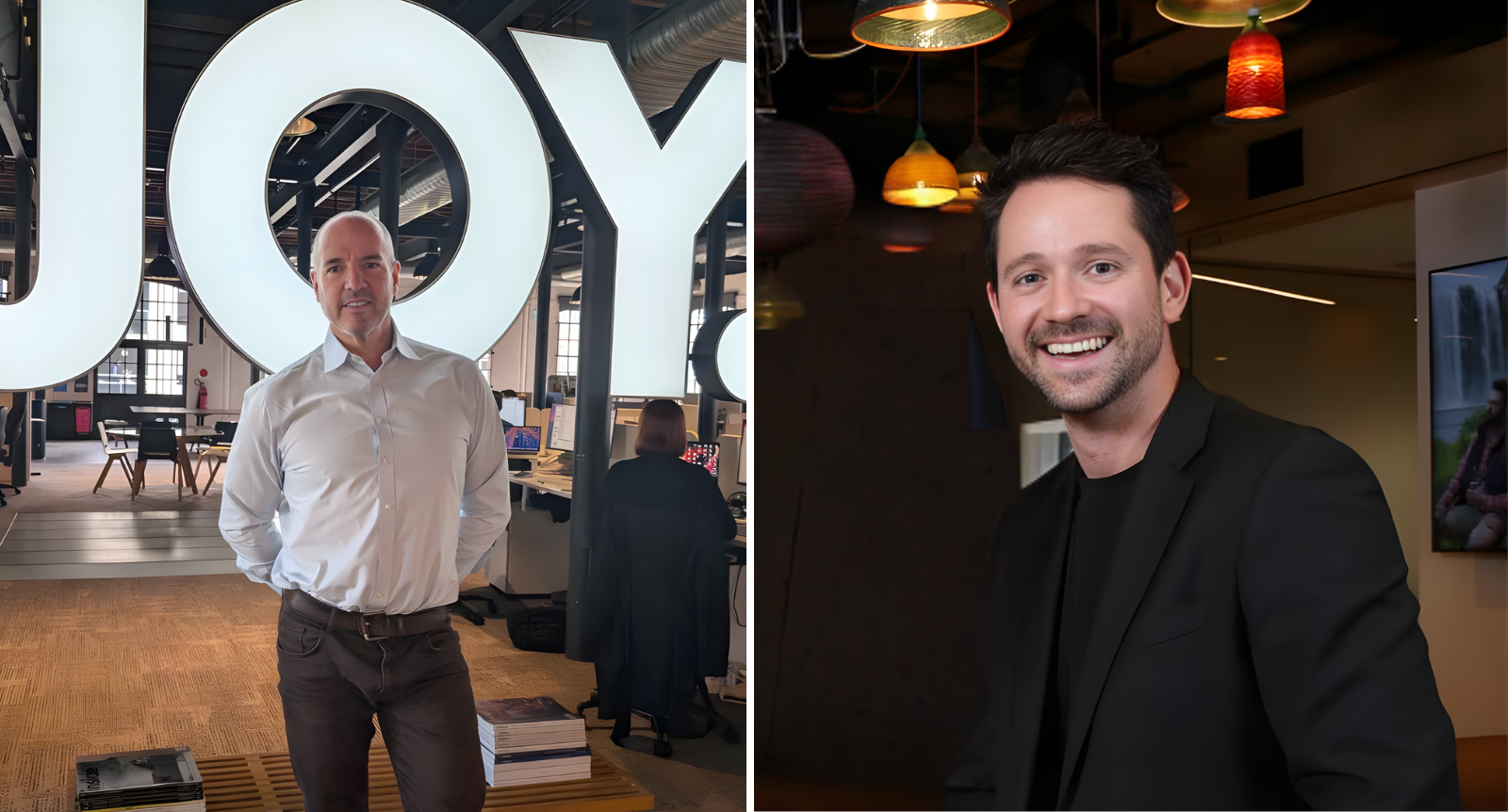
CEO of independent agency Joy., Peter Horgan and Sam Geer, managing director, media, of Accenture Song A/NZ. Image: file
CEO of independent agency Joy., Peter Horgan echoed this need for speed and execution. He told Mediaweek that media owners view this agility as a major asset. “Publishers are increasingly focusing on indies as a growth driver,” Horgan explained.
Noting that the primary advantage of the independent model is having “fewer constraints of group deals, enabling indies to move quickly and take advantage of opportunities for their clients”.
Unlocking passion and search rankings
This agility allows Indies to completely rethink rigid media plans. Geer pointed out that B2B marketing often defaulted to boring, rational advertising. “Business decision makers also watch football, also care about fashion, also go shopping and love e-commerce,” he challenged.
He reminded marketers that reaching clients through cultural passions cuts through the noise far more effectively.
Horgan agreed, noting that tapping into people’s passions formed an absolutely critical part of Joy.’s targeting and planning process.
He highlighted a modern reality of media planning, pointing out that, “generating relevant content tailored for specific platforms is how we not only unlock and leverage deeper connections but also improve rankings in Gen Search.”
Editorial agility in the polycrisis
Shifting consumer behaviour fundamentally changes how News Australia shapes its journalism.
Following Lavery, general manager client partnerships NSW, Ian Paterson moderated a panel featuring some of the country’s top editors to discuss how they captured fragmented attention.
Editorial director of The Australian, Claire Harvey noted that “the wonderful thing about the internet is there is nowhere to hide”.
She stressed that modern journalism must beware of the trap of assumed knowledge. “Everything we do should be made for a highly intelligent person who has no idea about a particular topic,” Harvey stated.
She explained that reporters have to decode complex issues without patronising the audience.
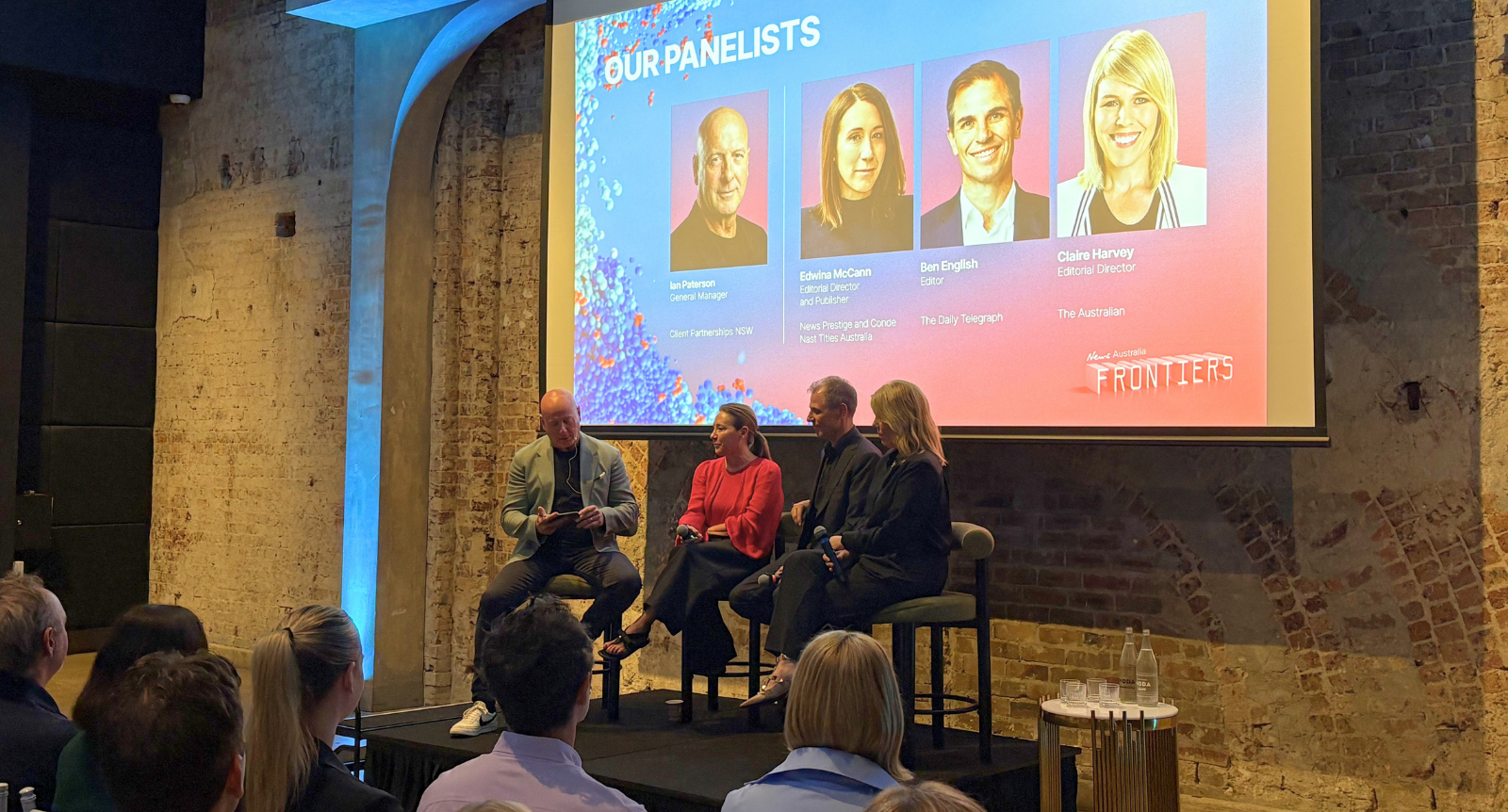
The Frontiers crowd were treated to a panel of influential editors. Image: supplied
And then she painted a vivid picture of the polycrisis coping mechanism in action.
Avid readers of The Australian would consume “7 or 8 stories about war”, but immediately following up with an article where a dietitian’s a number one tip recommended people eat an entire block of cheese.
Harvey easily landed a laugh in the room, but made the point about audiences moving rapidly from one strand to another.
Editor of the Daily Telegraph Ben English echoed this whiplash effect. He noted that readers wanted the Iran crisis decoded first thing in the morning, but they also desperately needed to know “what’s going on with the Sea Eagles and why are they so crap?”.
English explained that news operates as a “two-way conversation”, rather than a “fire hose telling people from on high God’s voice of what’s going on”.
For instance, when readers flooded the comments asking how to identify and support local products, the Telegraph launched the massive “Back Australia” campaign to help consumers figure it out. And that, he said, gave them “permission to be patriotic again”.
Breaking down the velvet ropes
This evolution also extends into the world of luxury. Editorial director and publisher of News Prestige Edwina McCann discussed how legacy brands must meet audiences where they are.
McCann pointed out that many people refused to walk through the doors of a Chanel boutique because they feared they didn’t belong. But the luxury brands have now opened more welcoming beauty counters and shops in malls to stop “missing out on selling a lipstick” to these customers.
Watching the panel unfold, Horgan observed a sizeable cultural shift.
He told Mediaweek that seeing legacy editors directly connect with advertisers and show genuine consideration for the needs of brands represented a “significant evolution in the print and news business”.
The holy grail of collaboration
All of this ladders up to a stronger collaboration between publisher, agency and brands. And that’s when the magic happens.
Referencing an NRMA campaign and the fruit of a previous Frontiers conference, Geer named, Help Our Highway, as the holy grail. “The best way to use news is not just for ads. It’s to actually drive cultural change in advocacy.”
And as the lunch plates were cleared at Alpha later in the afternoon, the message for Indies was clear.
The agencies that use their ingenuity to move quickly, tap into audience passions, and connect their clients to the things Australians actually care about, will win the day.
Feature image- Lou Barrett, managing director – client partnerships, News Australia.

oOh!media pulls plug on reo retail media arm
oOh!media will shut down its retail media arm reo by 30 June, as the company pivots back to its core out-of-home business.
The move marks a strategic reset for the ASX-listed media owner, which had been expanding into retail media in recent years.
This news follows the announcement of a leadership transition at the board level, with Chair Tony Faure set to retire after more than a decade with the company.
Refocus on core business
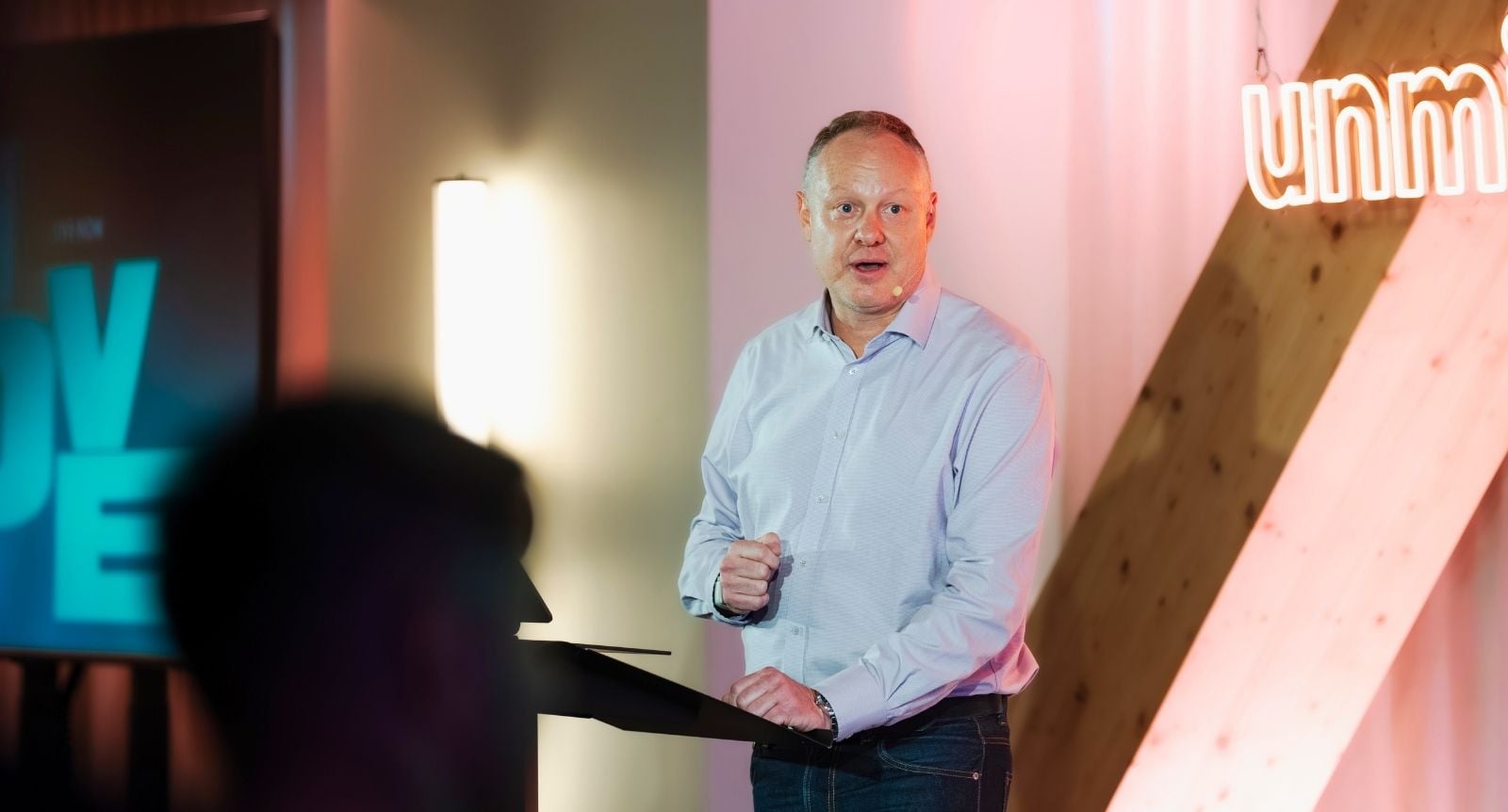
“oOh! will no longer pursue new retail partners under the reo retail media brand.”
CEO James Taylor said the company will no longer pursue new retail partnerships under the reo brand.
“This choice recognises that retailer acquisition in Australia has progressed more slowly than anticipated, with retailers showing a clear preference for in-house retail media solutions,” he confirmed to Mediaweek.
“By concentrating on our core out-of-home business, we are positioning oOh! to deliver stronger, more sustainable returns.”
Petbarn partnership transitions
As part of the change, oOh!media will transition its retail media offering with Petbarn to an in-house model.
The Petbarn PetAds omnichannel platform will move under Petbarn’s control, with a structured transition period running through to 30 June 2026.
Existing assets remain
oOh!media said it will continue to operate its existing reo in-store screen network partnerships, despite exiting the broader retail media expansion strategy.
The company confirmed the decision will result in redundancies within the reo team.
“We have made the difficult decision to make a number of redundancies… and our priority is to support those whose roles are affected,” Taylor said.
Main image: James Taylor
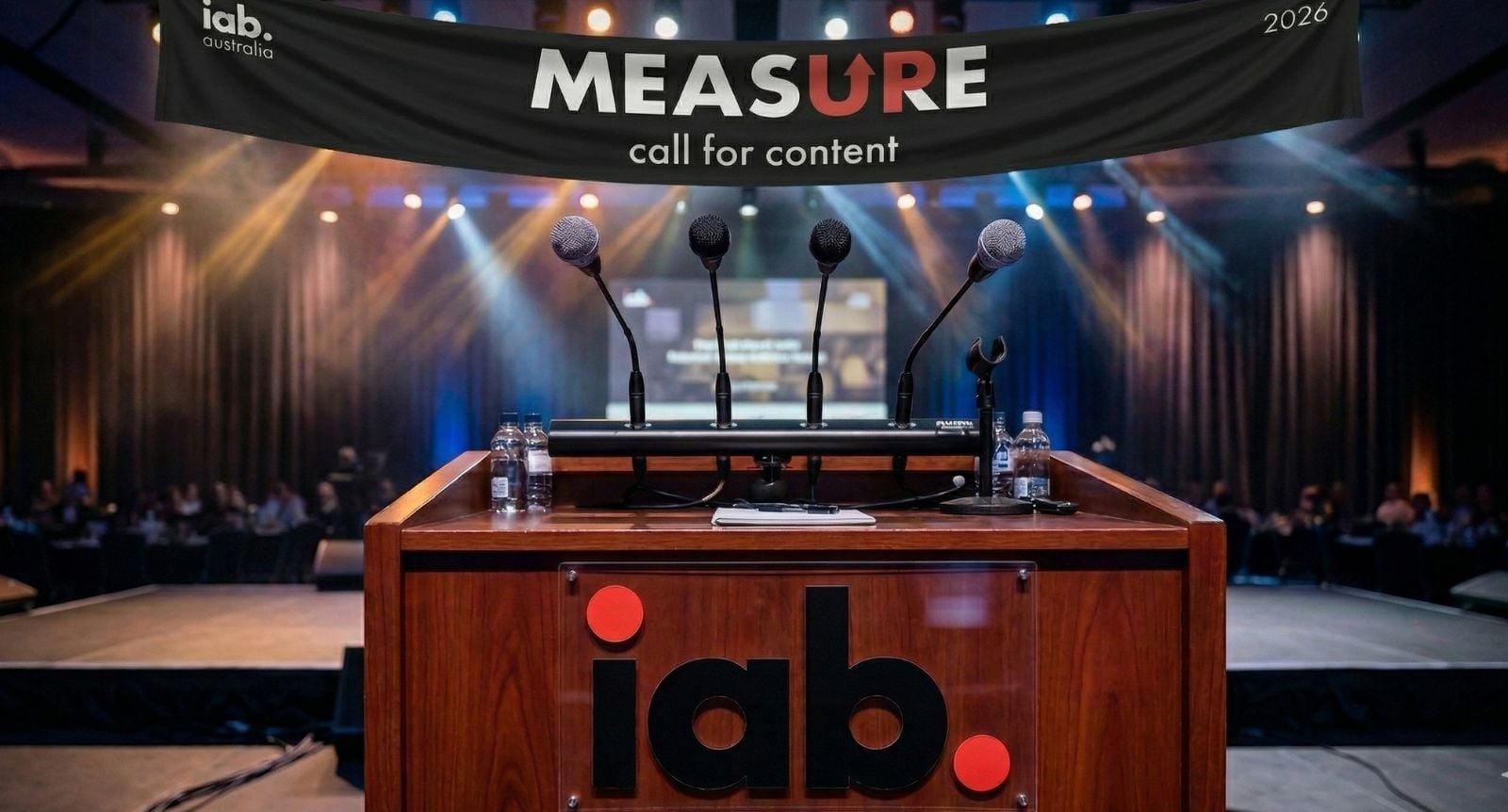
IAB puts measurement under the microscope as MeasureUp hits 10 years
IAB Australia has opened speaker submissions for MeasureUp 2026, as the industry’s flagship media measurement and marketing effectiveness event prepares to mark its tenth year.
Set to take place on 2 September 2026 in Sydney, MeasureUp has become a key forum for marketers, agencies, media owners and platforms seeking to strengthen their measurement and optimisation of advertising effectiveness.
The event comes as signal loss, AI-driven discovery and increasingly fragmented media consumption continue to reshape how marketing performance is tracked and evaluated, placing renewed pressure on the industry to improve transparency, comparability and confidence in measurement.
Focus turns to future of measurement
The 2026 program will feature the first wave of findings from IAB Australia’s Future of Measurement project, alongside a curated line-up of 10 sessions selected from industry submissions.
This year, the event will also introduce smaller “mastermind” workshop formats designed to tackle complex measurement challenges in more interactive settings.
IAB Australia is calling for evidence-based, data-led submissions that address key areas aligned to the Future of Measurement, including cross-media measurement, AI-driven approaches, modern data infrastructure and the evolution of marketing mix modelling (MMM).
Submissions exploring the incremental impact and effectiveness of emerging channels such as commerce media, shoppable ads, connected TV and creator partnerships are also encouraged.
Industry urged to move beyond theory
Natalie Stanbury, research director at IAB Australia, said the tenth edition of MeasureUp marks a pivotal moment for the industry, as the sector looks to lift standards across both audience and outcomes-based measurement.
She said the event’s focus has shifted firmly towards practical, evidence-based work that helps marketers better understand value, assess performance and make more confident investment decisions.
“MeasureUp has always been about raising the standard of measurement in Australia,” Stanbury said.
In its tenth year, the event will also serve as a key milestone for IAB Australia’s Future of Measurement project, with a focus on improving how different measurement approaches work together across channels.
Stanbury added that the industry is being challenged to move beyond theory, with submissions expected to clearly demonstrate how measurement frameworks can deliver trusted, comparable results in real-world environments.
“We are looking for submissions that move beyond theory and clearly demonstrate how different measurement approaches work together and deliver trusted and comparable measurement across channels.”
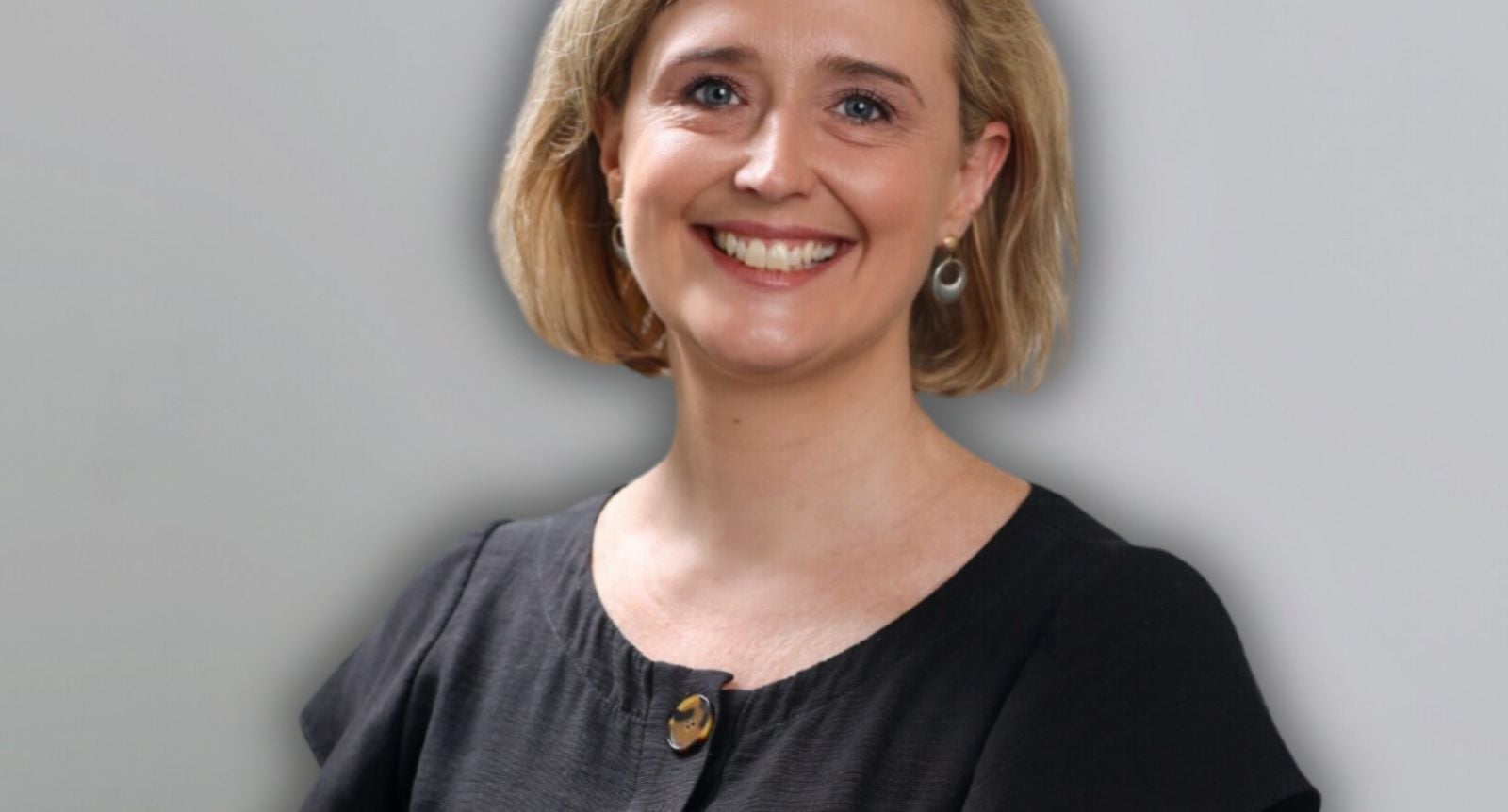
Natalie Stanbury
Submissions are open to brands, agencies, media owners, platforms, and researchers, with the requirement that content demonstrate real-world application rather than theoretical or promotional approaches.
Entries must include robust data, validated insights or proven case studies, ideally developed in collaboration with marketers and grounded in the Australian market. All submissions must be original and not previously presented.
What makes a strong submission
IAB Australia has outlined five key principles for prospective speakers:
• Demonstrate credibility with real-world evidence, including data and proven outcomes.
• Highlight actionable takeaways for immediate application.
• Address current industry challenges and future priorities.
• Offer fresh thinking rather than promotional content.
• Include diverse perspectives across the industry.
MeasureUp 2026 speaker submissions are now open.