
Monday December 8, 2025

What Netflix’s Warner Bros buy really means for the rest of us
As the dust settles on one of the biggest media deals Hollywood has seen in years, the real unpacking can begin.
Netflix’s roughly $110 billion AUD swoop on Warner Bros Discovery has ended months of speculation, backroom manoeuvring and rival bids from Comcast and Paramount Skydance. The streamer has landed a content vault spanning almost a century of studio history, from Harry Potter and Looney Tunes to Game of Thrones, Friends, Succession, Sex and the City, and beyond.
Now comes the autopsy. Why this deal, why now, and what does it actually mean for audiences and the industry?
For media veteran and CEO of The Meliora Company, Clive Dickens, the answer starts with a word few consumers would argue with. Simplification.
“If you think about the proliferation of paid streaming services and paid subscriptions that we all have to invest our money or time in, it’s gone up and up and up over the last 10 years, and when you add them all up, they’re now considerably more expensive than paid TV was at its peak,” Dickens told Mediaweek.
What the eventual bundled pricing looks like is still anyone’s guess, but Dickens is confident it will not simply stack one premium on top of another.
“Who knows what they’ll charge for a consolidated service, but it’s unlikely they will take HBO Max’s price point and simply add it to Netflix’s,” he said.
And for households straddling multiple platforms, the logic is already apparent.
“The reality is, if you’re paying to watch Harry Potter and Game of Thrones and White Lotus on HBO Max, and you’re paying to watch Emily in Paris and the latest series of The Diplomat on Netflix, you won’t need to pay for both,” he said. “So, for the consumer, this is a consolidation that needed to happen because it’s getting expensive and confusing.”
In other words, fewer apps, fewer passwords, fewer monthly hits to the card. As Dickens put it bluntly, “You’re toggling between applications all the time. And we should expect to see more of this consolidation over the coming years, because there were just too many apps and companies, and it’s unsustainable.”

Clive Dickens
From competing with sleep to competing for every minute
To understand why Netflix pushed so hard for Warner Bros now, Dickens reaches back to a line that once perfectly captured the streamer’s early dominance.
“At one point, about seven or eight years ago, Reed Hastings (the former CEO) was asked, Who is Netflix’s competitor? And at the time, he went on record saying, ‘Netflix competes with sleep.’”
Back then, the competition really was bedtime. “What he meant was that most people were binge-watching shows, going ‘just one more episode, just one more episode’, then we would realise it’s suddenly 10 pm,” Dickens said.
That era is over.
“This signals that they are no longer competing with sleep. They are now competing with any time that you and I do not spend on Netflix.”
Netflix now has more than 300 million paying households globally, which Dickens says represents a scale hard to comprehend truly. “Right now, they have more than 300 million paying households worldwide, and each household has two to four users. So really, that means there are over a billion users.”
That first billion, he said, was the easy part. “At the moment, a billion people on the planet use Netflix. Amassing that has taken them many years. But it’s going to be really hard to reach the next billion because the next billion either have another service they prefer or don’t want to spend that much money.”
Those first billion users also share some common traits. “ They are the more high-end households on the planet,” Dickens said.
“The next billion people either have different habits, different languages, different cultures, different religions, different locations, different preferences, or they’re not as into sitting down and watching 10 hours of scripted drama and probably don’t know who George Clooney is.”
Instead of chasing that harder next wave, Netflix is now turning inward.
“Those billion people exist across America, Northern Europe, Australia, New Zealand, South Africa, predominantly France and Germany, and predominantly the sort of top, the G8 countries,” he said.
“The next billion will be very, very hard. So, instead, it is always easier to go back and make your customers spend more time and money with you than to find a new customer.”
And that, Dickens argues, is where Warner Bros truly fits. “For Netflix, they are thinking we need actually to find more time with the first billion.”
Which leads directly to the new pitch to consumers.
“So therefore, it’s much easier to come back to you and me and say, actually, why don’t you spend more time on Netflix? You don’t need HBO Max. You don’t need that other service. More time on Netflix. More time listening to Netflix or Spotify. It’s more time playing games on Netflix.”
“So whatever time we’re spending on Netflix now, they want you to spend more.”
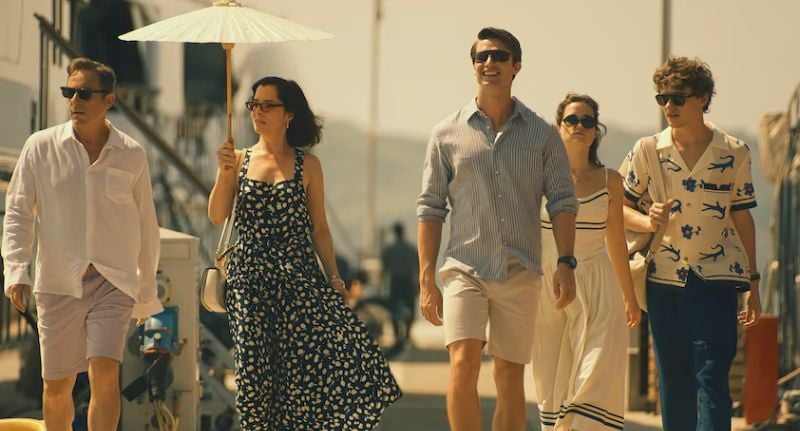
The White Lotus
AI is the real long-term threat
For all the noise around rival streamers and subscriber numbers, Dickens argues the real existential pressure on Netflix is coming from somewhere else entirely.
“Another reason the next billion is going to be very hard is AI,” he said, pointing to how quickly audiences are shifting from consuming content to generating it.
He cites Suno as the clearest proof point.
“It’s the number one AI music platform in the world. It allows users to generate and upload songs onto the app,” Dickens said.
“They announced that the number of songs uploaded to Suno every single month is equal to all the songs on Spotify.” The behaviour shift is profound. “In other words, people are spending time generating their own music, and people are spending time generating their own films. People are spending time generating their own stuff.”
That explosion of user-generated content, powered by AI, goes a long way toward explaining why Netflix made its Warner Bros. play now.
“This is why the Netflix deal is also due to the impact of AI and the time we’re all spending on it,” Dickens said, whether that is “generating songs, generating videos, looking for recipes, or chatting with our chatbots”.
At its core, he argues, this is not just a tech arms race.
“This is all about the changing consumption of what we call media, and now AI-produced content is a threat to legacy and traditional media.” In that light, the Warner Bros acquisition looks less like overreach and more like protection, a move to lock in irreplaceable IP and long-form storytelling at scale.
Netflix co-chief executive Ted Sarandos has described the deal as a “rare opportunity” to help define the next century of entertainment. Dickens sees something slightly starker beneath that optimism.
It is not just about growth anymore. It is about survival in a media economy being quietly reshaped by machines, not streamers. The billion-user race is still on, but the rules have changed.
BBC Studios ANZ makes redundancies amid wider APAC restructure
BBC Studios Australia and New Zealand has made a small round of redundancies in its Media and Streaming division, the latest in a series of workforce reductions across the local media sector.
While numbers were not disclosed, fewer than 10 roles are understood to have been affected.
No positions in the Production division were impacted.
Restructure follows APAC unification
The redundancies come weeks after BBC Studios formally integrated its media and streaming operations across Australia, New Zealand and Asia into a single APAC region. The move is intended to streamline decision-making and accelerate commercial growth across international markets.
Robi Stanton was appointed president, APAC media and streaming, in November. Stanton, who joined the business earlier this year, previously held senior roles at CNN International, Warner Bros. Discovery and Turner International in Australia and Singapore.
BBC Studios Global Channels CEO Marcus Arthur said consolidating the ANZ and Asia businesses under Stanton’s leadership would “unlock new opportunities for growth and collaboration across APAC.”
Stanton described the company’s regional portfolio as “extraordinary” and said the restructure would support a more connected and agile business.
The updated structure, coupled with the ANZ operational review, signals a broader shift as BBC Studios adapts to changing audience behaviour, platform fragmentation and increasing cost pressures across global markets.
Mediaweek has reached out to BBC for comment.
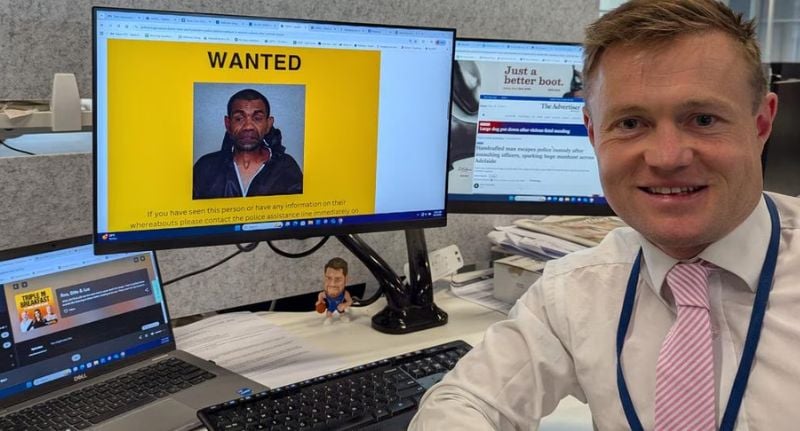
SCA's newsroom AI rollout hits its first major crisis
Less than two months after Mediaweek revealed Southern Cross Austereo’s (SCA) shift towards an AI-assisted newsroom model following a wave of redundancies, the broadcaster is now facing the fallout from a serious on-air breakdown that wrongly turned a working journalist into a wanted man.
SCA has launched an internal investigation after multiple Adelaide radio bulletins falsely named a News Corp reporter as the alleged perpetrator of a violent attack on police.
How the error went to air
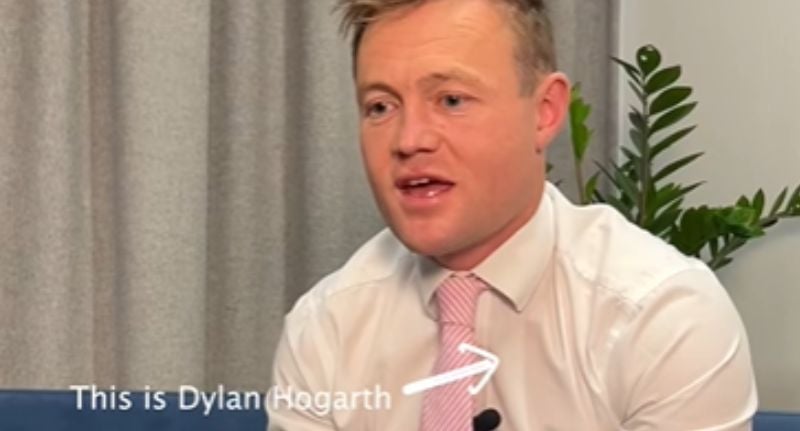
Across six separate updates on Friday morning on Triple M and SAFM, including flagship breakfast show Roo, Ditts & Loz, The Advertiser’s Dylan Hogarth was incorrectly identified as a man accused of attacking officers with a hammer before allegedly escaping custody at the Queen Elizabeth Hospital. Listeners were urged to call triple-zero if they saw him.
In reality, Hogarth had written the original online story about the police manhunt earlier that day. When the SCA-owned stations lifted details from that report, his byline appears to have been mistaken for the suspect’s identity.
Within an hour, as alarmed messages from friends poured in, the stations issued online corrections.
SCA executive general manager for Western Australia and Adelaide, Robert Iannazzo, said the company’s preliminary findings pointed to human error. Still, he did not rule out the involvement of AI-assisted newsroom systems, confirming both would form part of the investigation.

SCA executive general manager for Western Australia and Adelaide, Robert Iannazzo
The AI tilt behind the scenes
The incident lands squarely against the backdrop of SCA’s newsroom restructure, which multiple sources previously confirmed to Mediaweek was directly linked to the introduction of a new AI-assisted production model.
While the shift followed the company’s merger announcement with Seven West Media, SCA has stressed that the redundancies and restructure are not connected to the deal.
At the time, an SCA spokesperson said the broadcaster was “evolving the way we gather and prepare news bulletins to better serve audiences across Australia, now and into the future”.
Sources said the new model integrates AI at the scripting and collation stages of bulletin production, streamlining workflows but reducing the need for staff.
One insider said the system would make it “quicker for journalists to put together their bulletins”. When asked if the technology was directly linked to recent job losses, the response was blunt: “Yes”.
At the same time, industry figures raised concerns about whether SCA could continue to meet its Australian Communications and Media Authority (ACMA) local content requirements, which mandate at least 62.5 minutes of original local programming each week for regional broadcasters.
One source told Mediaweek at the time that “no way” could those targets be met under the new model. SCA strongly rejected that claim, calling it “factually incorrect” and insisting regional bulletin volumes would actually increase.
In a later statement, the broadcaster confirmed it had built a proprietary in-house software platform with AI capabilities to support journalists in gathering information and drafting bulletins, stressing all content remains fact-checked, edited and read by journalists in metro and provincial hubs.
Trust, safeguards and the reputational hit
For The Advertiser editor Gemma Jones, the damage runs deeper than one incorrect name.
She described the wrongful identification of Hogarth as “egregious”, accusing the radio stations of lifting stories without credit and warning that the incident exposed serious failures in editorial safeguards.
Hogarth has declined to comment on whether he will pursue legal action, but said his primary concern was how such a failure could make it to air in the first place.
In an era already saturated with misinformation and disinformation, he warned, the stakes for news organisations are only getting higher.
Not the first AI flashpoint in radio
This is also not the first brush with controversy for AI in Australian radio.
Earlier this year, Mediaweek reported backlash over the Australian Radio Network’s (ARN) use of an undisclosed AI-generated host, “Thy”, modelled on an employee and broadcast in four-hour segments.
The trial was defended as a technology experiment but drew sharp criticism for its lack of transparency and representation.
For SCA, the latest incident adds new urgency to an already delicate equation: faster workflows, fewer journalists and rising automation, all while audience trust remains fragile.
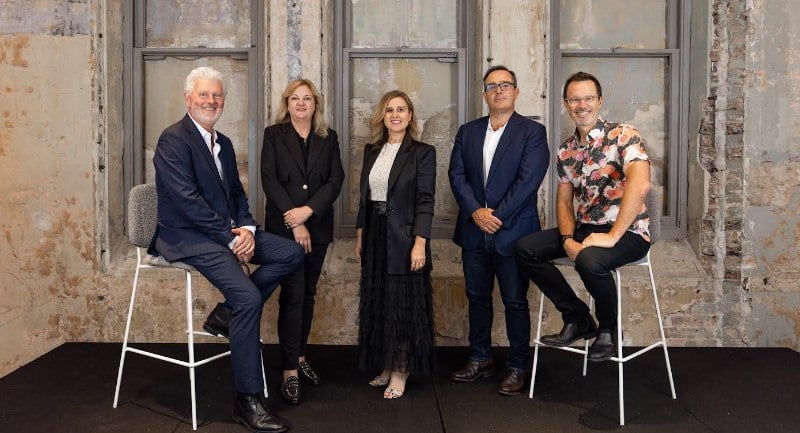
IMAA sets 2026 agenda as Jacquie Alley returns as chair
Independent Media Agencies of Australia (IMAA) has confirmed its leadership team for 2026, reappointing Jacquie Alley, The Media Store chief operating officer, as chair following a year of record membership and expanded industry programs.
The announcement was made at the organisation’s annual general meeting, which brought together member agencies, the board, the auditor, and the governance advisor to review the IMAA’s fifth anniversary year and to release its annual report.
Membership now sits at close to 170 indie agencies and 45 media partners.
Leadership reaffirmed for 2026
Alley was elected to a further two-year board term and subsequently reconfirmed as chair by the directors.
BCM Group chief executive officer Phil McDonald will continue as deputy chair, while Advertising Room chief executive officer Melissa Roberts remains secretary.
Media Republic director Steve Fagan will transition the treasurer role to Pivotus chief executive officer and founder Michael Petersen at the end of the financial year, with Fagan also stepping into a second deputy chair position.
A year of talent, training and sector insights
Alley told members that IMAA’s investment in capability-building continued to accelerate in 2025, including the national expansion of the Female Leaders of Tomorrow program to 32 mentor–mentee pairings and the return of Pitch-Chella, which saw 76 emerging agency professionals pitch campaign ideas for Mission Australia.
The IMAA also continued to develop sector intelligence through its Indie Census, Pulse Survey and Salary Survey, and strengthened its partnership with First Nations enterprise King’s Narrative, including an immersive visit to the Northern Territory.
The industry-first IMAA Academy has now trained more than 1,700 indie employees in media fundamentals.
“In just five years, the IMAA has transformed the landscape for independent media agencies in Australia,” Alley said.
“We’ve cemented our place as a connected and influential community, ensuring indie agencies are no longer a secondary choice but a preferred partner for brands seeking agility, creativity and personal service.”
“Everything we do is guided by member feedback and a shared passion to make the industry stronger together. Looking ahead, we’ll continue to lead with purpose, focusing on education, advocacy and community to elevate the entire independent media sector.”
2026 focus: AI guidance, data standards and major events
The IMAA outlined several priorities for 2026, including the launch of its Trend Report, updated AI Guiding Principles, and new data and privacy guidelines.
Its core programs – the IMAA Academy, Female Leaders of Tomorrow, Pitch-Chella and the Indie Census – will continue, alongside further expansion of the group deals program, which reached thirty-eight agreements this year.
Indie-Pendence Day will return in 2026 with events in both Sydney and Melbourne for the first time, along with the Byte series of member briefings.
The board will hold a strategic offsite in February to set the organisation’s multi-year roadmap, with a continued emphasis on education, advocacy, benchmarking and community events.
The IMAA will also maintain its government engagement work at both the federal and state levels.
Sector momentum heading into 2026
IMAA chief executive officer Sam Buchanan said independent agencies had “truly found their seat at the table” in 2025.
“This year has been about pushing the needle on the role and power of indies nationally,” Buchanan said.
“As we head towards 2026, we’re looking to the next phase of growth for the independent sector, in a climate of uncertainty but also opportunity.”
He added that Australian-owned agencies now represent “stability, local knowledge and deep expertise” for clients. “For many, an Australian-owned indie is no longer a nice-to-have; it’s a strategic advantage. The question now isn’t ‘why choose an indie?’ – it’s ‘why wouldn’t you?’”
Top image: Steve Fagan, Melissa Roberts, Jacquie Alley, Phil McDonald & Michael Petersen
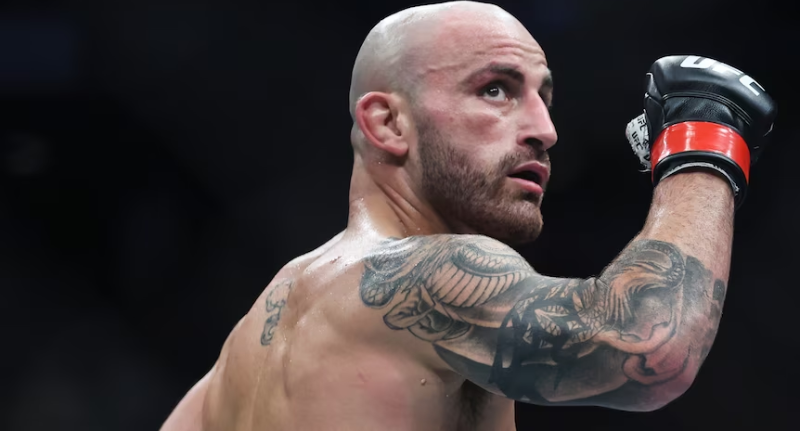
Volkanovski’s homecoming sets the main stage for UFC 325
Australian UFC star Alexander “The Great” Volkanovski headlines UFC 325: Volkanovski vs Lopes 2 at Qudos Bank Arena on Sunday, 1 February.
Volkanovski faces Brazil’s No.2-ranked Diego Lopes in a highly anticipated rematch, following their five-round “Fight of the Night” clash at UFC 314 in Miami earlier this year.
Tickets for the event go on sale Friday, 12 December at 3pm AEDT via Ticketek, with presales available to UFC Fight Club members and UFC newsletter subscribers earlier in the week.
A major moment for Australian MMA
“This event will not only be a huge moment for Alex, but for UFC and the sport of MMA in Australia,” said Peter Kloczko, Senior Vice President, Australia and New Zealand, UFC.
Kloczko emphasised the excitement around hosting a championship defence from an Australian athlete:
“UFC 325 will be major. To have Australia’s own Alex Volkanovski defend his title in front of a home crowd is a dream result.”
NSW Minister for Jobs and Tourism, Steve Kamper, echoed the sentiment, noting the economic impact and international pull of the event:
“It is incredibly exciting that Sydney will take centre stage next February for this blockbuster event, which will draw thousands of fans from across the world and inject millions into the NSW visitor economy.”
Explosive co-main event and stacked card
The night also features a high-stakes lightweight co-main event between New Zealand’s Dan “The Hangman” Hooker and France’s Benoit “God of War” Saint Denis.
The undercard brings several Australian fan favourites back to the Octagon, including:
Tai “Bam Bam” Tuivasa vs Tallison Teixeira
Jimmy Crute vs Dustin Jacoby
Jacob “Mamba” Malkoun vs Torrez Finney
Junior Tafa, Quillan Salkilld, Jonathan Micallef, and more
Heavyweights, rising contenders and international prospects round out a card built to draw significant local and global interest.
Adding further depth, UFC 325 will host the finals of the ROAD TO UFC Season 4 tournament a key pathway for Asia-Pacific athletes to earn UFC contracts.
Four divisions will crown winners, including flyweight, bantamweight, featherweight, and lightweight prospects.
Sydney welcomes another major UFC event
UFC last visited Sydney for UFC 312: Du Plessis vs Strickland 2 in February 2025, which broke the all-time gate revenue record for any Australian indoor arena, bringing in $12.3 million and generating $66.7 million in economic impact.
UFC 325 is again supported by Destination NSW and the NSW Government.
Australian fans can watch the main card live on Main Event via Kayo and Foxtel, with prelims available on Paramount+ and Network 10.
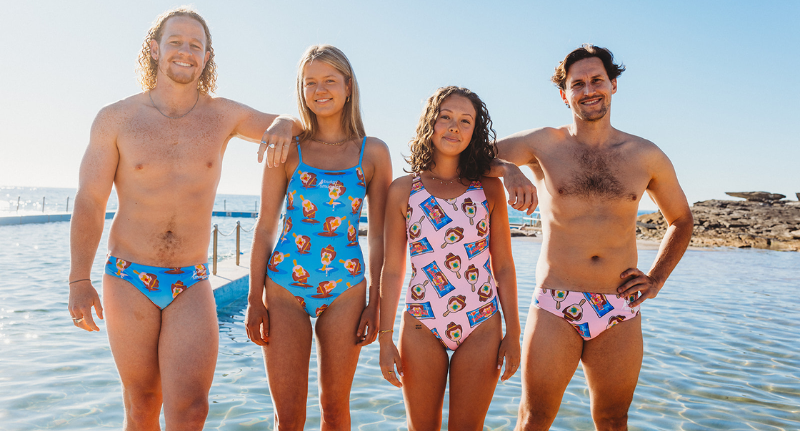
Bubble O’Bill makes a cheeky Budgy Smuggler comeback
Asembl is bringing back summer’s sweetest collaboration with the return of a Streets Bubble O’Bill collection with Budgy Smuggler.
With two high-quality nostalgic designs returning in men’s and women’s styles, the comeback also introduces boys and girls pieces for the first time, meaning the whole family can match this summer.
The collection lands December 11 2025 exclusively via Budgy Smuggler’s website and retail stores across New South Wales.
UPF 50+ pieces span men’s smuggling swimwear, a women’s one-piece, women’s swim top and bottoms, and new boys and girls styles.
A hit of nostalgia built for real Aussie summers
Born from the golden summers of Aussie childhoods, this Bubble O’Bill collection brings a hit of nostalgia and a whole scoop of fun to the season.
Made in Australia, the matching family range is designed for beach BBQs, cannonballs into the pool and chasing down the ice-cream truck.
The collection uses environmentally friendly inks, a laser-cutting process to minimise fabric waste, and hand-sewn finishes.
All pieces use chlorine-resistant fabric suitable for swimming, sport and general casual wear, celebrating the iconic Australian summer ice-cream bubble gum not included.
Bubble O’Bill first launched as Budgy Smugglers in 2022 as part of a nostalgic collection alongside Streets classics Paddle Pop, Splice and Golden Gaytime.
Why Budgy Smuggler brought it back
Budgy Smuggler general manager Brenden Hartmann said strong demand made the return an easy decision.
“We don’t often bring back designs from the archives, but Bubble O’Bill has such a cult following, and there’s a real nostalgia factor that made this one a no-brainer. The demand from our community to see it return was huge. It’s a collection people genuinely connect with and have asked us for again and again, so we’re stoked to bring it back with the addition of the kids range this time around,” he said.
Asembl managing director Justin Watson said the expanded collection hits all the right notes.
“This is the comeback we’ve all been waiting for. A deliciously fun and cheeky collection, now including boys and girls swimwear, it’s set to add a whole scoop of family matching fun to summer”.
Women control the spend, but sport still doesn’t speak their language
In November, Sky Sports UK learned – very publicly – that women are more than pink captions, matcha and “hot girl walks”.
After launching a female-focused TikTok channel called Halo, pitched as the “lil sis” to its main sports account, the broadcaster shut it down just three days later following backlash over content audiences labelled “patronising” and “unbelievably sexist”.
For Thayer Lavielle, Managing Director of Wasserman’s women’s advisory arm, The Collective, the misfire neatly captures the industry’s problem.
“Sports marketing in particular is still following that male-centric playbook,” she told Mediaweek. “Maybe I don’t want them to call it tokenism. I would call it more a lack of imagination.”
The Sky Sports UK moment now stands as a textbook example of what happens when brands attempt to court female fans without genuinely understanding them – the very disconnect at the heart of The Collective’s global study into women’s fandom and buying power.
The report, The Collective Economy: Her Fandom, Her Buying Power, draws on insights from 7,100 women across 10 countries and is supported by broader findings from The Collective Economy and Her Love of the Game (2024), which surveyed 35,000 respondents across 30 countries.
Despite women now holding unprecedented economic and cultural influence, many still feel disconnected from the teams and brands vying for their loyalty.
“We did this study because we wanted to understand how women feel as consumers and fans of sport. What we found is that many of us feel unseen and disconnected from the teams and brands that represent the game,” said Lavielle.
“Everyone keeps asking how to build loyalty with women, but the answer is simple: you have to serve us better. Right now, you’re not even talking to us.”

Thayer Lavielle
Billions in value, but engagement lags
The commercial opportunity is vast.
Globally, women are projected to control nearly $100 trillion in wealth by 2048, influence 75% of discretionary spending by 2030, and drive 85% of household purchasing decisions worldwide.
At the same time, the global sports market is forecast to hit $602 billion by 2030, with $782 billion spent on advertising in 2024 alone.
Yet The Collective’s data shows that engagement strategies have failed to keep pace with women’s growing economic power. While 72% of women globally identify as avid sports fans, sports marketing remains anchored in a familiar pattern, as Lavielle describes.
“Sports marketing in particular is still following that male-centric playbook,” she said. For Lavielle, the problem isn’t deliberate exclusion – it’s creative inertia.
Feeling misunderstood and underserved
The report found a significant disconnect between how women see themselves and how they feel brands represent them. 68% of women do not feel confident or empowered by the way women are portrayed in marketing. 78% don’t believe brands fully understand them. And 56% say they are the primary decision-maker for most purchases.
That influence deepens at a household level. 93% of women are key decision-makers for daily purchases. 76% are key decision-makers for sports-related purchases. 95% say family drives most daily decisions, while 77% of non-mothers feel brands still don’t understand them.
For Lavielle, the solution isn’t complex, nor is it necessarily expensive.
“The reality is there’s still a lack of understanding of who she is and how to reach her – and how simple it can actually be. There’s a perception that doing things differently is more expensive, when in fact you can test and learn relatively cheaply, or work with brands on value-in-kind partnerships that don’t require big budgets. It’s about making women as consumers and fans feel better served, better seen and properly valued,” she said.
Put the fan first
The study also challenges teams and leagues to rethink their priorities, arguing that relentless focus on operations and revenue can come at the expense of experience.
“Most teams are busy putting on games, servicing brand partners, fans and players. They’re trying to fill seats, sell tickets and move signage. But ultimately, the number one priority should be the fan experience – putting the fan first, full stop.
“That’s especially true for women. If you create an environment where we feel relaxed, appreciated, and genuinely cared for,” Lavielle said.
Lavielle believes brands, rather than teams, are often best placed to drive that next phase of growth in women’s sport and fandom. With deeper pockets and broader creative resources, she argues brands can move faster and take bigger swings than rights holders juggling the weekly demands of competition.
“I think brands are actually the accelerants for their rights holders, meaning they have more dollars to play with,” she said. “If they have more dollars and more agency dollars, they also have more creative resources at their behest and a broader swath of opportunity to pull from within their toolkit. That’s something teams don’t necessarily have, because they’re trying to put something on the field every day or every week, as the case may be.”
For Lavielle, the danger is that too many operators remain locked in a transactional mindset -focused on ticketing, signage and short-term returns – rather than the long-term relationship with the fan.
“What our proposal really looks at is how, as an operator, you stop just operating and stop just trying to put butts in seats – that should be table stakes,” she said.
Instead, she says, the real commercial upside sits in the experience layer, particularly for women. Brands are uniquely positioned to unlock that by sharing data, insights and funding that teams alone often can’t activate.
“That’s where brands can really accelerate the experience for fans, but particularly for women, because they can start to share data, share insights around who these women fans are, how they operate, how they want to be spoken to and how they want to participate in the ecosystem,” Lavielle said.
“Then brands can help pay for that and find deep return, both in loyalty and spend on the other side.”
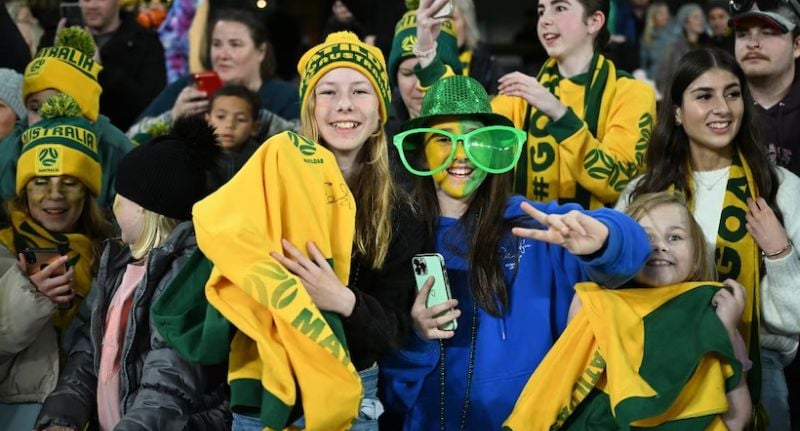
Resistance, not fear, holding progress back
Despite pockets of innovation, Lavielle says meaningful change is still too often limited to one-off campaigns rather than sustained strategy.
“I think it’s less fear and more resistance to trying something really out of the box and new. That resistance comes from a place of, ‘Well, we’ve never done it before, and I’m not sure it won’t be completely uphill.’
“Nobody is really doing it consistently across the board to the point where women feel, ‘Wow, that’s an experience I would continue to go back to – it was worth the money, it was worth my time, and I came out feeling happy about the whole experience, every single time, from top to bottom.’
“That’s a hard bar to cross, but I do think we can at least keep trying to make strides to get there.”
A cultural cost behind the commercial one
For Lavielle, the disconnect between women’s influence and how brands treat them is not just a marketing failure – it’s cultural.
“Look, it doesn’t surprise me at all, because working in this space for many years now, there has always been this need to explain ourselves and improve ourselves every single day in order to drive investment. That can be exhausting. But it’s also built on millennia of inherent misogyny. Most men aren’t trying to be that way – and neither are women – it’s just the way culture has been built,” she explained.
For brands, rights holders and leagues, the message from The Collective’s data is blunt: women already hold the power.
The question now is whether the industry is prepared to catch up.
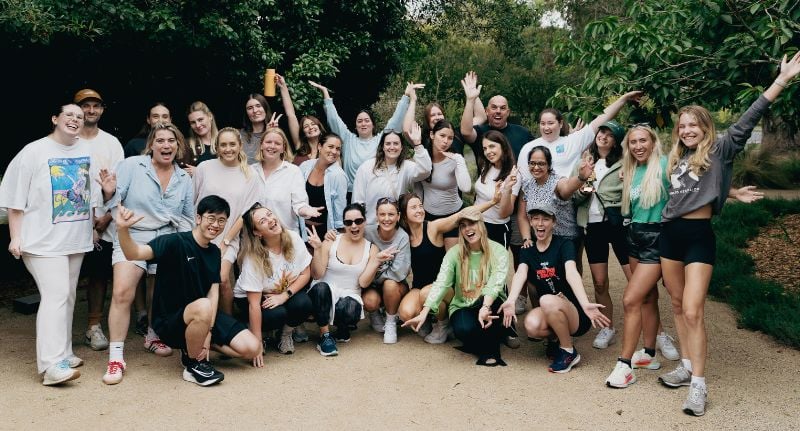
One Green Bean turns 18 as Havas Village resets for growth
Havas Village creative communications agency One Green Bean is celebrating 18 years in business, marking nearly two decades of using earned-led ideas to crash pop culture, shift behaviour, and deliver some of Australia’s most memorable campaigns.
Now, with a refreshed leadership trio and a sharpened focus on innovation, the agency is setting itself up for its next wave of growth.
Founded in 2007, One Green Bean arrived just as the media landscape was rewiring itself – Twitter had launched, Netflix was beginning to stream, and the first iPhone hit the market.
The agency’s proposition was simple: bold, personality-led ideas with earned thinking at the core.
That approach has fuelled 18 years of culture-jacking campaigns – from Ikea’s April Fool’s Doggy highchair to Doug Pitt’s “Fair Go Bro” for Virgin Mobile and more than a decade of MLA’s Summer Lamb work, delivered with The Monkeys (now Droga5).
In 2012, the agency made regional history as the first PR shop in APAC to win a Cannes Lion for its Well-Worn Volley campaign.
Leadership recalibrated – and commercial momentum restored
The agency’s next phase has been steered by CEO Amber Abbott, Managing Partner Lauren Bailey and Head of Content Laura Byrne – a team appointed in 2023 and credited with delivering “some of the strongest growth and commercial success in ogb’s history”.
“ogb is a special place. Our success has been built on creativity, true client partnerships, innovation, and a people-first culture,” Abbott said.
“As we grow into our next 18 years, we’ll lean into all those things that got us to where we are today… We’ll always remain true to our DNA, and that means serving up inspiring, personality-packed creative ideas that drive meaningful conversation for our clients.”
‘Deliberately Different’
Havas ANZ Group CEO James Wright positioned the milestone as a reminder of the agency’s indie spirit within a scaled global network.
“One Green Bean has always been a pioneer, an ideas-centric agency driving conversation and attention through earned channels and world-class creative thinking,” Wright said.
“Under the leadership of Amber, Loz and Laura, they have the ideal foundation to propel the agency further into an innovation-driven future, and at 18, they are finally old enough to buy me a beer or three.”
The anniversary also coincides with Havas ANZ’s new strategic platform, “Deliberately Different”, reinforcing a Village model designed to marry entrepreneurial culture with scaled capability.
A creative engine built on integration – and now AI
One Green Bean’s offering spans PR, social, influencer, content and integrated creative, operating across Sydney, London, Amsterdam and Doha as part of the Havas Network.
Recent years have seen the agency expand its in-house studio team, formalise its influencer division and integrate AI-driven tools and intelligence systems available across the Village.
That breadth has attracted new clients – including SafeWork NSW, EPA NSW, Netball WA, Levande, the Push-Up Challenge and WA Museum – while fuelling major campaigns for Budget Direct, OMO, Weet-Bix, St John WA, Lotterywest and more. A growing trans-Tasman remit now covers Sanitarium and Bayer.

The NRMA calls for a sustainable shift with new EV campaign
The NRMA has unveiled a new national campaign calling Australians to consider switching to electric vehicles, as they have the largest network of EV chargers in Australia.
After being named the inaugural winner of the SBS Media Sustainability Challenge, this initiative asked brands to normalise sustainable behaviour and rethink how environmental action is represented in marketing.
Australia’s transition to EVs remains slow compared to other developed markets.
Last month, battery electric vehicles accounted for nine per cent of all new cars sold, representing eight per cent of 2025’s year-to-date market share.
The NRMA has been a long-term supporter of EV adoption, citing lower running costs, the arrival of price parity with petrol and diesel models, and emissions reductions as key benefits.
The organisation also continues to expand Australia’s fast-charging network, now reaching 540 charging points across 157 sites, with 32 additional sites set to open within the next six months.
Low-carbon production model
As part of the SBS challenge, the NRMA was required to demonstrate sustainability not only in its messaging but also in its production methods.
Working with production partner 3rdspace, the team embedded low-impact practices across the entire process.
Key actions included remote-first location scouting, virtual casting, EV carpooling, solar-powered generators, vegetarian catering, refillable water systems, recycled wardrobe sourcing, renewable-powered post-production, and virtual voice-over recording.
AdGreen calculated the final footprint at 1.98 tCO₂e about 75 percent lower than average for a comparable shoot.
Marie Ferrett, General Manager Brand and Reputation at the NRMA, said: “Winning the inaugural SBS Media Sustainability Challenge was about proving creativity and sustainability can co-exist. We learned what works, what doesn’t and where the industry needs to go next.”
SBS commends NRMA for industry leadership
Kate Young, National Manager of SBS CulturalConnect, said the campaign demonstrated authentic and practical adoption of sustainability principles.
“We are incredibly proud to award the NRMA as the inaugural winner of the SBS Media Sustainability Challenge,” she said.
“In conceiving this challenge, we wanted to promote outstanding work which drives positive change and rethinks how brands can authentically drive sustainability in their advertising campaigns and the associated TV productions.”
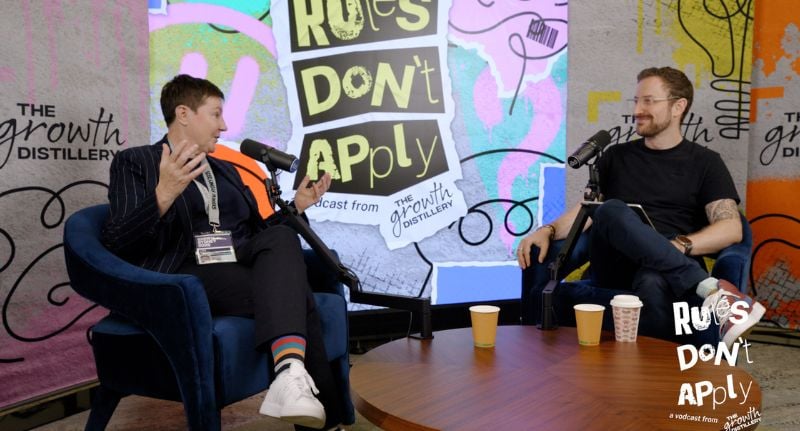
Lisa Watts wants journalism to slow down, wise up and reconnect with the truth
If you wandered past The Growth Distillery stage at SXSW Sydney, you probably heard the crowd forming before you saw it.
A live episode of Rules Don’t Apply was about to begin, and the room was gathering for a woman who has quietly become one of Australia’s most influential voices in the battle for truth.
Lisa Watts, CEO of The Conversation, took her seat opposite host Dan Krigstein with the kind of calm energy you only see in people who know exactly what they stand for. And what she stands for is deceptively simple: journalism that slows down, digs deeper and doesn’t treat truth like a disposable accessory.
Kriegstein introduced her as someone who has “spent her career proving that integrity and impact can coexist.”
When Krigstein asked how she’d explain her job to an eight-year-old, she laid it out plainly: “I work for a news website that only works with experts from universities.”
Journalists act as editors, she said, pairing with academics to “write stories that explain what’s happening in the news” and to surface research the public rarely sees.
It was a neat summary of a model that has quietly reshaped Australia’s information landscape.

Dan Krigstein
The radical idea that experts want to be heard
When The Conversation launched in 2011, the industry consensus was predictable: academics would never write quickly enough, simply enough, or for free.
Those predictions didn’t last long.
Watts said the newsroom quickly discovered an appetite – even a hunger – among academics to join public debate. The stereotype of the ivory tower, the aloof scholar hidden away behind paywalled journals, didn’t match reality.
“Most academics are interested in the world of ideas because they generally wanna find solutions and further the body of knowledge,” she told the audience.
What The Conversation offered wasn’t a platform of convenience, but a bridge – one that let expertise travel beyond campuses and policy briefs into everyday understanding.
And it worked immediately.
Why saying no has protected the mission
The Conversation’s defining choice – and the one Watts believes set them up for long-term survival – was refusing to build advertising into the model.
Had they chased those page-view dollars, she said, the site would have ballooned during the pandemic, hired aggressively, and then shrunk just as quickly when traffic returned to earth. Instead, the outlet relies on university memberships and voluntary financial support.
“It kind of keeps us really honest,” Watts said. “If people don’t find it valuable, they won’t give you their money.”
She recalled early temptations: big corporations wanting to underwrite topic sections, philanthropic projects pushing advocacy angles. Each time, the newsroom drew its line.
“We’re not there to persuade anyone to change their view,” she said. “We are there to leave the reader with more information about a topic than when they started.”
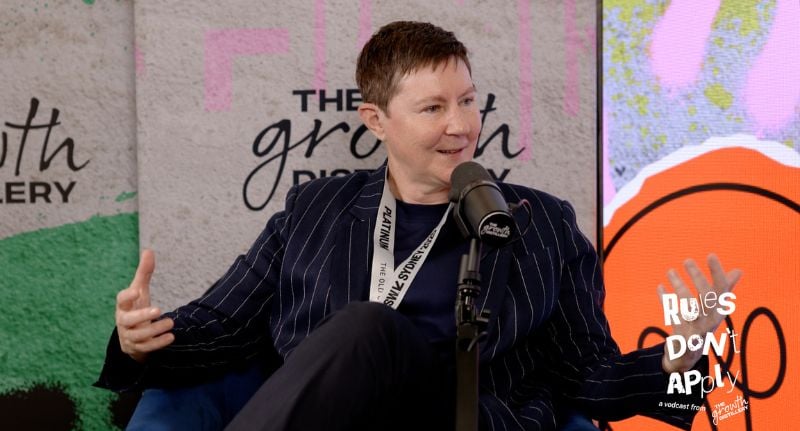
Lisa Watts
The journalism she hires for
When asked what she looks for in new recruits, Watts didn’t hesitate.
First: real journalistic experience. She loves “newspaper people” – those hardened by deadlines, spiked stories, and the muscle memory of accuracy under pressure.
Second: drive and curiosity. The newsroom receives up to 200 pitches from academics each week; editors need the instinct to find the story hiding beneath the data.
Third: the unexpected one – politeness.
“I think it implies a certain pause and listening,” she explained. It suggests generosity, openness and the ability to work with people whose expertise may be brilliant but not always easy to translate.
On climate, AI and the conversations Australia needs to have
Pressed on the issues Australia keeps avoiding, Watts pointed to climate, the “biggest challenge of our planet”, and one that people still find too overwhelming to engage with deeply.
She also flagged AI as both a breakthrough and a threat. Synthetic content is already flooding the internet, she said, and the “AI slop world” is not something audiences will accept indefinitely.
Her prediction? A swing back to trusted, advertising-free, source-led journalism. A return to brands where provenance is clear and incentives are visible.
“Nobody wants to be swimming around in a world of absolute garbage,” she said. And as misinformation spreads, people will increasingly turn to reputable outlets and journalists themselves.
The rules she’d give the next generation of newsmakers
For emerging content creators stepping into a chaotic information ecosystem, Watts offered a grounded blueprint:
• Check sources thoroughly – twice if needed.
• Correct errors openly and quickly.
• Build a two-way relationship with your audience; don’t operate in a vacuum.
For readers, the guidance was even more straightforward: vigilance. Treat media literacy like “online banking,” she said – cautious, intentional, and sceptical of anything that looks unfamiliar or too clean.
And finally: subscribe to trustworthy sources. “It’s free. And it’s good,” she added with a grin.
Why she’s still optimistic
Despite the noise, despite the distrust, despite the rise of synthetic everything, Watts remains proudly an optimist.
“We need truth,” she insisted. Australia’s strong public broadcasters, sceptical public, and resistance to political circus culture give her hope.
And right at the end, when asked what she’d like on her gravestone, she answered in one word: “Optimist.”
In a decade where journalism is often described as an extinction-level profession, Lisa Watts has built something rare: a newsroom where truth isn’t just defended – it’s designed into the structure.
At SXSW Sydney, that optimism didn’t sound naive. It sounded like a plan.
Media
LinkedIn emerges as surprise player in News Bargaining Incentive talks
According to John Buckley in Capital Brief, the Treasury has now quietly floated LinkedIn as a possible inclusion, according to people briefed on recent meetings.
Radio
AI blunder names wrong man on Triple M bulletin
Yes, really.
According to Radio Info, Hogarth had written a paywalled story for The Advertiser about an unnamed suspect the night before, then woke to messages from friends who thought he was being hunted across the city.