
Wednesday February 25, 2026

ARN’s $200m Kyle & Jackie O bet meets a 23% earnings slide
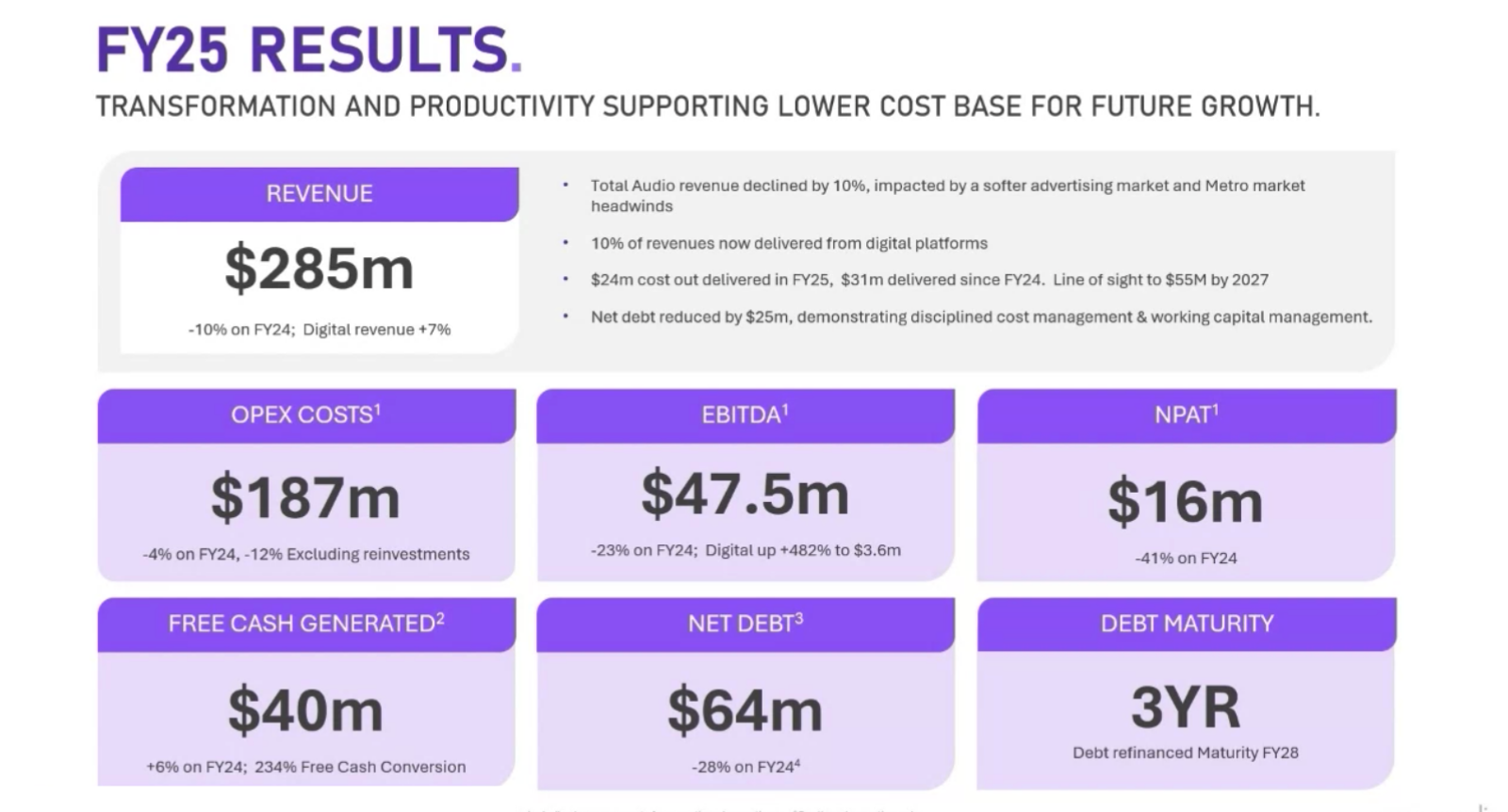
ARN Media has reported a 23% fall in underlying EBITDA for FY25, as the audio group enters what CEO Michael Stephenson describes as the execution phase of a broader strategic reset.
Underlying EBITDA dropped from $61.8 million to $47.5 million, while total revenue declined 10% to $285.2 million. Statutory EBITDA fell 27% to $45.7 million.
The result reflects a year of revenue pressure in metro radio, offset by cost-cutting, debt reduction and a renewed push into digital.
At the time of publication, the company’s share price was $0.37.
Source: ARN
Metro softness drives the earnings slide
The most immediate pressure came from metro advertising.
During this morning’s earnings call, Chief Financial Officer Alexis Poole said: “While we are disappointed with a 16% decline in metro, which reflects softer advertising conditions and changing advertiser preferences, we are also taking decisive action.”
That decline fed directly into the earnings compression. Revenue fell 10%, but EBITDA declined more than twice as fast, underscoring the radio model’s fixed-cost nature.
Operating costs were reduced 4% to $187 million, with $24 million in savings delivered during FY25. ARN has now identified $55 million in cost reductions across FY24–FY27, with $31 million already realised.
More tightening is still to come.
Source: ARN
Digital growing, but still a minority of revenue
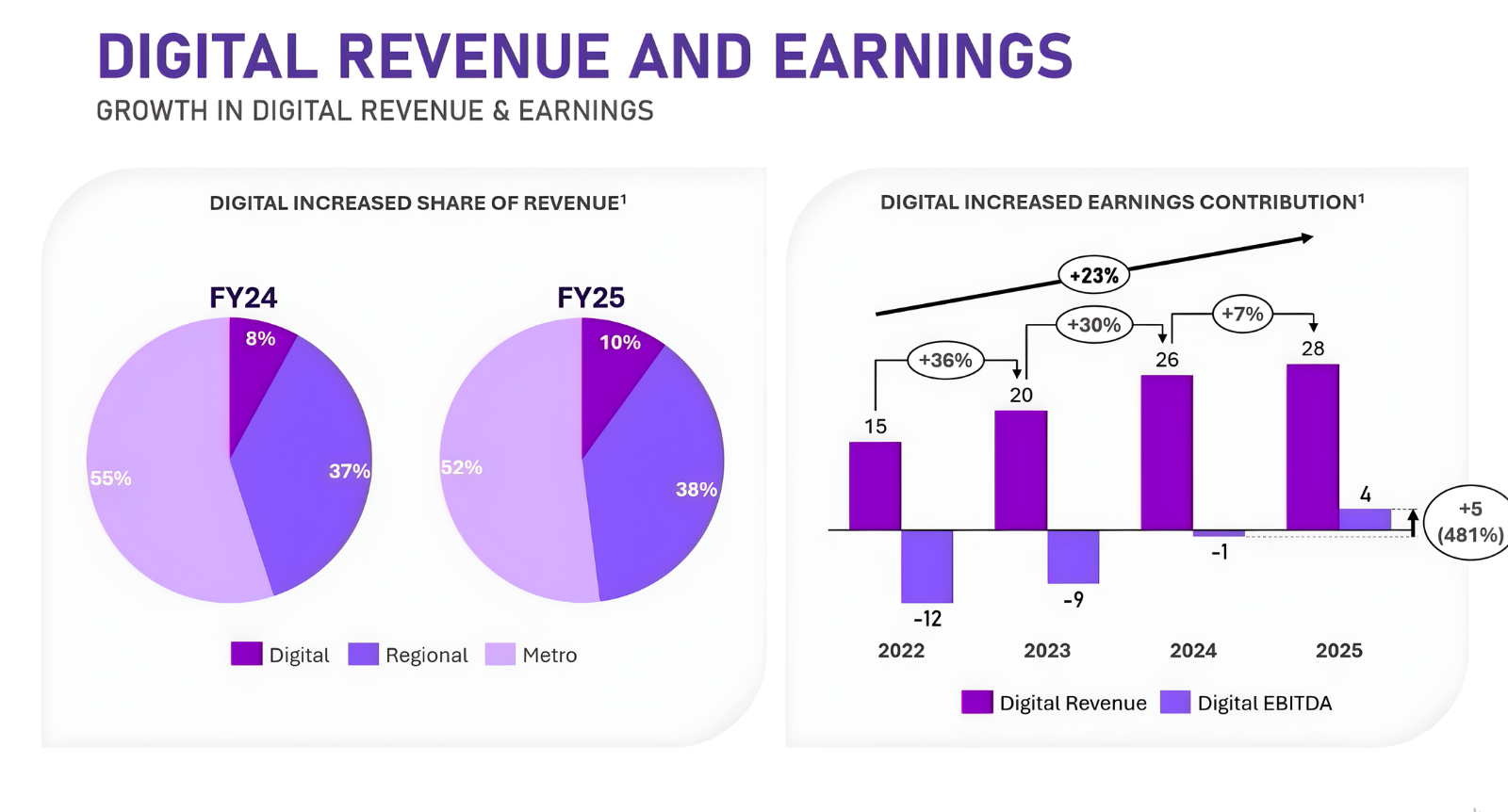
Digital revenue grew 7% to $27 million in FY25, now representing 10% of group revenue.
Poole said digital “is becoming materially more profitable.”
“In FY25, digital audio revenue reached $27 million, growing 7%, driven by the doubling of live streaming revenue,” she said.
However, podcast revenue declined after ARN exited lower-margin third-party agreements.
“Digital 7% growth was achieved despite podcast revenue decline, following deliberate exit of low margin third party agreements with onerous minimum revenue guarantees,” Poole said.
“A conscious trade-off was made to improve earnings, prioritise content ownership, reinvestment into ARN-owned podcasts and a deeper integration into the iHeart ecosystem. This is an example of our improved financial discipline.”
Even with growth, digital remains a small portion of overall revenue – a structural reality that continues to expose ARN to metro radio volatility.
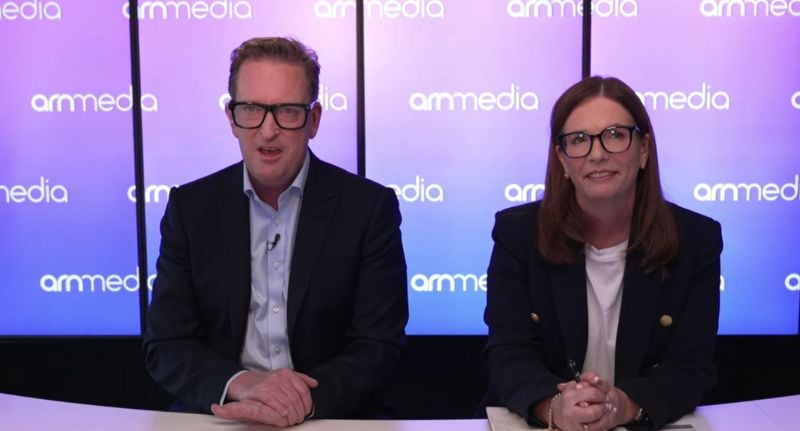
Michael Stephenson and Alexis Poole during the ARN earnings call. Source: ARN
The strategy: build beyond radio
Stephenson has framed the reset as deliberate and disciplined.
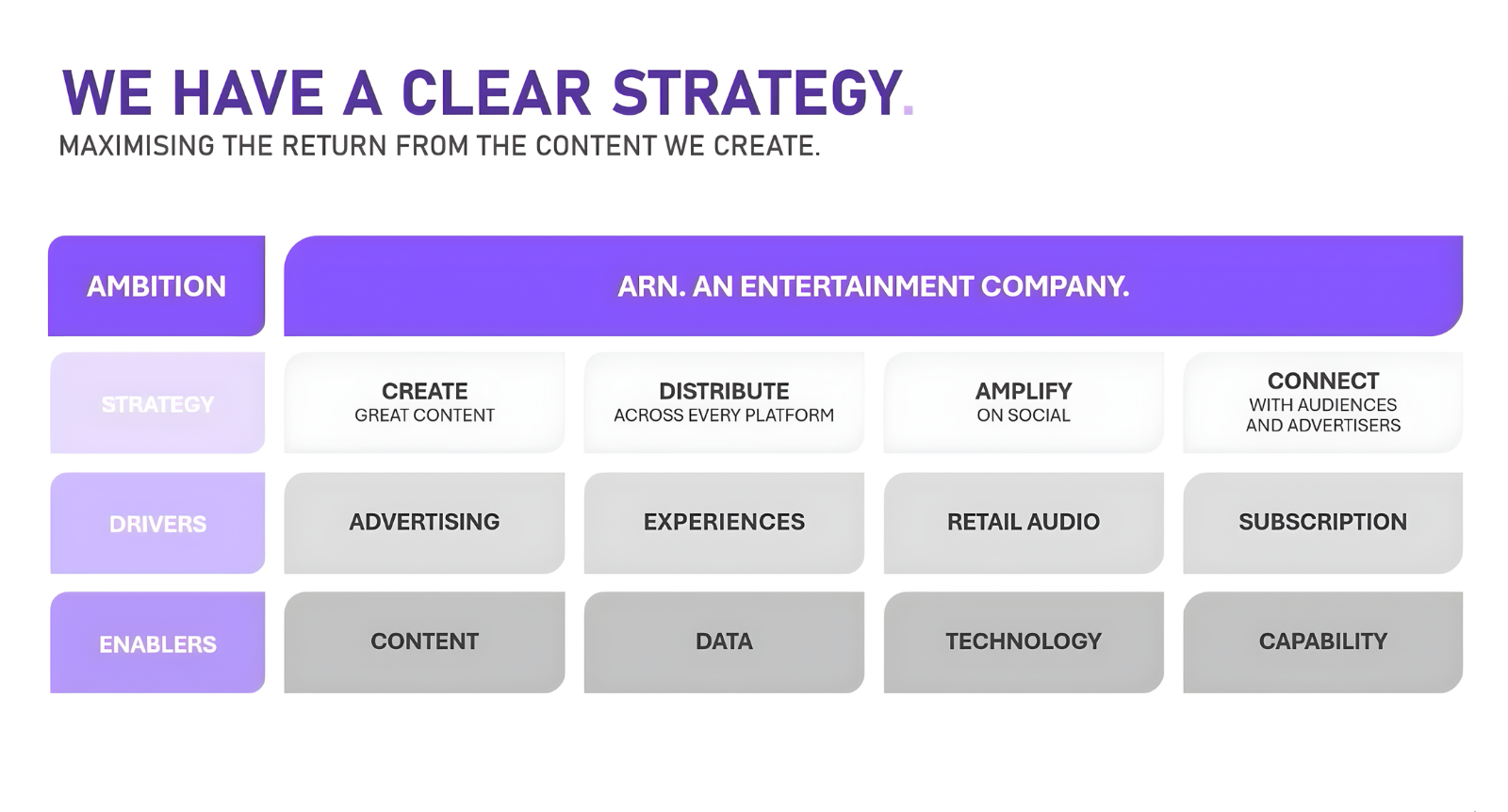
“We have a very clear strategy. Create great content, distribute it broadly, amplify it on social platforms to engage our audiences, and, importantly, our advertisers. That’s our plan,” he said.
“Our focus is on maximising the return on our existing content and talent investment by using our leading radio brands, our number one radio shows, and our radio stars to create content for every other platform. Content for radio, content for podcasts, content for video, and content for social platforms.”
Radio, he said, remains foundational.
“But what we’re building around it is something bigger. A platform that brings together audio, video, social and live experiences to create one connected entertainment ecosystem.”
Stephenson pointed to audio-video convergence as a medium-term opportunity, extending radio and podcast assets into video formats using existing studio and technology capability, “importantly with no incremental cost.”
“This strategy is expected to diversify revenue whilst improving the long-term monetisation of core audio assets,” he said.
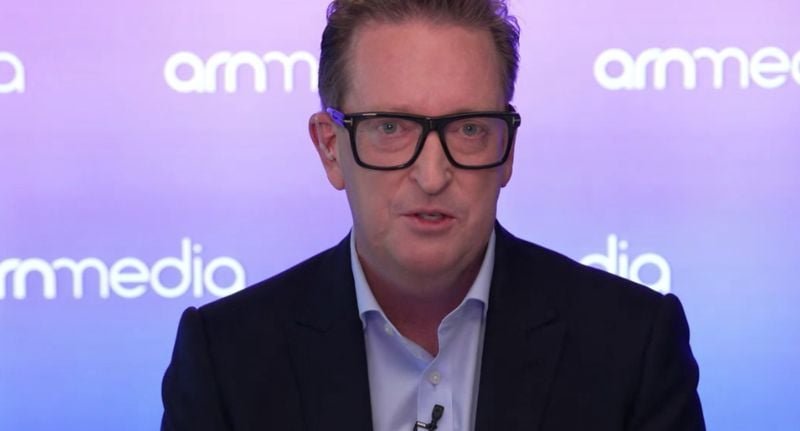
Michael Stephenson during the ARN earnings call. Source: ARN
The $200 million talent bet in sharper focus
The earnings slide also sharpens scrutiny on ARN’s record-breaking $200 million, 10-year deal with Kyle Sandilands and Jackie ‘O’ Henderson.
The Sydney breakfast show remains a ratings force in its home market, but expansion has been incremental rather than national. Melbourne performance remains modest, while Perth will receive the show via DAB+.
In a year where EBITDA fell 23%, major talent investments inevitably attract closer investor attention.
Stephenson has made clear the shift now is from redesign to delivery.
“We’ve obviously gone through a complete organisational redesign. We’ve put a new team in place. We’ve got a very clear strategy which I’ve outlined today to you in this presentation, communicating that to our teams broadly, and that will begin to execute,” he said.
“We’re in the executional phase and the vast majority of my time is spent on how we execute that plan across our entire business, diversify revenues and generate greater profits for our shareholders.”
Cash flow up, debt down – dividends paused
Despite earnings pressure, free cash flow rose 6% to $40 million, with free cash conversion reaching 234%.
Net debt was reduced 28% to $63.8 million, and debt facilities were refinanced and extended by three years.
However, the Board has suspended dividends while non-core assets are divested.
The message is clear: balance sheet repair and reinvestment take precedence over yield.
Outlook: flat market, execution critical
ARN expects the total audio advertising market to be flat in FY26, with low single-digit declines in radio offset by mid-to-high teens growth in digital.
Stephenson has acknowledged that the revenue mix must change.
“Today, whilst 40% of our audience is delivered on a digital platform, only 10% of our revenue is digital,” he said.
“Over time, any decline that we might see in traditional revenues will be more than offset by the growth in digital revenue.”
That ambition now defines the task ahead.
PM evacuated from The Lodge just hours after podcast chat with Karl Stefanovic
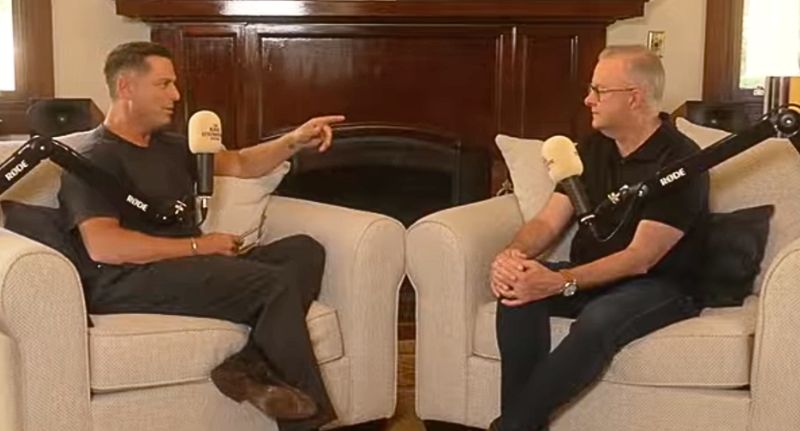
Prime Minister Anthony Albanese was evacuated from The Lodge in Canberra last night, just hours after speaking on a podcast hosted by Karl Stefanovic.
Just hours later, SBS broke the story that Mr Albanese had been evacuated from the residence after a security scare, with news.com.au reporting officials confirmed it was due to a possible bomb threat.
The incident sparked a significant police operation, and led to the prime minister being taken to a secret location for several hours.
Police first became aware of the threat at around 6pm on Tuesday night, with officers remaining for several hours after Mr Albanese was relocated.
The Australian Federal Police confirmed that at 6pm it responded to an “alleged security incident”.
“A thorough search of a protection establishment was undertaken and nothing suspicious was located,” the AFP said in a statement.
“There is no current threat to the community or public safety.”
A spokesperson for the prime minister said: “We trust the AFP to do their jobs and thank them for their work.”
The AFP said it would release more details at a later time.
The Lodge is the official residence of the Australian prime minister in Canberra and is where Mr Albanese and Jodie Haydon were married in November.
Albanese speaks on Karl Stefanovic’s podcast
The podcast was filmed at The Lodge in a cozy setting of the two men reclining on large white armchairs.
The Today host asked about the prime minister’s decision to back the UK government’s historic legal move to remove Andrew Mountbatten-Windsor from the royal line of succession.
Mr Albanese said he knows Australians are “disgusted” by the allegations about the former prince and his association with convicted sex offender Jeffrey Epstein.
“The whole Epstein saga is just rather extraordinary, quite a fall from grace for someone who was known as Prince Andrew for such a long period of time,” Mr Albanese said.
Stefanovic added his opinion about Mountbatten-Windsor, describing him a “disgusting, feral pig”.
WPP Media promotes Elliott Eldridge and Laura Fell in strategy shake-up
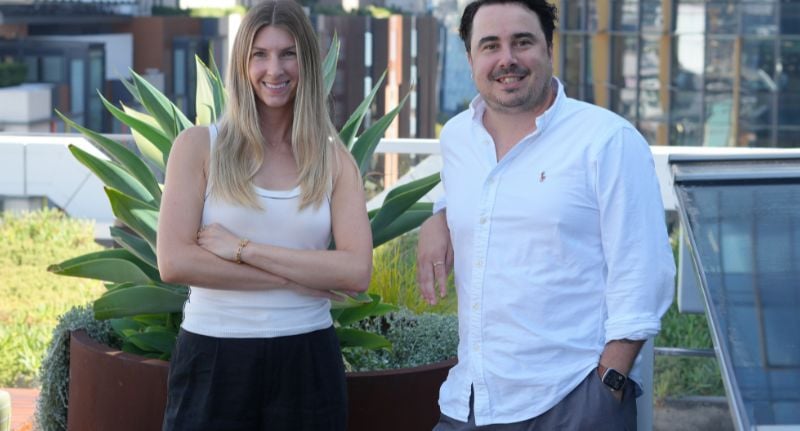
WPP Media has promoted Elliott Eldridge to Chief Strategy Officer and Laura Fell to Chief Planning Officer across Mindshare’s client portfolio, including Unilever, NAB, MG, Foxtel Group, Australian Labor Party and IKEA.
The appointments are effective immediately.
In their new roles, Eldridge and Fell will lead the advancement of strategic and planning products across Mindshare’s key accounts nationally.
National strategy and planning remit
As Chief Strategy Officer, Eldridge will help steer the national strategy agenda, shaping the approach to audience intelligence, communications strategy and effectiveness.
He will partner with national leadership and strategy teams to embed strategic processes across the business.
Fell will continue to lead the planning discipline, with responsibility for elevating planning standards across markets and client teams.
The pair have played a role in recent new business wins, including MG, uBank and Unilever, and in the creation of the bespoke WPP Media model for Suncorp, OpenEra.
They have also worked on campaigns including Dove’s Meno-Unpause platform, Rexona’s data-driven initiatives, OMO’s Laundry Goals and campaigns for Foxtel Group’s DAZN, MG and NAB.
Mindshare CEO Maria Grivas said in a statement: “Elliott and Laura are two of the most exceptional leaders and strategic minds in our industry. They elevate the work, elevate our people, and elevate the outcomes we deliver to clients. Their partnership is powerful, and these promotions recognise the sustained impact they continue to make across our business.”
WPP Media is WPP’s global media collective.
Main image: Laura Fell and Elliott Eldridge. Source: WPP

Google apologises for news alert about BAFTAs racial slur
Google has apologised after a computer-generated news alert about the BAFTA Film Awards racial slur incident included the N-word.
Deadline reports that Google pushed out a notification linking to a The Hollywood Reporter article, which had the headline: “How the Tourette’s Fallout Unfolded at the BAFTA Film Awards.” The alert invited readers to “see more on” and then included the N-word.
The notification was screenshotted and posted by Instagram user Danny Price. He said: “What an interesting Black History month this has turned out to be.” Price’s full post containing the unedited alert can be viewed here.
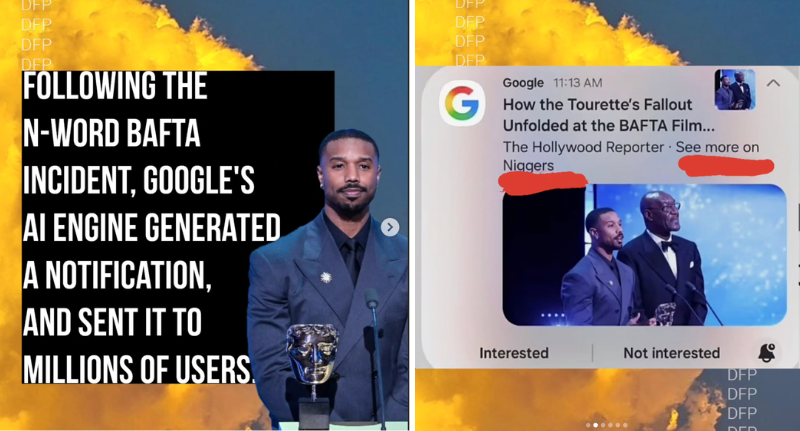
Danny Price’s screenshots of the Google alert. Image: Instagram
A Google spokesperson told Deadline: “We’re very sorry for this mistake. We’ve removed the offensive notification and are working to prevent this from happening again.”
Google has made it clear that the news alert was tech-related, not AI-generated.
Google said its systems “recognised a euphemism for an offensive term on several web pages, and accidentally applied the offensive term to the notification text.” It added: “This system error did not involve AI. Our safety filters did not properly trigger, which is what caused this.“
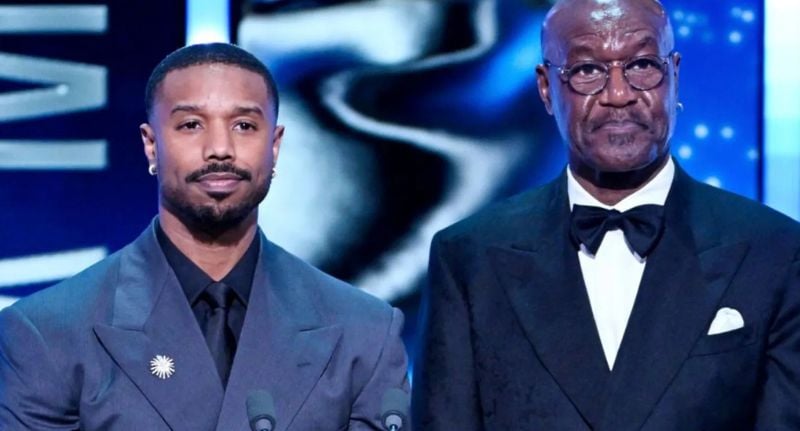
Michael B Jordan and Delroy Lindo presenting at the 2026 BAFTAs should have been a career-defining moment. Source: BBC
BAFTA judge resigns after racial slur scandal
Jonte Richardson has announced he will step down as a BAFTA judge over its handling of the highly offensive and controversial incident.
The award-winning writer, director and producer decided to withdraw from the BAFTA emerging talent judging panel after the scandal at the Royal Festival Hall in London.
Mr Richardson wrote on LinkedIn yesterday: “After considerable soul-searching, I feel compelled to withdraw from the Bafta emerging talent judging panel.
“‘The organisation’s handling of the unfortunate Tourette’s N-Word incident last night at the awards was utterly unforgivable. I cannot and will not contribute my time energy and expertise to an organisation that has repeatedly failed to safeguard the dignity of its Black guests, members and the Black creative community.
“‘This is particularly unfortunate given that this year’s cohort boasts some incredible Black talent, especially one of my favourite shows of 2025 ‘Just Act Normal’.
The incident occurred as actors Delroy Lindo and Michael B. Jordan were on stage presenting the evening’s first award. Tourette syndrome activist John Davidson, attending as the subject of the nominated film I Swear, was heard shouting the N-word during the ceremony.
The BBC has since conceded the language should have been edited out before transmission.
A spokesperson said: “We apologise that this was not edited out prior to broadcast and it will now be removed from the version on BBC iPlayer.”
In a separate statement, the corporation added: “Some viewers may have heard strong and offensive language during the Bafta Film Awards. This arose from involuntary verbal tics associated with Tourette syndrome, and as explained during the ceremony, it was not intentional.”
The broadcaster declined to comment further on why the slur was not bleeped or removed despite the delay.

Washington insider POLITICO expands to Australia
Global political publisher POLITICO will expand into Australia, launching a Canberra-based operation and a new Canberra Playbook when Federal Parliament returns from its winter recess in the third quarter of 2026.
Founded in Washington in 2007, POLITICO built its reputation on covering the intersection of politics, policy and power.
In the United States, it is known for breaking major political stories and agenda-setting investigations, including reporting on the Hunter Biden laptop controversy that reverberated across Washington and beyond.
It expanded into Europe a decade later, establishing a significant presence in Brussels and across the continent.
Now, the publisher is turning its attention to Australia.
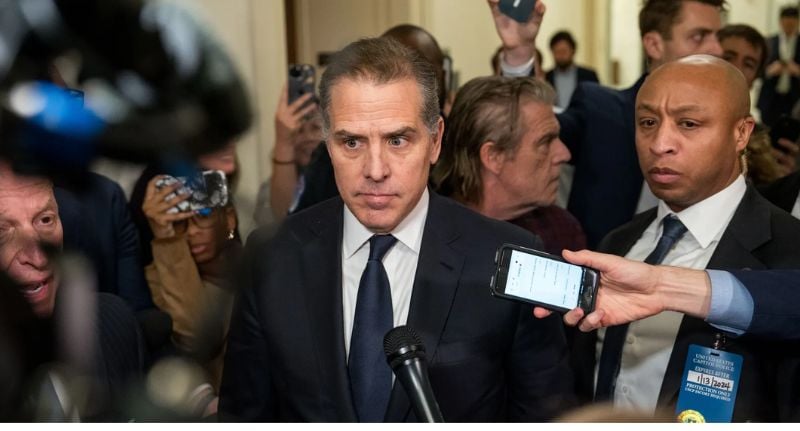
Hunter Biden. Source: Supplied
“POLITICO’s expansion to Australia is natural. We will deliver the same essential US and European coverage that our audiences in the Western Hemisphere depend on. And we will be even better positioned to help readers around the globe understand important economic and geopolitical developments in the Indo-Pacific, from trade and defence to energy and critical minerals,” POLITICO Chief Executive Officer Goli Sheikholeslami said.
“This investment in a third continent underscores how POLITICO enters its third decade as a strong, successful, and growing news organisation, committed to linking international power centres and illuminating politics, power, and policy on a global scale.”
The Australian operation will aim to serve what the company describes as the country’s most influential audiences, while also helping readers in North America and Europe better understand decisions made in Australia and their global impact.
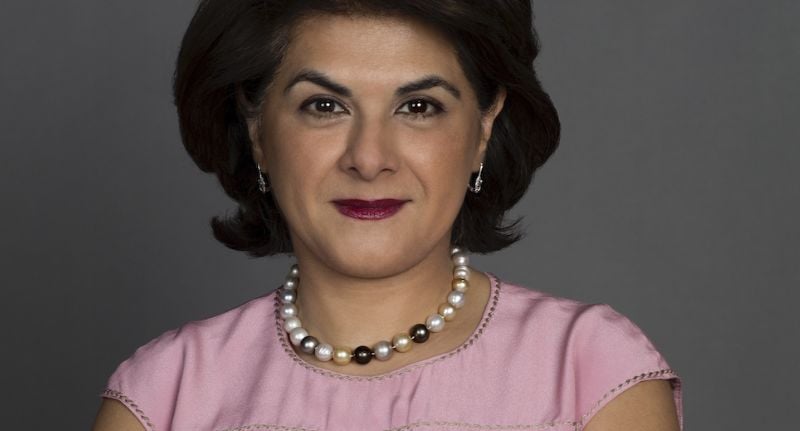
POLITICO Chief Executive Officer Goli Sheikholeslami.
Ryan Heath returns to lead the launch
Leading the expansion is POLITICO alum Ryan Heath, who returns to the publisher as Launch Editor for Australia.
Heath previously launched Brussels Playbook in 2015 and played a central role in establishing POLITICO as a must-read in European political circles. In Australia, he will oversee the editorial build-out, assemble the founding newsroom team and initially author the Canberra Playbook.
“Australians need journalism that both explains power dynamics and connects the dots globally. That’s why I’m so excited to help lead POLITICO’s expansion into my home country,” Heath said.
“In this era of great power and technology upheavals, POLITICO’s ability to examine Australia’s most important security and trade relationships is unrivalled. We take politicians and policy seriously – it’s all we do. We will bring that depth and new angles to political journalism in Canberra, just as we have everywhere else we operate.”
The Playbook model comes to Canberra
The Canberra Playbook will follow the model established in Washington and Brussels: early-morning, agenda-setting coverage aimed squarely at policymakers, advisers, lobbyists and corporate decision-makers.
For the local media market, the launch adds another specialist political player in a capital already served by legacy mastheads, broadcasters and a growing cohort of digital-first operators. For POLITICO, it strengthens its strategy of linking power centres across North America, Europe and now the Indo-Pacific.
The company says its Australian edition will maintain its “distinctive, non-partisan” approach, focused on insider reporting and policy detail.
With Parliament set to return in the third quarter of 2026, the countdown to Canberra Playbook is now underway.

‘We will not stand still’: Heith Mackay-Cruise and John Kelly on speed, scale and the next phase of SCA–Seven
The first set of numbers since the merger of Southern Cross Media Group and Seven West Media landed yesterday.
The new media monolith recorded a 17% drop in profit, even as the group reported diverging fortunes across its portfolio.
For Chairman Heith Mackay-Cruise, the message is less about defending a 17% dip and more about momentum. For CEO John Kelly, it’s about integration at pace.
For shareholders, it might be time to strap on those helmets, because despite the merger being just 49 days in, the training wheels have well and truly been torn off.
When asked by Mediaweek about the company’s decision to part ways with former CEO Jeff Howard a day before releasing its half-year results, Mackay-Cruise was bullish in his reply: “We have a very robust strategy with regards to the bringing together of two amazing media companies to create the largest multimedia platform in Australia.”

Jeff Howard.
A frustrating market
Mackay-Cruise is pragmatic about the headline number – a 17% fall in profit – highlighting industry-wide soft advertising conditions, combined with rising interest rates.
“The media sector is facing a very frustrating economic environment,” he explained.
“When the RBA increases interest rates, that puts the handbrake on consumer sentiment, and that flows through to advertising dollars. And we’re seeing that in a very shortened market at the moment.”
Mackay-Cruise went on to say that while revenue was down overall, the “green shoots” were clear in the group’s audience performance, with television, audio and digital products delivering the highest audience shares the company has recorded.
Digital as the growth engine
Barely seven weeks into the job, Kelly sounds energised rather than cautious, telling Mediaweek he is “more excited today” than when the deal first began, pointing to the opportunities ahead, particularly in digital.
He pointed to the scale differential between platforms, saying, “The reality is there’s 15 million signups in 7plus, only 2.5 million in LiSTNR,” and described the potential to “cross-pollinate not only the signups, but the activity on platforms” as “massive.”
Kelly added that digital assets will “clearly be the growth engine of the company moving forward.”
The radio executive was quick to remind media and shareholders he is not a one-trick pony, telling Morningstar Australia’s Director of Equity Research, Brian Han, during the earnings call that he brings three decades of media experience to the role, including 17 years at Network 10 across operations, strategy and finance.
“I guess I have the benefit, I’ve got 30 years in media, but probably people don’t understand. I’ve spent 17 years at 10 in both operations, strategy and finance roles,” Kelly said, adding that he understands “cost, cost efficiencies” and “how to target cash flow returns.”


Streaming surging
Seven’s streaming service 7plus delivered double-digit revenue growth in the half, while LiSTNR posted revenue growth and positive EBITDA, reinforcing management’s view that digital is the group’s long-term growth engine, even if it does not yet fully offset the earnings weight of linear television.
For his part, Mackay-Cruise is pushing back on any suggestion that broadcast is obsolete.
“There is no question that consumer behaviour is changing,” he said, noting that during the Bondi terror attack more viewers turned to the main TV news programmes on 7, 9 and ABC “than at any other time.”
He added that this highlights “the importance of actually having quality journalism” underpinning news and current affairs, describing it as the “source of truth” and arguing, “you can’t get that source of truth from the technology platform in a social media sense.”
Going bush
The strategic logic of the merger becomes even clearer in regional Australia.
As Mackay-Cruise explained, the group’s “coverage of regional and rural Australia is second to none,” with 73% of regional radio listeners and a 46% share of regional television.
The combined footprint spans every regional, rural and remote market, “more so in some markets than the ABC”, giving the business what he described as “complete coverage of Australia from a messaging perspective.”
Mackay-Cruise is also quick to point out that the reach is not just about the audience, but also revenue.
He pointed to the strength of Seven’s broadcast and print assets in Western Australia, such as The Nightly, alongside SCA’s radio network, describing the combined footprint as “amazing.”
For advertisers, the real upside sits in cross-selling: SCA has 8,000 clients, but only 2,000 currently advertise with Seven. That leaves 6,000 potential customers who can now be offered a one-stop shop across television, radio, print and digital.

Future facing
The commercial opportunity may be front of mind, but the cost line is just as pressing.
The merged group has flagged $30 million in cost savings over the next year amid soft advertising conditions.
Mackay-Cruise was direct about what that entails.
“In an industry with cyclical headwinds, and naturally we have a significant cost base that does include people.”
He added: “We will not stand still, and we will be agile, and we’ll be focused on accelerating the execution of our agreed strategy to get the right benefits for all of our stakeholders.”
In plain terms, further restructuring is on the table.
The first result shows growth in audiences and digital revenue, but continued earnings pressure, particularly in linear television. The next phase is about delivery: realising merger synergies, removing costs, and demonstrating that scale across 25–54s, strength in regional markets, and an integrated audio, video, and digital sales model can convert into sustained profit growth in a tight advertising market.
Main image: Heith Mackay-Cruise, and John Kelly. Source: SCA

Move over music: Audiobooks power Australia’s workouts
New research from Audible Australia suggests we’re increasingly choosing audiobooks over adrenaline-fuelled playlists to power through our mornings and workouts.
The findings reveal digital audio is fast becoming part of the nation’s daily ritual, with 32% of Australians saying listening to audio is essential or very important in setting the tone for their day.
Almost half (47%) use audio in the morning to improve their mood or mindset, while 26% say it helps soothe nerves ahead of a stressful day, and 25% feel more mentally prepared after listening.
Audio is no longer just background noise. Forty-one per cent say it enhances getting ready for the day, while 39% say it improves their morning exercise routine.

From mindset to movement
The research signals a shift in how Australians approach fitness. More than half of Australians listen to podcasts while exercising (57%), and 34% choose audiobooks.
Among runners who listen to audiobooks:
• 47% say time passes faster
• 36% say they stay more motivated
• 36% report improved focus
• 35% say runs feel easier
• 24% say it helps them stay consistent
The behavioural impact is tangible. Of those who listen to audiobooks while exercising, 35% exercise for longer, 25% work out more often, and 16% shift their workout time to fit in more listening.
Half report a better mood during workouts, 42% experience reduced stress, and 29% say they reach a deeper flow state.

Australian athlete and author Turia Pitt, author of Selfish.
Audio as a daily performance tool
Australian athlete and author Turia Pitt, author of Selfish, said audio plays a powerful role in shaping her mornings.
“As a mum, a runner and someone who’s learned a lot about resilience, I know how powerful it is to start with something that lifts you up. That’s why I love the idea of using audio – it helps you get out the door, stay motivated and actually enjoy the hard bits.
“Even on the days when you feel flat, a great story or a motivating voice can shift your whole mindset. If more Aussies can find that spark through Audible and a morning routine that works for them, then that’s epic,” she said.
Polly Blenkinship, Global Head of Brand Media, Audible, said the data reflects a broader shift in how listeners engage with the platform.
“Australians love getting a head start on the day, whether that’s going for a run, taking a walk or turning a commute into a mindful moment. We’re seeing more and more people bringing Audible along for these moments with audiobooks giving listeners motivation, calm, or a little inspiration without competing for attention. Wellness is becoming such a big part of how and why our listeners engage with Audible.”

Polly Blenkinship, Global Head of Brand Media, Audible.
Community drives discovery
Community influence also plays a role. Sixty-seven per cent of Australians say they are more likely to try a new audiobook or podcast if someone in their fitness circle recommends it. Seventy-seven per cent say they would listen to audiobooks while working out if told it could help improve their personal best.
To tap into the momentum, Audible is launching its second consecutive Move with Audible Challenge on Strava. From 8 February to 31 March 2026, participants are invited to complete six hours and five minutes of activity – the average length of an audiobook – to unlock a two-month extended free trial of Audible Premium Plus and a two-month Strava subscription trial.
The challenge spans walking, running, cycling, yoga and strength training, reinforcing Audible’s positioning of audio as a companion to movement rather than a distraction from it.
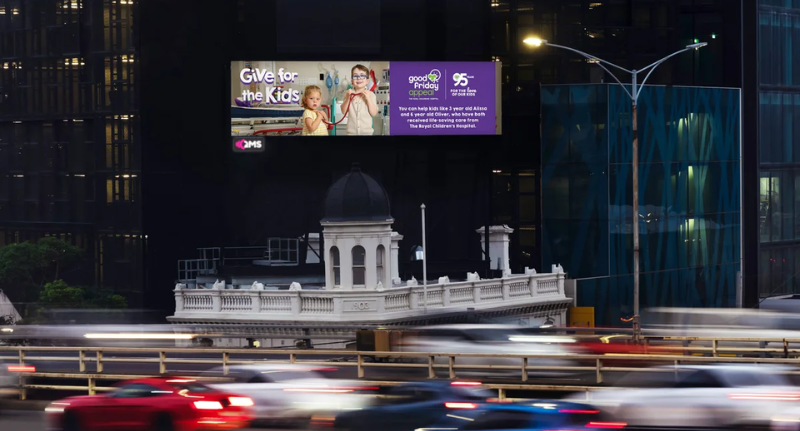
QMS backs 95th Good Friday Appeal with ‘Give For The Kids’ campaign
Digital outdoor media company QMS has renewed its partnership with The Royal Children’s Hospital Good Friday Appeal – supporting the landmark 95th year of fundraising for paediatric care across Victoria.
In its fourth consecutive year as a partner, QMS will amplify the 2026 “Give For The Kids” campaign across its metro and regional Victorian digital billboard network.
Statewide reach for a landmark year
This year’s Appeal ambassadors, Ollie and Alissa, will feature prominently across QMS’s high-impact sites, helping to drive awareness and donations in the lead-up to Good Friday on 3 April 2026.
Funds raised will support state-of-the-art equipment and technology, patient and family-centred care programs, groundbreaking research and education initiatives designed to attract and retain leading medical talent at The Royal Children’s Hospital.
Among the key projects funded this year is the GEMStone study, which uses advanced genomic testing to address genetic conditions, the leading cause of death in children in high-income countries.
Funding will also support MRI-compatible Neonatal Transport Ventilations, aimed at reducing transport risk and improving care for intubated babies in hospital settings.
Beyond billboards
QMS’s involvement extends beyond its digital out-of-home campaign, with staff also participating in volunteering and fundraising activities in the lead-up to the Appeal.
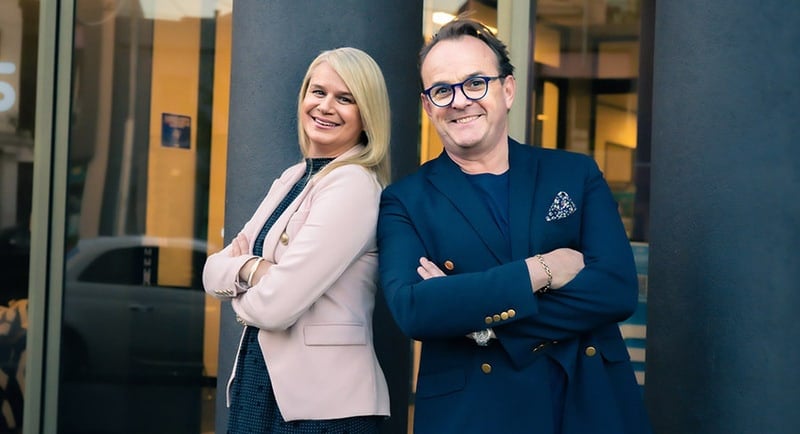
QMS COO Sara Lappage & CEO John O’Neill Image: QMS
QMS Chief Operating Officer Sara Lappage said the partnership reflects a growing commitment to the cause.
“Four years in, our commitment to the Good Friday Appeal continues to grow. The Royal Children’s Hospital provides extraordinary care to sick children and their families, and we’re proud to use the scale of our network to help drive fundraising that supports this life-changing work,” she said.
Good Friday Appeal Executive Director Rebecca Cowan thanked QMS for its continued backing during a milestone year for the campaign.
“On this landmark year for the Good Friday Appeal, we celebrate the unwavering dedication of our generous partners, fundraisers and volunteers, through which countless lives of children and their families have been touched,” she said.
The Good Friday Appeal telethon will run from 9:00am to 11:30pm on 3 April.
Where to donate
To donate online, click the link here.
Why your 2026 strategy needs a sense-check
Leah Cioccio, Strategy Director, Equality Media + Marketing
As a strategist, I know most plans do not reset simply because the calendar flips.
Real strategy runs to financial years, investment cycles and long-term ambition. A new year does not automatically make an existing plan wrong. In fact, constantly rewriting strategy in response to short-term mood shifts is often where momentum is lost.
And yet, the start of the year does something interesting. The bookend of Christmas, the return to routine and the diary that is briefly empty create a pause. It becomes easier to lift your head from the plan and ask a different question. What is happening around us right now, and how might that change the way our marketing lands?
This is not a call to rip up your FY26 strategy. It is a reminderto sense-check it against the reality Australians are living in as we enter the year. Because while the fundamentals may still be sound, the emotional context has shifted.
Optimism hasn’t disappeared, but it is under pressure
The data tells a nuanced story.
McCrindle research shows 64% of Australians remain optimistic about the country’s future over the next three years, down from 72% in 2021.
Optimism is still present, but it has softened. At the same time, the Westpac–Melbourne Institute Consumer Sentiment Index remains below neutral, reflecting ongoing short-term caution. Australians still believe in the country’s long-term vision, but many feel more exposed in the present.
That tension is shaping behaviour, from how people spend and how quickly they switch, to how much tolerance they have for friction and how fast they disengage when something feels unnecessary or unfair.
For marketers in 2026, the challenge is no longer simply about cutting through. It is how to show up in a way that people are willing to stay with.
In low-trust environments, competence becomes visible
Roy Morgan’s Trust in Institutions research places trust in government at around 30%, alongside media and banking. This long-term erosion of institutional trust has reshaped how Australians respond to authority, messaging and promises of any kind.
In low-trust environments, scepticism becomes the default. Australians are more alert to exaggeration and less willing to suspend disbelief simply because something looks impressive or entertaining. People are less interested in being wowed and more interested in being reassured that a brand will do what it says, behave predictably and treat them fairly.
Creativity still matters. Memorability remains the first battleground for growth, and emotionally engaging work is more likely to be noticed and remembered. But in 2026, creativity must also signal competence. The strongest brands combine emotional impact with credibility.
Value is judged after the purchase, not just at checkout
Australians are value-conscious, and increasingly value-weary. ABS retail data shows that spending spikes around events like Black Friday are now firmly embedded in the calendar. Outside those moments, however, retail growth remains modest, and many households are simply holding steady in real terms.
Discounting can unlock transactions, but it does little to build confidence over time. Where value is now truly judged is after the purchase. In categories like insurance, where annual switching rates consistently sit between 20 and 25 per cent, customers are making practical assessments about whether the experience matches what was promised.
In this context, value is created through the everyday moments that follow the sale, as clear communication, advertising included, and predictable service work together to confirm whether a brand is worth choosing.
Housing pressure is identity pressure
Housing has become one of the most emotionally charged issues in Australia.
Home ownership has fallen from 70% in 1991 to 66% in 2021, with the sharpest declines among younger Australians. At the same time, nearly 30% of Australians are now born overseas, making this one of the most culturally diverse periods in our history.
Despite that diversity, home ownership remains a powerful symbol of stability and progress. For some, it is something to protect. For others, it is a milestone that feels increasingly out of reach.
Brands operating near housing, finance, insurance or major life stages are therefore working in emotionally charged territory, whether they intend to or not. In this environment, brands have an opportunity to build stronger meaning through clear narratives and genuine differentiation, giving Australians a clearer sense of who they are and what they stand for.
A final thought
Taken together, these shifts point to a quieter but more demanding moment for brands. Australians are not closed to marketing, but they are more selective about what they give their attention to and what they trust.
Your strategy is probably not wrong, but the context in which it is playing out has changed.
That makes this a moment to refine, not reset. To stay the course where it still makes sense, while adjusting how clearly, consistently and credibly you show up.
The start of the year is a good time to ask that question. Not whether we change the plan, but whether we are still showing up in the right way.