
Thursday December 11, 2025
Who knew we were this prudish? The ads Australians couldn’t handle in 2025
Australia’s advertising regulator, Ad Standards, has revealed the 10 commercials that triggered a spike in public complaints this year.
Among the more than 230 ads assessed by the community panel, a series of ads featuring Kia’s ‘zombie-proof’ EVs drew the most attention.
Most concerns centred on the use of zombies, with many of the 86 complainants worried the imagery could frighten children.
While the panel decided the ads weren’t overly scary, it found one ad had depicted a remote parking assist feature in a way likely to contravene road rules.
A Dettol hand sanitiser ad, which featured a child picking their nose, was described by some complaints as ‘gross’ and ‘sickening’.
However, the community panel found the ad complied with the advertising rules and did not encourage behaviour that was unhealthy or unsafe.
Meanwhile, it appears we’re back in the 1950s, a time when using the anatomically correct word, vagina, was unsavoury. Caruso’s Natural Health received more than 60 complaints about its ad promoting a vaginal health probiotic.
The issue? Inappropriate language.
Executive director Greg Wallace said that Ad Standards received almost 5,000 complaints this year.
“Australians care deeply about the advertising they see and hear every day and aren’t afraid to speak up if they think a brand has overstepped,” he said.
“We take that feedback seriously and work closely with industry to support responsible advertising.”
The big issues
The issues that attracted the most complaints in 2025 were sex and nudity, followed by violence, then health and safety.
Ad Standards also heard from many Australians who were put off by ads they considered tasteless, gross or relied too heavily on shock value.
“This year we saw a number of complaints from people who were turned off by ads they felt crossed the line on taste,” Wallace added.
“While shock tactics may seem appealing from a creative standpoint, they can quickly backfire. Australians respond far more positively to advertising that’s clever and creative rather than deliberately provocative.”
Decisions on complaints are made by the Ad Standards Community Panel, a diverse group of Australians representing a wide range of backgrounds, experiences and perspectives.
Top 10 cases
1. Kia Australia – 86 complaints
This series of TV ads show Kia’s range of ‘zombie proof’ electric vehicles.
Concerns: Frightening imagery, road safety.
Decision: Breach (motor vehicle advertising rules)
2. Dettol – 70 complaints
This TV ad for hand sanitiser includes a scene showing a boy picking his nose and wiping his finger across a tablet.
Concerns: Depicting unhygienic behaviour.
Decision: No breach
3. Caruso’s Natural Health – 67 complaints
This TV ad promotes a vaginal health probiotic.
Concerns: Discrimination, inappropriate language.
Decision: No breach
4. Youi – 65 complaints
This TV ad features a family discussing shopping for car insurance, comparing it to Aunty Kate’s search for a boyfriend.
Concerns: Discrimination.
Decision: No breach
5. Big W – 37 complaints
This TV ad about school holidays shows a child putting up a blurred out middle finger.
Concerns: Inappropriate gesture.
Decision: Breach (Language)
6. Red Rooster – 34 complaints
This TV ad shows a skateboarder stealing a chicken at a skate park.
Concerns: Anti-social behaviour, theft.
Decision: No breach
7. Pilot – 32 complaints
This TV ad for an erectile dysfunction treatment shows people discussing a garden hose.
Concerns: Sexual innuendo.
Decision: No breach
8. Rexona- 31 complaints
This TV ad shows close-up shots of body parts with labels like ‘bums’ and ‘balls’. Concerns: Inappropriate language, sex and nudity.
Decision: No breach
9. Bankwest – 27 complaints
This TV ad shows a woman making a ‘power move’ by using a coworker’s cup.
Concerns: Workplace bullying.
Decision: No breach
10. Westpac – 25 complaints
This TV ad shows a man feeding his dog ice-cream.
Concerns: Animal mistreatment.
Decision: No breach
Instagram unveils game changing algorithm hack for users and brands
Instagram is giving users a closer look under the hood of its recommendation engine, unveiling an AI-powered feature that lets people view and adjust the topics shaping their Reels feed.
The move lands amid pressure on platforms to open the black box of algorithmic curation, and arrives in the same week Australia enforced its world-first under-16 social media ban.
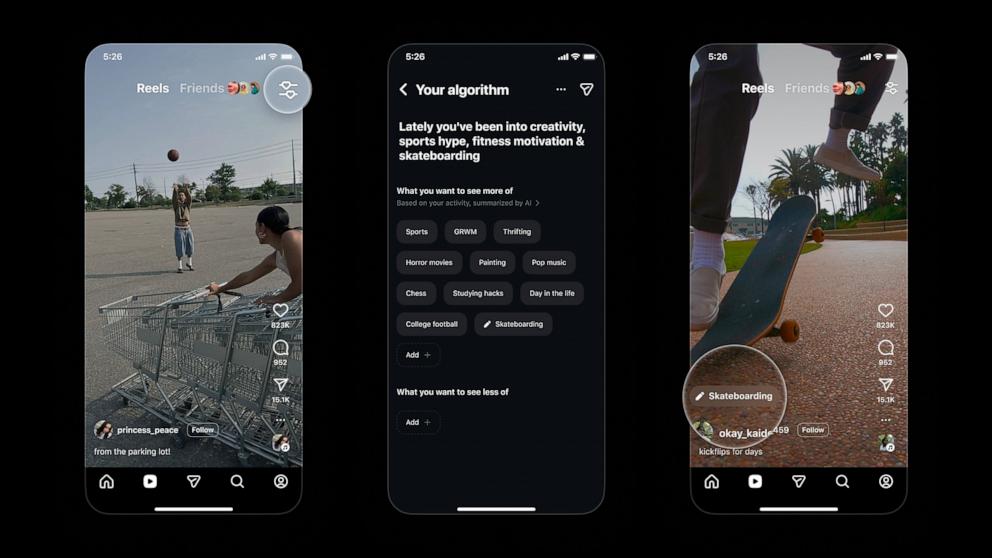
A closer look at ‘Your Algorithm’
The new feature, called Your Algorithm, sits in the top-right corner of the Reels tab, marked by a small icon with two lines and hearts.
Tapping it opens a personalised dashboard of the interests Instagram believes define each user’s feed – a running map of what the app thinks you like, based on your viewing and engagement history.
From there, users can “view a personal dashboard of their top interests” and choose which topics they want to see more or less of. Meta says the recommendations will shift in real time.
“Instagram has always been a place to dive deep into your interests and connect with friends,” the company wrote in a blog post. “As your interests evolve, we want to give you more meaningful ways to control what you see.”
Transparency under regulatory pressure
The launch signals a notable shift in tone from Meta, which for years resisted calls for deeper transparency around its recommendation systems – often described as the industry’s secret sauce.
Critics argue that opaque algorithms fuel echo chambers or surface harmful content; regulators have increasingly sought to address those risks.
Meta now says Instagram is “leading the way” by giving users the power to fine-tune their feed, including the option to type in specific topics to modify how the system treats them.
The company plans to expand the feature beyond Reels into Explore and other app surfaces. It’s available now in the United States and will “roll out globally in English soon.”
Arriving in a charged policy moment
The timing hasn’t gone unnoticed.
Yesterday, the federal government’s under-16 social media ban rolled out, in a sweeping attempt to “take back control” from tech giants and curb what the government labelled “predatory algorithms.”
While Your Algorithm won’t change Meta’s enforcement obligations, it does signal a platform leaning into user choice as the regulatory climate tightens.
It also gives Instagram a cleaner narrative: more visibility, more agency, and – critically – more distance from the suggestion that algorithms operate unchecked.
Warner Music Australasia announces major promotions
Warner Music’s local team has shuffled the deck this week, rolling out a couple of big leadership promotions that speak to where the label wants to push next.
Alex Young steps up as VP domestic artists for Australasia, taking the reins across A&R, creative, and marketing.
It’s a broad remit and a clear signal that Warner wants a tighter, faster domestic pipeline feeding both charts and culture.
Meanwhile, Dan Ellis moves into a newly minted role as VP, international artist strategy, across Australasia and Southeast Asia.
His brief? Figuring out how the region’s talent can travel further, faster, and louder. The label says the changes are designed to fuel global export ambitions and sharpen how local artists break beyond home turf.
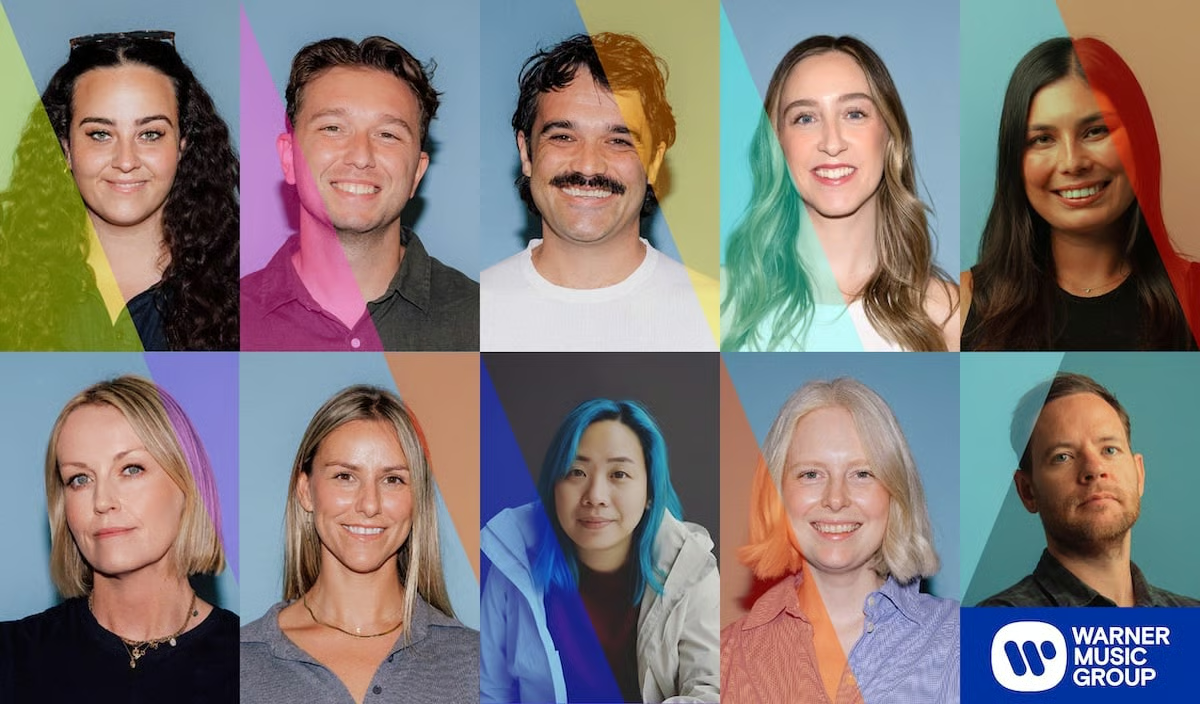
The label confirmed that Young will be supported by Charlotte Kindred, who has been promoted to the new role of Head of Domestic Artist Strategy at Warner Music Australasia, leading the day-to-day execution of domestic and export strategy, and by Sarah Thomas in the position of Artist Relations & Promotions Manager, Australasia Export.
The newly created position will have Thomas based in New York.
Meanwhile, Ellis will be backed by Lucy Baker, who is promoted to Head of PR, Artist Relations & Wellbeing, where she will lead PR, artist relations, and radio promotional efforts for Australia and New Zealand; Jordon Dionatos, WMG’s International Artist Strategy Lead, Australasia; and Lisan Yee as International Artist Strategy Lead, SE Asia, based in Singapore.
WMG has also announced that Manny Kupelian will take on the new role of Head of Creator Strategy, in which she will oversee the Creator & Influencer team across the region; Mat Buck has been to promoted to GM Streaming, Social & Community; and Luke Vespa is the group’s new Streaming & Partnerships Lead.
“These strategic appointments reflect our unwavering commitment to our mission, to take our local artists global and make our global artists local,” Rosen said.
“With an expanded regional footprint, we are now better positioned than ever to deliver on this mission. This new structure combines agility with deep specialisation, ensuring we have precisely the right expertise to seize on the dynamic opportunities across our region.
“I’m immensely proud to promote this exceptional group of leaders who will drive our continued growth while keeping our extraordinary artists at the heart of everything we do,” he said.
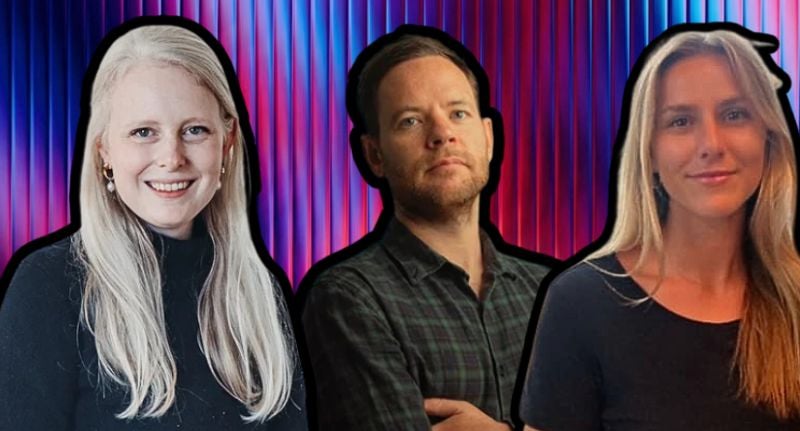
Main image: Alex Young, Dan Ellis, and Charlotte Kindred
‘Diabolical’: McDonald’s pulls AI Christmas ad after backlash
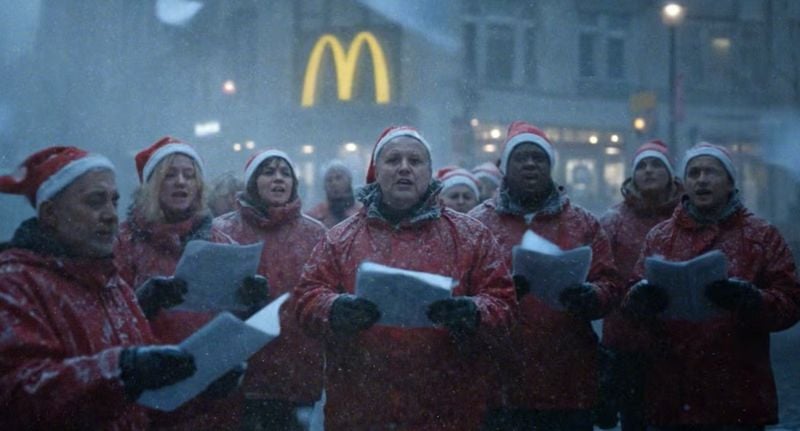
McDonald’s Netherlands has pulled an AI-generated Christmas commercial after what was meant to be a playful nod to holiday stress quickly turned into a creative misstep, triggering sharp consumer backlash and reigniting industry debate about how far brands can push AI-led storytelling before audiences push back.
As Ad Age reports, the 45-second spot, created by TBWA\Neboko with production by The Sweetshop, was a fully AI-generated musical number designed to tap into the season’s chaos.
Cats upending Christmas trees, falls on the ice rink, burnt biscuits – all stitched together under a reworked “It’s the Most Wonderful Time of the Year,” now spun as “It’s the Most Terrible Time of the Year.”
The intention was simple enough: acknowledge the overwhelm consumers feel at this time of year and position McDonald’s as a small sanctuary from the festive frenzy.
But as the ad travelled beyond the Netherlands, viewers were less charmed.
Audience reaction turns cold
Comments arrived fast, and they weren’t wrapped in holiday spirit.
“Indeed, it is the most terrible time, not because of Christmas, though; it’s because of this thing,” one viewer wrote on YouTube.
Another dismissed it outright: “This is diabolical.”
By Tuesday, the fast-food giant had quietly removed the video from YouTube.
The stakes for AI creativity in advertising
The episode lands at a moment when marketers are experimenting heavily with generative AI, yet audiences remain quick to call out work that feels rushed, uncanny or emotionally thin.
In an interview with Mediaweek, Phil McDonald, CEO at BCM, singled out a Christmas AI ad rolled out by Coke as an example of “how not to harness AI to build your brand.”
“There is nothing good about this. The idea that this type of AI can replace heartfelt, well-branded, powerful advertising is as believable as Santa’s elves.”
The tension is growing: AI offers speed, efficiency and endless production permutations, but consumers still expect the polish, warmth and human touch that holiday creative – more than most genres – relies on.
Afterpay reveals what was on Australia’s unhinged shopping list for 2025
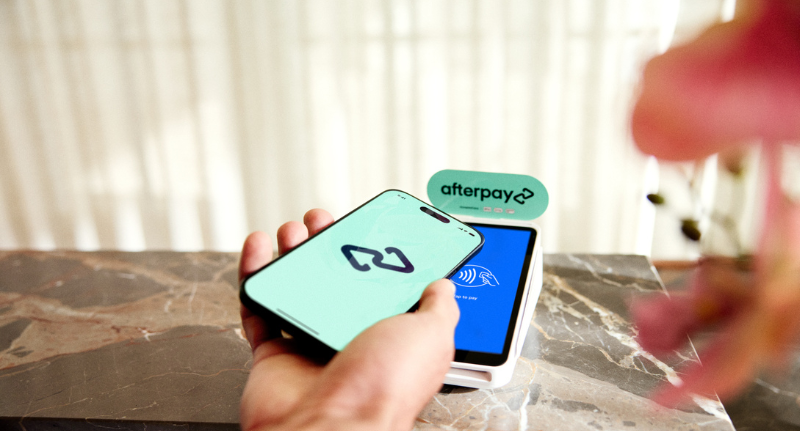
Afterpay has released its annual snapshot of what Australians added to cart in 2025, with the newly published Afterpaid 2025 Report capturing the retail mood of the nation through anonymised transaction data from 4.1 million customers.
The report highlights the products, experiences and contradictions that shaped consumer behaviour this year across fashion, beauty, tech, home and lifestyle.
From bag charms to bar carts, hotel stays to wheel alignments and LED masks to lube, the report points to a year defined by personal upgrades, self-expression and cultural microtrends driven by predominantly Gen Z and Millennial shoppers.
What Australia loved in 2025
Some of the most consistently purchased items on Afterpay included Booking.com hotel stays, Nike Tuned 1 sneakers, tickets to Hot Wheels Monster Trucks Live and mycar wheel alignments.
These topped what Afterpay calls its Slay Score, a ranking of the year’s most in-demand purchases.
Not everything on the list was predictable. While Nike’s TNs and Labubu dolls continued their run, other curveballs included the viral Nespresso peppermint coffee that swept Gen X and Millennials, and a surprising rise in adult role-play costumes.
The mix, the report says, shows shoppers are leaning into delight and novelty just as much as utility.
Experiences continue to outpace possessions
Experiences led the most significant shift in consumer behaviour, with hotel bookings, festivals, boat parties and wine tours climbing sharply.
Hotels.com saw its purchases rise 73 per cent, and boat party tickets jumped 104 per cent. Afterpay says flexible payments are helping make previously premium experiences widely accessible.
The fashion contradictions that defined the year
Fashion trends were driven by contrasts. Baggy jeans and ultra-baggy sweat pants (As seen and guessed) dominated Gen Z wardrobes, while fitted cardigans became one of the year’s biggest surprise wins.
Bag charms became the micro-accessory of 2025, mesh flats rose 96 per cent, and ballet flats increased 34 per cent.
Cowboy boots had a cultural moment, selling five times as many in Sydney and Melbourne as in Queensland.
Nike Tuned 1 cemented itself as the national go-to sneaker, led by Gen Z, who accounted for 44 per cent of purchases. Kitten heels were a comeback story, rising 193 per cent.
Beauty trends point to looksmaxing
This year saw women invest heavily in beauty technology, with LED masks up 95 per cent, press-on nails up 93 per cent, gua sha tools up 80 per cent and ice rollers up 47 per cent. Men focused on grooming and dental aesthetics, with tooth whitening kits increasing by 115 per cent.
Home upgrades reflect a mood for comfort
Consumers continued refreshing their homes with décor and practical upgrades. Bar carts climbed 117 per cent as home entertaining continued its revival.
Lighting trends also surged, with wall sconces up 43 per cent and pendants up 52 per cent. Robot vacuums were powerful among Millennials, accounting for 49 per cent of purchases in the category.
Tech, gaming and everyday optimisation
Tech purchases favoured content creation and wellness tracking. E-readers jumped 352 per cent, boosted by BookTok culture.
Ring lights climbed 133 per cent. Smart rings were up 34 per cent, and walking pads saw their most significant spike during the early-year return-to-routine period. Screen protectors remained one of the top tech essentials.
Adult categories become mainstream
The report shows Australian shoppers are increasingly comfortable buying adult products online. Role play costumes surged 292 per cent, lingerie rose 26 per cent, and lace sets were up 25 per cent. Among the top-selling items was Lovehoney’s 6-inch Classic Realistic dildo.
The rise of comfort adventure
Australians embraced an outdoors mindset that prioritises ease and comfort. Camping chairs dominated sales, inflatable paddleboards were particularly popular with women at 55 per cent of purchases and golf clubs continued to rise, increasing 46 per cent. Hammocks spiked on 2 February across NSW and Queensland.
A snapshot of a changing Australian consumer
Emily Marshall, Director of Trade and Partner Marketing APAC at Afterpay, said the report offered a read on how Australians are shaping identity through spending.
“Australians voted with their wallets for joy, comfort and self-expression,” Marshall said.
“Afterpaid 2025 paints a picture of a country that’s savvy, culturally plugged-in and unafraid to embrace contradictions. It’s a real-time snapshot of how we live, spend and express ourselves, and that’s what makes this report so uniquely Australian.”
As 2026 approaches, Afterpay says the data points to a retail landscape where experiences continue to outshine possessions, comfort is as important as style, and consumers prioritise authenticity over fast-churn microtrends.
The full Afterpaid 2025 Report is available now on Afterpay’s website, along with lifestyle images and product screenshots.
oOh!media secures Jacob’s Creek, Qantas, NRMA for biggest Australian Open out-of-home push
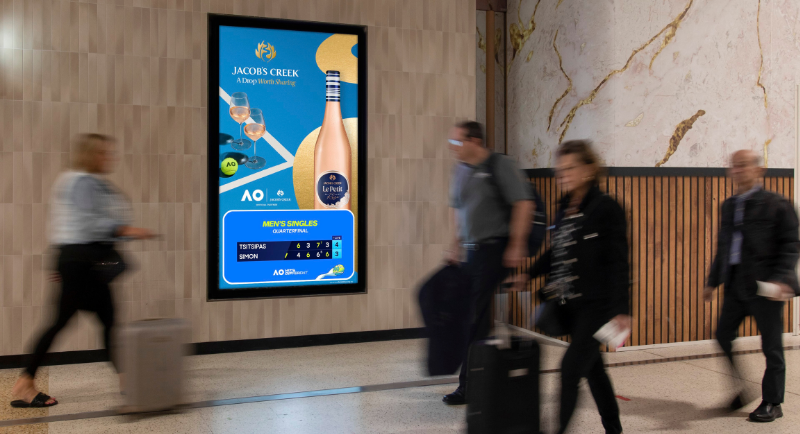
oOh!media has unveiled its largest Australian Open advertising program to date by offering brands a rare chance to integrate with live Australian Open content.
Brands include Jacob’s Creek, Qantas Frequent Flyer, Philips, Adobe, NRMA Insurance, and Airtasker.
Now in its fourth year, the outdoor advertising company will broadcast live match scores and highlights from the tournament across its Office, Airport, Street, Road, Rail/Metro and Retail digital networks, engaging audiences as the tennis action unfolds.
Following a seven-year hiatus, Jacob’s Creek has returned as the official wine partner of the Australian Open and will extend its presence nationwide through oOh!’s Out of Home network.
Amy Darvill, marketing director ANZ, Vinarchy, said: “Partnering with the Australian Open puts Jacobs Creek on one of the biggest stages in sport and extending our presence across oOh!’s network amplifies that impact.
“Summer is when Australians are out socialising and celebrating together, and this integration keeps us top-of-mind and builds brand awareness by reaching fans wherever they are.”
Mark Fairhurst, chief revenue officer, said: “We’re thrilled to have Jacob’s Creek, Qantas Loyalty, Philips, Adobe, Airtasker, and NRMA Insurance taking centre stage.
“These partnerships connect brands with fans in meaningful, high-impact ways in real time across oOh!’s premium environments. With fan engagement at an all-time high across the Australian Open, there’s still room for other brands to join this major summer event.”
Fiona Stevens, CCO, Airtasker said: We’re excited to team up with oOh! on this innovative Australian Open integration.
“As always in our partnership, we’re pushing outdoor media further, turning a major cultural moment to boost nationwide brand engagement, while inspiring more Aussies to get anything done this summer.”
oOh!’s network continues to attract some of the biggest brands looking to align with summer’s most-watched moments, highlighting the event’s growing appeal across premium out-of-home environments as advertiser interest around major cultural events grow.
Last year, the two-week tournament helped drive a 16% year-on-year increase in consumer spending across Melbourne and more than 1.5 million passenger movements through Melbourne Airport.
The 2026 Australian Open runs from 18 January to 1 February, giving marketers a powerful window to reach audiences in high-dwell, brand-safe environments during peak summer activity.
Havas PLAY ANZ launches paid internship to open new pathways for diverse creative talent
Havas PLAY ANZ has launched PLAY Your Part, a six-month paid internship program that creates a genuine pathway for diverse, creative talent to enter the advertising industry.
Beginning March 2026, the program offers part-time roles (three days per week) in Sydney and Melbourne, joining Havas PLAY ANZ’s Social, Content, and Advocacy teams.
Interns will work on live client campaigns, gain hands-on experience in content creation and community building, and receive structured mentorship from senior leaders across the Havas Village.
The launch of PLAY Your Part reflects a broader industry conversation about creating fair and accessible pathways for emerging talent.
Recent education and media discussions have highlighted the need for programs that provide meaningful, hands-on experience and remove barriers to entry – ensuring opportunities are based on creativity and potential, not financial circumstances.
Beatrix Fisher, Head of Social Media at Havas PLAY, said: “PLAY Your Part pays young talent for the work they do. From day one, they receive recognition and fair compensation, helping dismantle the barriers that have long kept early-career creatives from fully participating in the advertising industry.”
Mathilde Perrais, People and Talent Coordinator at Havas Group ANZ, added: “Breaking into the industry shouldn’t depend on who you know or whether you can afford to work for free. This program gives emerging talent space to play, experiment, and build real skills for their career – all without the pressure and barriers that keep too many people out.”
Applicants will complete a creative-first application process, designed to assess originality, cultural awareness, and initiative. University study is not a prerequisite, and shortlisted candidates will participate in interviews with Havas PLAY mentors and leaders.
The program reflects Havas PLAY’s ethos of culture, content, and advocacy, and its commitment to being ‘Deliberately Different’ – creating opportunities that mirror the diversity and energy of the audiences brands seek to engage.
Applications open 11 December 2025 and close 31 January 2026.
Domain brings property fandom to TV with new national series
Domain is extending its content footprint into broadcast this autumn, launching Open for Inspection – a new national property TV series set to air on Channel Nine and 9Now from 7 March.
Designed to sharpen Domain’s role in Australia’s property conversation, the series takes viewers inside on- and off-market listings around the country, backed by market commentary from Domain’s editorial team.
Turning property browsing into a broadcast format
Co-hosted by Domain’s national property editor Alice Stolz and Drive TV’s Jessica Lydka-Morris, the show leans into what Domain calls the nation’s “passion for property.”
Each episode blends lifestyle storytelling with real-time market context – from budget retro renos and coastal retreats to architectural standouts and family favourites.
“Open for Inspection takes Australians beyond the photos and into the heart of what makes a home truly special,” Stolz said.
“Every property has a story, and this series gives viewers a front-row seat to the emotions, decisions and surprises that shape the buying and selling journey.”
Across the season, viewers will see a mix of standout listings currently live on Domain, trend insights, design inspiration and commentary from Domain’s team of reporters.
A new promotional lever for agents
While the format is consumer-facing, Domain is also pitching the series as a commercial opportunity for agents and sellers.
“By showcasing listings in beautifully produced national TV segments, we’re giving agents a premium new way to elevate their campaigns, reach wider audiences and deliver even greater impact for their vendors,” Stolz said.
Agents will have access to a suite of packages designed to increase visibility and align campaigns with the show’s broadcast reach across Nine’s linear and digital platforms.
Backed by a national marketing campaign
The launch will roll out alongside an integrated marketing push spanning digital and social, with Domain positioning the series as a fresh entry point for Australians dreaming, browsing, or navigating their next move.
Open for Inspection will air Saturdays at 12:00pm on Channel Nine and 9Now.
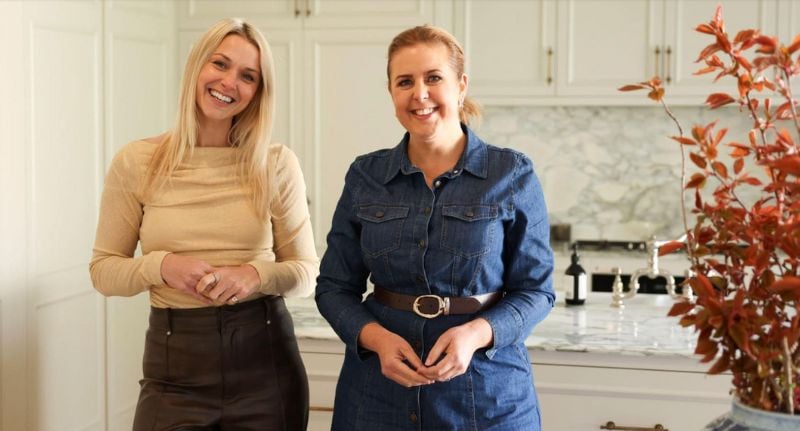
Main image: (L-R) Open for Inspection hosts Drive’s Jessica Lydka-Morris and Domain’s Alice Stolz

Reality reigns: Hayu drops Sydney FanFest
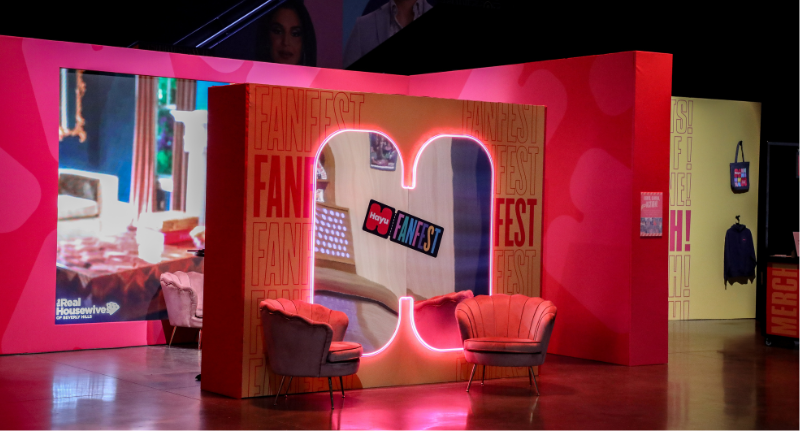
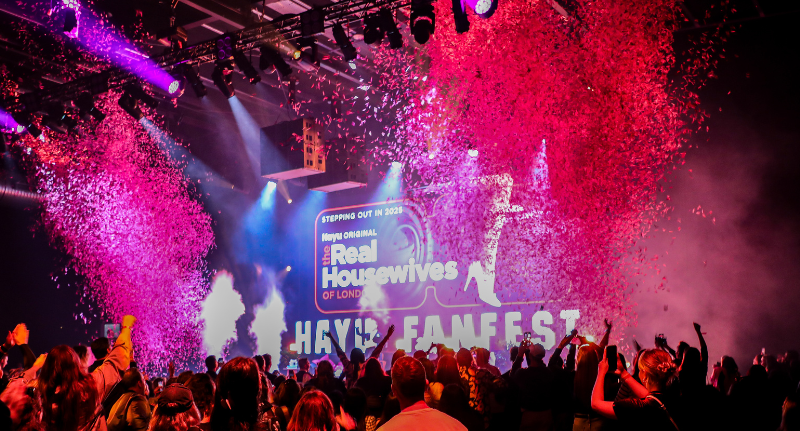
Hayu is bringing its global reality fandom celebration to Australia, confirming that Hayu FanFest will arrive in Sydney on 15 August 2026 as part of the platform’s tenth anniversary year in the market.
The event promises an all-in, in-person experience for reality diehards and casual fans alike, with the streamer preparing to roll out live panels, cast interviews, immersive brand activations, meet-and-greets and exclusive merchandise.
Talent announcements are set for early 2026, with Hayu hinting at cast from some of its most iconic franchises.
A decade of Australian superfans
Over the past ten years, Hayu has built a sizable Australian audience and a loyal community that consistently pushes its shows into the broader pop-culture conversation.
The streamer says FanFest will give brands a rare chance to reach this highly engaged group, offering bespoke sponsorship opportunities and access to exclusive 7Bravo media packages.
“Marking our tenth anniversary year at this unmissable immersive event is the ideal way to celebrate our fans,” said Hendrik McDermott, MD, Hayu, EMEA Networks and International Direct-To-Consumer, NBCUniversal.
“When London’s 2024 Hayu FanFest sold out in mere minutes, we knew it was only a matter of time before we would deliver the ultimate fan experience to our loyal subscribers Down Under. We are excited to undertake this must-attend event for reality fans in alignment with 7Bravo, NBCUniversal’s free-to-air channel in the market.”
A global reality TV powerhouse
Launched in the UK, Ireland and Australia in 2016, Hayu will mark its tenth year in 2026 having expanded into 42 other markets.
The service now hosts more than 10,000 episodes and over 350 reality series, ad-free, with new seasons dropping the same day as the US.
Its catalogue spans some of the genre’s biggest franchises, helping cement the streamer as a destination for unscripted entertainment and a driver of fandom both on-platform and across social.
Hayu will reveal more information on location, ticketing, talent and the full event agenda in the coming months. Fans can register for updates here.
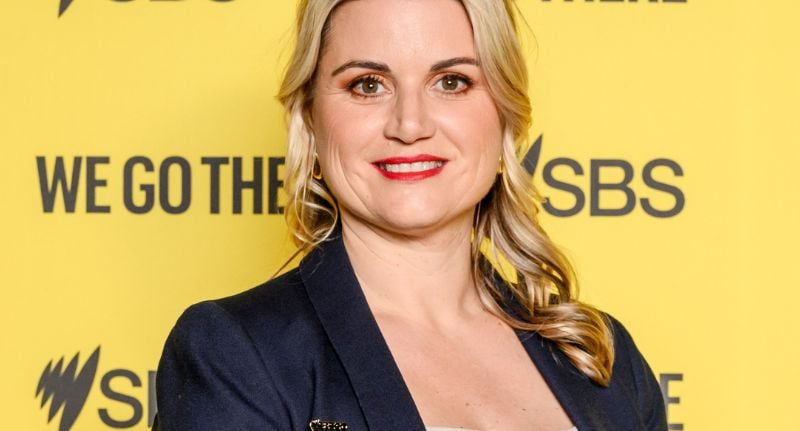
In 2026 speaking to contemporary Australia has never been more challenging, nor more important
Next year, 2026, will be a Census year, which, in due course, will see us get a new snapshot of how contemporary Australia has changed. But we already know many of the deep trendlines, which show that diversity is now a mainstream attribute in this country.
The 2021 Census found that more than half of Australians (51%) were either born overseas or have a parent who was, while 22% speak a language other than English at home. If that trendline continues, it’s likely that only around two-thirds of Australians will speak English as their first language by the 2030s, down from 80% in 2001. That shift has profound implications for how brands communicate.
For a long time, perhaps too long, marketers have spoken to an imagined “mainstream”. One that frankly no longer exists. The Australia of today is multilingual, multi-faith, and multi-ethnic, and its diversity is only deepening. Earlier this year, SBS launched new research – the What Australia Means to Me report, in collaboration with the University of Western Sydney – which surveyed more than 6000 people and looked not just at who we are but how we feel.
Our research showed there’s a powerful cultural evolution underway. Seventy-eight per cent of Australians now believe it’s good for society to be made up of different cultures – up from 58% just a few years ago – while concerns about “assimilation” have sharply declined.
That’s a figure you don’t often see in the media amid what are sometimes high-profile calls to halt or restrict the current levels of migration.
Migrants themselves are also navigating this balance confidently. Nearly eight in ten overseas-born Australians say they feel Australian, while also wanting to maintain their cultural heritage.
The challenge for marketers
Despite this rich complexity, many Australians don’t feel seen in advertising.
According to our research, only 32% of overseas-born Australians and 26% of Australian-born respondents feel represented in advertising.
This isn’t just about who appears on screen and billboards. It’s about what kinds of stories are told. Australians want to see stories that acknowledge where people come from.
This means embedding cultural understanding at every stage of your marketing, from planning and creative development through to media placement and community engagement.
It’s also an invitation to collaborate with diverse and First Nations creatives to find new ways to express your brand’s messages.
Marketers who do, and who partner with people who understand the space, will find themselves speaking to growth audiences – culturally diverse Australians, younger cohorts, and those who define identity by values rather than birthplace.
They are the new mainstream, and they are hungry for authenticity. In an era where migrants contribute 1.5% of Australia’s annual retail growth and around 500,000 new arrivals settle here every year, cultural inclusion is not just a moral imperative – it’s a commercial one.
Yet too many marketing campaigns still treat diversity as an afterthought: a translated tagline here, or a diverse casting choice there.
An opportunity: growth through inclusion
The economic case for more diverse communications is compelling.
There is a sizable audience of more than 10 million Australians whose needs and cultural nuances have been consistently underserved.
Brands that listen, collaborate with diverse and First Nations creatives and media partners, and elevate these stories are helping to shape an Australia that is more representative, more inclusive – and ultimately more connected.
When brands engage meaningfully with these expectations and represent communities – not only translating their message but adapting it to cultural contexts – the results speak for themselves. Loyal customers, stronger brand affinity, and long-term growth follow.
This is the difference between simply showing up and truly belonging. Importantly, these marketers are also doing what makes the most business sense and will drive results for their brand.
Australia of 2026 will only be more vibrant, multilingual, and multifaceted. It’s an Australia that expects more from the stories it sees and the brands it supports.
Brands that embrace this reality will not only grow their share of market, but their share of meaning. Because when you speak to the full richness of Australia, its languages, its cultures, its values, you’re not just marketing.
You’re helping write the next chapter of the Australian story.
Social Media
Australia’s under-16 social ban lands unevenly
Communications Minister Anika Wells said TikTok had already deactivated more than 200,000 accounts linked to users believed to be under 16. However, according to Bronte Gossling in The Sydney Morning Herald, plenty of teens are still on the app, openly joking about dodging the age checks.
Meanwhile…
The Australian Financial Review’s Sam Buckingham-Jones writes that the ban barely had time to settle before teenagers began side-stepping it.
Within hours of the ban landing, three alternative platforms not covered by the law – Lemon8, Yope, and Coverstar – shot straight to the top of Apple’s App Store.
And…
After a year spent digging into the policy, the brilliant Cam Wilson at Crikey has written a wrap of everything he’s learned.
It’s worth a read, given that much of his reporting has zeroed in on the flaws, contradictions, and likely unintended consequences in what is, at its core, an untested and imperfect policy.
US weighs new social media disclosure rule for travellers
The Australian’s Joseph de Avila and Michelle Hackman report the US is floating a plan that would force visitors from visa waiver countries, including Australia, to hand over five years of social media history before stepping off the plane.
If approved, the rule would apply to citizens from 42 nations in the programme, from Japan to France to the UK.
AI
Trump surprises tech world with green light for Nvidia in China
As Jessica Sier writes in The Australian Financial Review, the announcement dropped on his social platform and immediately reopened a market the company had effectively lost.