






Meta outlines anti-scam strategy as trust becomes central to performance marketing
The company says that so far in 2025, it has removed more than 134 million scam ads.

Meta used this week’s Global Anti-Scam Summit in Washington, DC, to outline the scale of its enforcement efforts - and to make a broader point about how scam activity is reshaping the economics of performance marketing and customer trust.
For an industry reliant on credibility, consistency and predictable user behaviour, scam activity is increasingly more than a safety issue. It’s becoming a structural challenge.
Meta says that so far in 2025, it has removed more than 134 million scam ads, supported international investigations that have resulted in arrests, and recorded a more than 50% decline in user reports about scam ads over the last 15 months.
The company frames scams as a direct threat to the advertising environment in which its products operate.
“Scams don’t just harm individual victims - they undermine trust in our entire advertising ecosystem, which is the very foundation of our business model,” Meta told attendees at the summit.
For performance marketers, that trust is the cornerstone of every campaign. If audiences hesitate, acquisition drops. If acquisition drops, loyalty becomes harder to build. The commercial implications ripple outward.



The leading media trade publication in Australia.
Get our top stories straight to your inbox daily by signing up to our Newsletter
By providing your information, you agree to our Terms of Use and our Privacy Policy. We use vendors that may also process your information to help provide our services.
AI and automation take a more prominent role
Meta detailed a series of technical updates designed to detect scam patterns earlier and minimise user exposure.
These include new AI models trained to identify emerging scam tactics and behavioural anomalies across Meta’s platforms.
One area of focus is the use of facial recognition technology to detect ads that exploit celebrity images or manipulated likenesses. Meta says early testing more than doubled the volume of violative ads detected and removed.
The company positions these upgrades as part of a broader shift from reactive policing to proactive risk reduction.
Targeting the networks behind scams
The other significant change is Meta’s increased emphasis on dismantling the infrastructure used by criminal scam operations, rather than simply removing individual ads.
In the first half of 2025, Meta says it detected and disrupted nearly 12 million accounts across Facebook, Instagram and WhatsApp linked to what it describes as “criminal scam centres,” including large-scale operations in Southeast Asia.
The company also supported the US Department of Justice’s Scam Centre Strike Force and the FBI in disrupting a criminal network tied to the Tai Chang compound in Myanmar, resulting in the takedown of 2,000 Facebook accounts.
Meta shared intelligence with Singaporean authorities last month that helped dismantle an illegal online gambling network tied to fraudulent activity.
These actions sit alongside more than 60 lawsuits Meta has filed in recent years, targeting platform abuse ranging from impersonation to account takeover schemes.
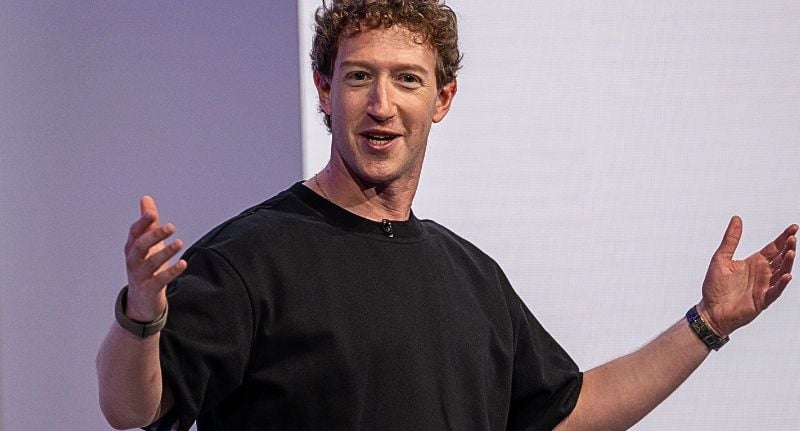 Meta CEO Mark Zuckerberg
Industry-wide information exchange accelerates
Meta also highlighted its growing participation in cross-industry intelligence programs:
FIRE, a reciprocal exchange with more than 70 global financial institutions, which Meta says has directly led to tens of thousands of removals.
The Global Signal Exchange, where Meta shares intelligence on abusive websites, scam tactics and emerging threats with companies including Microsoft and Google.
Participation in the FBI’s Level Up program targeting investment fraud.
The company says this level of coordination is necessary given the scale and sophistication of transnational scam operations - including compounds with an estimated 300,000 cyber scammers, many of whom are trafficking victims.
What this means for performance marketing and loyalty
The throughline in Meta’s messaging is that the future of performance marketing will be shaped by how effectively platforms can reduce scam activity, maintain user trust and protect the reliability of advertising environments.
Meta argues that a safer feed supports more predictable results for advertisers and fewer barriers to long-term customer retention.
Industry-wide, the logic is straightforward: trust influences click behaviour, and click behaviour influences performance.
The summit makes clear that the next evolution of performance marketing is not purely an optimisation challenge - it’s increasingly intertwined with platform integrity, enforcement capability and cross-industry cooperation.
More from Mediaweek
The leading media trade publication in Australia.
Get our top stories straight to your inbox daily by signing up to our Newsletter
By providing your information, you agree to our Terms of Use and our Privacy Policy. We use vendors that may also process your information to help provide our services.


