



Media trust lifts, but cracks deepen beneath the surface finds Edelman flags deeper divides
Its Trust Barometer shows trust has improved, but insularity and income divides remain pronounced.

Edelman’s 2026 Australian Trust Barometer found trust in Australia’s major institutions has improved, but the country remains sharply divided by income, outlook and values.
The annual study found overall trust in business, government, media and NGOs rose from 49 per cent in 2025 to 54 per cent in 2026, shifting Australia from distrust to neutral territory.
But the report also found 73 per cent of Australians now hold what Edelman describes as an “insular mindset”, marked by distrust of people with different beliefs, values or backgrounds.
What the 2026 Trust Barometer found
Trust in media recorded the biggest gain, up eight points year-on-year. The government followed with a six-point rise, while business increased five points.
Even so, Edelman said trust remains fragile. The study found a 19-point gap between high- and low-income earners, the largest reported in Australia since 2021.
Optimism also remains weak. Just 22 per cent of Australians believe the next generation will be better off, compared with a global average of 32 per cent.
Tom Robinson, chief executive officer of Edelman Australia, said the results point to “opposing institutional realities” across the country.


The leading media trade publication in Australia.
Get our top stories straight to your inbox daily by signing up to our Newsletter
By providing your information, you agree to our Terms of Use and our Privacy Policy. We use vendors that may also process your information to help provide our services.
“In Australia, we’re witnessing the emergence of opposing institutional realities. This means that, across demographics, we’re seeing levels of competence and efficacy in business, governments, NGOs and media, and the leaders of these sectors, differ widely,” Robinson said.
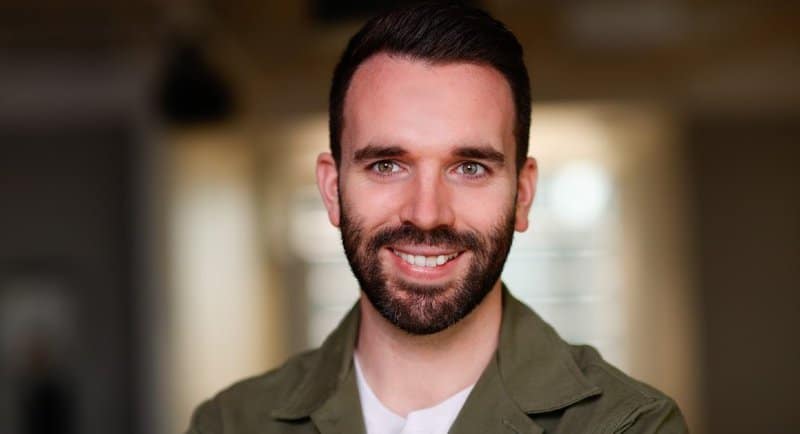 Tom Robinson
He said the rise in trust is not being felt evenly across the population. “In 2026, we’ve recorded the largest gap in trust (19%) between high- and low-income earners since the pandemic hit (2021). Therefore, while trust is up, this confidence is felt unevenly.”
Insularity becomes a business issue
The report suggests those divisions are beginning to affect workplace culture and business sentiment. It found 42 per cent of Australians would rather move departments than report to a manager with different values.
Another 33 per cent said they would put less effort into supporting a project run by colleagues with different political beliefs. Meanwhile, 44 per cent said they would support reducing the number of foreign companies operating in Australia, even if it led to higher prices.
Trade and recession concerns also featured prominently. Six in 10 Australians said they were worried about trade and tariff impacts on their work, while 54 per cent were concerned about losing their job in a recession.
Robinson said those pressures are driving people towards more local and familiar sources of trust. “Ultimately, these fears are causing consolidation in who we trust. There is a shift towards deeper trust in more localised sources including community and grassroots, and this is contributing towards a national retreat into a more insular mindset,” he said.
Institutions face pressure to rebuild trust
The study found Australians still expect institutions to take responsibility for repairing divides. Eight in 10 respondents said government has the greatest obligation to build trust, although only 36 per cent believe it is doing a good job.
Employers were seen as performing better, with Edelman reporting a 17-point gap between expectation and performance. CEOs may face more scrutiny, however, with 72 per cent of Australians saying chief executives are obligated to help bridge divides, while only 36 per cent believe they are meeting that responsibility.
Robinson said Australians want practical action rather than uniformity. “Usually when we think about addressing divides, we try to eliminate differences. However, in trying to navigate a world populated by insular groups, we need to be willing and able to work across these differences,” he said.
He said that means governments modelling civility, media making room for different viewpoints, NGOs helping groups understand each other, and businesses creating dialogue across differences and income groups.
How the research was conducted
The 2026 Edelman Trust Barometer is the firm’s 26th annual trust survey. It was produced by the Edelman Trust Institute and is based on 30-minute online interviews conducted between 23 October and 18 November 2025.
The global study covered 28 countries, with 1,200 respondents surveyed in each market. Edelman said the sample was designed to be representative by age, gender, region, and ethnicity or nationality.
More from Mediaweek
The leading media trade publication in Australia.
Get our top stories straight to your inbox daily by signing up to our Newsletter
By providing your information, you agree to our Terms of Use and our Privacy Policy. We use vendors that may also process your information to help provide our services.


