



Could we BE any more nostalgic? What the McDonald's Friends tie-up says about creative risk in a time of data saturation
So, why are we so obsessed with the 'safe' and the familiar?

Josh Barnes, Managing Partner, Connected Media
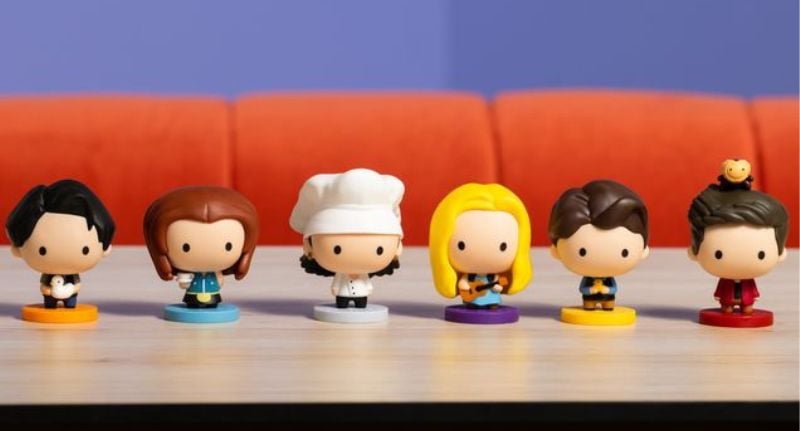
McDonald's is launching a Friends-themed meal promotion
Complete with Joey, Rachel, Ross, Phoebe, Monica, and Chandler collectibles.
The move clearly shows why familiarity feels safe in the cultural and marketing environment we all now live in.
Friends stopped airing 22 years ago and is now older than many of its current fans. Yet here we are, ordering burger meals based on a sitcom that started in the previous millennium. And it's not an outlier. Star Wars, which debuted in 1977, continues to spawn new series and films, attracting a new generation of fans. The Barbie movie broke box office records by tapping into generational memory, and Spotify's algorithm surfaces songs your parents danced to.
The Central Perk couch is burned into my brain as vividly as any childhood memory, and that’s the point. As McDonald's Australia marketing director Amanda Nakad said, when making the announcement, the partnership “brings together two cultural icons that stand for connection, comfort, and joy”.
There's something broader happening, though: familiarity has become a valuable marketing and creative currency. While retro culture isn’t new, familiarity is outperforming novelty, and nostalgia is no longer niche; it's a mainstream cultural currency. But the more we optimise for safety by using data, the harder it becomes to generate true originality.
But here is the paradox. The cultural franchises we're now turning to for our hit of nostalgia weren't born from data; they emerged from creative instinct in an era before real-time audience transparency existed. Their creators took risks that no algorithm would recommend today, and their originality wasn't predicted; it was discovered.


The leading media trade publication in Australia.
Get our top stories straight to your inbox daily by signing up to our Newsletter
By providing your information, you agree to our Terms of Use and our Privacy Policy. We use vendors that may also process your information to help provide our services.
The algorithm made me do it
Digital and tech platforms now have unprecedented behavioural visibility into our habits. Every click, pause, skip, and rewatch feeds the machine, and the machine has learned something important; familiar content is cognitively easier to consume, requires less mental effort and feels safer.
Algorithms reward this, audiences reinforce it, and, in turn, this creates a constant feedback loop of iteration over invention.
The platforms didn't create nostalgia; humans have always craved the comfort of the familiar, but they've turbocharged it and made it the frictionless default.
Which raises the question: are we nostalgic for the content itself, or for the era of creative risk that produced it?
The more brands optimise for the familiar, the harder it becomes to generate the kind of true originality that creates tomorrow's classics, and we may be engineering a world where creativity risk is now in real jeopardy.
Optimising the risk away
Marketers understand the tension. Every campaign can be measured, optimised, and refined based on what the audience demonstrably responds to, and that is in no way a bad thing. Data should be used, but it needs to be leveraged more effectively to inform creativity rather than replace it.
When everyone optimises toward the same signals, campaigns start looking and feeling identical. Distinctive work can often appear inefficient before it proves effective, but the campaigns that cut through aren't always the ones that tested best. Sometimes they're the ones that make the strategist nervous, or that instinctively feel risky.
If marketers only do what the data validates, we become curators of the past rather than architects of the future, chasing proven engagement over unknown potential.
Maybe what we need are protected zones for experimentation, spaces where instinct leads, and data follows and where creative unpredictability is given room to breathe before being suffocated by optimisation.
The brands creating tomorrow's nostalgia will be the ones willing to take risks today. Prediction and performance metrics are certainly valuable, but creative unpredictability may be the scarcest and most valuable asset we have. The ability to say ‘I don't know if this will work, but it feels right’ and actually follow through.
Because here's the thing about nostalgia, it only works if someone, somewhere, once took a risk on something new.
Could we BE any more in need of that kind of courage?
More from Mediaweek
The leading media trade publication in Australia.
Get our top stories straight to your inbox daily by signing up to our Newsletter
By providing your information, you agree to our Terms of Use and our Privacy Policy. We use vendors that may also process your information to help provide our services.


