



Lisa Watts wants journalism to slow down, wise up and reconnect with the truth
Lisa Scott: 'If people don't find it valuable, they won't give you their money.'

If you wandered past The Growth Distillery stage at SXSW Sydney, you probably heard the crowd forming before you saw it.
A live episode of Rules Don’t Apply was about to begin, and the room was gathering for a woman who has quietly become one of Australia’s most influential voices in the battle for truth.
Lisa Watts, CEO of The Conversation, took her seat opposite host Dan Krigstein with the kind of calm energy you only see in people who know exactly what they stand for. And what she stands for is deceptively simple: journalism that slows down, digs deeper and doesn’t treat truth like a disposable accessory.
Kriegstein introduced her as someone who has “spent her career proving that integrity and impact can coexist.”
When Krigstein asked how she’d explain her job to an eight-year-old, she laid it out plainly: “I work for a news website that only works with experts from universities.”
Journalists act as editors, she said, pairing with academics to “write stories that explain what's happening in the news” and to surface research the public rarely sees.
It was a neat summary of a model that has quietly reshaped Australia’s information landscape.


The leading media trade publication in Australia.
Get our top stories straight to your inbox daily by signing up to our Newsletter
By providing your information, you agree to our Terms of Use and our Privacy Policy. We use vendors that may also process your information to help provide our services.
 Dan Krigstein
The radical idea that experts want to be heard
When The Conversation launched in 2011, the industry consensus was predictable: academics would never write quickly enough, simply enough, or for free.
Those predictions didn’t last long.
Watts said the newsroom quickly discovered an appetite - even a hunger - among academics to join public debate. The stereotype of the ivory tower, the aloof scholar hidden away behind paywalled journals, didn’t match reality.
“Most academics are interested in the world of ideas because they generally wanna find solutions and further the body of knowledge,” she told the audience.
What The Conversation offered wasn’t a platform of convenience, but a bridge - one that let expertise travel beyond campuses and policy briefs into everyday understanding.
And it worked immediately.
Why saying no has protected the mission
The Conversation’s defining choice - and the one Watts believes set them up for long-term survival - was refusing to build advertising into the model.
Had they chased those page-view dollars, she said, the site would have ballooned during the pandemic, hired aggressively, and then shrunk just as quickly when traffic returned to earth. Instead, the outlet relies on university memberships and voluntary financial support.
“It kind of keeps us really honest,” Watts said. “If people don't find it valuable, they won't give you their money.”
She recalled early temptations: big corporations wanting to underwrite topic sections, philanthropic projects pushing advocacy angles. Each time, the newsroom drew its line.
“We're not there to persuade anyone to change their view,” she said. “We are there to leave the reader with more information about a topic than when they started.”
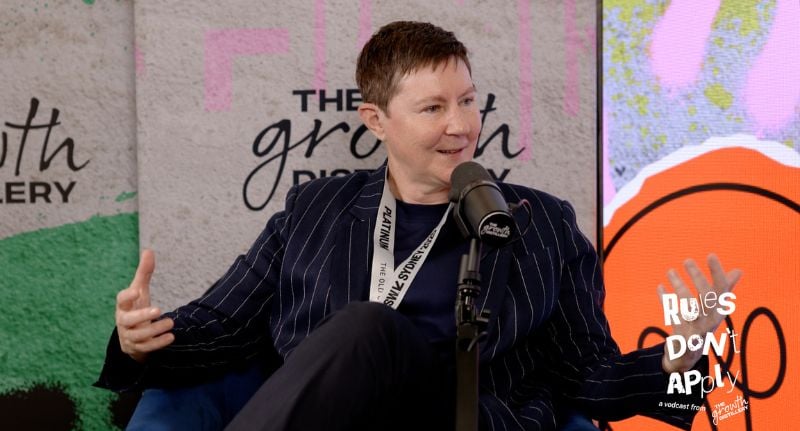 Lisa Watts
The journalism she hires for
When asked what she looks for in new recruits, Watts didn’t hesitate.
First: real journalistic experience. She loves “newspaper people” - those hardened by deadlines, spiked stories, and the muscle memory of accuracy under pressure.
Second: drive and curiosity. The newsroom receives up to 200 pitches from academics each week; editors need the instinct to find the story hiding beneath the data.
Third: the unexpected one - politeness.
“I think it implies a certain pause and listening,” she explained. It suggests generosity, openness and the ability to work with people whose expertise may be brilliant but not always easy to translate.
On climate, AI and the conversations Australia needs to have
Pressed on the issues Australia keeps avoiding, Watts pointed to climate, the “biggest challenge of our planet”, and one that people still find too overwhelming to engage with deeply.
She also flagged AI as both a breakthrough and a threat. Synthetic content is already flooding the internet, she said, and the “AI slop world” is not something audiences will accept indefinitely.
Her prediction? A swing back to trusted, advertising-free, source-led journalism. A return to brands where provenance is clear and incentives are visible.
“Nobody wants to be swimming around in a world of absolute garbage,” she said. And as misinformation spreads, people will increasingly turn to reputable outlets and journalists themselves.
The rules she’d give the next generation of newsmakers
For emerging content creators stepping into a chaotic information ecosystem, Watts offered a grounded blueprint:
• Check sources thoroughly - twice if needed.
• Correct errors openly and quickly.
• Build a two-way relationship with your audience; don’t operate in a vacuum.
For readers, the guidance was even more straightforward: vigilance. Treat media literacy like “online banking,” she said - cautious, intentional, and sceptical of anything that looks unfamiliar or too clean.
And finally: subscribe to trustworthy sources. “It's free. And it's good,” she added with a grin.
Why she’s still optimistic
Despite the noise, despite the distrust, despite the rise of synthetic everything, Watts remains proudly an optimist.
“We need truth," she insisted. Australia’s strong public broadcasters, sceptical public, and resistance to political circus culture give her hope.
And right at the end, when asked what she’d like on her gravestone, she answered in one word: “Optimist.”
In a decade where journalism is often described as an extinction-level profession, Lisa Watts has built something rare: a newsroom where truth isn’t just defended - it’s designed into the structure.
At SXSW Sydney, that optimism didn’t sound naive. It sounded like a plan.
More from Mediaweek
The leading media trade publication in Australia.
Get our top stories straight to your inbox daily by signing up to our Newsletter
By providing your information, you agree to our Terms of Use and our Privacy Policy. We use vendors that may also process your information to help provide our services.


