



'The relationship is the metric': Jean Oelwang on love, partnership and fixing a divided world
She also shares how to build cultures of love and accountability.

For Jean Oelwang, founding CEO and president of Virgin Unite, the real future-of-work question is not about AI, hybrid policies or productivity hacks. It is whether we can relearn how to work - and live - together before it is too late.
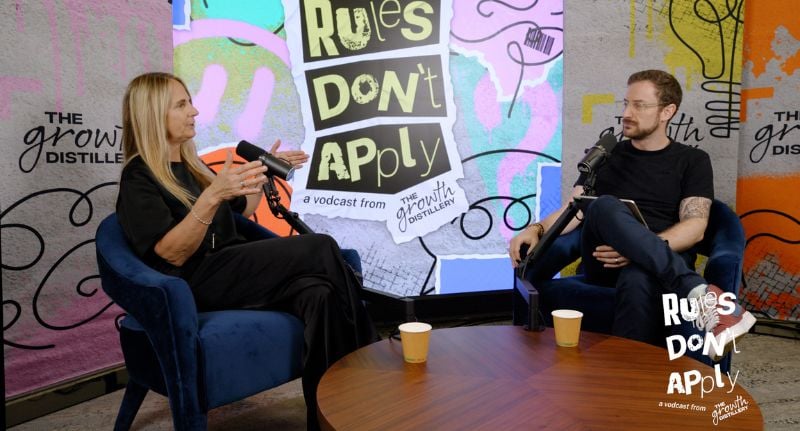
Speaking on The Growth Distillery’s Dan Krigstein on the Rules Don’t Apply podcast at SXSW Sydney, Oelwang argued that in a world hooked on division, hyper-individualism and Hunger Games-style corporate ladders, collaboration itself has become a radical act.
“I hope in some way I've shifted in some tiny way, shifted this world towards realising that the most important thing we need to do is collaborate at a scale that we can't even begin to imagine yet,” she said.
“And that people start to realise that the relationship with each other is the most important metric of success in this world.”
From death row to radical hope
For someone who has worked alongside Nelson Mandela, Jane Goodall and Sir Richard Branson, Oelwang’s most powerful story did not start in a boardroom - it began on death row.
She described one of her “most unexpected” partnerships with Anthony Ray Hinton, an innocent man imprisoned in a five-by-eight-foot cell on death row in the US for 30 years.
“He is an amazing human being who was actually imprisoned incorrectly in the United States on death row for 30 years,” she said.


The leading media trade publication in Australia.
Get our top stories straight to your inbox daily by signing up to our Newsletter
By providing your information, you agree to our Terms of Use and our Privacy Policy. We use vendors that may also process your information to help provide our services.
“And I think Anthony was an unexpected connection because I learned so much from him, someone who had endured that and come out the other side. Still with this extraordinary sense of humour, this extraordinary sense of joy for life and this deep passion to wanna end the death penalty.”
That resilience, she said, did not happen in isolation. Hinton’s best friend, Lester, drove more than 200 miles each way every week for three decades to visit him.
“When Ray got out, the first thing he did was help buy a house for Lester right next door to his house,” Oelwang said. “Their friendship is just extraordinary.”
It is the kind of unlikely, unshakeable partnership that has shaped her life’s work.
Why genuine partnership still feels radical
Despite decades of building alliances between CEOs, activists and world leaders, Oelwang is blunt about how rare true partnership still is inside organisations.
“I think they feel radical because every bone in the structure of how we've built businesses and how we've built capitalism is pushing us toward the other extreme,” she said.
From hyper-individual KPIs to title-driven hierarchies, she believes the system “breaks apart the connective tissue” that relationships need to thrive.
“Often it has the opposite impact because then someone is singularly focused on their goals,” she said.
“Rather than thinking about the collective and how the collective company and organisation can deliver.”
When firms strip out competitive incentives and rewire them around impact, she said, the change can feel orchestral. Citing social impact firm Draper Richards Kaplan, she noted: “It changed the whole dynamic of the company. They talked about how it went from a company that was working together, but you know, still self-focused, to something that's actually playing like a symphony now.”
Culture is built between the meetings
If you want a partnership, incentives are only the beginning. Oelwang laid out three hallmarks of a genuinely collaborative culture: purpose, lived values and “magnetic moments”.
First, a purpose strong enough to pull people out of spreadsheet mode.
“What is that intoxicating purpose that every single day, everyone in your company is gonna get up and be excited to come into work?” she said. “That immediately sets the tone of the culture, that this is more than just people sitting behind desks… names and numbers on a spreadsheet.”
Second, values and virtues that are more than “the shiny billboard”.
“How many times do we think, 'Okay, this is our list of stuff'. But then people don't live it every day,” she said. “That has to flow from every level of the company.”
And finally, engineered rituals that make connection routine: from Innocent Drinks’ open CEO sessions to Airbnb’s now-famous “elephants, dead fish and vomit” forums for challenging conversations.
“They said that that changed the dynamic of their company because it created this safe space to have really difficult conversations,” Oelwang said.
Inside Virgin Unite and her current project, Planetary Guardians, the same principles apply - with a sharper edge.
The group has launched a planetary “health check” tracking how close the Earth is to “a red high-risk line that if we cross, that could be irreversible and, you know, catastrophic damage to life as we know it”.
“What this team is doing is how do you balance that fear… with this sense of joy and optimism that we can still change course. 'Cause we still have a five-year window,” she said.
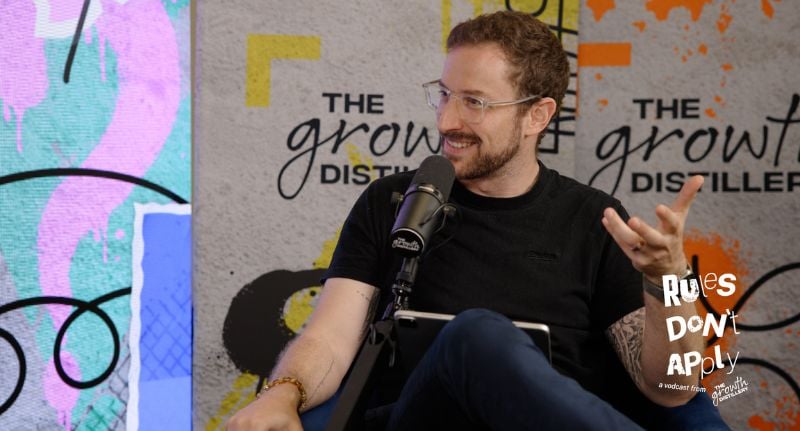 Dan Krigstein
Love as a leadership strategy
For Oelwang, the most underrated leadership strategy is also the most unfashionable four-letter word in the corporate lexicon: love.
“The question should not be, do you love me? The question should be, Am I loving enough?” she said. “Whether it's having a conversation with someone, whether it's giving a presentation to a board. What do you want the other person to feel?”
That lens, she argued, should be applied to what one Virgin people director called the “million magic moments” of everyday culture.
“Every single interaction you have with someone, whether it's by a coffee station or whether it's, you know, in a meeting, is a chance to build or lose culture,” she said.
Crucially, love does not cancel accountability.
“If you don't have that accountability, then you're not being fair to your other colleagues,” she said.
“It's doing that with a sense of love, because I think that's one of the things that I've found the hardest in any role I've been in, is having to let go of someone.”
“In the end, it's actually not love keeping them in the wrong role, both for the team and for them as well.”
Six lessons from the world’s longest partnerships
Oelwang has spent more than 15 years studying 65 long-term partnerships – from Ben & Jerry to global movements – that used their relationships to create outsized impact.
“What we found there was six things that came out consistently,” she said.
The first is purpose: “It could be that the two people have individual purposes, but come together, and they help each other with their purpose. Or it could be one common purpose.”
The second is being “all in”. As Ben & Jerry put it: “We a hundred per cent had each other's backs. We were friends before we were partners.”
The third is a set of shared virtues, which she called the “twin sisters”: trust, respect and belief, followed by humility, gratitude and empathy.
“This sense of, again, living by these virtues and being conscious of it,” she said. “Even with your body language. Even with every word you say.”
The final two are less obvious: “magnetic moments”- daily, monthly and yearly rituals that act like connective tissue – and the ability to “celebrate friction”.
“Absolutely none of these partnerships avoided friction,” Oelwang said. “But they all figured out tools on how they lift above friction.”
Letting go of the superhero myth
Asked about her own evolution, Oelwang was frank.
“The most important thing I've let go of is thinking that, um, I have to be a superhero,” she said. “And I feel like that superhero myth is a thing that we all need to unlearn.”
Her “hot take” is equally simple – and quietly subversive in an attention economy that rewards outrage.
“I believe that human beings are inherently good and want connection in this world,” she said. “Most of the press is all about the bad things, and I really believe that inherently human beings are great.”
If her gravestone could say anything, she added, it would borrow from Buckminster Fuller’s description of himself as a “trim tab” - the tiny flap on a ship’s rudder that can move an entire vessel.
“Every single one of us as an individual can make a shift in a change. But when we come together as collective trim tabs, that's when the huge change [happens].”
In other words, the point was never the superhero. It was always the ship - and who we choose to steer it with.
Main image: Jean Oelwang
More from Mediaweek
The leading media trade publication in Australia.
Get our top stories straight to your inbox daily by signing up to our Newsletter
By providing your information, you agree to our Terms of Use and our Privacy Policy. We use vendors that may also process your information to help provide our services.


