






Ipsos iris: Winter Olympics and Australian Open lift sports audience in February
Ipsos iris data shows 13.3 million Australians visited a sports website or app in February.

Ipsos iris data shows major sporting events helped lift Australia’s online sports audience in February, with 13.3 million people visiting a sports website or app across the month.
That equated to 59 per cent of Australians aged 14+ online, with the sports category up 4.9 per cent month on month. Ipsos attributed the rise to events including the 2026 Winter Olympics, the Australian Open men’s final and the Super Bowl.
What drove sports viewing in February?
The audience increase came as Australians turned to digital platforms for live updates, highlights and analysis around major local and international events.
According to the release, Australians spent an average of 32 minutes consuming sports content online in February. Men spent 49 minutes on average, compared with 13 minutes for women.
Men accounted for 52.2 per cent of the sports audience, while women made up 47.8 per cent.
Which sports brands ranked highest?
According to the ranking chart in the release, news.com.au Sport had the biggest online sports audience in February with 3.825 million users, followed by Fox Sports on 3.008 million and 7news.com.au Sport on 2.415 million.
The Australian Football League ranked fourth with 2.416 million users, ahead of ESPN.com.au on 2.354 million and Kayo Sports on 2.340 million. Nine.com.au’s Wide World of Sports, National Rugby League, Cricket Australia and the Organising Committee of the Olympic and Paralympic Games also featured in the top 10.


The leading media trade publication in Australia.
Get our top stories straight to your inbox daily by signing up to our Newsletter
By providing your information, you agree to our Terms of Use and our Privacy Policy. We use vendors that may also process your information to help provide our services.
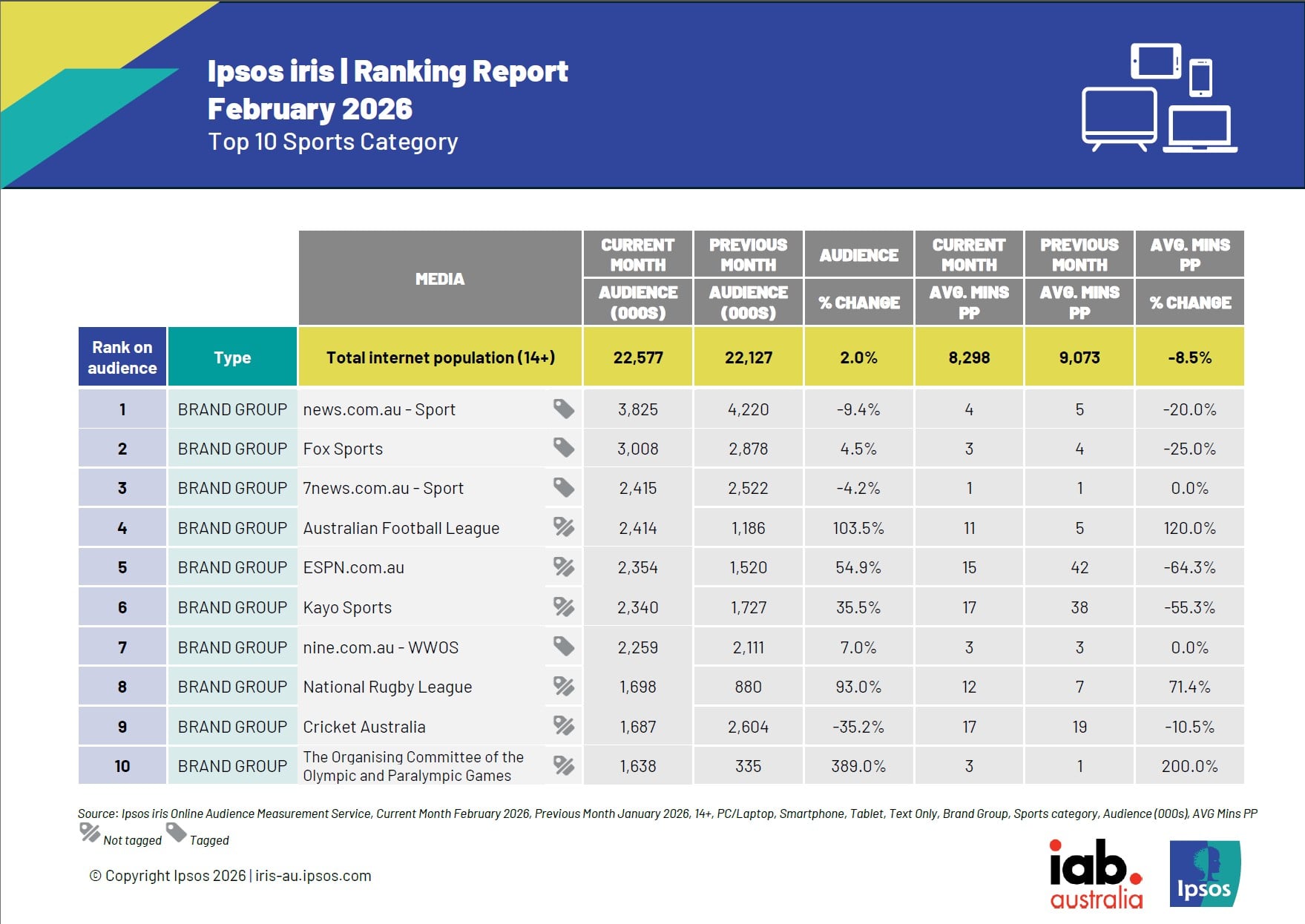 Ipsos iris chart - sports Feb 26
Broader digital trends
The same Ipsos iris release said 22.6 million Australians aged 14+ used the internet in February and spent an average of 4.9 hours online each day.
It also noted that more than 21 million people used a news website or app during the month, underlining the continued scale of digital publishing audiences in Australia.
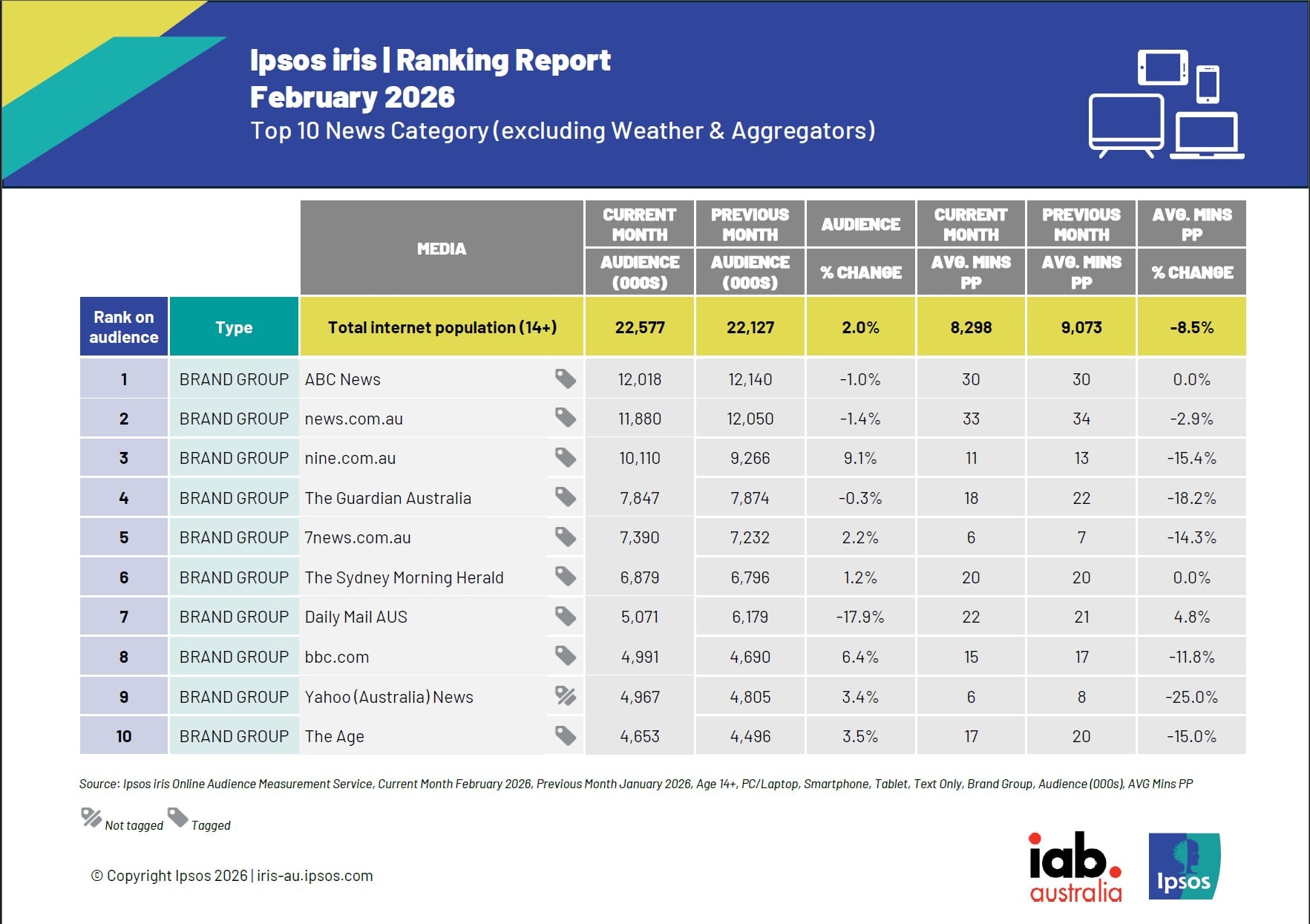 Ipsos iris chart - news Feb 26
How Ipsos iris measures audience
Ipsos iris is the digital audience measurement currency endorsed by IAB Australia. Its methodology combines site-centric measurement with a nationally representative, single-source panel.
The panel measures activity across 8,000 smartphone, PC, laptop and tablet devices, with data designed to account for cross-device usage.
More from Mediaweek
The leading media trade publication in Australia.
Get our top stories straight to your inbox daily by signing up to our Newsletter
By providing your information, you agree to our Terms of Use and our Privacy Policy. We use vendors that may also process your information to help provide our services.


