



EXCLUSIVE: Why The Growth Distillery’s Leigh Lavery is betting on humans in 2026
News Australia's key knowledge hub is throwing the gauntlet at the algorithms.

When Leigh Lavery started at The Growth Distillery five years ago, he never imagined he’d one day be running it.
He was the first hire under founding boss Dan Krigstein, brought in to help build a small, curious unit inside News Corp Australia that could read the room when everything else was moving too fast.
Now, Lavery is at the helm, and he’s throwing a very public gauntlet at the algorithms.
The Growth Distillery has unveiled its 2026 research program, a playbook designed to surface the human motivations that AI models keep smoothing out - and, for the first time, wire those insights straight into Intent Connect, News Corp’s audience-targeting engine.
It’s a move that turns the unit from a think tank into something much more commercially sharp: an activation layer inside the News Australia sales stack.
“I’m energised," Lavery told Mediaweek. “In this industry, everyone is wondering what's around the corner, and when you’re working in behavioural science and audience intelligence, there’s a truckload that we can draw on to try to provide some of the clues to that answer.”
For Lavery, the promotion is both personal and strategic.


The leading media trade publication in Australia.
Get our top stories straight to your inbox daily by signing up to our Newsletter
By providing your information, you agree to our Terms of Use and our Privacy Policy. We use vendors that may also process your information to help provide our services.
“I think I was Dan’s [Krigstein] first hire, and we’ve worked together shaping the team to where it is today. So for me it’s a really exciting next chapter.”
 The Growth Distillery's former Director, Dan Krigstein
A foresight engine inside News Corp’s data machine
Internally at News Corp, The Growth Distillery is known as the Growth Intelligence Centre - a unit that sits at the intersection of audience behaviour, content consumption and commercial strategy.
Externally, Lavery wants it known for something simpler and sharper: foresight.
"This year, we really want to be known for looking at the signals for what’s happening in the market.”
The power of the team comes from how two worlds collide: human research and audience data at a national scale.
“There’s a real interdependence, because part of the power of the Growth Distillery is that within our team, we have both a bunch of very smart researchers, and a bunch of audience intelligence experts who are able to look at how 18 million Australians engage with content," he said.
That dual lens - what people read, watch and click, plus what they say they’re feeling - creates what Lavery calls “lead indicators” of what consumers are about to do next.
“It puts us in a really powerful position to look at the lead indicators of consumer behaviour, because often we’re engaging with content before we make a purchase decision.”
Born in a polycrisis, built for what comes next
The team itself was born in chaos - formed in 2020 as COVID detonated everything marketers thought they knew.
“Our team was formed in 2020, right in the midst of COVID,” Lavery said.
Five years on, the volatility hasn’t eased - it’s just mutated.
For Lavery, the urgency behind the 2026 program is shaped by the moment the industry finds itself in. What began as a pandemic shock has evolved into something messier and harder to read - a stack of economic, cultural and technological pressures all colliding at once.
“We’ve hit a whole range of different sorts of crises falling at once, which we sort of refer to as a polycrisis. And it’s made what’s going to happen next even harder to predict.”
In that environment, traditional forecasting starts to wobble. Models can tell you what usually happens - but not necessarily what people are about to do when the ground keeps shifting underneath them.
“One thing that we have learned throughout this whole process is that some of the best signals are looking at what people are engaging with and also asking them directly.”
What people read, watch and search for, Lavery argues, often gives away what’s coming next - well before it shows up in sales data or economic reports.
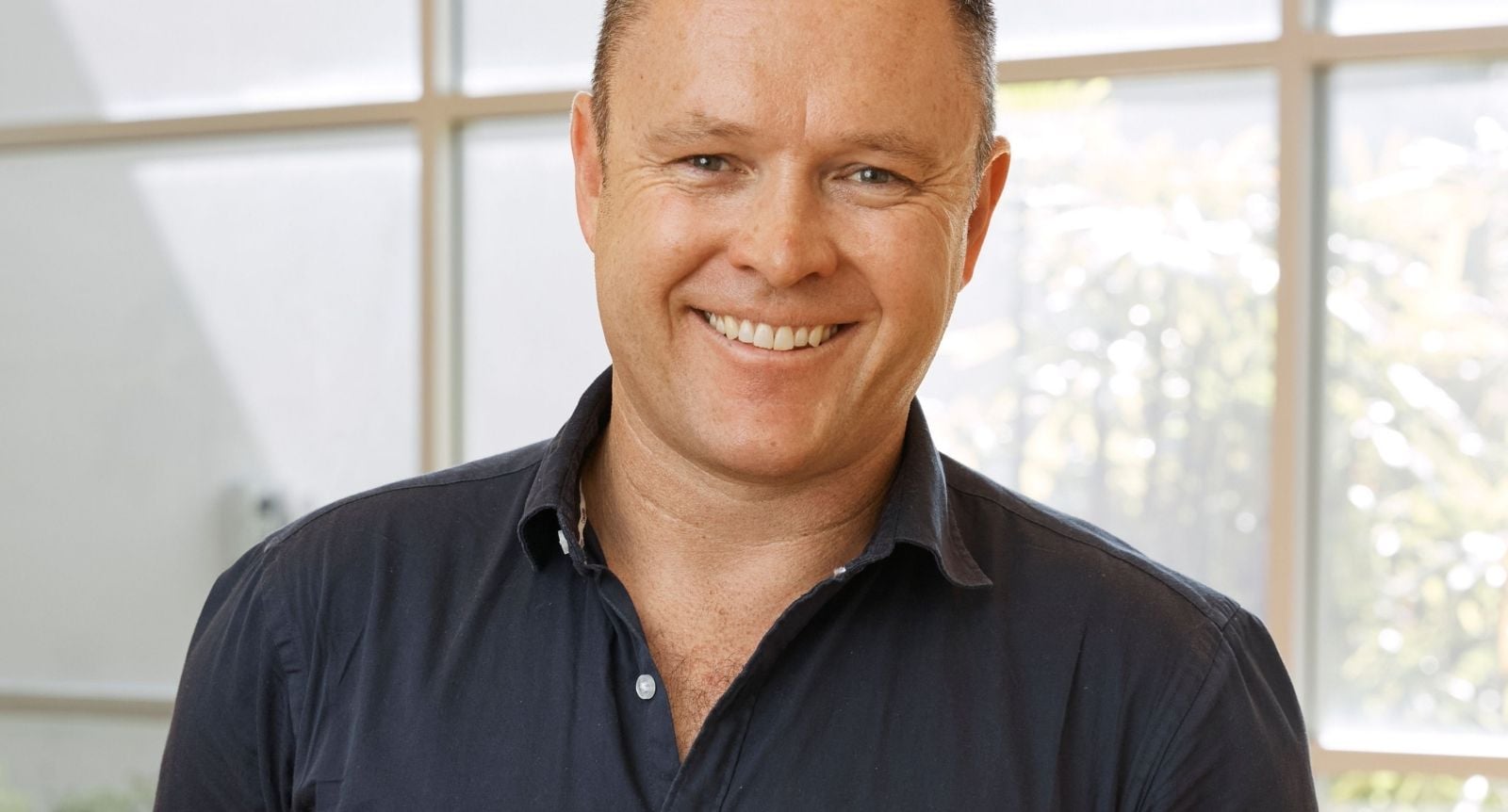 Leigh Lavery
Fighting back against the averages
At the centre of the 2026 agenda is The Unconventional Truth - a new research stream explicitly designed to push back against algorithmic sameness.
“It's an idea that’s born out of trying to fight back against LLMs and algorithms using the averages to give you the median of what the most likely story is going to be.”
In other words, the middle of the bell curve is killing growth.
“We don’t want to contribute further to the clutter; we want to cut through,” Lavery said. “Our aim is to come up with what the Unconventional Truth is that people are missing or they’re not tackling, or it’s not obvious because of regression analysis.”
This is where The Growth Distillery is doubling down on human intelligence.
“Obviously, AI is increasing a hell of a lot of productivity and efficiency, but we think at the centre of it, really understanding humans and understanding human intelligence and using human intelligence, is still going to be incredibly powerful moving forward."
Because, as Lavery puts it, people don’t behave the way the models say they should.
“Humans aren’t as predictable as the model suggests. And so we want to understand what the human element is and what the human factors are.”
From reach to fandom, from noise to tribe
Another major 2026 pillar is Fuel for Fandom, which examines how passions - sports, travel, food, wellness- are becoming anchors in a noisy, anxious world.
“In this chaotic world, where everybody can be on all the time, people are now starting to want to control that,” Lavery said. “We’re seeing that people are becoming much more selective of what they opt into versus what they opt out of.”
That selectiveness is reshaping how audiences behave, and where brands can show up.
“Across sport, travel, health - almost every vertical we touch - we can see that there’s almost a little bit of a reinvention in most cases with how people are engaging with these pursuits.”
It also taps into something deeper: belonging.
“I think there’s no doubt we’re seeing a shift towards that sense of hyperlocal and wanting to be a part of something and a part of your community,” Lavery said. “When the world’s looking chaotic and a bit crazy, you tend to want to flock to people that you can have an affinity with.”
When insight becomes inventory
The biggest commercial shift, though, is how all this research now plugs straight into Intent Connect.
“When we come up with great big stories, we want to show how it directly adds value to our partners’ businesses,” Lavery said. “And with that, what we want to do is we want to actually let them be able to activate on that as well.”
In 2026, most Growth Distillery projects will produce live, targetable audiences inside News Corp’s buying platform.
“We’re actually building research that sits within the Intent Connect system, so as you learn a new audience or a new audience segment, brands will have the ability to turn those insights into action.”
That means if the Distillery identifies a segment - like sporting heavyweights - brands can immediately buy and target them, both on and off the News network.
“A lot of our insights in the past have lived and died in PDFs,” Lavery said. “And so what we want to do is make them much more accessible and actionable than ever before.”
It also creates a feedback loop - real-time data on what those audiences actually do.
“By doing that, then you actually have a real-time perspective on what these audiences are actually doing as well.”
Taken together, the 2026 program marks a clean break from the old model of research as a slide deck.
For Lavery, who walked in as the first hire and now sits in the big chair, it’s the logical next step.
Human intelligence. Audience data. Media activation. Finally, in one loop.
More from Mediaweek
The leading media trade publication in Australia.
Get our top stories straight to your inbox daily by signing up to our Newsletter
By providing your information, you agree to our Terms of Use and our Privacy Policy. We use vendors that may also process your information to help provide our services.


