



Escaping the doomscroll: How 'Frontiers' is rewriting the media brief
Publishers drop the hard sell, inviting top agencies to solve live brand briefs.

Interest rates have just increased again. Petrol prices. They remain better left unmentioned. And Trump's chaotic war in Iran lacks an obvious end.
That all sounds like a polycrisis to me.
So, the term is becoming a buzzword for good reason. And the year of the fire horse has hit like a bucking bronco.
But the mood shifts in the tranquil surrounds of the Southern Highlands.
I arrive just in time for the second instalment of the 2026 series of News Australia's Frontiers sessions. And enter a picturesque pavilion just as Leigh Lavery, General Manager of The Growth Distillery, completes his presentation. He’s dropped a thought leadership and research piece on the power of passion.
The room echoes with applause.
His story has clearly resonated. Part of his narrative explores the aforementioned polycrisis and how it drives consumers to pursue their passions.


The leading media trade publication in Australia.
Get our top stories straight to your inbox daily by signing up to our Newsletter
By providing your information, you agree to our Terms of Use and our Privacy Policy. We use vendors that may also process your information to help provide our services.
This time, however, additional editorial insight bolstered the theme.
Attendees gained direct access to publishing heavyweights Ben English and Edwina McCann, who provided the perfect finger-on-the-pulse overlay.
I caught up with both editors and three leading agency heads to understand exactly how this instalment of Frontiers made a commercial impact.
Escaping the doomscroll
If you think the polycrisis hurts the media business, Vogue Australia editorial director and publisher, McCann politely disagrees. She watches the traffic spikes instead.
“I wouldn't say it's a retreat,” McCann said. “I actually think when a new polycrisis emerges, there's actually a gravitation to trusted brands”.
She acknowledged that audience fatigue eventually sets in during prolonged global crises, but the desire for escapism becomes a highly monetisable asset.
“Without a doubt, people come because they want that escape,” she noted.
The Daily Telegraph editor, English agreed. He pointed out that the pandemic created a collective existential crisis for audiences that permanently altered consumption habits.
“We realise we're just not going to live as long as perhaps we imagine,” English said. “So let's make the most of it”.
He added that the Telegraph drastically broadened its definition of news to include health, wellness, and education pillars to capture this inward turn.
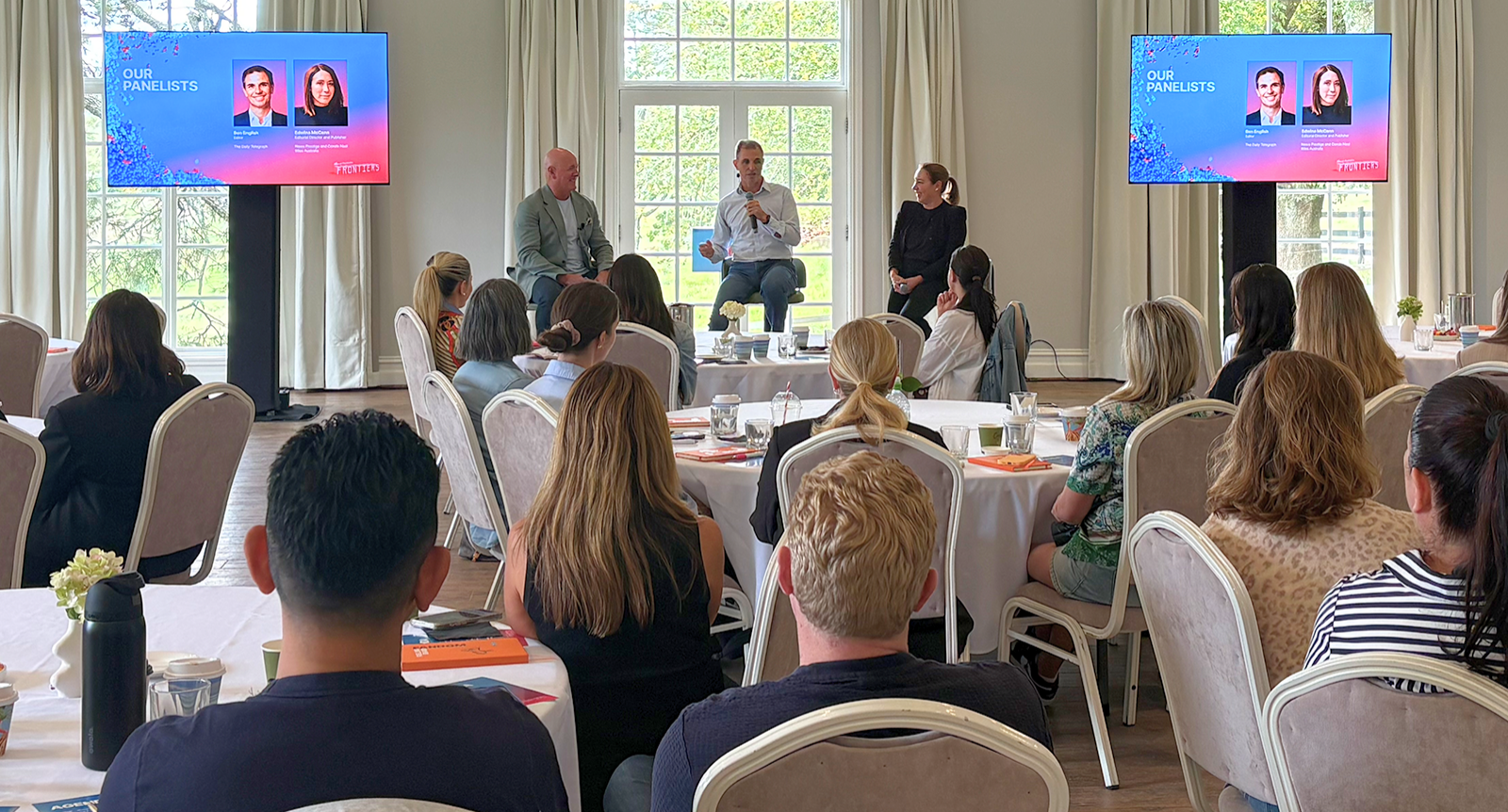 Frontiers Media session with editorial heavy hitters Ben English and Edwina McCann. Image: supplied
The clients in the room acknowledge the opportunities associated with wellness. Why? Because health-related fandom can be a highly lucrative asset.
“The people who are most passionate about you and your brand and your product, become your greatest advocates,” English explained. “And in a world where you might have zero marketing spend, that sounds pretty attractive to me”.
Finding the way in for brands
Why is this critical right now? Consumers deal with the polycrisis by retreating into the very things that give them a break from the doom mongering, according to UM Australia newly minted CEO Stevie Douglas-Neal.
The trick for brands is to find an authentic entry point into these passion verticals.
The Frontiers presentation outlined distinct pathways, such as community and mastery, providing agencies with a tangible roadmap. Douglas-Neal explained that a brand must identify its right to play.
“Am I a subject matter expert? No, then mastery is maybe not my way in,” she explained. “But creating a community could be my way in”.
She pointed to American Express and its Shop Small initiative as a prime example of a brand leveraging community to cut through the noise.
Getting clients in the room
Getting the clients out of the city and into the workshops alongside their agency counterparts proved to be a real differentiator of Frontiers Mach Two.
OMD Sydney chief media partnerships officer, Jane Combes noted the stark contrast to other iterations of the event.
“In previous years, we've really skimmed the surface of six or seven clients,” Combes noted. “Whereas I feel like today was very different– in that we could really deep dive into a live brief”.
OMD Sydney managing director Amanda Watts echoed this sentiment. She pointed out the immense value of having an entire room full of people discussing their biggest business challenges.
Watts revealed that her team brought Sony Pictures into the room to directly workshop a major film release. (although the specific title remained a closely guarded secret.)
The agency representatives also expressed surprise and appreciation for the absence of a hard sell.
“As opposed to many years ago, where there was a lot of pushing of News products, to be honest,” Combes said. She observed that workshop participants pitched ideas not centred around news and that publisher representatives never shut them down.
“It was all about the idea generation and the relationship building, which was really key,” Combes added.
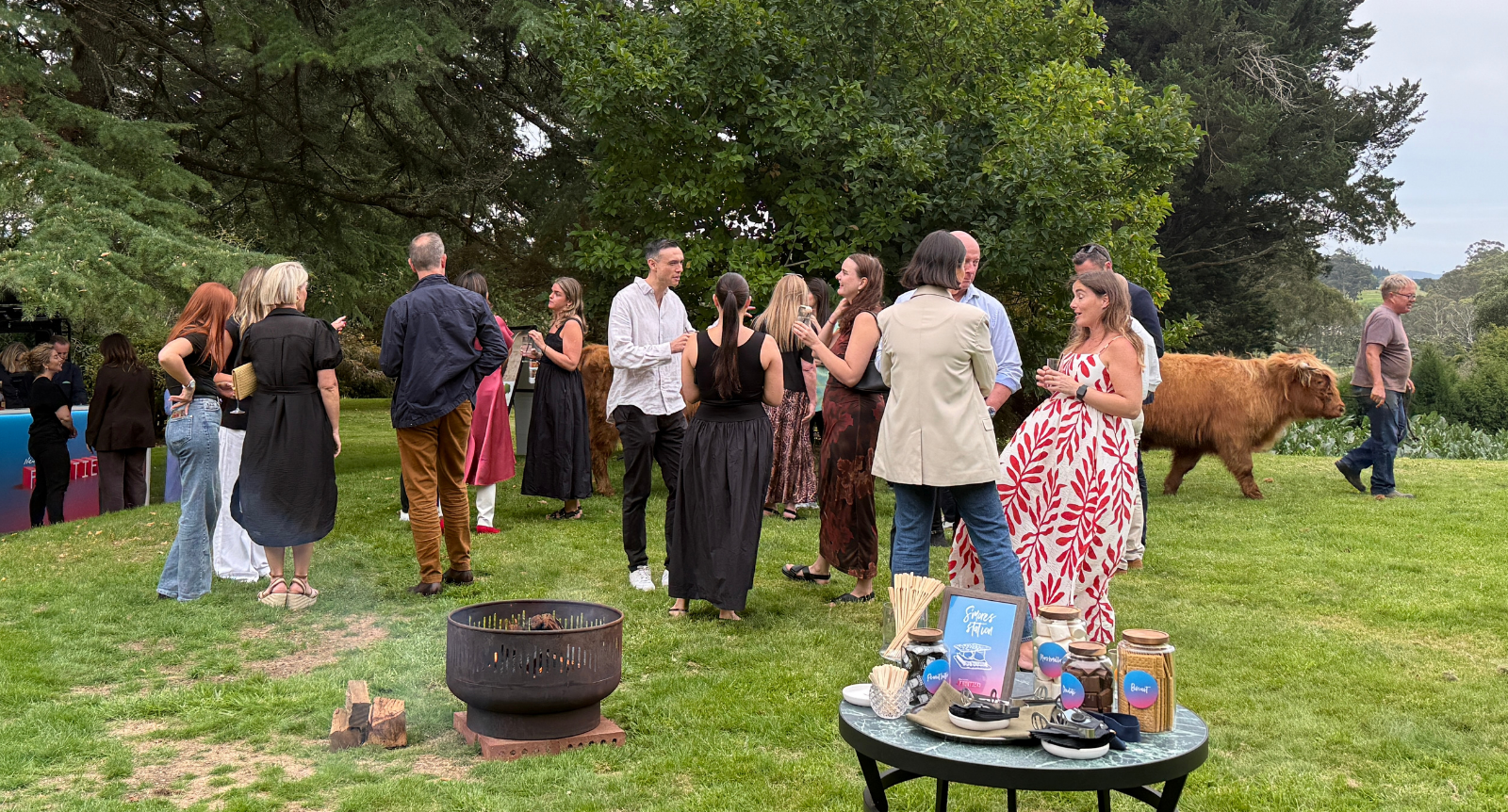 Some very special guests attended this Frontiers session in the Southern Highlands. Image: supplied
Collaboration creates community
Watts noted this collaborative approach left clients feeling highly valued and bought into the process.
In an industry usually obsessed with the next aggressive pitch, simply putting the client's brief at the centre of the room proved to be the ultimate power move.
“They were very happy and impressed that they've had all this attention on them and their business problem,” Watts explained. “Like a whole room of people talking about their biggest challenge for a few hours”.
Douglas-Neal echoed the power of this collaborative energy. She noted that magic happens when a brand perfectly meets an editorial need.
Through this co-creation, she revealed her team found an enduring, meaningful conversation space for their client rather than just chasing a fleeting social media trend.
English summed up the delicate balance of these brand partnerships perfectly.
He acknowledged that serving content useful to both consumers and clients remains tricky, but getting it right serves a much higher purpose.
“I think as a result of the discipline of doing these sorts of projects, we do actually end up with outcomes that have improved the community,” English concluded.
As it turns out, collaborating with all the key players at the exact same table might just be the secret to making that happen.
Feature image- Edwina McCann and Ben English: supplied
More from Mediaweek
The leading media trade publication in Australia.
Get our top stories straight to your inbox daily by signing up to our Newsletter
By providing your information, you agree to our Terms of Use and our Privacy Policy. We use vendors that may also process your information to help provide our services.


