






CBAA spotlights multicultural radio in Harmony Week
More than 1.5 million culturally and linguistically diverse Australians tune into community radio every day.

Harmony Week is putting renewed attention on the role of Australia’s community broadcasters, with the sector highlighting its reach across more than 100 languages and its contribution to multicultural connection nationwide.
According to the Community Broadcasting Association of Australia, community radio and television stations now deliver 500 radio services and two television services across the country, reaching 5.4 million listeners each week.
The sector says thousands of hours of community language programming are produced weekly, supporting diaspora communities, new migrants, and local audiences who are often underserved by mainstream media.
Community stations extend multicultural reach
Dedicated multicultural community stations operate in major cities including Sydney, Melbourne, Brisbane, Adelaide and Canberra, while general community broadcasters also carry language and cultural programming tailored to local communities.
Faith-based services and emerging digital-only broadcasters are also contributing to multilingual output across the sector.
Audience figures show more than 1.5 million culturally and linguistically diverse Australians tune into community radio each week, spending an average of more than 15 hours listening.
Sector leaders point to the social cohesion impact
Jon Bisset, CBAA CEO, said community broadcasting remains central to Australia’s multicultural media landscape.


The leading media trade publication in Australia.
Get our top stories straight to your inbox daily by signing up to our Newsletter
By providing your information, you agree to our Terms of Use and our Privacy Policy. We use vendors that may also process your information to help provide our services.
“Community broadcasting plays a vital role in strengthening multiculturalism in Australia. Every week, community radio stations broadcast in more than 100 languages and produce thousands of hours of community language programs covering local news and information, arts and culture, local events which helps all Australians stay connected to community and each other,” Bisset said.
“By amplifying diverse voices every day, community broadcasters make sure Australia’s media reflects the full richness of the people who live here.”
Chad Phillips, Membership and Engagement Coordinator at the National Ethnic and Multicultural Broadcasting Council, said: Multicultural broadcasting also creates space for culturally diverse creators and for local storytelling.
“Multicultural broadcasting is vital because it empowers Australian broadcasters and content creators from CALD and multicultural backgrounds to share their languages, cultures, and stories, enriching the Australian media landscape while strengthening social cohesion and ensuring diverse communities have a strong and representative voice,” Phillips said.
George Salloum, president of 3ZZZ, said local language broadcasting remains critical to representation and belonging.
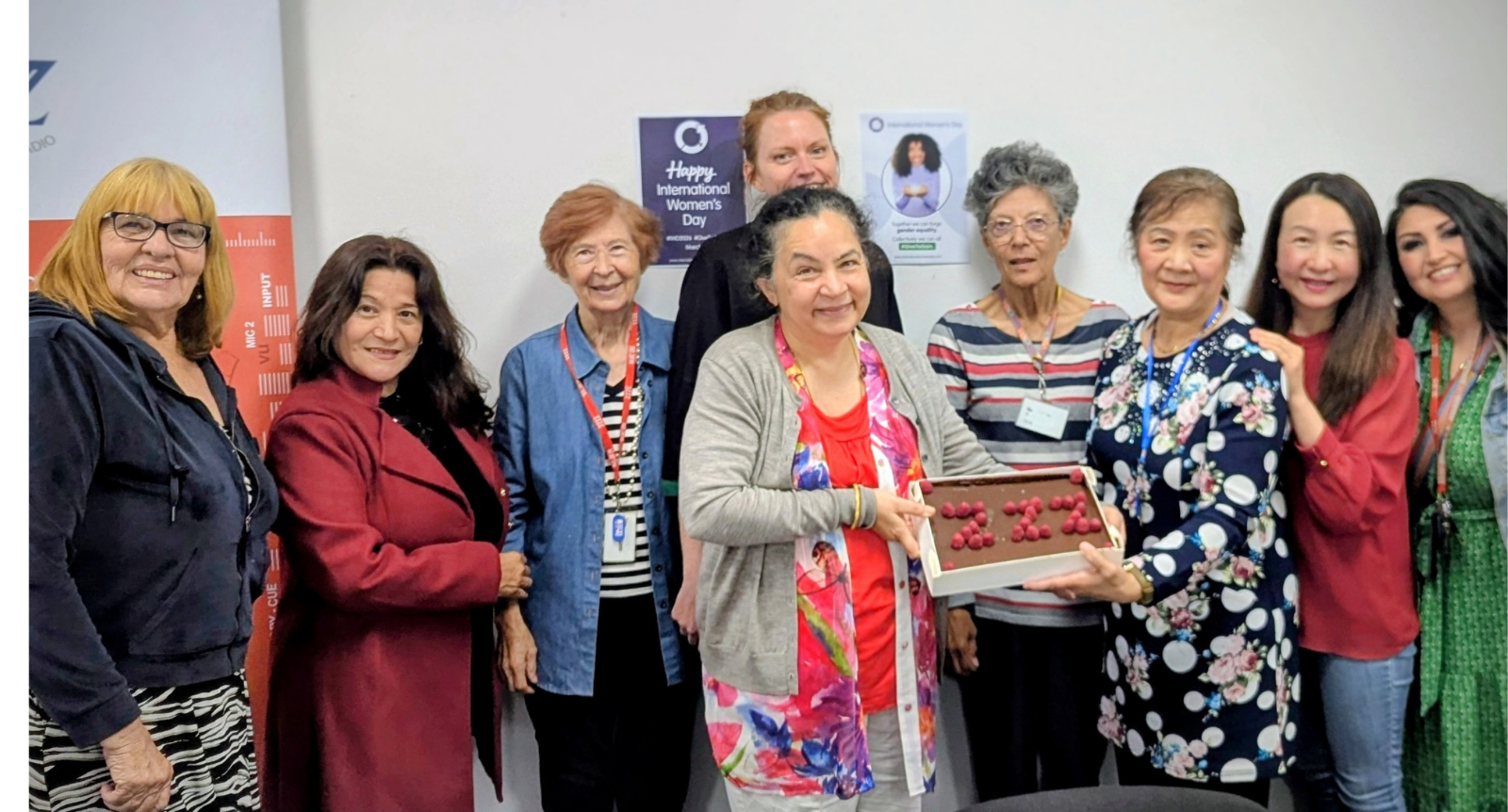 3ZZZ volunteers celebrating International Women's Day
“Multicultural community radio gives people the chance to hear their own language, share their culture and feel truly seen and heard. At 3ZZZ our volunteers bring communities together through storytelling, music and conversation, helping strengthen connection and understanding across Melbourne’s diverse society.”
Eduardo Jordan, executive producer of programs including The Wire and Fair Comment at 4EB, said multilingual current affairs programming is increasingly important as misinformation grows.
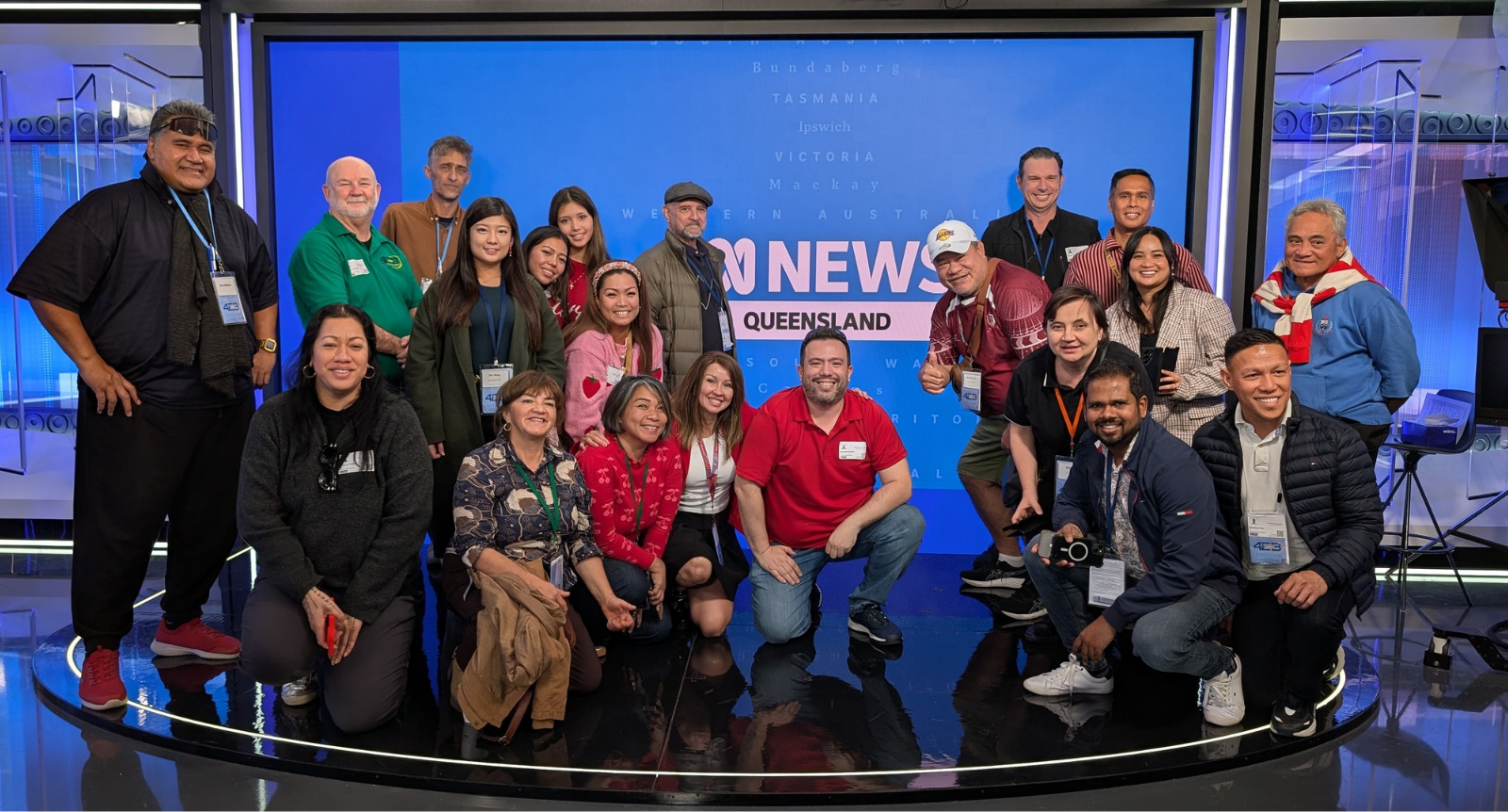 4EB sports broadcasting trainees with ABCs Amanda Shalala 2025.
“Multicultural broadcasting is essential to keep social cohesion among our communities because it has a sense of belonging and a sense of culture. With more than 200 nationalities living in Australia, these are critical in giving support and connection to new migrants, refugees, and Australians with a cultural background,” Jordan said.
“In terms of news and current affairs, Fair Comment and The Wire are providing information to these communities in a time where misinformation is rapidly increasing, putting our communities at the centre of stories.”
Pattie Todorovic, station manager of 5EBI, said local multilingual radio remains essential for migrant and refugee communities.
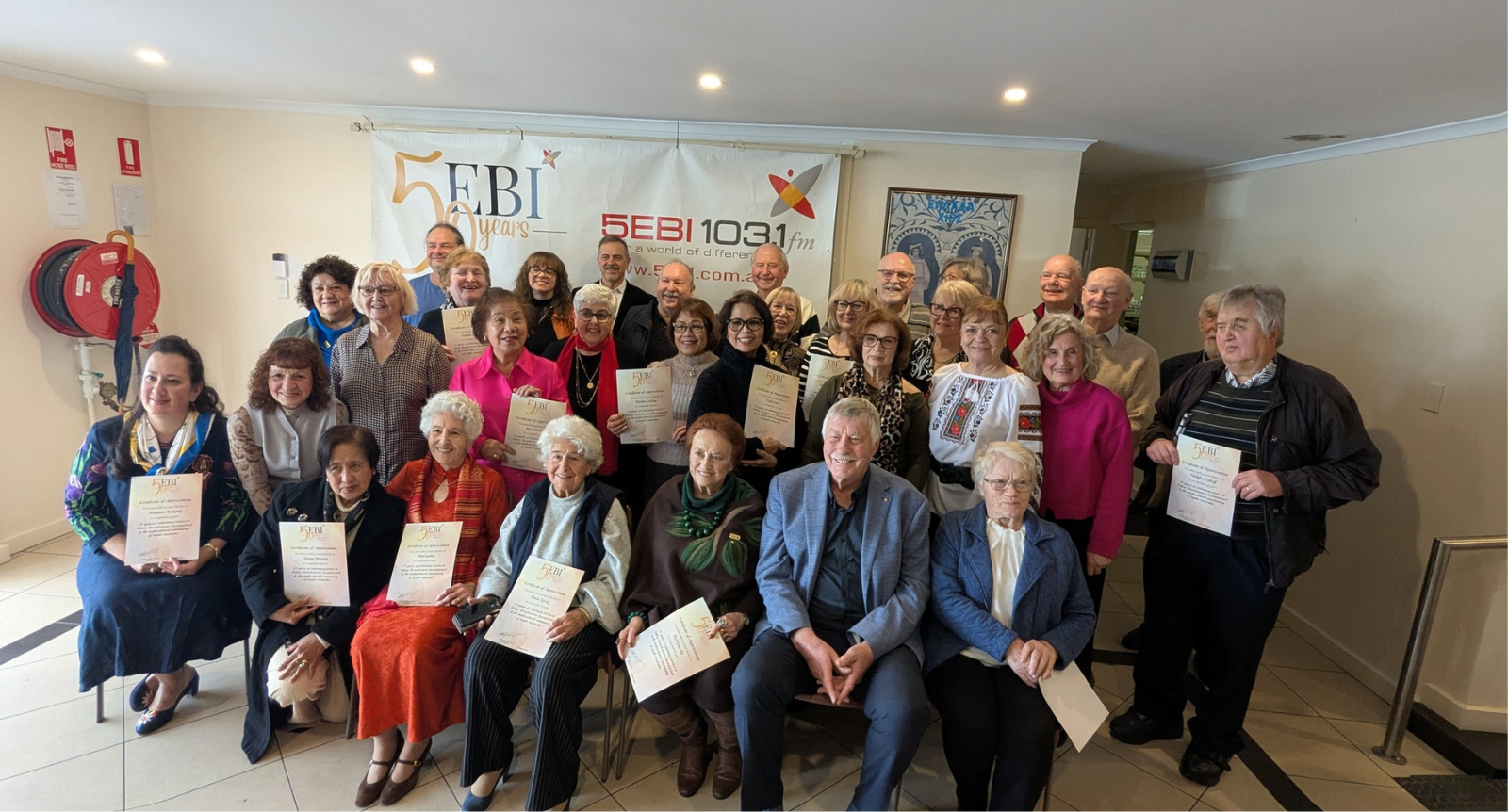 Volunteers with certificates celebrating 50 years of 5EBI.
“Community and multicultural broadcasting is especially important in a Multicultural Australia, where diverse communities rely on stations like 5EBI Ethnic Broadcasters Incorporated to stay connected and informed,” Todorovic said.
“As Adelaide’s dedicated ethnic community radio station, 5EBI has been serving the community for over 50 years, providing programs in many languages that allow local migrant and refugee communities to hear news, share stories, music and celebrate culture in a way that reflects their everyday lives in South Australia.
“It helps people understand local services, events, and issues specific to Adelaide, making it easier for newcomers to settle and feel part of the community. At the same time, it brings different cultural groups together by promoting understanding and respect, strengthening social cohesion across the city.
“Being run by local volunteers, 5EBI also gives multicultural communities the chance to actively participate in media, build skills, and ensure their communities are represented, making it a vital part of Adelaide’s multicultural identity.”
Roadmap 2033 sets a long-term focus
The sector’s long-term priorities are outlined in Roadmap 2033, a 10-year strategy aimed at ensuring community broadcasting remains accessible, inclusive and representative of contemporary Australia.
Around 18,000 volunteers continue to support programming across the sector, contributing on air and behind the scenes to content reflecting local languages, cultures and lived experiences.
Top Image: Award Winners at the 2025 NEMBC Conference
More from Mediaweek
The leading media trade publication in Australia.
Get our top stories straight to your inbox daily by signing up to our Newsletter
By providing your information, you agree to our Terms of Use and our Privacy Policy. We use vendors that may also process your information to help provide our services.


