



'Bringing back jingles wouldn’t hurt': Which classic Aussie ads would be cancelled in 2026?
Top creatives reveal the classic Aussie ads that wouldn’t survive the woke police of 2026.

There was a time when some Aussie classics pushed right up against the line, where the boundary between bold creativity and straight-up misogyny or animal abuse felt blurry at best, and somebody’s uncle in the approval room might have given it a thumbs up anyway.
The audiences were different. The media environment was different. Society was different.
Ten years ago, we weren’t navigating a world shaped by AI, bots and algorithmic amplification. Humour landed differently. Nostalgia hit without a disclaimer.
But does the humour that worked back then still hold enough space today to push those necessary creative boundaries? Or does the threat of sensitivity debates and cancel culture jump scares stop ideas before they even get close to the line?
To unpack it, Mediaweek reached out to some of adland’s top creatives to share their favourite “toxic” tale, the campaigns that made them genuinely laugh, even if they would never make it past legal today, and to reflect on how creative approval processes have evolved.
Jeff Malone, Chief Strategy Officer at Town Square
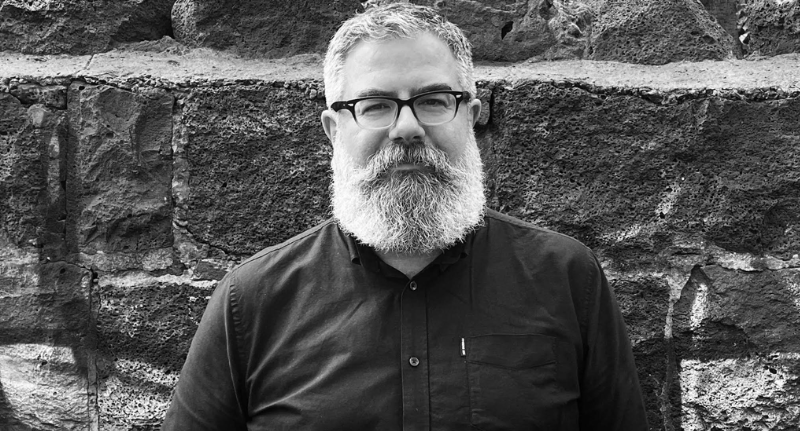
Malone is quick to challenge the premise that advertising has declined.


The leading media trade publication in Australia.
Get our top stories straight to your inbox daily by signing up to our Newsletter
By providing your information, you agree to our Terms of Use and our Privacy Policy. We use vendors that may also process your information to help provide our services.
“It’s too easy to say that a lot of today’s advertising sucks,” Malone says. “I heard the same things twenty years ago when I got into the industry, and it was no more true then than it is now.”
He argues the industry suffers from selective nostalgia.
“We tend to romanticise the past, remembering a handful of great ads while forgetting the 99% that were crap. And that was when there were far fewer advertisers out there with far fewer channels to reach us. So sure, there are probably more ‘bad’ ads out there today, but we’ve got to remember, there are a lot more ads, period.”
When it comes to the campaigns, people insist “couldn’t be made today”, Malone suggests many simply would not resonate with modern audiences.
“Classic beer ads are often touted as examples of ‘the good old days’, while ignoring or forgetting a lot of these objectified women, promoted toxic behaviours, reinforced stereotypes and in today’s world would alienate more audiences than they’d bring in.”
He rejects the idea that bold work has vanished while taking a dig at Didi, Telstra, and Specsavers campaigns
“To think we’re not making incredible work would require ignoring the brilliant batshit insanity of Didi’s latest campaign, the spit-take surprise of Specsavers ‘Welcome to Melbourne’ banner at the Sydney airport, or pretty much anything Telstra’s been up to under Brent Smart.”
For Malone, the core issue is not wokeness but courage.
“There aren’t enough Brent Smarts out there. There never have been. Bravery, unfortunately, has always been in short supply.”
What has shifted, he says, is fear.
“If the best advertising works because it’s doing something no one’s seen before, then whoever’s got to sign off on it has to feel comfortable with the risk.”
With restructures, looming layoffs and increasing scrutiny from CEOs, the personal cost of backing bold work has grown.
“Add the threat of AI, the shrinking power and presence of CMOs, and the declining confidence of CEOs in their marketing leaders, and it shouldn’t surprise anyone when a client chooses predictable over provocative.”
His solution is blunt.
“In a nutshell, we need to make risk feel safe. Bringing back jingles wouldn’t hurt either.”
Sophie Beard, Creative Director at Clemenger BBDO Melbourne

Beard points to Antz Pants’ “Sic ’em Rex” as an iconic campaign that might struggle in 2026.
“Would it still get made today? Maybe not in its current form,” Boyd says.
She acknowledges its male gaze framing, but also its underlying subversion.
“At its core, it still has a feminist heartbeat. It’s a woman commanding an echidna to ‘sic ’em’.”
Approval processes have evolved alongside measurement.
“Alongside traditional focus groups, there’s now AI-generated ‘synthetic audiences’. Not only do we have to convince humans to make our ads, but now we need to win over the robots.”
She welcomes more formalised inclusion checks, but warns against excessive caution.
“Being overly cautious and second-guessing ourselves doesn’t lead to great work. We still have a responsibility to show a version of Australia that pushes us forward.”
For Beard, boldness does not require offence.
“You can still be bold without being offensive.”
Dom Megna, Executive Creative Director at Spinach
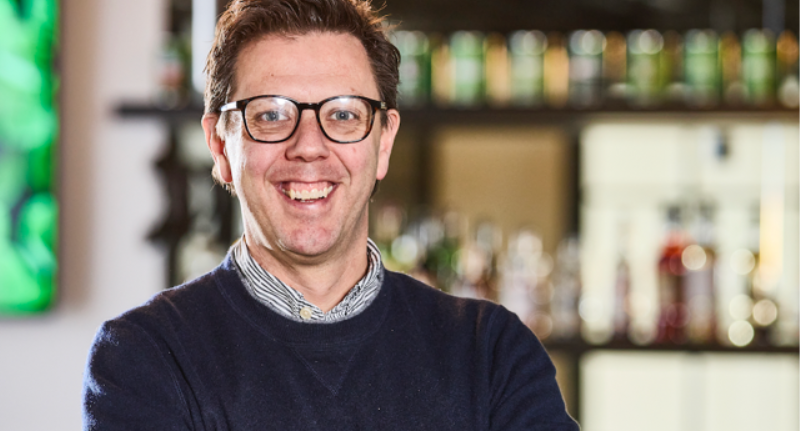
Megna looks back fondly on the Wally Walpamur paint campaign from the 1980s, featuring chimpanzees in human clothes with badly dubbed Aussie voices.
“They were hilarious,” Megna says. “But apart from the fact they rightly wouldn’t get made today for animal safety reasons, the loose, Aussie, schlocky humour is something you don’t see anymore.”
He believes humour itself has been diluted.
“Humour now is often muted to the point where it doesn’t quite land. Brands don’t want to be seen as flippant, and while many aim to be fun for all, they’re not funny to anyone. It’s like humour got a reverse lobotomy, overthought to the point of not funny.”
On approval processes, Megna says change has been incremental rather than dramatic.
“The past 10 years? Not so much. Possibly more levels of approvals, but this varies per client. Ad Standards have been around a lot longer than that.”
However, brand safety has become a much larger consideration.
“More opinions matter. Used to be more common that if the CMO or MD believed in it enough, that was it. Brand safety is a much larger consideration now as well.”
Asked whether the industry is more cautious or more accountable, Megna says it is both.
“With the increase of risk aversion, there’s more thought placed on what might be wrong with the work than what might be right.”
He adds: “We’re in advertising, if it’s between fight or flight, most will flight.”
Owen Bryson, Creative Director at Clemenger BBDO
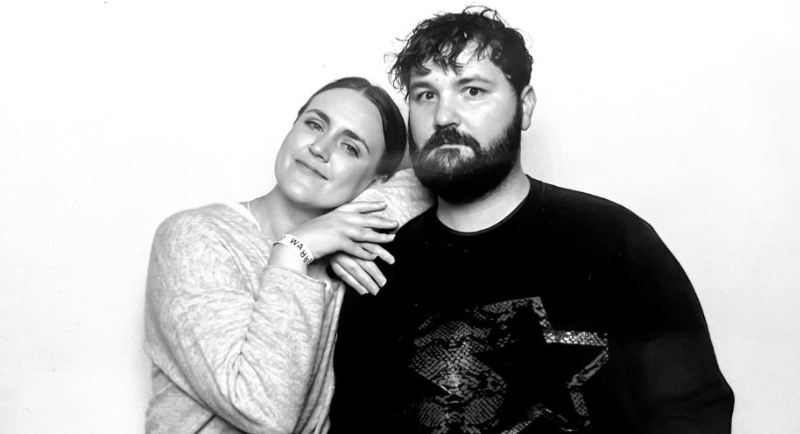
Bryson cites Cash Converters’ “Thirteen” as an ad that would struggle to get made today.
“This is a prime example of something that would struggle to get made today. Firstly, the brand isn’t mentioned until 41 seconds in. Secondly, I think legal might have an issue with the whole eye-poke-assault thing.”
Approval processes, he says, now involve more layers.
“I think there are probably just more layers of approval, more opinions to consider: agency, client, regulatory bodies, research. More pecking by more ducks.”
He believes caution is directly linked to accountability.
“We are more cautious because we are more accountable.”
And while he thinks the industry has become less bold, he remains hopeful.
“That Cash Converters ad was made 26 years ago. Two years ago, someone remembered it. I don’t think there’s anything on air at the moment that will be remembered in a year let alone 20.”
“But I also don’t think we’re incapable of making ads people will remember in 20 years. All it takes is a handful of smart, brave and talented ducks to trust their duck-guts and take a little bit of a risk.”
Sam Boyd, Creative Strategy Lead at BCM Media & Creative
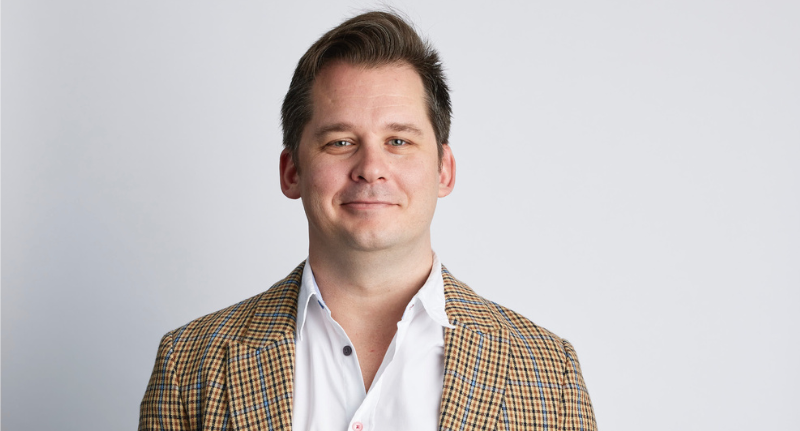
Boyd argues the comparison between eras is flawed.
“Fundamentally, the question asks us to look back at the work and compare it to now. But that’s not really a fair comparison because the landscape has fundamentally changed. It would be comparing apples and oranges. Instead of looking back, we should look forward.”
He does not believe boldness has disappeared.
“I don’t think boldness has disappeared. It’s just been redistributed.”
Traditional paid channels, he says, are more risk-managed because the stakes are higher.
“When you’re investing serious money in TV or large-scale media, the reputational and financial exposure is huge, so naturally, more people want a say before anything goes live.”
Creativity has adapted to fragmentation.
“So creativity isn’t weaker today. It just has to work across a far more fragmented media landscape.”
He notes that brands now operate in a far more transparent world, where reaction is instant.
“Much of the boldness now shows up in earned and social. Those spaces are faster, more conversational and closer to culture.”
The strongest campaigns, he argues, combine both.
Top Image: AI-Generated
More from Mediaweek
The leading media trade publication in Australia.
Get our top stories straight to your inbox daily by signing up to our Newsletter
By providing your information, you agree to our Terms of Use and our Privacy Policy. We use vendors that may also process your information to help provide our services.


