

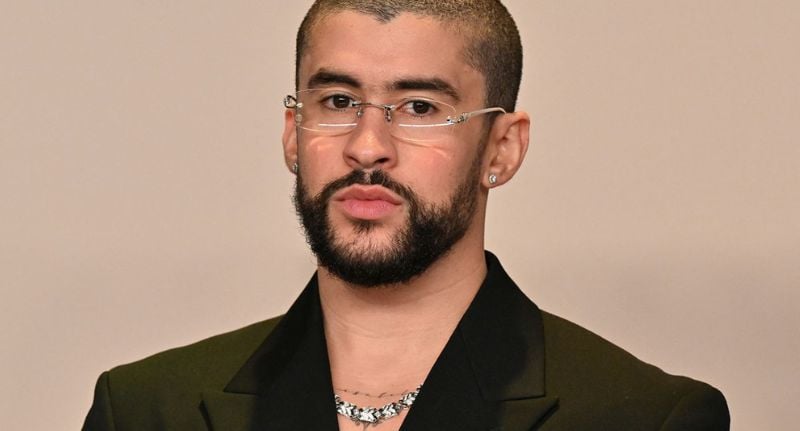
Bad Bunny’s long-awaited Australian debut has wrapped, but the cultural aftershock is still reverberating across the live music industry.
Across two nights at Sydney’s ENGIE Stadium, close to 90,000 fans turned out for the Puerto Rican superstar’s first-ever Australian shows, setting a new attendance record for a concert at the venue and underscoring the growing power of Latin music on the global stage.
For promoters and platforms alike, the turnout signals something bigger than a successful tour stop. It reflects a structural shift in audience tastes, where language is no longer a barrier and artists performing outside English are increasingly driving mainstream demand.
The artist, born Benito Antonio Martínez Ocasio, announced his only Australian shows in May last year.
The dates arrived amid a run of career-defining milestones that have propelled him from Latin music heavyweight to one of the most influential figures in global pop.
In 2025, Bad Bunny was crowned Spotify’s most-streamed artist globally. That momentum continued into 2026, when he secured a historic Grammy Awards win and delivered a widely discussed Super Bowl halftime performance celebrating Puerto Rican culture and identity.
Together, those moments helped build anticipation for his arrival in Australia and revealed just how ready local audiences are for music that transcends language.
View this post on Instagram
Fans are listening beyond language
Audience behaviour is shifting quickly.
According to Live Nation’s Living for Live Global Study 2025, listeners are increasingly embracing music that originates far outside their own cultures.
More than three in four fans say language doesn’t really matter when it comes to the music they enjoy. Nearly 70% report listening to more global artists than they did a few years ago, while 65% actively seek out music from other cultures. Over half say at least 50% of what they listen to is not in their primary language.
The findings help explain why artists like Bad Bunny, who perform primarily in Spanish, are commanding stadium-sized audiences around the world.
Renée Hermsen, Head Promoter NZ at Live Nation Australasia, told Mediaweek Latin music’s rise has been building for years, even if it has recently accelerated.
“I think in a way, it’s kind of had a bigger appeal, Latin music, for quite some time. If you think about artists like Shakira, Mark Anthony, and Ricky Martin.”
But the appeal of the genre now goes beyond individual stars.
Hermsen says the appeal of Latin music goes beyond chart performance or streaming numbers. At its core, she argues, the genre taps into something more emotional – a sense of joy, connection and shared experience that resonates with audiences across cultures.
“I think now it’s just such an infectious sound, and it’s music made for dancing most of the time. It’s made for a lot of joy and connection. I think that’s what is very appealing, especially when there’s quite a bit of negativity and feelings of isolation in the world.”
That celebratory spirit, she said, is part of what allows the music to travel so easily across borders. Even when listeners don’t understand the lyrics, the energy and atmosphere still translate.
“Then something like this is just like, you want to be a part of it,” she said. “And I think it’s also very open, even though it’s a different language, it’s open, it’s diverse, it’s a celebration. Yeah, those are all really appealing characteristics of the culture.”

Renée Hermsen, Head Promoter NZ at Live Nation Australasia
Social media speeds up global fandom
If streaming has broadened music discovery, social media has dramatically accelerated the pace at which cultural moments spread.
Hermsen says platforms like TikTok and Instagram now allow performances to reach global audiences almost instantly.
“That’s such a big part. To be honest, with any movement nowadays, social media plays such a big part,” she said.
“You could be watching something live, and within minutes, everything is online. It’s incredible how connected we all are across the globe, because of social media.”
That global visibility was on display during Bad Bunny’s Super Bowl appearance, which celebrated Puerto Rican culture on one of the world’s biggest entertainment stages.
But Hermsen is quick to caution that he’s not the first Latin American artist to perform at the event.
“Shakira, Jennifer Lopez, Enrique Iglesias – they’ve all been on that stage. But l for someone to play the full show entirely in Spanish, shows such a big celebration of Puerto Rico and Puerto Rican culture and identity.”
From Latin star to global icon
Over the past decade, Bad Bunny has steadily expanded his cultural footprint far beyond music.
Hermsen says Bad Bunny’s rise has been more than just a typical chart climb. Over the past decade, the artist has steadily built momentum within Latin music before breaking through as a global cultural figure.
“During the last 10 years, he’s been making music and climbing quickly in the Latin world.”
What began as a dominant run within the Latin music scene has since expanded far beyond the genre. As his audience has grown, so too has his cultural footprint – spanning music, fashion and entertainment.
Hermsen notes that Bad Bunny’s reach now extends well beyond the traditional boundaries of Latin music, with global streaming success, major fashion campaigns, television appearances, and acting roles helping cement his profile.
“He’s done all these fashion campaigns, he’s been on Saturday Night Live, and he’s done a bunch of acting.”
That crossover visibility, she says, is part of what has elevated him from genre star to something far larger.
“So he’s become so much bigger than just Latin music. I think he’s becoming an icon.”
The global attention surrounding the tour, fuelled by viral clips and awards-season momentum, only added to the buzz around the Sydney shows.

Bad Bunny and Pedro Pascale in a skit from Saturday Night Live. Source: YouTube
Opening Australia to a new wave of global artists
For promoters, the scale of Bad Bunny’s Australian audience suggests the country could soon see more tours from artists performing outside English.
“I feel like this is a starting point,” Hermsen said.
“Bad Bunny is opening up this market. And there’s a lot of interest because it really is a wonderful touring destination.”
“A lot of artists are keen to come here, especially now that they’re seeing it, there is actually a really solid market.”
Unlike other touring regions, Australia draws most of its concert audiences from local rather than neighbouring countries, making the scale of the response particularly significant.
“So it’s really showing how much interest and excitement there is for this tour. But I’m very confident that it’s for Latin music and Spanish-speaking music, much broader and generally non-English-speaking music for that.”
If Bad Bunny’s record-breaking Sydney run proved anything, it’s that Australia’s music audience is rapidly becoming more global, and the next wave of non-English-language superstars may already be lining up to test the market.
Main image: Bad Bunny