






'Beautiful compatibility': Amex Brand VP Naysla Edwards on the Gen Z overlap driving its F1 push
Edwards reveals how the race has become a year-round engine for brand growth.

With the dust barely settled on the 2026 Formula One Australian Grand Prix, which wrapped over the weekend at another packed Albert Park, American Express is already framing its presence at the race not as a seasonal sponsorship, but as a permanent plank in its brand architecture.
Now in its second year as the Official Payments Partner of the Melbourne race, the payments giant materially expanded its on-ground footprint across the precinct, turning the event into a multi-layered platform spanning customer acquisition, merchant partnerships and brand storytelling.
The strategy reflects how global brands are increasingly treating Formula One: less as a logo-placement exercise and more as a live marketing ecosystem.
For American Express, that means building a presence that extends across hospitality, dining, music, experiential activations and full-funnel marketing campaigns.
“Well, we're back, and it is a multi-year partnership,” Naysla Edwards, Amex Vice President of Brand, Customer Marketing and Member Experience, told Mediaweek.
“We really believe that when you come into any partnership, Formula One or other, it's really important you learn a lot as you evolve through the years.
“So we try to come to partnerships, not just for the short term but for the long term.”


The leading media trade publication in Australia.
Get our top stories straight to your inbox daily by signing up to our Newsletter
By providing your information, you agree to our Terms of Use and our Privacy Policy. We use vendors that may also process your information to help provide our services.
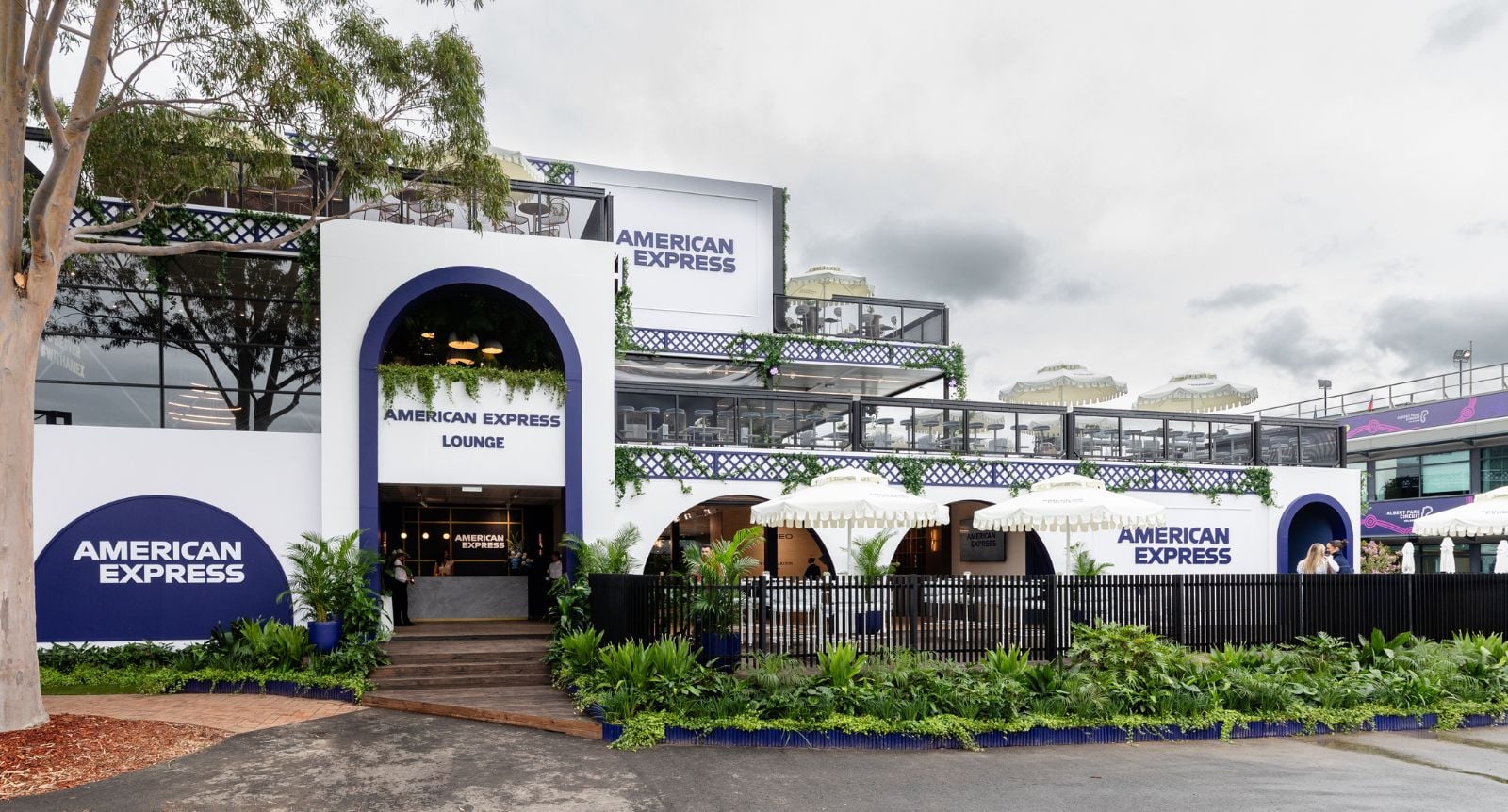 This year's revamped American Express lounge.
Demographic alignment driving the strategy
The commercial logic behind the partnership is simple and compelling.
More than 40% of new Formula One viewers globally are under 35. Women now represent around 41% of the sport’s audience. At the same time, roughly 65% of new American Express card acquisitions are Gen Z and Millennials.
For Amex, the overlap between the sport’s audience and its own growth segments makes the race a powerful acquisition channel.
“Audiences are growing year on year,” Edwards said.
“More than 40% of the new audiences are coming from people under 35, which is a very critical point for us because when you look at the acquisition of new customers, of new card members, 65% of the acquisition is now Gen Z or millennials, so there is a beautiful compatibility with the audiences that the Formula One attracts, as well as the new customers that we're bringing into Amex.”
The sport’s shifting gender balance is also notable.
“I also love how F1 is building so much from a gender perspective,” Edwards said.
“I think about 41% of the fans are now female. We know that we have Netflix’s Drive to Survive to thank for that as well.”
From four weeks to a full year’s planning
Year one of the partnership was, by any measure, a scramble.
With Melbourne opening the 2025 F1 calendar, American Express had just four weeks between signing its global agreement and activating on the ground at Albert Park.
“When I go back to our first year, we had just four weeks to put on the event after signing the global agreement,” Edwards said.
“And that was insane. But, the partnerships, the agencies, the collaboration with the AGP team, is absolutely phenomenal.”
For 2026, the timeline looked very different.
“So this year, we started planning in August last year,” she said.
“We had plenty of time, and I think that with that time we could do some self-reflection, breathe, and just have the time to think about what was possible this year.”
That additional runway allowed the brand to expand across multiple elements of the race precinct.
Expanding across music, fashion and fan experiences
One of the most visible changes this year was American Express stepping into presenting partner roles for two of the event’s signature experiences: Glamour on the Grid and the Lakeside Festival.
Music, identified as a strong engagement driver in year one, became a larger focus.
“There was a music component last year, the Lakeside Festival, but this year, American Express is the presenting partner of the Lakeside Festival,” Edwards said.
“Music is super important for our customers.”
The Amex Lakeside Terrace was rebuilt into a three-storey structure overlooking the festival stage, expanding capacity and improving sightlines across the precinct.
“We have also completely redone our buildings,” Edwards said.
“So we have our Lakeside Terrace, which we had last year, but this year’s version is a three-level building, and it has more capacity than last year's.”
Glamour on the Grid also received additional investment as Amex expanded its presence across the race-week calendar.
“This year was really more about the opportunities and the spaces we could expand.”
Hospitality and lifestyle partnerships
Hospitality remained central to the Amex experience across Albert Park.
The Amex Lounge returned as the brand’s flagship hospitality space, featuring premium food and beverage partners including Moët & Chandon, Belvedere, Penfolds, Grill Americano and the Ritz-Carlton Bar, alongside race broadcasts, viewing areas and live music.
In the lounge, guests could participate in guided tastings celebrating Penfolds Grange, while a pop-up version of Chris Lucas’ Grill Americano served hospitality ticket holders.
Across the broader precinct, American Express leaned into Melbourne’s dining culture.
Chin Chin, presented by American Express, offered a bookable dining experience during race week, with card members receiving priority reservations and additional benefits when paying with their American Express card.
Meanwhile, the Amex Racing Club returned with simulators, content creation spaces and exclusive upper-level lounge access for Platinum and Centurion card members.
A new partnership with Uber also introduced a supercar arrival experience, with selected card members and riders chauffeured to Albert Park in branded supercars.
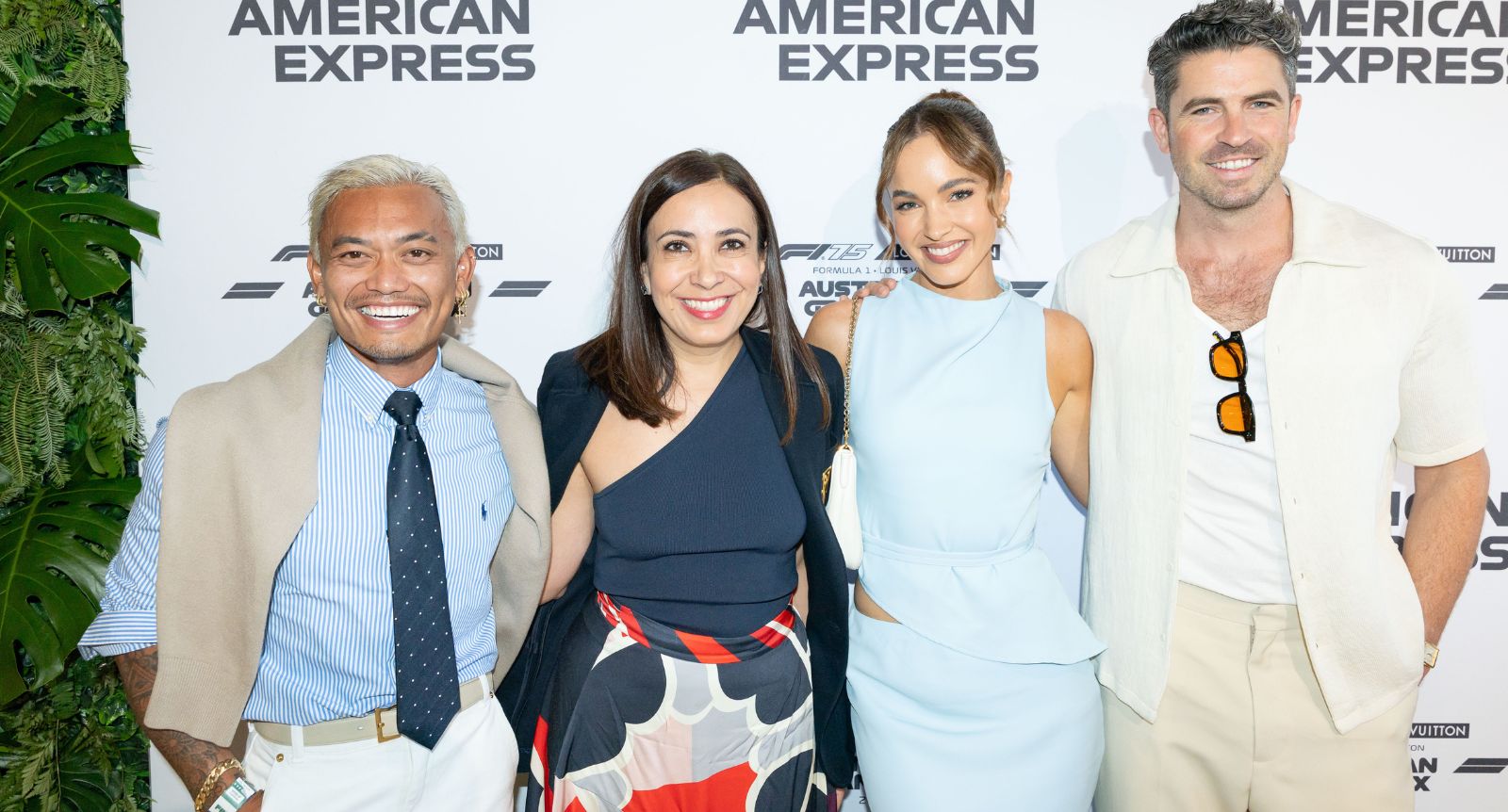 Khanh Ong, Naysla Edwards, Olivia Molly Rogers, and Scott Tweedie.
One event, three audiences
For Amex, the Grand Prix functions simultaneously as a customer retention tool, a merchant showcase and a live acquisition environment.
“Our customers are every customer - our consumer customers, our small business customer and also the businesses that receive payments,” Edwards said.
The brand’s race presence is supported by a full-funnel marketing campaign spanning digital, out-of-home and broader media channels, developed with agency UM.
“Acquiring new customers is, of course, very important, and we have developed a full funnel campaign that expands across really incredible media channels: out of home digital and so on,” Edwards said.
“So brand consideration is one of the metrics that we're able to measure through the full funnel model that we have developed with our agency, UM.”
Beyond acquisition metrics, Amex tracks customer engagement through satisfaction, retention and usage of card benefits, alongside merchant outcomes.
“And then the final one that is super important for me is the merchants and their satisfaction,” Edwards said.
“We partnered with a lot of different businesses to do this, and so we want to make sure the businesses that we're planning with are super happy, and that they feel that we're bringing them great customers.”
A collaboration across agencies and partners
Delivering the activation requires a wide network of collaborators.
American Express works alongside the Australian Grand Prix Corporation, global brand teams and agencies, including Wasserman, UM, Dentsu Creative and Edelman, as well as hospitality partners such as Moët Hennessy, Penfolds and MECCA MAX.
“It is the people you partner with, and the people you work with - especially those in your own team,” Edwards said.
“Everyone collaborates; there is no competition.”
With the chequered flag now waved on the 2026 Melbourne race weekend, the Grand Prix may be over for another year.
But for American Express, the strategy is clear: when planning starts months out, partnerships expand, and the audience keeps growing, the event stops being a sponsorship and becomes something much bigger.
More from Mediaweek
The leading media trade publication in Australia.
Get our top stories straight to your inbox daily by signing up to our Newsletter
By providing your information, you agree to our Terms of Use and our Privacy Policy. We use vendors that may also process your information to help provide our services.


