


ABC launches 'most trusted news' campaign via Leo - just don't mention the war
Talk about timing.

The Australian Broadcasting Corporation (ABC) has unveiled a new national brand campaign positioning itself as a trusted news source just days after being forced to correct an inaccurate claim that the United States had bombed Palestinians in Gaza.
The campaign, created with Leo Australia, promotes the idea that trust in journalism is built through persistent questioning and rigorous reporting.
Its launch comes after the public broadcaster issued a correction to an analysis article written by ABC business reporter Gareth Hutchens, which had incorrectly suggested the United States was involved in bombing Palestinians in Gaza.
“An analysis piece published on Sunday, 9 March stated that both the United States and Israel were responsible for the bombing of Palestinians in Gaza,” the ABC said in a correction attached to the article.
“This was incorrect. The story was updated to remove reference to the United States, and an editor's note has been posted.”
The correction acknowledged that the claim, which appeared in a broader analysis of Australia’s geopolitical relationships, was inaccurate and had been removed.
The incident has renewed scrutiny around the ABC’s editorial processes at a moment when the broadcaster is simultaneously reinforcing its positioning as Australia’s most trusted news source.


The leading media trade publication in Australia.
Get our top stories straight to your inbox daily by signing up to our Newsletter
By providing your information, you agree to our Terms of Use and our Privacy Policy. We use vendors that may also process your information to help provide our services.
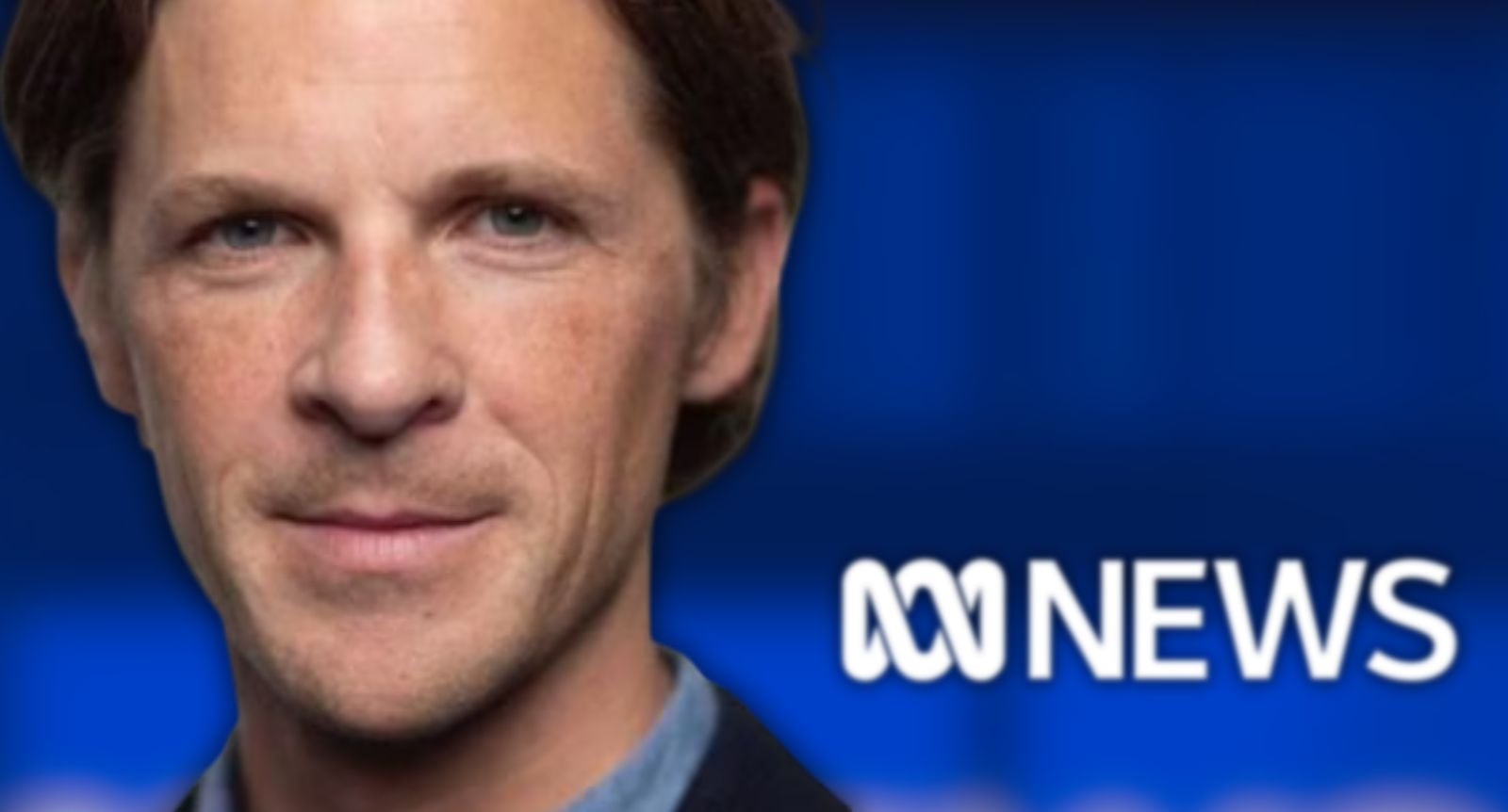 ABC business reporter Gareth Hutchens. Source: ABC
‘Keep Asking’: a campaign built around trust
The new campaign, titled 'Keep Asking', leans directly into that positioning.
Rolling out across television, out-of-home, radio, digital, and social platforms, the work frames questioning as the foundation of credible journalism.
The campaign arrives at a time when media organisations globally are increasingly leaning on trust as a defining brand attribute in a fragmented information environment.
Milla McPhee, Director of Audiences at the ABC, said the campaign was designed to reinforce the public broadcaster’s role in holding power to account.
“Asking hard questions has never been more important, but never more at risk,” McPhee said.
“Keep Asking is a strong reminder of the role of ABC News, which exists to serve the Australian public.
“It reflects our commitment to quality journalism and the relentless pursuit of truth through asking the questions Australians need answered.”
The ABC has frequently cited its standing in surveys such as Roy Morgan’s annual media trust rankings, where it has consistently ranked among the country’s most trusted news brands.
That reputation, however, also raises the stakes when editorial errors occur, particularly on sensitive international issues.
Leo Australia’s stripped-back creative approach
For Leo Australia, the campaign’s creative execution was designed to mirror the editorial principles it promotes.
The agency opted for a minimal production approach intended to reflect transparency and authenticity.
“We made the deliberate choice to build sets and capture almost everything in-camera to reflect the honesty and integrity at the heart of ABC News,” said Leo Australia Executive Creative Director Tommy Cehak.
“The work is direct, provocative and stripped back because, as ABC News demonstrates every day, it isn’t just about the questions you ask but also the ways in which you ask them.”
The creative concept centres on the idea that journalism’s value lies not in slogans but in the process of investigation itself.
Correction draws attention to editorial transparency
The Gaza correction stemmed from a section of Hutchens’ analysis discussing Australia’s intelligence relationship with the United States.
In the updated version of the article, the focus shifted toward the role of Pine Gap, the joint Australia-United States satellite surveillance facility near Alice Springs.
“Pine Gap, the secretive joint Australia-United States satellite surveillance base in Alice Springs, plays a key role in US global surveillance and in supporting US military operations around the world, including drone strikes,” Hutchens wrote.
“Protesters in the Northern Territory have also been trying to draw attention to the role that Pine Gap may have played in Israel's relentless bombing of Palestinians in Gaza for the past two and a half years.”
While the ABC moved to correct the original claim within a day of publication, the episode has also raised questions about how corrections are communicated.
Recent data also shows scrutiny of the ABC’s journalism is increasing.
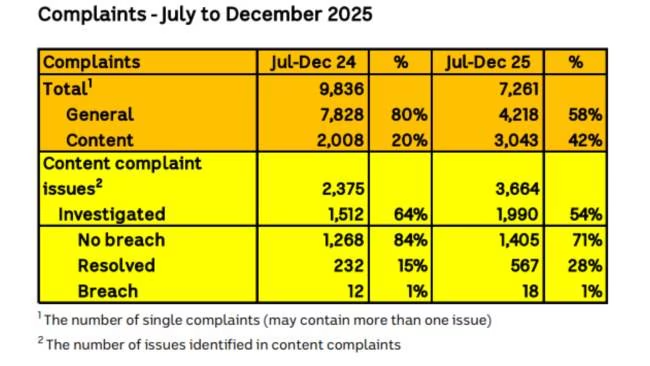
In its mid-year report, the ABC Ombudsman revealed the broadcaster received 3,043 content complaints in the six months to December 2025, up from 2,008 complaints in the same period a year earlier.
 Source: ABC Ombudsman
Despite the sharp rise in audience feedback, the number of substantiated breaches increased only marginally.
The Ombudsman investigated 478 more complaints than in the previous year, but ultimately identified just six additional breaches of editorial standards.
Coverage of the Middle East conflict generated the largest volume of complaints during the period, followed by reporting on the Bondi terror attack.
However, the Ombudsman concluded that neither topic resulted in editorial breaches despite attracting hundreds of complaints.
More from Mediaweek
The leading media trade publication in Australia.
Get our top stories straight to your inbox daily by signing up to our Newsletter
By providing your information, you agree to our Terms of Use and our Privacy Policy. We use vendors that may also process your information to help provide our services.


.png%3Fv%3D1789956826028&w=3840&q=75)

